" We don't sell the wine without touching the vine "
| Country: | Portugal |
| Region: | Vinho Verde |
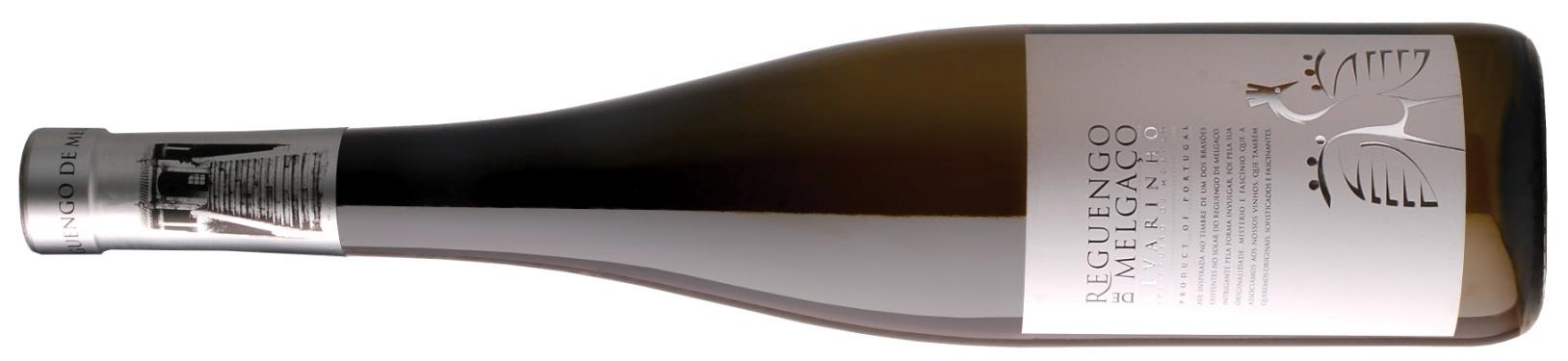
| Winery: | Reguengo de Melgaco |
| Grape Type: | Albarino |
| Vintage: | 2020 |
| Bottle Size: | 750 ml |

Carmo Vinhos Madeira Verdejo 10 Yr an amber medium dry wine with medium body and acidity. Rich aroma and flavor of dried fruits, nuts and caramel, showing a vibrant character, lengthy and well balanced. An excellent aperitif or as an accompaniment to pates.

Ossian Capitel Verdejo is made from 100% Verdejo.
Ossian Capital represents a particular expression of very old Verdejo vines, taking its potential far finesse, elegance and longevity. It is made in selected years with a selection of extraordinary grapes.
Color: Old golden yellow color with greenish reflections.
Aromas: Surprisingly nuanced and profound.
Flavors: Fresh, full and very light.
Review:
"The 2020 Capitel is pure Verdejo from the oldest vines from the Peña Aguda vineyard in the village of Nieva on slate soils. This is the last vineyard to be bottled and has higher alcohol (14%) than the rest of the vineyards despite now harvesting earlier. The wine has a different aromatic profile but getting closer to the style of Ossian, less opulent than in the past, with more energy, quite fruit-driven with some exotic notes reminiscent of banana skin. The whole clusters were pressed and the juice put to ferment in barrel where the wine matured with the lees and, starting this year, without bâtonnage, because they feel the wines have enough volume and stirring the lees can bring more oxidation to the wine. 2,500 bottles produced. - Luis GUTIERREZ"
- Robert Parker's Wine Advocate (January 31st 2023), 93+ pts

Ossian Quintaluna Verdejo is made from 100% Verdejo
Quintaluna is a young wine that is made exclusively from Verdejo in the province of Segovia. 60% is very old grape: pre-phylloxera (ungrafted). 40% is made of very young grapes on trellises, grown certified organic, with low yields. The key to success for the Verdejo grape is held in the soil. Ideal soil has a high content of sand and pebbles of different sizes. Some have higher proportions of clay and others have significant proportions of clay and limestone. As the pebbles and sand allow for good drainage, the clay holds enough moisture to allow the vines to thrive.
The color is a straw yellow with greenish reflections. On the nose, you will find aromas of white flowers, stone fruit (peach), and citrus (lemon, mandarin). It also displays tropical fruit aromas. The palate is complex. Natural acidity is evident in the freshness and length on the palate. Almond and ripe fruit flavors are found in the mid-palate with fresh grass and citrus on the finish.
It pairs wells with all kinds of appetizers, entrees and salads.
Review:
"The 2020 Quintaluna is pure Verdejo from small plots on sandy soils in the province of Segovia, fermented in stainless steel with indigenous yeasts. They still use grapes from external suppliers but are working toward using 100% their own grapes (which they might achieve in 2023); therefore, the wine is not certified organic, because some of the vineyards from the growers are not certified. It has a balsamic nose reminiscent of bay leaf, dried yellow flowers, chamomile and pollen intermixed with pit fruit. It has a dry palate and a chalky texture, with balance and finesse, with moderate ripeness and 13.5% alcohol. 110,000 bottles. - Luis GUTIERREZ"
- Robert Parker's Wine Advocate (January 31st 2023), 92 pts

A barrel fermented, old vines Verdejo made in a style different from what we typically see in this white varietal. It has a remarkable complexity, resulting in the smoothness and depth of a high-end white. Very suitable for cellaring.
Golden yellow color with greenish reflections. Complex, toasty aromas of nuts & dried fruit. Large, creamy, spicy, balanced and voluminous.
Rice with fish, cooked seafood, grilled seafood, baked white fish.
"The eponymous 2020 Ossian was produced with Verdejo grapes from old, organically farmed vines around the village of Nieva (Segovia), a zone where phylloxera didn't reach. They consider 2020 their finest vintage to date, with a big change from 2018 and when they have achieved a much better understanding of their vineyards. It has notes of pit fruit and sweet spices, with good weight on the palate, moderate alcohol (13.5%) and ripeness and good freshness and balance. It's serious and with potential to develop in bottle. 80,000 bottles produced. - Luis GUTIERREZ"
- Robert Parker's Wine Advocate (January 31st 2023), 94 pts

Lima Granite Vinho Verde is made from 100 percent Loureiro.
This special project from the Adega Ponte de Lima highlights the diverse soils of the Vinho Verde region. Made from 100% Loureiro grapes, both the Granite and Schist varieties boast a crisp acidity and expressive minerality.
Lima Vinho Verde Granite displays intense floral aromas with great freshness and more accentuated minerality.
Sushi, fish, seafood, cheeses and salads.

Lima Vinho Verde Rose is made from 75% Souzao, 15% Borraçal and 10% Espadeiro.
It is a blend of 75% Souzao (same as Vinhao), 15% Borraçal (which is also known as Caino Tinto) and 10% Espadeiro:
Souzão (or Sousão or Vinhão) is a Portuguese wine grape that is used in the production of port wine. While originating in the Minho regions, it is used primarily in Australia, California and South Africa. In Portugal, it is also an authorized planting in the Douro, and Dão-Lafões area (Vinho do Dão). The grape is known for the deep color it produces in a wine as well as its coarse and raisiny taste.
Caiño tinto (also known as Borraçal) is a red Galician wine grape variety that is also grown in Portugal's Vinho Verde wine region where it is known as Borraçal. In Spain, it is a permitted variety in the Denominación de Origens (DOs) of Rías Baixas and Ribeiro where it produces highly perfumed wines with noticeable tartness and high acidity.
Espadeiro is a red Portuguese wine grape planted primarily in the Minho region for making Vinho Verde. It is also grown across the border, in Spain, in Galicia where it is used to make light bodied wines.
Fresh with an intense fruity character. Very mineral wine with notes of apple, plums, peach, combined with a still dominant citric profile. Magnificent volume with an elegant and delicious unctuousness. Fantastic finish, long and aromatic. Very good balance between acidity and dryness/sweetness although the wine almost doesn’t have residual sugar.
Alcohol content: 12.5 % Vol.
pH: 3,41
Total Acidity: 6 g/L tartaric acid
Volatile Acidity: 0,36 g/L acetic acid
Average age of the vines is 20 years old, all planted on alluvium (stream deposit) consisting in gravelly and sandy soils.
Grapes were transported to the winery immediately after the harvest in small size boxes. They were smoothly pressed before fermentation in stainless-steel tanks, with temperature control. Selected yeasts were added for the fermentation.
Fish and seafood are strongly associated to the white wine consumption. With Reguengo de Melgaço Alvarinho wines it’s not different. They usually make wonderful pairings with fish and seafood main courses.
However, other pairings are also recommended.
Salads, fruit, white meats, are also great companions for Reguengo de Melgaço Alvarinhos. The volume, attack and intense flavour of these wines allow even more unconventional pairings for white wine, such as heavier meat plates.
Review:
"The Cardadeiro family restored this estate in the 1990s, planting 22 acres of alvarinho along the Minho River on the border with Spain’s Galicia, on a property believed to have been built by Rainha Dona Leonor and owned by the Portuguese royal family in the 1500s. In 2020, the site lived up to its heritage with a beautiful wine, a river of fruit, flowers, nuts and stones—the crisp detail of a peach just coming into ripeness, the breeziness of apple blossoms, the savor of raw hazelnut and jasmine tea. The crunch of granitic acidity gives all that flavor a mineral drive, lasting on the breath, suited to five, maybe ten years of age. - J.G."
- Wine & Spirits Magazine (October 2022), 94 pts
Reguengo de Melgaço means land of the royalty. The name comes from the fact that the estate belonged to the Portuguese royal family on the XVI century from where it got its name.
Date Founded: 1998
Reguengo de Melgaço means land of the royalty. The name comes from the fact that the estate belonged to the Portuguese royal family on the XVI century.
As the property once belonged to aristocratic feudal families, the Melgaço population used to pay the tithe based on its production. This is the reason why you can find some very large “lagares” and “canastros” existing in the Quinta.

Robert Mondavi Winery Napa Red Blend is made from 74% Cabernet Sauvignon, 13% Cabernet Franc, 9% Merlot, 4% Petit Verdot.
Robert Mondavi’s vision was to elevate Napa to the world stage. In celebration of his achievement, our Napa Tier wines are sourced from distinctive vineyards throughout the Napa Valley and truly emulate a classic Napa Valley style.
Nearly half of this year’s blend is sourced from the deep, well-drained soils of Oakville, which provides gorgeously dark, supple wines with fine tannins. Stags Leap District, Oak Knoll, Yountville, and Rutherford also find their place in the bottle, with the varying mesoclimates and soils of these vineyards integrating seamlessly into a 100% Napa Valley blend.
Review:
"Dominated by 80% Cabernet Sauvignon with smaller percentages of the other Bordeaux red grapes, this wine speaks of heritage and prestige. Broad, silky, and powerful, the graceful liquid is enhanced by dark chocolate, white pepper, black plum, violets, and sweet earth."
-Meridith May, Tasting Panel, January/February 2023 Pts. Tasting Panel

Sequentis is a limited-edition Reserve Merlot that advances our devotion to Bordeaux varieties. The remarkable 2021 vintage opens with heady aromas of rose petal, plum, blackberry jam, cooked strawberry, ripe black cherry and baking spice. A medium-bodied mouthfeel floods the senses with extraordinary complexity, including layered flavors of pomegranate, raspberry, blackberry, coconut, tobacco and vanilla. Balanced acidity and fine tannins converge on a smooth, velvety finish.
Review:
The Daou hallmark of toasted pecan and walnut aromas show on the nose of this Merlot, which also offers ripe berry and toasted herb touches. The palate carries the savory, nutty tone as well, with dark cherry providing fruit and firm tannins holding strong. Drink now-2035.
-Wine Enthusiast 93 Points