
" We don't sell the wine without touching the vine "
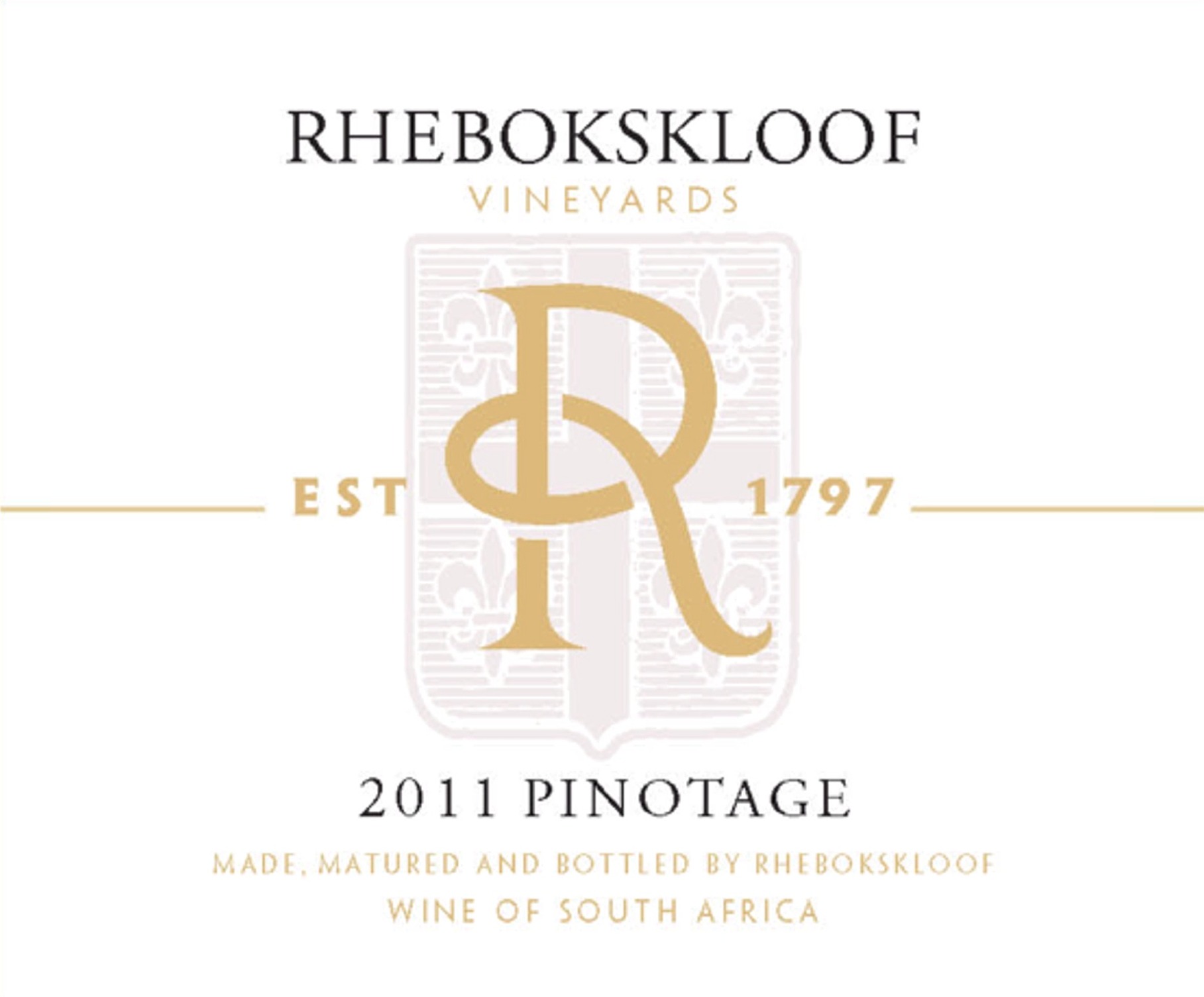
| Country: | South Africa |
| Region: | Paarl Valley |
| Winery: | Rhebokskloof |
| Grape Type: | Pinotage |
| Vintage: | 2011 |
| Bottle Size: | 750 ml |

All older vintage wines have been purchased from a single collectors cellar. Pictures can be requested before shipment.
All older vintage wines have been purchased from a single collectors cellar. Pictures can be requested before shipment.
Babylons Peak Pinotage is made from 100 percent Pinotage.
Babylon's Peak winery, situated on the highest weathered granite slopes of the Paardeberg Mountain, is privately owned by the Basson family who has passed down the tradition, passion and art of winemaking over four generations. Predominantly low-yield dryland bushvines are selected to produce these excellent wines with distinctive character.
Dark red color, with ripe plums and mocha on the nose. Dark fruit followed by spice on the palate. A well balanced wine with smooth integrated tannins.
The Pinotage is dryland bushvines, planted on the highest south-east facing granite slopes on the farm. Due to its unique terroir, this vineyard ripens slowly over a very long period. This results in very dark color, soft tannins and good flavor compounds. The baboons normally harvest their quantity first and we pick the rest.
The grapes were harvested by hand at 25,6°B.and destalked only. No crushing was done. Cold maceration was done before fermentation started in open fermenters. The grapes fermented between 24-26°C for 5-7 days, after which the wine was taken to barrels where it went through malolactic fermentation. After malolactic fermentation was completed, the wine spent 12 months in 225 liter French oak barrels until bottling.
Pairs with lamb, bobotie and braaied red meat.
Babylons Peak Pinotage is made from 100 percent Pinotage.
Babylon's Peak winery, situated on the highest weathered granite slopes of the Paardeberg Mountain, is privately owned by the Basson family who has passed down the tradition, passion and art of winemaking over four generations. Predominantly low-yield dryland bushvines are selected to produce these excellent wines with distinctive character.
Dark red color, with ripe plums and mocha on the nose. Dark fruit followed by spice on the palate. A well balanced wine with smooth integrated tannins.
The Pinotage is dryland bushvines, planted on the highest south-east facing granite slopes on the farm. Due to its unique terroir, this vineyard ripens slowly over a very long period. This results in very dark color, soft tannins and good flavor compounds. The baboons normally harvest their quantity first and we pick the rest.
The grapes were harvested by hand at 25,6°B.and destalked only. No crushing was done. Cold maceration was done before fermentation started in open fermenters. The grapes fermented between 24-26°C for 5-7 days, after which the wine was taken to barrels where it went through malolactic fermentation. After malolactic fermentation was completed, the wine spent 12 months in 225 liter French oak barrels until bottling.
Pairs with lamb, bobotie and braaied red meat.
Indwe Pinotage Coastal Region is made from 100 percent Pinotage.
Pinotage is a true South African grape variety, Our signature grape smilar to the Blue Crane being our national bird. Indwe Pinotage grapes are meticulously sourced from our grape producers along the Coastal region of the Western Cape ensuring complexity, depth and purity of fruit. The wine is layered with sweet cherry notes, and subtle hints of mocha and vanilla flavors.
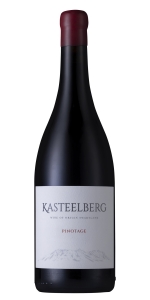
Kasteelberg Pinotage is made from 100 percent Pinotage.
The Kasteelberg range of wines, celebrates the discovery of Riebeek and the Kasteelberg mountains in 1661. Kasteelberg stands sentinal over the fertile valley below. From the slopes of the mountians, hand-selected grapes are expertly crafted with care to produce rare and expressive wines. The Kasteelberg range truly is the pinnacle of our Winemakers'art.
Harvested from an exceptional vineyard in the heart of the Swartland, the Kasteelberg Pinotage is characterised as a well-structured wine, offering layers of flavours and aromas. Seductive rich plum flavors with notes of captivating dark chocolate follows through in a smooth and lingering palate of intense flavors integrated with the freshness of ripened cherries.
Grapes used for this wine are coming from vines that are 10 years old in average. It is also sustainable farming used for this plot.
The grapes were cold-soaked for 3 days at 10°C to extract as much color as possible before fermentation. After cold-soaking, the temperature is increased to around 18°C and yeast is added to start fermentation. Regular pump-overs are done to enhance skin contact which improves the flavor and color profiles. Fermentation temperature between 22 - 26°C. Fermented dry on skins, pressed. After malolactic fermentation, wine is transferred to barrels. French oak barrels, 2nd, 3rd and 4th fill barrels for 12 months.The grapes were cold-soaked for 3 days at 10°C to extract as much color as possible before fermentation. After cold-soaking, the temperature is increased to around 18°C and yeast is added to start fermentation. Regular pump-overs are done to enhance skin contact which improves the flavor and color profiles. Fermentation temperature between 22 - 26°C. Fermented dry on skins, pressed. After malolactic fermentation, wine is transferred to barrels. French oak barrels, 2nd, 3rd and 4th fill barrels for 12 months.
Balling: 26°B at harvest
Fermentation: Fermented in stainless steel tanks on the skins
with regular pump overs. Pressed at 8°B
Oaking: 60% new French oak barrels and 40% 2nd fill barrels.
Aging: Matured in oak for 14 months.
This wine shows complex, dark fruit flavors with notes of blackberry, prunes and hints of soft oak spices. The ripe, rounded tannins fill the palate and nuances of dried fruit flavours linger on the aftertaste
The Rhebokskloof Estate
Rhebokskloof dates back to 19 August 1692, when Simon van der Stel, then governor of the Cape, awarded a free grant of land to Dirk van Schalkwyk. The initial large piece of land was divided into six different farms between the First and Second World Wars, and sold off.
The original farm was only reclaimed in 1986, when new owners bought back the other five farms. An early dwelling on the farm built around 1692 has since been restored as the main homestead. A later dwelling is dated 1797, and is built in the traditional Cape Dutch style, and has also been restored to its former splendor.
Rhebokskloof’s current owners bought the estate in 2006.
The Rhebokskloof Cellar and the Winemaker
Rhebokskloof’s winemaker, Rolanie Lotz, studied cellar technology at Elsenburg Agricultural College in Stellenbosch and joined Rhebokskloof in 2007 after being winemaker at Simonsvlei for four years. Her career highlight thus far has been winning a gold medal and fifth place overall for Rhebokskloof 2007 Black Marble Syrah at the 2010 Syrah du Monde wine competition in France. Rolanie’s passion for Shiraz and her unique winemaking skills is reflected in our award-winning wines.
Rhebokskloof’s cellar makes use of traditional techniques when creating wine, forgoing extensive technology for time-trusted approaches that yields exceptional wine. During the pump-over process in harvest time, some of the grapes are pressed by hand.
The cellar is focused on biodiversity and creates an eco-friendly culture through initiatives like using ‘tree-free’ wine labels. Rhebokskloof is the first South African wine estate to use labels made from 100% renewable sugar cane fibre that are completely wood-free.
The Rhebokskloof Vineyards
Karin Louw is Rhebokskloof’s viticulturist. She studied cellar technology at Elsenburg Agricultural College in Stellenbosch and then gained experience abroad, working in France and New Zealand. She has been working at Rhebokskloof since 2007, first as assistant winemaker and since 2010 as viticulturist. One of her career highlights at Rhebokskloof was being instrumental in the vineyard replanting program on the estate.
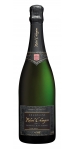
This is a 9 liter imperial also called a Salmanazar .
Roland Champion Champagne Blanc de Blanc Grand Cru 2014 is made from 100% Grand Cru Chardonnay from the chalky soils of Chouilly.
This Champagne is full of elegance and finesse. Very complex nose, with a bouquet of aromas dominated by honey, brioche and notes of dried fruits, hazelnuts and sweets. Perfectly matured.
Manual harvest; then pressing immediately to avoid oxidation & preserve quality. Free run juice only. Aged six years on the lees.
It matches magnificently with foie gras!
Review:
"Based in Chouilly on the Côte des Blancs, it is obvious this producer will have a Blanc de Blancs Champagne. And very good it is, with some age after six years on lees while still having freshness, crisp acidity and a tight, steely edge. The bottling will benefit from further aging, and it will be at its best from 2022. - ROGER VOSS"
- Wine Enthusiast (December 2020), 92 pt
-75x150.jpg "Maranones Garnacha Vinos de Madrid Sierra Gredos 2022")
“Marañones is so to say our signature vine. This is why the winery was named after this location.
It is part of the mountain at 800 m in altitude, oriented North. We find there the three types of granite of San Martin: the white granite, the brown and the pink. Each vineyard at Marañones has a different soil. Some are on a hill. Others are more towards the plains.
In this wine we wish to convey the Marañones area so representative of the whole winery. this is why we make this wine from the great Garnacha grape. We use a mix of vines since it is not a Parcela wine, which would be much more delicate and of more limited production.
The 100 percent Garnacha expresses itself fully, both in the nose and in the mouth, with flavours of blackthorn, a sensation of fleshy fruit retaining a slightly crispy texture. Then comes a full silkiness, with the granularity of these granite soils rich in quartz. That nugget of quartz is noticeable in the texture, length, fineness, elegance and the floral element of the wine.”
bright, ruby Grenache with wild herb, flower and crunchy red fruit flavors. Sharp tannins add structure to this full-bodied wine.



