
" We don't sell the wine without touching the vine "
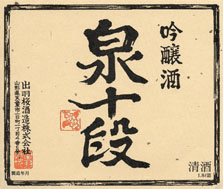
| Country: | Japan |
| Region: | Yamagata |
| Winery: | Dewazakura Brewing Company |
| Grape Type: | Miyamanishiki (kojimai) (Sake) |
| Vintage: | NV |
| Bottle Size: | 720 ml |

Savory nuances of toasted quinoa, banana bread, and nutmeg are present in the nose. On the palate, this sake is layered, lifted and complex, with flavors of plantain, dried cranberry, nougat, white Mushroom and almond.
POLISHING RATIO: 60%
ALCOHOL: 15-16%
SMV +/-: +3.0
RICE KAKE: 50% WAKAMIZU 50% LOCALLY FARMED JAPANESE RICE
YEAST STRAIN: PROPRIETARY

Sake By Kysela has been a project in the making for three years now. In the end, we selected a Sake made from the famous Yamada Nishiki rice produced in the Southern Prefecture of Shimane. Flavorful, rich, and clean; this sake is best as an aperitif or with seafood like fluke, dover sole or halibut. Kanpai!!!

Rice milling: 60%
Rice varietal: Iwai (Only available in Kyoto)
Alcohol: 15%
Sake meter value: +3.0
Acidity: 1.3
Tasting Notes: --------
Eikun sake uses water from a source called "Fusui", rated as one of the top 100 sources of water in Japan. This water source is located just south of the ancient Japanese, and still cultural capital of Japan, Kyoto.
Review:
"Clear with a platinum blue cast. Aromas of coconut milk, melon, pear and rice pudding with a with a supple, dry-yet-fruity medium body and a vanilla, apple, and pepper accented finish. A robust and lively sake that will sing with spicy Asian cuisine."
- Beverage Testing Institute (July 2nd 2014), 91 pts

Sake Eikun Junmai Ginjo Water Lords is made with Iwai rice.
Eikun sake uses water from a source called "Fusui", rated as one of the top 100 sources of water in Japan. This water source is located just south of the ancient Japanese, and still cultural capital of Japan, Kyoto.
Aromas of macadamia oatmeal cookie, spicy zucchini bread, and vanilla cream with a satiny fruity-yet-dry medium-to-full body and a layered, banana custard, jicama, salted whole nut, apple, and radish nuanced finish. A Wonderfully vibrant and flavorful sake.-Beverage Tasting Institute 94 points (Exceptional)
RATING: 94 points (Exceptional)
CATEGORY: Junmai Ginjo Sake, Sake
ALCOHOL BY VOLUME: 15.3%
TASTING LOCATION: In Our Chicago Tasting Room
TASTING DATE: Dec-05-2012
WINE ID: 200768

Woodsy honeycomb, nutshell, and mushroom patch aromas with a satiny fruity-yet-dry medium-to-full body and a delicate savory mushroom stock, chestnut, and golden beet driven finish. A fine choice for tempura. 91 Points -Beverage Tasting Institute
RATING: 91 points (Exceptional)
CATEGORY: Junmai Ginjo Sake, Sake
ALCOHOL BY VOLUME: 15.4%
TASTING LOCATION: In Our Chicago Tasting Room
TASTING DATE: Dec-05-2012
WINE ID: 200767

TASTING NOTES:
This is a classic, delicious Honjozo with crimini mushroom, almonds and lilac aromas. The first sip of this sake is full of stone fruit and minerals complimented by notes of caramel, cocoa and almond and finishes with plenty of umami.
POLISHING RATIO: 60%
ALCOHOL: 16-17%
SMV +/-: +3.0
ACIDITY: 1.6
RICE KOJI: JAPANESE RICE 100%
RICE KAKE: JAPANESE RICE 100%
YEAST STRAIN: KYOKAI
FOOD PAIRINGS: Chinese Food, One Pot dishes like Beef Stew.
CHEESE PAIRINGS: Foggy Morning, Prima Donna, Domaine de Village
Sake Dewazakura Izumi Judan Tenth Degree is a martini-lover's sake: clear, high-octane and bone dry, with a hint of juniper reminiscent of Tanquerary. No other ginjo combines dryness (+12 on the sake scale) and edginess (36 proof) to such exhilarating effect. A peerless sake with toro and hamachi or serve with salmon roe, caviar and cocktail canapes. Drink well-chilled after forty minutes in the freezer.
Rice Variety: Miyamanishiki
Polishing Ratio: 50%
Alcohol Percentage: 17.5%
Sake Meter Value: +12.0
Acidity: 1.4
Yeast Type: Yamagata YK-0107
Dewazakura Brewing Company
Many sake enthusiasts are surprised to learn that twenty-five years ago ginjo labels were hard to find in Japan. In those days, people were still drinking the cloyingly sweet sakes the breweries had been churning out since the ’50s; no one thought that customers would actually pay more for the quality ginjo and daiginjo sakes brewed in limited amounts for competitions.
In 1981, Dewazakura Brewing Company changed that with the release of "Oka," an affordably priced ginjo label with a polishing ratio of 50 percent and a lovely floral aroma. It was light, crisp and delightful. It was made to be drunk cold. Soon other breweries introduced their own ginjo labels. And so began one of the most creative periods in the history of sake, earning for Dewazakura the admiration and respect of even its most ardent competitors.
What made the brewery stand out was a drive for innovation. Dewazakura was not a wealthy brewery, or a long-established one, but they were open to change. When the opportunity arose in the years after the war to invite research technicians in from the National Research Institute of Brewing, they jumped at the chance. Drawing on the knowledge and skill of Hideo Abe, a former Institute research advisor, they put new ideas into practice without hesitation.
By 1991, Dewazakura had perfected its cold storage technique, aging freshly pressed sake at 28 degrees Fahrenheit to keep it as aromatic and flavorful as possible until bottling. In 1996 it introduced "Dewasansan," brewed from a new Yamagata rice strain of the same name, another hit which opened the way for other prefectures to introduce highly specific regional labels. This year, for the first time in history, Yamagata breweries received more gold medals than any other prefecture at the 2004 Japan National Sake Appraisal, an achievement due in no small measure to the pioneering efforts of the Dewazakura Brewing Company.
Woodsy honeycomb, nutshell, and mushroom patch aromas with a satiny fruity-yet-dry medium-to-full body and a delicate savory mushroom stock, chestnut, and golden beet driven finish. A fine choice for tempura. 91 Points -Beverage Tasting Institute
RATING: 91 points (Exceptional)
CATEGORY: Junmai Ginjo Sake, Sake
ALCOHOL BY VOLUME: 15.4%
TASTING LOCATION: In Our Chicago Tasting Room
TASTING DATE: Dec-05-2012
WINE ID: 200767

Hailing from the newly established West Sonoma Coast AVA, this inaugural release displays deep ruby in tint with Bing cherry, wild mountain berry, and an ethereal note of damp earth. Vibrant red and blue fruits dance on the palate, accompanied by oyster shell and a stony tension in character with its coastal influences. A silky texture and uplifted acidity add a sophistication and intensity to this wine, as well as a remarkably long finish.
Review:
The 2021 Pinot Noir (West Sonoma Coast), a new wine in this range, is lights out. Rich, ample and bold, the 2021 races across palate with layers of purplish fruit, lavender, spice, menthol, licorice and spice. A dollop of stems adds nuance, but without dominating the overall balance. There's terrific acidity and structure to play off the natural fruit richness that is such a distinctive attribute of the best sites in the appellation.
-Vinous 96 Points

The 2022 Jayson Chardonnay achieves a beautiful equilibrium of richness, buoyancy, and intricacy. Aromas of sweet Meyer lemon, crushedalmond, and grilled pineapple lead to a concentrated palate of bright lemon curd and orange blossom honey underscored by fresh pear andtoasted nuttiness with a hint of baking spice. The texture is classic Pahlmeyer, plush and detailed, while the presence of bright Carneros fruitbrings energy and litheness. Flavors are lifted and extended on a spine of bright acidity, the lingering finish striking an ideal balance betweenopulence and mouthwatering freshness.
Review:
This generous, buttery and spicy wine is sourced from several parts of Napa Valley and brings gorgeous richness to the nose, palate and finish. Elements of brown butter, marzipan, toasted almonds and poached pears flood the flavors, with vanilla bean and a touch of sweet coconut. Barrel fermented in 36% new French oak, it’s full-bodied and nicely viscous in texture.
James Suckling 93 Points



