
" We don't sell the wine without touching the vine "
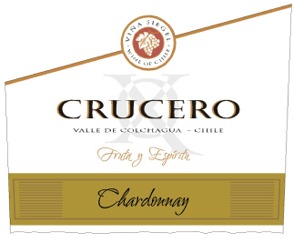
| Country: | Chile |
| Region: | Colchagua Valley |
| Winery: | Siegel |
| Grape Type: | Chardonnay |
| Vintage: | 2013 |
| Bottle Size: | 750 ml |
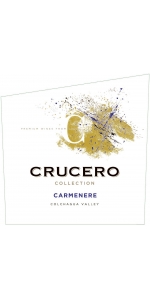
Siegel Crucero Collection Carmenere is made from 100 percent Carmenere.
Pre-fermenting maceration at 15ºC for five days. Fermentation between 28º to 30ºC to get more color and structure for our Siegel Crucero Carmenere . Four light pump-over are done daily. Post fermenting maceration for about two weeks. Then the juice was separated from the skins, which were pressed to extract more juice. 100% malolactic fermentation.
Aged 25% in American oak barrels for 3 months.
Fine deep color, with average plus density. A brooding quite intense nose: earthy, prunes and pronounced touch of violets. Entry quite firm and clear cut, with fine acidity and good fruit that adds supleness. Excellent balance. Very good with lots of character.
Pairs well with chicken, pasta, red meats, cheeses
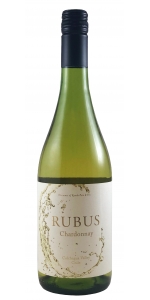
Rubus Chardonnay Colchagua Valley is made from 100 percent Chardonnay.
Attractive yellow color with some green tones. Its intense varietal character reminds one ripe fruits like pineapple, with notes of melon and honey well harmonized with oak. In the mouth it is full, rich and buttery.
Grapes are harvested in the morning in order to avoid high temperatures.
At the winery, the grapes are gently pressed.
Alcoholic fermentation is held between 15º and 16º Celsius.
Then, 25% of the wine goes into American Oak barrels for 3 months.
After this, the blend is made, clarified, cold stabilized and filtered. Right before bottling, the wine goes through an on-line filtration system (plate and sterile membrane) to ensure microbiological stability
As far as the food pairing, it is delicious with pasta, fish, seafood and mild cheeses. It is also delicious on its own as an aperitif.
Rubus Chardonnay Colchagua Valley is made from 100 percent Chardonnay.
Attractive yellow color with some green tones. Its intense varietal character reminds one ripe fruits like pineapple, with notes of melon and honey well harmonized with oak. In the mouth it is full, rich and buttery.
Grapes are harvested in the morning in order to avoid high temperatures.
At the winery, the grapes are gently pressed.
Alcoholic fermentation is held between 15º and 16º Celsius.
Then, 25% of the wine goes into American Oak barrels for 3 months.
After this, the blend is made, clarified, cold stabilized and filtered. Right before bottling, the wine goes through an on-line filtration system (plate and sterile membrane) to ensure microbiological stability
As far as the food pairing, it is delicious with pasta, fish, seafood and mild cheeses. It is also delicious on its own as an aperitif.
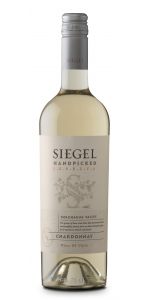
Siegel Hand-picked Selection Chardonnay is made from 100 percent Chardonnay.
The handpicked selection Reserva wines are born out of a strong desire to offer the very best expressions of terroir from El Crucero vineyard, located at 360 meters above sea level. These carefully handpicked grapes deliver superb varietal characteristics and exceptionally well-balanced fruit concentration. The manual harvest behind the handpicked Reserva Wines, a stage prior to a second triage, highlights Siegel's commitment to delivering uniquely hancrafted wines from Chile.
This handpicked Chardonnay shows a pale yellow color. On the nose, it presents notes of tropical fruits like mango. On the palate, it is well-balanced, with a pleasant acidity and a persistent finish.
Pairs best with white meats and fish, especially salmon.
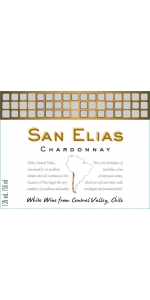
Siegel San Elias Chardonnay is made from 100 percent Chardonnay.
This Chardonnay has a light yellow color with green highlights. The nose shows fresh and intense tropical fruit aromas of pineapple, citrus, herbs and a touch of honey. On the palate it is lush, smooth and well-balanced with good acidity and lovely tropical fruit flavors.
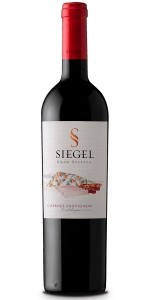
Siegel Gran Reserva Cabernet Sauvignon is made from 100 percent Cabernet Sauvignon.
Pre-fermentative cold maceration for 5 days, with alcoholic fermentation occuring at 27-29 degrees C to better extract polyphenols from the wine. Post-fermentative maceration for 2 to 3 weeks. Once the wine has been blended it is smoothly clarified. Aged in French oak barrels for 10 to 12 months.
The grapes for the Gran Reserva wines are the product of a careful selection of Siegel's best vineyards in the Colchagua Valley, harvested by hand, and revealing a strong expression of the land.
Deep ruby red with aromas of cassis, red fruits, black pepper, black cherries, tobacco, cinnamon and chocolate. On the palate it is highly concentrated with juicy notes of red fruits and spices. Structured & complex from the oak aging.
Serve with red meat, braised stews, grilled pork and flavorful cheeses.
Siegel Crucero Chardonnay Colchagua Valley 2013 is made from 100 percent Chardonnay.
Attractive yellow color with some green tones. Its intense varietal character evokes ripe citrus fruits, with floral and honeyed tones along with well integrated wood. In the mouth it is rich, round and fruity with some creamy notes.
The Vina Siegel Crucero Estate
Alberto Siegel was born in Santiago in 1946, the third generation in Chile of an Austrian family. His grandfather was an Austrian architect that built some very important and traditional buildings in downtown Santiago, at the beginning of the 20th century, including the Chilean Federal Reserve.
His father, Don Germán, was a viticulturist that spent most of his career in charge of Viña San Pedro’s vineyards near the town of Molina, 140 miles south of Santiago. There Alberto grew up, literally in the middle of the vines. It was not a surprise when he decided to study Agronomy and specialize in winemaking at the Universidad Católica in Santiago.
After finishing high school, he spent a year working in wineries in Germany, and upon his return in 1971, he joined the German company Bayer. His job was to sell fertilizers to farm owners in the Colchagua area, 100 miles south of Santiago. Through this job he got to know almost every land owner, most of which were grape growers and wine producers.
A few years later and as a natural consequence, he started to act as a wine and grape broker, selling the production of small owners to the big Chilean wineries. He established Sociedad La Laguna, and he soon became the most important Chilean broker in this field, a position that he holds today by far. There is hardly any Chilean person or company involved in the wine business that has not dealt with Alberto Siegel at least once.
In parallel, and together with his father, Alberto founded Viña Siegel in 1980. They started planting vineyards in Colchagua and building the Winery in Santa Cruz. When Don Germán died in 1998, Alberto became the owner, together with his family. In the beginning, Viña Siegel only sold bulk wines to the biggest Chilean wineries, like Concha y Toro, San Pedro and Santa Rita. In 1997, Alberto decided to enter the bottled wines business and made the necessary investments to go ahead with this project.
Today, the winery has a capacity of over 3 million gallons and the company owns over 1,850 acres of vineyards in Colchagua. Their wine cellar has state of the art technology, such as vertical pneumatic presses, vacuum filters, and stainless steel tanks with total temperature control, for both cooling and heating. Viña Siegel Winery is still a family operation, with Alberto Siegel as chairman and chief winemaker. The winery has two consultants in enological matters.
The Vina Siegel Crucero Vineyard
The varieties of grapes grown are Cabernet Sauvignon, Merlot, Carménère, Syrah, Chardonnay and Sauvignon Blanc, with other new varieties being added as markets demand. Viña Siegel is currently working with terroir consultant Pedro Parra to design a new site in Los Lingues, which will be planted with several new varietals, including Carignan, Grenache, and Mourvedre. The winery produces a range of varietal wines, along with reserve wines that highlight the quality of the grapevines born in this valley. The Colchagua Valley is truly a synthesis of the country’s way of life and wine has been produced here since time out of mind. This area, which has deservedly been raised to the category of estate bottling in wine making, has maintained its prestige due to the great quality of its wines. One of its noted symbols is its high quality Cabernet Sauvignons, and its red wines in general. Its variety of soils and climatic variations, some warmer, some cooler, have given the region innumerable attributes for grapevine cultivation.
Pierinvaletta Arneis Langhe Hills is made from 100% Arneis
No oak. Aged on the lees for 4 months in Stainless Steel Tan
Fresh, fruity, mineral.
Pierin Valetta is one of the ancestor of the Family and these wines are dedicated to him as we would like to thank him for giving us vineyards that reach up to 70 years old.
Made from 20 years old vines planted on Limestone soils.
No Oak. The wine was aged on the lees for 4 months in Stainless Steel Tanks.
Wine was slightly filtered before bottling.
'Belle Côte', French for “Beautiful Slope”, was named by Sir Peter after the famous ski run in Courchevel, France. The oldest of the four Knights Valley Estate Chardonnay vineyards, ‘Belle Côte’ consistently exemplifies the potential of crafting exceptionally high-quality Chardonnay from our mountain vineyards. Planted at 1,700 to 1,800 feet (518 to 549 meters), Belle Côte has a southeastern exposure and a western border of native trees, which shelter the vines from the hot afternoon sun. These unique attributes create a naturally cool microclimate that provides an extended growing period and slow-ripening fruit, resulting in a later picking schedule that often continues into October (two to three weeks longer than most Chardonnay vineyards in Napa and Sonoma Counties).
The combination of a wet winter with significant rains in December through March and cool weather delayed budbreak nearly a month. Flowering and fruit set were also pushed back and the weather during the later flowering was favorable resulting in decent fruit set and slightly above average yields for the Chardonnay vineyards—a marked improvement over the record-low yielding 2022 vintage. The growing season was temperate without major heat spikes allowing the berries to hold onto their acidity which carried through into the wines. Harvest was almost a month later than normal with the last Belle Côte block coming in on November 2nd.
As the oldest of the four Peter Michael Winery estate Chardonnay blocks, 'Belle Côte' exemplifies the consistent quality of Chardonnay these mountain vineyards produce. Due to the naturally cool climate of the site’s high elevation, and mitigated exposure to the hot afternoon sun by its southeastern exposure and a stand of trees on its western border, the vines are allowed to slowly ripen. The growing season for Belle Côte typically extends into October, two to three weeks longer than most Chardonnay vineyards in Napa and Sonoma Counties.
With highly expressive aromatics of orange blossom, jasmine, candied orange peel, and rose petal, the 2023 'Belle Côte' showcases its unique terroir and thirty-three-year-old vines with a rich, creamy entry, dense, broad, juicy mid-palate and a lengthy, refined finish. There is a seamless quality to this wine that matches power, gras, and intensity with structure and weightlessness. The 2023 'Belle Côte' can be enjoyed in its youth or after many years of cellaring.
Review:
This extraordinary estate-grown wine from a great vintage is super vibrant, energized and tangy, with vital acidity supporting luscious ripe pear and apple flavors on a silky texture. Can't think of anything it lacks. Seamless, layered, yet structured and fresh, boding well for longer-term aging. It has a melts-in-the-mouth quality and an extra long finish. Drinkable now and best from 2030.
-James Suckling 100 Points



