" We don't sell the wine without touching the vine "
| Country: | Chile |
| Region: | Colchagua Valley |
| Winery: | Siegel |
| Grape Types: | Chardonnay Viognier |
| Vintage: | 2015 |
| Bottle Size: | 750 ml |

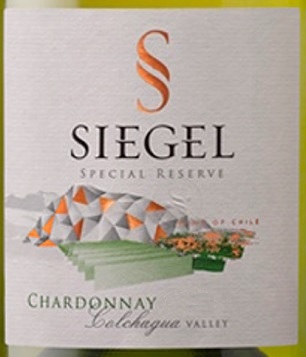
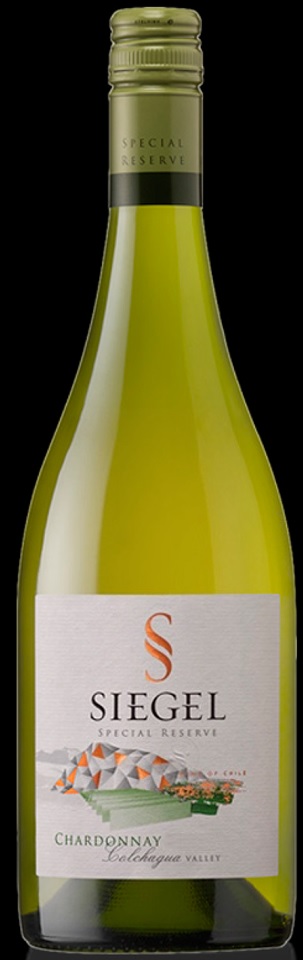
Siegel Special Reserve Chardonnay is made from 100 percent Chardonnay.
This Chardonnay has a pale yellow color. On the nose is is complex with citrus and tropical fruit aromas balanced with notes from the oak aging. On the palate it has good acidity with a long finish.
VINIFICATION: Alcoholic fermentation occurs at 16-17 degrees C. When the alcoholic finishes part of the wine is kept on a pump-over program.
FINNING AND FILTRATION: Once the wine has been blended it is clarified and then undergoes cold stablisation and is later filtered through clay.
AGING: Aged in French oak barrels for 6 months.
Pairs well with fish like Tilapia, salmon and white meats.

Siegel Special Reserve Cabernet Sauvignon is made from 100 percent Cabernet Sauvignon.
Viña Siegel is a family operated winery with a well-established tradition and long history. For generations we have been dedicated to the art of crafting wines with strong identities.
Our Special Reserve wines represent the union of tradition and innovation in two generations. The grapes are sourced through careful selection of our best vineyards. Their ripe and round tannins clearly express the terroir of Colchagua. Siegel Special Reserve Cabernet Sauvignon has been aged for 12 months in french oak barrels, lending it structure and complexity. The wine is deep ruby red and presents aromas of Cassis, red fruits, black pepper, black cherries, tabacco, cinnamon and chocolate. On the palate it is highly concentrated with juicy notes of red fruits and spices.
Serve with red meat, braised stews, grilles pork and flavorful cheeses.
Pre-fermentative cold maceration for 5 days, with alcoholic fermentation occurring at 27-29°C to better extract polyphenols from the wine. Post-fermentative maceration for 2 to 3 weeks. Then part of the wine is decanted into barrels for 10-12 months. The rest of the wine finishes its malolactic fermentation in stainless-steel tanks. Once the wine has been blended it is smoothly clarified.

Siegel Special Reserve Carmenere is made from 100 percent Carmenere.
Viña Siegel is a family operated winery with a well-established tradition and long history. For generations we have been dedicated to the art of crafting wines with strong identities. Our Special Reserve wines represent the union of tradition and innovation in two generations. The grapes are sourced through careful selection of our best vineyards. Their ripe and round tannins clearly express the terroir of Colchagua. Siegel Special Reserve Carmenere has been aged for 12 months in French oak barrels. It has an intense violet-red color, with aromas of black fruits, spices, dark chocolate and dried figs. The palate is balanced and juicy with velvety tannins and a long finish.
Pre-fermentative cold maceration for 5 days, with alcoholic fermentation occurring at 27-29°C for a deeper colour and better structure. Smooth pump overs happen once a day at the winemaker’s discretion. Post-fermentative maceration for 2 weeks. Then the wine is separated from its lees and malolactic fermentation ensues. Once the wine has fermented it is smoothly clarified and cold stabilisation occurs when necessary.
It pairs well with spicy foods, pasta with mushrooms and roasts

Siegel Reserve Cabernet Sauvignon Cabernet Uber Cuvee is made from 85% Cabernet Sauvignon, 15% Syrah.
Dark red color, perfumed nose with hints of vanilla. This fruity, cherry flavored wine exhibits round rich flavors that over deliver.
8 weeks of Oak aging, medium toasted barrels, 100% French Oak.
Best with grilled meats and stews.
Siegel Reserve Cabernet Sauvignon Cabernet Uber Cuvee is made from 85% Cabernet Sauvignon, 15% Syrah.
Dark red color, perfumed nose with hints of vanilla. This fruity, cherry flavored wine exhibits round rich flavors that over deliver.
8 weeks of Oak aging, medium toasted barrels, 100% French Oak.
Best with grilled meats and stews.

Sale price good on website only and wine must be shipped to your home.
Siegel Reserve Red Blend 1234 is made from 50% Syrah, 30% Carmenère, 10% Cabernet Franc and 10% Petit Verdot.
Deep ruby color. Intense aromas of black fruits, white pepper, spices and a hint of clove. The blend of four varieties gives a complex, deep wine with juicy tannins, good volume and very balanced.
Pre-fermenting cold maceration for five days, alcoholic fermentation at 26-28 C to obtain color and structure. Post fermentation maceration of two to three weeks according wine tasting and then the wine is separated from the skins. The wine ends its malolactic fermentation in tank. Harvest: by hand (30 day harvest window)
Paella, Confit de Canard (duck confit) and pastas.
CLOSEOUT!
This Chardonnay has a pale yellow color. On the nose is is complex with citrus and tropical fruit aromas balanced with notes from the oak aging. On the palate it has good acidity with a long finish.
VINIFICATION: Alcoholic fermentation occurs at 16-17 degrees C. When the alcoholic finishes part of the wine is kept on a pump-over program.
FINNING AND FILTRATION: Once the wine has been blended it is clarified and then undergoes cold stablisation and is later filtered through clay.
AGING: Aged in French oak barrels for 6 months.
Pairs well with fish like Tilapia, salmon and white meats.
The Vina Siegel Crucero Estate
Alberto Siegel was born in Santiago in 1946, the third generation in Chile of an Austrian family. His grandfather was an Austrian architect that built some very important and traditional buildings in downtown Santiago, at the beginning of the 20th century, including the Chilean Federal Reserve.
His father, Don Germán, was a viticulturist that spent most of his career in charge of Viña San Pedro’s vineyards near the town of Molina, 140 miles south of Santiago. There Alberto grew up, literally in the middle of the vines. It was not a surprise when he decided to study Agronomy and specialize in winemaking at the Universidad Católica in Santiago.
After finishing high school, he spent a year working in wineries in Germany, and upon his return in 1971, he joined the German company Bayer. His job was to sell fertilizers to farm owners in the Colchagua area, 100 miles south of Santiago. Through this job he got to know almost every land owner, most of which were grape growers and wine producers.
A few years later and as a natural consequence, he started to act as a wine and grape broker, selling the production of small owners to the big Chilean wineries. He established Sociedad La Laguna, and he soon became the most important Chilean broker in this field, a position that he holds today by far. There is hardly any Chilean person or company involved in the wine business that has not dealt with Alberto Siegel at least once.
In parallel, and together with his father, Alberto founded Viña Siegel in 1980. They started planting vineyards in Colchagua and building the Winery in Santa Cruz. When Don Germán died in 1998, Alberto became the owner, together with his family. In the beginning, Viña Siegel only sold bulk wines to the biggest Chilean wineries, like Concha y Toro, San Pedro and Santa Rita. In 1997, Alberto decided to enter the bottled wines business and made the necessary investments to go ahead with this project.
Today, the winery has a capacity of over 3 million gallons and the company owns over 1,850 acres of vineyards in Colchagua. Their wine cellar has state of the art technology, such as vertical pneumatic presses, vacuum filters, and stainless steel tanks with total temperature control, for both cooling and heating. Viña Siegel Winery is still a family operation, with Alberto Siegel as chairman and chief winemaker. The winery has two consultants in enological matters.
The Vina Siegel Crucero Vineyard
The varieties of grapes grown are Cabernet Sauvignon, Merlot, Carménère, Syrah, Chardonnay and Sauvignon Blanc, with other new varieties being added as markets demand. Viña Siegel is currently working with terroir consultant Pedro Parra to design a new site in Los Lingues, which will be planted with several new varietals, including Carignan, Grenache, and Mourvedre. The winery produces a range of varietal wines, along with reserve wines that highlight the quality of the grapevines born in this valley. The Colchagua Valley is truly a synthesis of the country’s way of life and wine has been produced here since time out of mind. This area, which has deservedly been raised to the category of estate bottling in wine making, has maintained its prestige due to the great quality of its wines. One of its noted symbols is its high quality Cabernet Sauvignons, and its red wines in general. Its variety of soils and climatic variations, some warmer, some cooler, have given the region innumerable attributes for grapevine cultivation.

All older vintage wines have been purchased from a single collectors cellar. Pictures can be requested before shipment.

Jean Reverdy Sancerre Blanc is 100% Sauvignon Blanc
Single vineyard. Vinification: cold fermentation in stainless steel tank, no oak, no malolactic fermentation.
Sweet, fruity and clean. White flowers (acacia, jasmine) and citrus fruits aromas. Perfectly balanced.
A delicious wine, perfect with fish dishes, especially salmon, and a local goat cheese Crottin de Chavignol.