
" We don't sell the wine without touching the vine "
| Country: | United States |
| Regions: | California California (Napa) |
| Winery: | Silver Oak |
| Grape Type: | Cabernet Sauvignon |
| Vintage: | 2018 |
| Bottle Size: | 750 ml |

Silver Oak Alexander Valley Cabernet Sauvignon is made from 95.2% Cabernet Sauvignon, 2.5% Cabernet Franc, 1.9% Merlot, 0.4% Petit Verdot
The Silver Oak Alexander Valley Cabernet Sauvignon 2019 has notes of red cherry, raspberry, blackberry, iris, vanilla and clove. Ruby in color, this elegant wine has great acidity and lift on the mid-palate. Black currant and warm baking spices linger with a deep and fruity finish. It will provide drinking pleasure through 2047 given proper cellaring.
Review:
-Decanter 94 Points
-James Suckling 94 Points
Silver Oak Alexander Valley Cabernet Sauvignon is made from 95.2% Cabernet Sauvignon, 2.5% Cabernet Franc, 1.9% Merlot, 0.4% Petit Verdot
The Silver Oak Alexander Valley Cabernet Sauvignon 2019 has notes of red cherry, raspberry, blackberry, iris, vanilla and clove. Ruby in color, this elegant wine has great acidity and lift on the mid-palate. Black currant and warm baking spices linger with a deep and fruity finish. It will provide drinking pleasure through 2047 given proper cellaring.
Review:
-Decanter 96 Points

Silver Oak Cellars Napa Valley Cabernet Sauvignon is made from 81.6% Cabernet Sauvignon, 14.8% Merlot, 1.8% Petit Verdot, 1.4% Cabernet Franc, 0.4% Malbec.
Ruby in color, the 2020 Silver Oak Napa Valley Cabernet Sauvignon is a harmony of black and blue fruit notes that dance delicately on the palate. Plum and blueberry intertwine with whispers of baking spices, creating a tapestry of flavors that unfold in layers of complexity. On the palate, it is a study in elegance—smooth and effortlessly refined. Silky tannins provide structure without imposing, ensuring a seamless journey from the first sip to the last.
Review:
-James Suckling 95 Points

Laird Cabernet Sauvignon Flat Rock Ranch is made from 100 percent Cabernet Sauvignon.
Laird's Flat Rock Ranch vineyard is located near the north corner of where Yountville Cross Road meets Silverado Trail, on State Lane. This prized, complex fruit from the Yountville Appellation is a result of unique geological and meteorological conditions: volcanic soils similar to the adjacent Stags Leap District, but also display ancient coastal deposits, and sedimentary and alluvial soils that provide beneficial stress for our vines. Marine air currents from San Pablo Bay to the south are caught when they reach the "Yountville Mounts," providing a natural cooling effect that balances warm, sunny days that ripen the rich tannins of our hallmark Cabernet Sauvignon to elegant distinction.
Bold violet-red color introduces a captivating bouquet of blueberries, tea leaf, and vanilla. This full-bodied wine has flavors of cassis, hazelnut and briary undertones with fresh acidity and chewy tannins on the palate
Review:
"The 2018 Cabernet Sauvignon Flat Rock is laced with crème de cassis, menthol, lavender, spice and blueberry jam. Inky and plush, the 2018 also has quite a bit of energy backing it all up. The 2018 is a gorgeous wine from Laird.- Antonio GALLONI"
- Vinous (The 2019 Napa Valley Cabernets: A Deep Dive, January 2022), 93+ pts
-Antonio Galloni (Vinous) 93 Points

Avennia Red Willow Cabernet Sauvignon is made from 100% Cabernet Sauvignon.
The Red Willow Cabernet is a true blockbuster.
Coming from one specific block of 30 year old vines at this iconic vineyard, then strictly barrel selected, this is the essence of powerful, old vine Washington Cabernet. After all of our efforts promoting the idea of the Bordeaux blend, it would take a pretty compelling argument to suspend that idea and make a 100% varietal Cabernet. In 2016 Red Willow provided us with just that. Each time we tasted it in the barrel, the belief grew that this was something special. Something we can't make every year. In the end we were won over, and decided to make a limited amount of this wine. But don't be fooled, as this too is a blend and a selection. Each year as we are tasting the grapes as harvest approaches, we notice that the vines near the bottom of this long, steep west-facing slope, are a little different. The vines at the bottom are in a little richer soil, and get a little more water, so we pick them separately, sometimes even a week or ten days apart, and keep them separate in barrel.
This wine is all from the top of the vineyard, with its lower yield and poorer soils giving more concentration and interest. Then further, nearly every combination of new and used French oak barrels were trialed to find the best blend. It's not enough just to use the four best barrels, but to trial each combination to see how they complement each other. For a wine with this much mass, 100% new French oak was used for the first time at Avennia. It is a wine that needs a little cellaring to start, but should last a very long time.
Review:
-Jeb Dunnuck 96 Points

Siegel Unique Selection Red is made from 45% Cabernet Sauvignon, 35% Carmenere and 20% Syrah
Aged in French oak barrels for 14-16 months.
Viña Siegel Unique Selection is the utmost expression of our best Los Lingues vineyards located in the Alto Colchagua region.
A deep violet color. There are aromas of cassis and cherries with hints of spices, chocolate and violets. This wine is characterised by its complexity and harmony, with a robust tannic structure.
After carefully selecting the optimum harvest date, the grapes are hand selected, then they are de-stemmed and cold macerated for 5-6 days. Alcoholic fermentation occurs at 26-29°C, during this period pump overs are performed daily at the winemaker’s discretion. Post-fermentative maceration occurs for 2 to 3 weeks. The wine is smoothly clarified. Cold stabilisation only occurs when necessary.
Review:
"Blackberry, blackcurrant leaf, rose, peppercorn and chocolate orange. It’s medium-to full-bodied with firm, chewy tannins. Concentrated and layered with a flavorful, spicy finish. 45% cabernet sauvignon, 35% carmenere and 20% syrah. Drink or hold."
- James Suckling (June 2021), 91 pts
-Antonio Galloni 90 Points
"This blend includes 45% Cabernet Sauvignon, 35% Carménère and 20% Syrah coming from Colchagua Valley. Aromas of blackberry, raspberry and a touch of coffee bean emerge from the glass. A solid structure supports vanilla and other baking spices mixed with blackberries and blueberries. Lively acidity leads the flavors into a fruity aftertaste. - Jesica Vargas"-Wine Enthusiast 92 Points
"Unique all comes from Siegel's parcels in Los Lingues and combines Cabernet Sauvignon with 35% Carmenère and 20% Syrah. Showing the region's classic combination of freshness and grip, it has notes of lavender, liquorice and blackcurrant, sinewy tannins, nuanced oak and a long, stony, well-balanced finish. 2023-28" - Tim Atkin MW (Chile 2021 Special Report), 93 pts When the founding fathers of the Napa Valley carved out new sub-AVAs (American Viticultural Areas) in the 1980s, Soda Canyon Ranch was not yet on anyone’s map. The vineyard is neighbored to the northwest and west by the winegrowing districts of Stags Leap District and Oak Knoll District, respectively, which were among the early pioneers of California Cabernet Sauvignon to attain global fame. To the northeast and southeast—and further off the beaten path—were Atlas Peak and Coombsville, thought to be the next frontiers for the emerging wine-producing region.
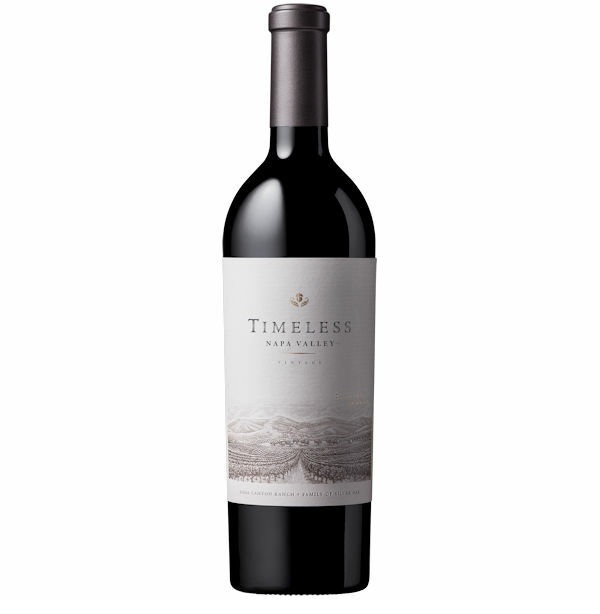
With richness and depth of flavor, the 2018 Timeless Napa Valley is the embodiment of patience and attention to detail. Decades of experience at Soda Canyon Ranch allow winemaker Nate Weis and team to highlight the individual merits of each block. Combining the strongest lots from each resulted in a refined and harmonious bottling.
In 2018, the diurnal shift at Soda Canyon Ranch produced a darker, lusher fruit profile of Cabernet Sauvignon. Simultaneously, the overnight recovery periods resulted in expressive and refined Merlot, giving the wine a pleasant profile of bright, red fruit. With an extended harvest window, the signature, plush density and structure of Petit Verdot is also prevalent in the final blend. Cabernet Franc thrived in 2018 with its predilection for the cooler soils and the climate of blocks 5, 6, 16, 20 and 21—areas we call the Transition Zone and Hardpan Alley. The variety’s floral and tobacco-like aromatics are accentuated, and its more aggressive nature for back-end tannins tamed.
Once blended, the 2018 vintage rested in French oak barrels for 16 months, developing flavors of vanilla and baking spice. Velvety tannins dance across the palate of bright and lingering cassis. With a smooth finish, this is a comforting wine of elegance and depth—a sophisticated expression of the sedate summer.
Review:
This is a little old-school and shows lots of dark berry, chocolate and dried fruit. It’s full, dense and layered with fleshly sensibility. Velvety texture.
-James Suckling 93 Points
Ray Twomey Duncan, a Colorado entrepreneur who began investing in California vineyards in the late 1960s, and Justin Meyer, a Christian Brothers-trained winemaker, co-founded Silver Oak out of a Napa Valley dairy barn in 1972, producing only 1,000 cases of their inaugural vintage.
Silver Oak began over a handshake between two friends with a bold vision: focus on one varietal, Cabernet Sauvignon, aged exclusively in American oak and worthy of cellaring for decades to come.
In 2006, a fire destroyed our historic Oakville winery. While rebuilding was a difficult and emotional event; the opportunity to design a new, state-of-the-art winery from the ground up has resulted in better Napa Valley Cabernets and minimized our eco footprint.
Ten years after the fire, Silver Oak Napa Valley was designated the world’s first LEED Platinum winery for existing buildings, operations and maintenance (EBOM) by the U.S. Green Building Council (USGBC).
Next, when it came time to reimagine the Silver Oak Alexander Valley winery, we applied the lessons learned from our Oakville winery and set an even higher bar. With a goal of net-zero water and energy as our north star, the new Sonoma county winery has since become the world’s first winery to achieve LEED Platinum for building, design and construction (BD+C).
“We have yet to make our best bottle of wine,” or the idea that our best wines are still ahead of us, is a founding philosophy that still guides us to this day.
We farm more than 400 acres of vines in Napa Valley and Alexander Valley with a leading-edge approach toward farming and viticulture, and the softest possible impact on natural resources and the environment.
Since 2014, Napa Valley native Nate Weis has overseen all grapegrowing and winemaking operations at Silver Oak. Nate worked side-by-side with his predecessor Daniel Baron, just as Daniel worked with Justin Meyer before his retirement. These overlapping tenures ensure consistency and quality control, as well as the inherent wisdom that our best wines are still ahead of us.
Silver Oak Alexander Valley Cabernet Sauvignon is made from 95.2% Cabernet Sauvignon, 2.5% Cabernet Franc, 1.9% Merlot, 0.4% Petit Verdot
The Silver Oak Alexander Valley Cabernet Sauvignon 2019 has notes of red cherry, raspberry, blackberry, iris, vanilla and clove. Ruby in color, this elegant wine has great acidity and lift on the mid-palate. Black currant and warm baking spices linger with a deep and fruity finish. It will provide drinking pleasure through 2047 given proper cellaring.
Review:
-Decanter 94 Points
-James Suckling 94 Points

Waypoint Lowrey Vineyard Homestead Cabernet Sauvignon is made from 100 percent Cabernet Sauvignon.
We are pleased to bring you for the first time a stunning vineyard, planted high above the valley floor between Rutherford and Pritchard Hill by the Bettinellis, the Lowrey Vineyard. The Homestead piece faces the old 19th century home of the land’s first resident, one Mister Lowrey. The rare hillside site bends slightly downward to give a perfect exposure, and the tight spacing creates tension and concentration in the wine. It is ripe, airy, and medium-full. Extremely expressive terroir is on full display and gorgeous black cherries, cedar, and fine grain tannins create a new Napa Cabernet experience you’ve probably never had before.
Review:
-Wine Enthusiast 93 Points

Crown Point Estate Selection is made from 75% Cabernet Sauvignon, 10% Merlot, 6% Petit Verdot, 6% Cabernet Franc, 3% Malbec.
The 2016 Crown Point Estate Selection exhibits a heady aromatic array of baking spices, ripe red and black fruits, with deep intonations of earth and minerals. The palate is elegant and bright, with appealing acids and nuanced notes of savory mocha and dried herbs. Polished and seamless, the tannins finish with a comet-like trail of textural opulence highlighted by glossy flavors of baked berry pie and warm toast. Recommended drinking window: now through 2030s.The 2016 Estate Selection is representative of all five red Bordeaux varieties. The selection process starts in the vineyard and continues on through the winemaking process: only the best lots make the final blend. All blocks were harvested & fermented separately. The individual components were blended after 12 months in barrel. Total time in 225 liter French oak barrels was 26 months.
Review:
-Wine Enthusiast 97 Points
-Jeb Dunnuck 97 Points

Force Majeure Cabernet Sauvignon Red Mountain is made from 100 percent Cabernet Sauvignon.
The estate Cabernet Sauvignon is grown primarily along the southwest ridge of the vineyard. The vines produce small berries with bountiful flavor, concentration and intensity, but also a good degree of finesse, excellent structure and layers of complexity that will continue to develop during extended bottle aging for those who want to cellar and age their wines. The wine is powerful, elegant, full-bodied.
Bottled unfined and unfiltered.100% free run
Pumpovers and punch-downs, up to 45 day macerations
Native yeast, 5 day cold soaks
22 months in 75% new French oak barrels
Fermented in concrete and stainless closed top tanks.
Review:
Another gem is the 2019 Cabernet Sauvignon Red Mountain Estate, a deep, concentrated, powerful Red Mountain Cabernet Sauvignon that I suspect will be up there with the legendary wines from this terroir. Beautiful cassis, graphite, lead pencil shavings, and damp earth notes give way to a full-bodied effort that has a liqueur of rocks-like minerality, flawless balance, building yet polished tannins, and a great finish. Hide bottles for 4-5 years, and it will evolve for 25-30 years if properly stored. Best After 2026.
-Jeb Dunnuck 98+ Points
"Blackberry, crushed rock, black cherry and spice aromas lead to ripe, intense, seamless, balanced dark-fruit flavors. The tannins give a firm grip. An extended finish caps it off. It's glorious. - SEAN P. SULLIVAN" - Wine Enthusiast (November 2022), 95 pts "A gutsy red that retains a sense of style and polish, with expressive blackberry, espresso and toasty spice flavors that build structure toward broad-shouldered tannins. Drink now through 2030. —Tim FISH." - Wine Spectator (Insider, January 4th 2023), 94 pts-Owen Bargreen (Vinous) 97 Points
-Wine Enthusiast 95 Points

Klipsun Cabernet Sauvignon Red Mountain is made from 84% Cabernet Sauvignon, 4% Merlot, 4% Malbec and 8% Syrah.
The 2017 vintage started out with a cool, wet winter, with significantly above average snowfall in eastern Washington. Red Mountain had a 24% increase in rainfall in 2017 over the 10 year average. Going into spring, the cool trend continued. As a result, bud break at Klipsun was behind the historical average and significantly behind the most recent warm vintages of 2013 2016. Bloom was also slightly delayed. Because of the cool weather, set was lighter than usual which translated into significantly less fruit in 2017.
The early part of the summer saw average temperatures followed by above average temperatures in July and August. As a result, he at accumulation was a bit above average for the season, despite the cool start. And because of the smaller than normal yield, harvest began right on schedule, perhaps even a bit early for some of the whites. In the second half of September, when Klipsun traditionally harvests all the reds, the temperatures cooled considerably, which delayed ripening. This allowed for luxurious amounts of hang time without the threat of increased sugar accumulation, stretching harvest into the first week of October. A s a result, all fruit going into the 2017 Klipsun Cabernet Sauvignon could be picked at perfect sugars levels with great fruit maturity and flavors. Overall, the quality of t he 2017 harvest is as high as the 2016. However, the style is slightly different. The 2017 wine has a firmer structure, more spice & mocha in the nose and will take a few mo re years than the 2016 to reach a perfect balance between fruit and tannin.
Review:
The 2017 Cabernet Sauvignon Red Mountain is composed of 84% Cabernet Sauvignon, 4% Merlot, 4% Malbec and 8% Syrah, which immediately emanates with aromas of dark roasted espresso bean, toasted oak, dried tobacco and dusty black fruit tones of cassis, currant and blackberries covered in dark cocoa powder. Full-bodied, generous in complexity and still tight in the mouth, the wine unpacks layers of cedar and vanilla tones with dusty purple flowers and bitter dark chocolate across the mid-palate, giving way to fine-grained tannins that will loosen with time. As the wine sits on the palate, the 100% French oak regimen is on full display for all to see. The wine lingering long and continues to evolve in the mouth, ending with a drying finish that highlights the oak and terroir. It’s still a baby, and I would keep it in the cellar for another few years before popping the cork—this will effortlessly coast for more than a decade. The 2017 vintage marks the second release of this wine, with 6,300 bottles produced. It comes from its namesake vineyard, first planted in 1984 on Red Mountain. I’m keeping my eye on this producer. I’m impressed, and even though the oak may be a bit much at the moment, it's still delicious. - Wine Advocate 94+ Points
-Jeb Dunnuck 94 Points

Heritage School Missiaens Hillside Cabernet Sauvignon is made from 100 percent Cabernet Sauvignon.
A steep, rocky site with red volcanic soils results in our most structured and concentrated wine. Planted in 1998 using 110R rootstock and clone 337 Cabernet Sauvignon our Hillside Vineyard produces wines as breathtaking as the views from its slopes. These tiny, dark blue berries ripen near the end of September thanks to cool afternoon temperatures allowing for increased hang time and developed flavors.
Reviews:
"The 2014 Cabernet Sauvignon Missiaen's Hillside Vineyard is the darkest and richest of these wines, but it also has enough structural breadth to handle all of that intensity. Superripe plum, bittersweet chocolate, tobacco and licorice all flesh out over time. This is an especially rich, seamless style, yet all the elements are in the right place. - Antonio Galloni"
- Antonio Galloni's Vinous (December 2016), 92 pts
Review:
-Antonio Galloni (Vinous) 93 Points

Kinsella Estates Heirloom Cabernet Sauvignon is made from 100% Cabernet Sauvignon
20 months in French Oak (75% New)
Organic made.
Intense was the first word that came to mind. Purely focused tannin weaves its way through the core of this wine. Has a savory characteristic that we have found in past vintages (2014 to be specific) with a slight licorice note on the exceptionally long finish. While this vineyard has been described as “feminine” in the past, that is certainly not the case for this bigger, bolder vintage!

Merryvale Pinot Noir Sonoma Coast 2022 is made from Pinot Noir.
From the cool, fog-swept vineyards of the Sonoma Coast — including fruit from the celebrated Durell and Sunchase sites — this is Merryvale's elegant, Burgundian-minded take on California Pinot Noir. A mix of Dijon and heritage clones (667, Pommard, 777 and 828) was largely destemmed, fermented with native yeasts, and aged about ten months in roughly 40% new French oak — restraint that lets the fruit lead. Expect a perfumed, silky glass: black cherry, raspberry and dark berry lifted by forest floor, cola spice and a whisper of graham cracker, with bright acidity and fine, polished tannins carrying a long finish. Lovely now and over the next decade.
Winery Info: Merryvale Vineyards was founded in 1983 and makes its home in the historic Sunny St. Helena winery on Main Street — a stone landmark built in 1933 as the first winery raised in the Napa Valley after Prohibition, and the cellar where Robert and Peter Mondavi first made wine with their father, Cesare. The Schlatter family has owned and run Merryvale since the 1990s, today led by René Schlatter. At its heart lies the Historic Cask Room, where two stories of century-old 2,000-gallon oak casks line the walls. Four decades on, Merryvale remains a quintessential St. Helena house.
Review:
A wonderful interplay of brightness and savoriness captures the elegance of wines from the Sonoma Coast. Aromas of crushed red raspberries, sauteed mushrooms and wild blackberries. On the palate there’s red fruit and black pepper, with bright, crunchy acidity and taut tannins. The finish is long, with umami flavors. Medium-bodied. Drink or hold.
-James Suckling 94 Points



