" We don't sell the wine without touching the vine "
| BUY MORE! SAVE MORE! | ||||||||||||||||||||
|
| Country: | France |
| Regions: | Loire Sancerre |
| Winery: | Michel Thomas |
| Grape Type: | Pinot Noir |
| Vintage: | 2025 |
| Bottle Size: | 750 ml |
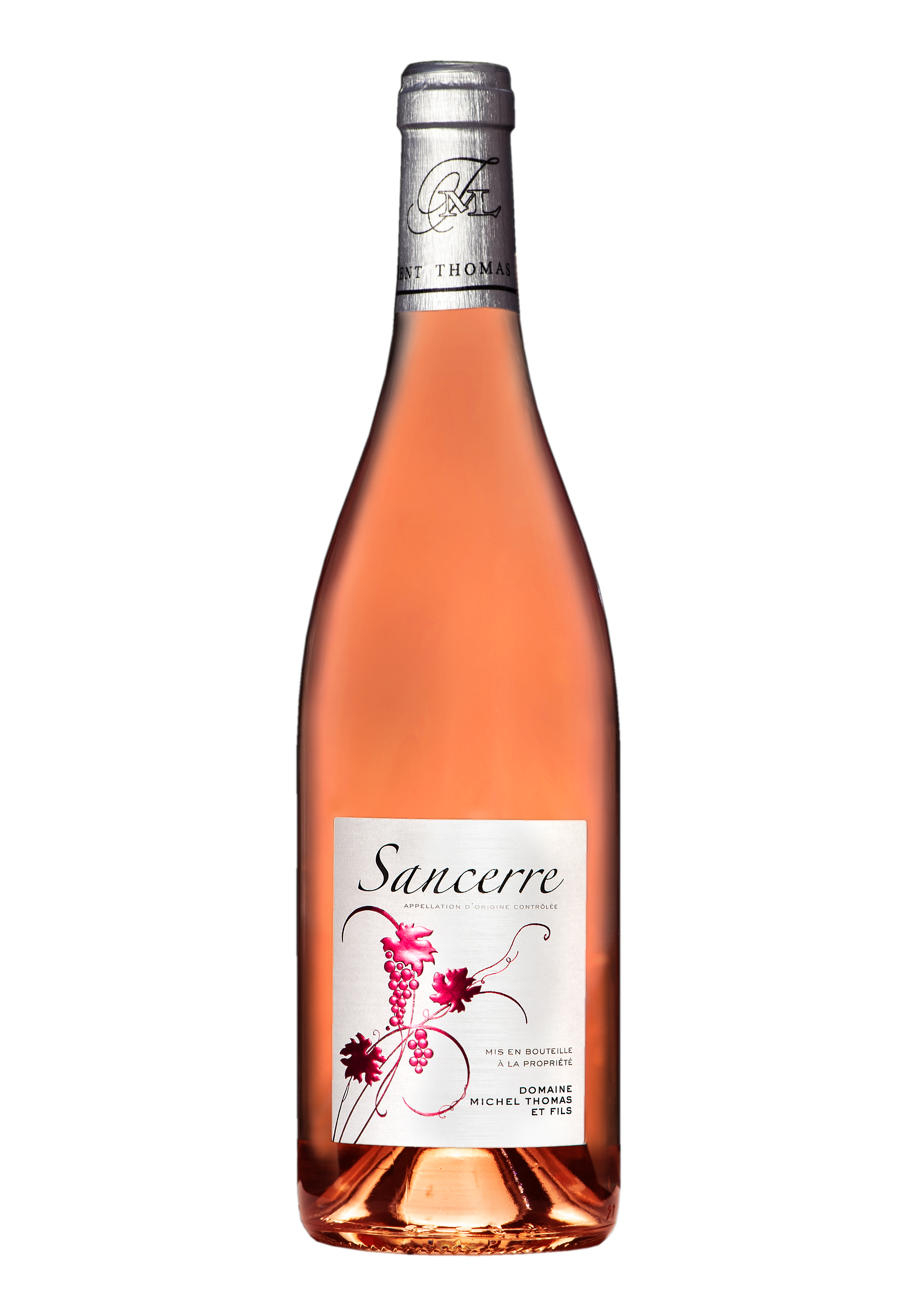
Thomas Sancerre Rose is made from 100% Pinot Noir.
Vines are 20-55 years old.
Terroir (soil type) is a blend of "Caillottes" and "Terre Blanche".
Everything is machine harvested (which means it is 100% destemmed).
50% Direct press + 50% Saignée (bled) with 12-24 hours of skin contact maceration.
The alcoholic fermentation is done in temperature controlled stainless steel tanks.
Right before bottling, the wine is fined with Bentonite (very light filtration with oenologic clay).
Tasting Notes:
Light, bright pink. Redcurrant, strawberry and chalk on the nose, with a touch of singed orange gaining strength with air. Dusty red fruit and citrus flavors are braced by tangy minerality, which adds lift and cut. Uncompromising in the best way, finishing with excellent clarity and echoes of lemon and orange zest.
Food pairings:
This is a very versatile wine. You can have it on its own in the summer time as an apéritif. But it is also excellent with Hors d'Oeuvres and terrines. It will compliment any white meat dish and poultry. You can also enjoy it with salmon or exotic food (slightly spicy sushi).
The Domaine Michel Thomas Estate
Michel Thomas and his son Laurent took over the estate in 1970 from Michel's father, who started in 1946. The total production is about 10,000-12,000 cases per year. They export 65-70% of their production, mainly to Japan and Russia.
The Domaine Michel Thomas Vineyard
Today they farm 40 parcels located in four villages, totalling 17 hectares (42 acres): 11 hectares Sauvignon, 6 hectares Pinot Noir. The special bottling "Silex" is limited each year to between 400-500 cases. They grow grapes on three soil types: 40% Terre Blanche-Argilo-Calcaire, 40% Caillottes-calcaire, 20% Le Roc-Silex.

Thomas Sancerre Rose is made from 100% Pinot Noir.
Vines are 20-55 years old.
Terroir (soil type) is a blend of "Caillottes" and "Terre Blanche".
Everything is machine harvested (which means it is 100% destemmed).
50% Direct press + 50% Saignée (bled) with 12-24 hours of skin contact maceration.
The alcoholic fermentation is done in temperature controlled stainless steel tanks.
Right before bottling, the wine is fined with Bentonite (very light filtration with oenologic clay).
Tasting Notes:
Light, bright pink. Redcurrant, strawberry and chalk on the nose, with a touch of singed orange gaining strength with air. Dusty red fruit and citrus flavors are braced by tangy minerality, which adds lift and cut. Uncompromising in the best way, finishing with excellent clarity and echoes of lemon and orange zest.
Food pairings:
This is a very versatile wine. You can have it on its own in the summer time as an apéritif. But it is also excellent with Hors d'Oeuvres and terrines. It will compliment any white meat dish and poultry. You can also enjoy it with salmon or exotic food (slightly spicy sushi).

Michel Thomas Sancerre Blanc is 100% Sauvignon Blanc (40% Caillottes, 40% Grosses Terres, 20% Silex)
The wine displays an exotic nose with a touch of smoke and licorice. On the palate, peach and watermelon dominate with citrus zest and chalk notes.
Aged on the lees for a few months (no oak). It goes well with seafood, fish, goats cheese.

Thomas Sancerre Blanc Cuvee Terre Blanche is made from 100 percent Sauvignon Blanc.
A typical Sancerre with citrus, honey, and flint notes, supple and fragrant. The palate is fresh, with grapefruit and lemon flavors and a pleasant minerality throughout.
Thomas Sancerre Blanc Terre Blanche was fermented in part Oak foudre (Cuve tronconique) and part 400-liter oak barrels for 18 Months.
Pair with grilled fish with lemon sauce, caesar salad with chicken as well during the spring or summer time.

Reverdy Jean Sancerre Rose is made from 100 percent Pinot Noir.
Color: Pale salmon pink color
Nose: delicate aromas of roses and orange blossom that will transform into gooseberry and peach blossoms as the temperature in the glass rises.
Mouth: The palate is crisp, lean and elegant, but the flavors are quite persistent with cherry, blackcurrant,apricot and red currant aromas.
According to the Sancerre AOC regulation, maximum yield authorized for the rosé is 55 hl/ha.
Pairs well with poultry and spicy food.

From the caillottes soil type.
A Sancerre fermented and aged in amphorae, straw-colored, with full aromas and a beautiful complexity: grapefruit, honeysuckle, orange blossom and a pinch of curry. A fine sweetness coats an expressive, dynamic and juicy mouth, with a zesty accent. Complete, persistent, its place is at the table, on fish with fennel for example.
A pure expression of Sancerre’s classic terroir. Grown on the appellation’s prized Caillottes soils — shallow, stony limestone mixed with gravel — this Sauvignon Blanc delivers exceptional elegance and vibrancy. The well-draining stones promote deep rooting and early ripening, yielding a wine with bright aromatics of citrus, white peach, fresh herbs, and wet stone. Crisp, lively acidity and a refined, mineral-driven finish make this the quintessential Sancerre — refreshing, aromatic, and perfectly balanced. Ideal as an aperitif or with shellfish, goat cheese, and fresh seafood.
Only 1000 bottles produced.

Fullerton Three Otters Rose is made from 60% Pinot Noir, 40% Pinot Gris (7-50 years old)
This Willamee Valley blend hails mainly from three different vineyards in the north, east, and south of the Willamee Valley, with a smaering from five of our other sites. The soils of the vineyards represent the breadth and diversity of the Willamee Valley with both sedimentary- and volcanic-based soils.
Acid: TA 5.6 g/L
pH: 3.45
Aging: 100% stainless steel
Bottled Unfined
Clones: Pommard, Wadensville, Dijon 113, 114, 115, 667, and 777
Winemaker Alex Fullerton and his father and proprietor Eric Fullerton couldn’t decide on a house style for rosé, so they held a friendly competition. They each made a rosé to see whose would win over a crowd. Though the wines were destined to be boled separately, Alex got curious and tried blending the two. Voila! The sum was better than the parts, and a tradition was born. Alex now makes one rosé that is whole cluster pressed and tank fermented, yielding a very crisp and light colored wine, while Eric crafts his rosé from a more robust extraction, which yields a darker and fuller-bodied wine. The two lots are then blended to taste, delivering a crisp, fresh rosé with wonderful structure. The juice spent three weeks on the gross lees prior to fermentation to extract aroma precursers, and then six months on lees post-fermentation.
Pairs with soft cheeses, chicken/turkey.
Review:
-Eric Guido (Vinous) 90 Points

Dominique Piron Morgon Cote du Py is made from 100 percent Gamay.
The Morgon Cru is based in the heart of Northern Beaujolais. Côte du Py is the heart of Morgon, a little hill of very old blue stone rocks - the oldest soils of Beaujolais (around 430 millions years old), with a typical blue color.
Côte du Py has been known for centuries for being the best terroir of the village, producing long lived wines with strong structure and flavors.
Wines of the Côte du Py are very dark, profound and dense. Classic aromas of red berries, cherry, kirsh. Fruity, structured and mineral in the mouth with graphite flavors and spicy notes of black and white pepper. Wine can age up to 10 years.
Hand picked grapes are sorted manually and destemmed for 50 to 70%. Fermentation starts in concrete tanks and lasts for 18-25 days with remontages and pigeages. Then after pressurage starts the aging, for 2/3 in concrete tanks, and 1/3 in recent French oak barrels with batonages on fine lies only. After 10 month we do the blending, keeping only the best cuvees and best barrels, and do the bottling.
Pairs well with red meat like beef, duck and game (Hare, Dear, Wild Pork,…), cheses.
Review:
-James Suckling 91 Points

Fefinanes Albarino de III Anos is made from 100% Albarino.
The III Ano shows all the expressiveness of the Albarino grape, with a full nose of ripe fruit and a mineral character. Complex and meaty with firm structure on the palate, it promises a splendid evolution and a long life for this elegant, characterful wine.
Aged 3 years on the lees. First, four months in French and American oak barriques (no new oak; only 1-, 2- and 3-year-old barrels), with frequent batonnage to draw the most expressive notes from the Albarino; then transferred to stainless steel so the oak aromas integrate.
Excellent with shellfish, grilled or stewed fish, white meats and poultry.