
" We don't sell the wine without touching the vine "
| BUY MORE! SAVE MORE! | ||||||||||||||||||||
|
| Country: | Spain |
| Region: | Catalonia |
| Winery: | Torello |
| Grape Type: | Macabeo Xarel-lo Parellada |
| Organic: | Yes |
| Vintage: | 2019 |
| Bottle Size: | 750 ml |
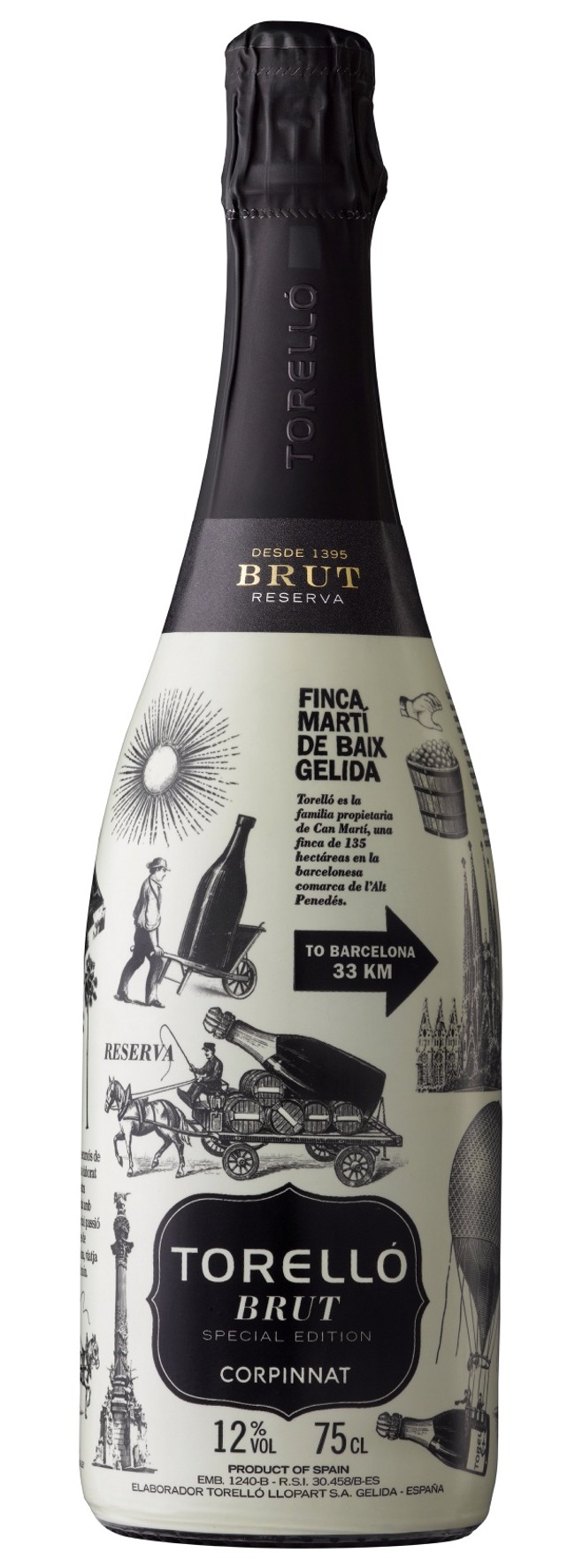
Torello Corpinnat Special Edition Brut Reserve is made from 44% Xarel.lo, 37% Macabeo, 11% Chardonnay, 8% Parellada.
The estate soils have been formed from sediments from the Garraf Massis, deposited thousands of years ago. One of the most characteristic features of the estate’s soils is the presence of accumulations of calcium carbonate. The movement of water through the soil dissolves the carbonates and takes them to a certain depth. The continuous repetition of this process has ended up producing the accumulation of these deposits. When these become massive, after thousands of years, they bind together and form a hard stratum called a petrocalcic horizon. This hard stratum limits the availability of water to the vine and the production, but is a factor that gives the grape quality
The wine offers a straw yellow color, clean, transparent, fine, and persistent bubbles with a rosary formation. In the nose fresh pear aromas stand out along with delicious notes of pastry cream, white flowers, and candied fruits. On the palate, good balance and acidity. Powerful and flavorful with white flowers and notes of brioche, almond and great length.
Special Edition is very versatile and matches with many different kinds of dishes; pasta, pork, chicken, fish, seafood, rice, cold cuts, desserts.
Torelló grape growers since 14th Century. Family owned-wine run by 23rd generation. 100% own vineyard. 100% organic grapes and olives tress. 100% hand harvest. 100% vinified on the premises of the winery. Low yield. Specialized in long aged Corpinnat Sparkling wine. Torelló is also founding member of CORPINNAT.
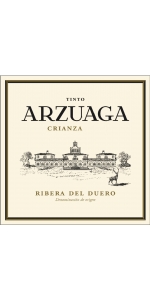
Arzuaga Ribera del Duero Crianza 95% Tempranillo and 5% Cabernet Sauvignon.
Dark cherry color with purple highlights. Powerful nose and high aromatic diversity of ripe red and black fruits, spicy and balsamic notes, and a roasted finish. Soft and mellow in the mouth with a great fruitiness and length.
Review:
This is a big wine with alluring aromas of cedary oak and black fruit. Ripe palate of black berries, some dark chocolate and integrated, polished oak. Long spicy finish. Classy Ribera. -Decanter 95 Points
Torello Corpinnat Special Edition Brut Reserve is made from 44% Xarel.lo, 37% Macabeo, 11% Chardonnay, 8% Parellada.
The estate soils have been formed from sediments from the Garraf Massis, deposited thousands of years ago. One of the most characteristic features of the estate’s soils is the presence of accumulations of calcium carbonate. The movement of water through the soil dissolves the carbonates and takes them to a certain depth. The continuous repetition of this process has ended up producing the accumulation of these deposits. When these become massive, after thousands of years, they bind together and form a hard stratum called a petrocalcic horizon. This hard stratum limits the availability of water to the vine and the production, but is a factor that gives the grape quality
The wine offers a straw yellow color, clean, transparent, fine, and persistent bubbles with a rosary formation. In the nose fresh pear aromas stand out along with delicious notes of pastry cream, white flowers, and candied fruits. On the palate, good balance and acidity. Powerful and flavorful with white flowers and notes of brioche, almond and great length.
Special Edition is very versatile and matches with many different kinds of dishes; pasta, pork, chicken, fish, seafood, rice, cold cuts, desserts.
Torello Corpinnat Special Edition Brut Reserve is made from 44% Xarel.lo, 37% Macabeo, 11% Chardonnay, 8% Parellada.
The estate soils have been formed from sediments from the Garraf Massis, deposited thousands of years ago. One of the most characteristic features of the estate’s soils is the presence of accumulations of calcium carbonate. The movement of water through the soil dissolves the carbonates and takes them to a certain depth. The continuous repetition of this process has ended up producing the accumulation of these deposits. When these become massive, after thousands of years, they bind together and form a hard stratum called a petrocalcic horizon. This hard stratum limits the availability of water to the vine and the production, but is a factor that gives the grape quality
The wine offers a straw yellow color, clean, transparent, fine, and persistent bubbles with a rosary formation. In the nose fresh pear aromas stand out along with delicious notes of pastry cream, white flowers, and candied fruits. On the palate, good balance and acidity. Powerful and flavorful with white flowers and notes of brioche, almond and great length.
Special Edition is very versatile and matches with many different kinds of dishes; pasta, pork, chicken, fish, seafood, rice, cold cuts, desserts.
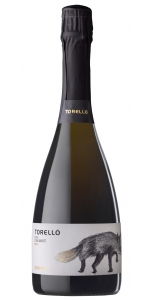
Torello Corpinnat Finca Can Marti Brut 32% Chardonnay, 32% Xarel.lo, 22% Macabeo and 14% Parellada.
The Can Martí estate soils have been formed from sediments from the Garraf Massis, deposited thousands of years ago. One of the most characteristic features of the estate’s soils is the presence of accumulations of calcium carbonate.The movement of water through the soil dissolves the carbonates present and takes them to a certain depth. The continuous repetition of this process has ended up producing the accumulation of these deposits.When these become massive, after thousands of years, they bind together and and form a hard stratum called a petrocalcic horizon. This hard stratum limits the availbility of water to the vine and the production, but is a factor that gives the grape quality.
Straw yellow color, fine and constant bubbles, clean and bright, with golden reflections. The nose reveals a subtle aromatic intensity with fresh and sweet aromas. Honey flowers, citrus notes, white fruit, and balsamic herbs such as fennel.
In the mouth the acidity is well balanced, with delicate bitter notes to the finish and a set of ripe fruits and balsamic nuances.
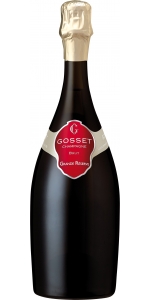
Gosset Grande Reserve Brut is made from 45% Chardonnay, 45% Pinot Noir, 10% Pinot Meunier.
The color is bright and golden, the nose open and expressive, and the palate is dominated by a refreshing mineral tension.
Gosset Grande Reserve is a truly faithful expression of the Gosset style. To achieve a cuvee of this quality, the cellar-master has blended the best of the various champagne crus at the grape- harvest with wines specially chosen from our reserve stocks for their richness and maturity.
This champagne is the perfect accompaniment to mild and subtly spiced dishes with cooked fruit, sweet/savory dishes or tajines. A blend of three vintages, the Grande Réserve Brut is adaptable by nature — from apéritif to dessert.
Review:
The nose opens with the fresh ripeness of yellow apple and highlights of Granny Smith. It has beautifully subtle autolysis on the palate, deepening into notes of creamy apple crumble, Golden Delicious and Mirabelle plum, while remaining utterly strait-laced. Elegance, length and absolute freshness are inherent and quietly convincing.
-Decanter 94 Points
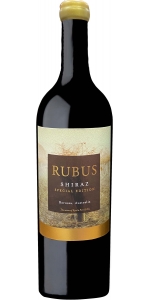
Rubus Special Edition Barossa Shiraz is made from 100 percent
The Rubus Project was created by Fran Kysela as a way to source & sell incredible wines at value prices. All wines in this international project are hand-selected by Fran Kysela. Rubus wines are fruit driven, true-to-type values that over deliver - a true representation of quality for the consumer at an excellent price.
Deep red with a slight purple hue on release. The wine has a rich mix of dark chocolate infused with coffee bean and black liquorice, then scents of tar, aniseed, raw (pure) soy and black olive on the nose. The palate is expansive, and yet balanced and finessed. An amalgam of dark berried flavors and textural sensations. The 100% new oak is completely absorbed, meshed with ripe tannins, completing a palate of impressive length and youthfulness.
Sourced from Thorn-Clarke’s St Kitts vineyard (Block 7) in the far north of the Barossa, the Rubus Reserve demonstrates both the strengths of the region and the unique characters of the vineyard.
A thin layer of topsoil over weathered marble, schist and shale mean the vines work hard to source water and nutrients. The result is naturally low yields concentrating the power and density of the fruit. Diurnal temperature variation is another important aspect of St. Kitts. Warm daytime temperatures are followed by cool nights with variations of up to 30°C (55°F) from the peak during the day into the cool night minimums.
Review:
“Earthy detail develops in this sleek and juicy shiraz, a tarry streak under fresh plum and bruised strawberry. The tannins have gravity and precision, their bracing intensity and concentration integrated into what panelist David Hawkins described as “a big, powerful wine with great liveliness.” While suited to aging, this is accessible now if you’re grilling meats to serve with it.”
- Wine & Spirits (February 2023), 94 pts
"Made by Thorn-Clarke for the US market, this has a rich and vivid nose with blueberry, violet, dark plum and subtle oak spice in play. The palate has a succulent feel with plenty of rich, open-knit blackberry and blueberry flavor. Smoothly delivered tannins carry long and even. Drink over the next decade."
- James Suckling (November 2021), 94 pts
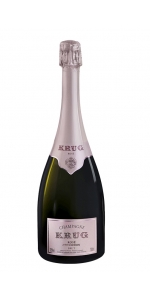
Thus, the first Édition of Krug Rosé, a singular Champagne achieving an astonishing balancing act between finesse and substance, came to be.
The story of Krug Rosé dates back to 1983. With Joseph’s non-conformist spirit at heart, the 5th generation of the Krug family gave birth to a new composition, a bold rosé inspired by the House’s reputed art of blending, to be re-created each year.
Krug Rosé is an unexpected rosé Champagne combining elegance and boldness – inspired by the dream of the fifth generation of the House of Krug to conceive a rosé Champagne that did not exist, a rosé Champagne that could be re-created every year.
Krug Rosé 27ème Édition is a blend of 38 wines from 9 different years, the youngest of which is from 2015, while the oldest dates back to 2005. ▪ It was completed with 10% traditionally macerated Pinot Noir of the year blended from plots in Aÿ and Mareuil-sur-Aÿ, to add a unique spiciness, colour and structure. Its final composition is 57% Pinot Noir, 23% Chardonnay and 20% Meunier. ▪ A stay of around seven years in Krug’s cellars gives Krug Rosé 27ème Édition its unique expression and elegance.
At first sight, its subtle pale pink colour holds a promise of elegance. On the nose, aromas of rose hips, cured ham, mulberries, redcurrant, peony, pepper and pink grapefruit. On the palate, delicate flavours of honey, citrus and dried fruit with a long finish, enhanced by its fine bubbles complete the experience.
Review:
Thirty-eight wines from nine vintages spanning 2005 to 2015 - 55% of them reserve - went into this blend of 57% Pinot Noir, 23% Chardonnay, and 20% Meunier; a nonpareil of shimmering depth. On the pure, precise nose, raspberries and roses mingle with suggestions of woodsiness, honey-cured ham, and parmesan rind before vibrating with white peach and red currant, honeyed cashew, and a soupcon of tobacco leaf and cucumber on the palate - where the tension between its almost ethereal refinement, thanks not least to the unending mousse, and the luxuriance of its finish is simply (or not so simply) delicious.
-Tasting Panel 99 Points
A brooding and intense wine. The aromas begin with notes of blueberry, cassis, a hint of lavender followed by a myriad of exotic spices, some hazelnut, thyme and an element of licorice. Firm, mature tannins—evidence of Ten's ageability—are followed by a long, velvety finish.
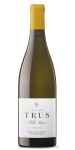
Trus Albillo Mayor Reserva Ribera del Duero is made from 100% Albillo Mayor.
Light straw yellow color despite its age. Aromas of white flowers and grapefruit typical of the variety, along with some very light notes of toasted wood and of long bottle ageing. Very well-balanced on the palate, with the characteristic fullness of the variety and a very refreshing natural acidity which bodes well for the wine's ageing. A wine for ageing which already displays all its complexity and elegance. We recommend consumption at a temperature of between 8 and 12ºC.
Grapes are coming from a Goblet-trained vineyards in Peñaranda de Duero. Dry-farmed, without irrigation. Different orientations and altitudes.
TA: 6 g/l in tartaric acidity.
VA: 0.4g/l.
pH: 3.3.



