" We don't sell the wine without touching the vine "
| BUY MORE! SAVE MORE! | ||||||||||||||||||||
|
| Country: | Spain |
| Region: | Ribera del Duero |
| Winery: | Arzuaga |
| Grape Type: | Tempranillo |
| Vintage: | 2017 |
| Bottle Size: | 750 ml |
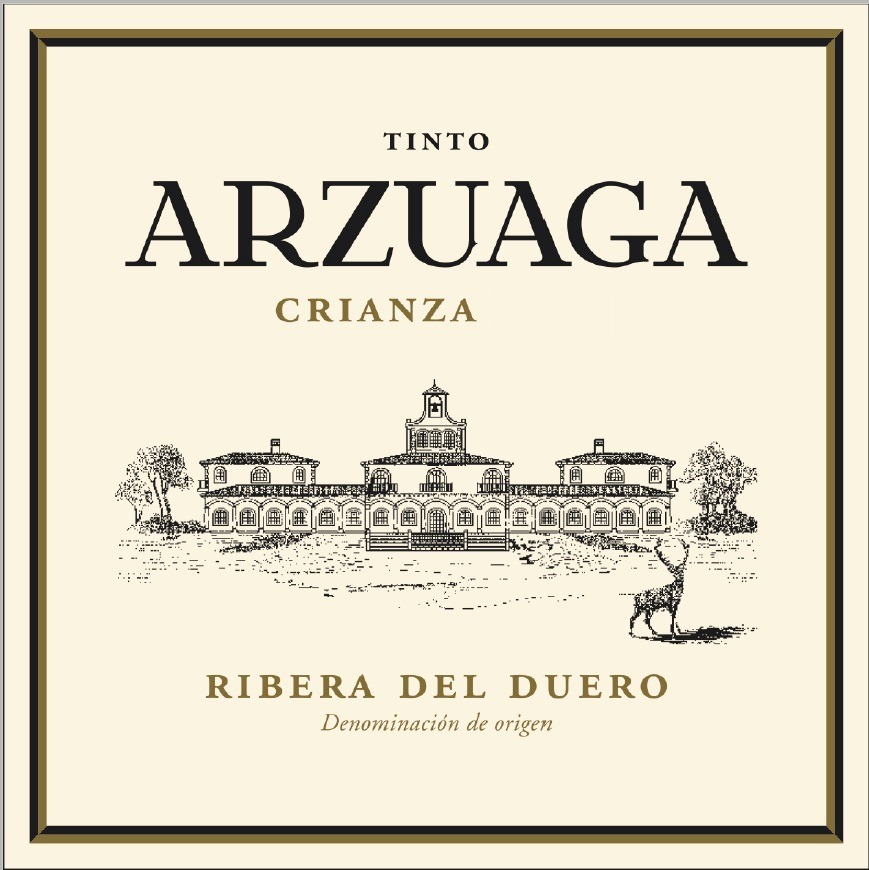
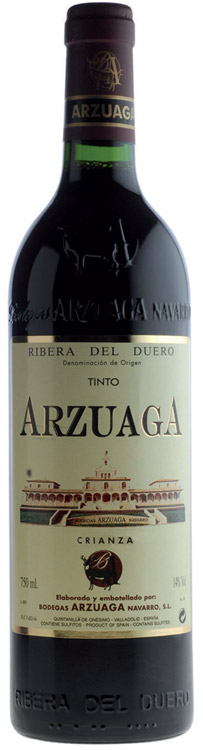
Arzuaga Ribera del Duero Crianza 95% Tempranillo and 5% Cabernet Sauvignon.
Dark cherry color with purple highlights. Powerful nose and high aromatic diversity of ripe red and black fruits, spicy and balsamic notes, and a roasted finish. Soft and mellow in the mouth with a great fruitiness and length.
Review:
This is a big wine with alluring aromas of cedary oak and black fruit. Ripe palate of black berries, some dark chocolate and integrated, polished oak. Long spicy finish. Classy Ribera. -Decanter 95 Points
Florentino Arzuaga, a great wine lover, founded Bodegas Arzuaga-Navarro in the early 1990’s after purchasing Finca La Planta, an estate located in the town of Quintanilla de Onésimo (Valladolid). With pines, oaks, Spanish cedars, wild boars, and deer, Florentino realized the great potential of an estate large enough to have a horizon of its own. Then came the vines, the cellar, and the wine – red wines with a backbone, yet elegant, well-rounded, and complex.
Bodegas Arzuaga-Navarro boasts over 150 hectares of vineyards distributed between the immediate vicinity of the cellar and the natural area of La Planta estate. The Arzuaga-Navarro vineyards enjoy a unique climate: during the day, a sharp sunlight bathes the land, while nights are fresh and humid. This combination of climatic factors favors a slow and perfect grape ripeness, resulting in a lush, aromatic fruit with great acidity.
In the Castilian region, characterized by having scarcely fertile soils, the Tinto Fino (or Tempranillo) varieties, as well as the French varieties Cabernet Sauvignon and Merlot are cultivated. For over 20 years, 80 percent of the vineyards have yielded around 4.00 kg/ha.
Bodegas Arzuaga-Navarro also owns vineyards outside the province of Valladolid, in the town of Malagón, in Ciudad Real, where the Pago Florentino wine is produced.
The Bodega’s passionate work has turned their wines into one of the most prestigious brands within the Ribera del Duero Denomination of Origin.

Vinsacro Dioro Seleccion is made from 100% Vidau (Blend of the de varietals Tempranillo, Graciano and Mazuelo with predominance of 70+ years old Garnacha).
A wine to enjoy.Vinsacro Dioro, a wine inspired by the Egyptian, Greek and Roman cultures that worshipped wine and gave it a sacred meaning associated with joy and festivity. It is the fruit of our best vineyards, living witnesses to the work and passion of the four generations that preceded us.
Pair with Roast lamb or pork, game, beef steaks, stewed meats. During the aperitive, it will accompany as well with aged and blue cheese.
14% Vol.
Grapes selected manually from our vineyards located on the southern slopes of Monte Yerga in the “Cuesta la Reina” estate. Grapes that are harvested with the utmost care, transported at low temperature in fruit boxes to the winery to avoid any damage to the fruit.
Fermentation is carried out with indigenous yeasts and the wine is kept in maceration for 30 days while breaking the cap daily. Afterwards, the wine is transferred to oak barrels where it remains for 17 months before bottling.
"Really sophisticated and polished with vanilla, coffee, earth and spice scents and oaky flavours. Long, brooding finish."
- Decanter World Wine Award (April 2022), 94 pts
"The 2019 Vinsacro Dioro Selección is a Vidau field blend sourced from Monte Yerga in Rioja Oriental. Aged for 18 months in French and Eastern European oak barrels, it is only released after five years in the cellar. Dark garnet in color, time in the glass reveals soy sauce, bay leaf and thyme notes, along with black fruit and chutney-like undertones. Dry and rich on the palate, it flows with softened tannins and a clingy mouthfeel, lingering long with an impression of tomato leaf. This is a complex, nuanced and solar red that will warmly captivate your palate. - Joaquin HIDALGO"
- Antonio Galloni's Vinous (April 2024), 94 pts

Enemigo El Enemigo Gran Enemigo is made from 100% Cabernet Franc.
In the spectrum of people who pay attention to detail, winemakers are often incredibly detail-oriented. This can sometimes spill over to become an internal battled, and, as Alejandro Vigil and Adrianna Catena state, "We are our own worst enemy." El Enemigo pays homage to this internal struggle.
The nose presents sweet aromas of black ripen fruits with hints of vanilla and chocolate, which appear after the oak ageing. The mouthfeel is sweet with structured, persistent tannins due to the natural acidity of this wine, leading into an excellent long finish.
Review:
The nose of the 2018 Gran Enemigo El Cepillo Single Vineyard, from a low-yielding and drier year, is full of curry, a note that was a constant across the three vintages I tasted together, but it tends to be stronger in low-yielding and dry years like this. It's also floral and comes through as aromatic and a little exotic, in a good way, with elegance, persistence and very pure flavors. It has fine-grained tannins, great acidity and balance. 7,200 bottles. All these single-vineyard bottlings mature in ancient 4,000-liter oak foudres for some 15 months.
-Wine Advocate 97 Points"Pretty and inviting on the nose with gorgeous aromas of floral violet, cassis and completed with a lifted, delicate liquorice note. The palate is graced with deep herb, pepper, crunchy red fruit and graceful, silky tannins."
-Decanter 97 Points

Aalto P.S. Pagos Seleccionados Tinto is made from 100 percent Tempranillo.
Climatic conditions
The farming year began with a mild autumn and little precipitation. A very dry winter started with -9ºC reaching at the end higher temperatures than normal for that time of the year. Spring and summer characterized by little rain, only some rain showers in July and late August avoided the hydric stress of the vines. The vegetative cycle of the vine developed with big variations of temperatures, alternating warm and atypical low temperatures of 4ºC for mid-June. The ripening of the grapes happened under very good conditions and the harvest started on 24th September 2019.
100% Tinto Fino (Tempranillo) primarily from very old vines – 60 to 90 years old – from selected plots in La Horra and La Aguilera. The harvest was done by hand, in small boxes of 15 kilos that are thoroughly inspected, bunch by bunch, on the selection table.
Tasting notes
Review:
Color: dark cherry, Aroma: toasty, spicy, fine cocoa, black fruit, Mouth: tasty, toasty, fine bitterness, ripe tannins
Guia Penin 94 Points

Segries Tavel Rose is made from 50% Grenache, 30% Cinsault, 15% Clairette, 5% Syrah. The age of the vines is 30 years. Traditional vinification at low temperature, "vin de saignée" with a maceration during one night in cement vat.
This is large for a Rose...structured and focused, with the color of dark ruby. The nose is loaded up with fresh fruit. Strawberry, blackcurrant, and raspberry beam from the glass. On the palate, the mouth-feel is ripe and succulent. It has strength, but maintains its fresh and crisp expression. The finish is filled with Asian spice and slight hints of smoke. Drink this juice now or over the next year or two.

Produced from 100% Chenin Blanc planted on clay and flint stones based soils.
Vinification: aged in stainless steel tanks with temperature controlled fermentation. Aged on the lees for 4 months.
Kieselguhr filtration.
This sparking wine is fresh and fruity. Rich and easy to drink, which makes it a wonderful aperitif. For the aficionados this is an excellent food friendly wine. Its quality makes it a great alternative to Champagne.
"The two sparkling wines should not be missed. They’re both terrific examples of how good sparkling Vouvray can be. Both are 100% Chenin Blanc cuvees, with the non-vintage Chateau Gaudrelle Vouvray Brut showing lots of effervescence and plenty of flowery brioche, buttered citrus, melon and dried apricot notes. It is crisp, fresh, and ideal for drinking over the next several years."
-Wine Advocate 90 pts
"Just off-dry, this almond- and apple-flavored wine achieves a fine balance of crispness and richness. There is just a touch of honey, intertwined with delicious citrusy acidity."
- Wine Enthusiast , 90 pts

While Pieter Cuythoff humbly named the valley after his patron, Jan van Riebeeck, Riebeek Cellars feels it is only fitting that this wine, which expresses the best of its valley, should carry the name of its founder. So, in honor of Mr. Cruythoff, this range of fine wine bears his name.
Bright red berry notes and a hint of spice is balanced by a luxurious texture & an elegant, lingering, dry finish.
The Chardonnay & Pinot Noir grapes are crushed together. To ensure an array of layered fruit flavors and to capture freshness, we use only free run juice from the crushed grapes. The juice is cold fermented with selected Champagne yeast, blend with a touch of ‘spicy’ Shiraz and then left on the gross lees for 6 months where it undergoes malolactic fermentation and develops the distinct sparkling wine flavors. After the wine is stabilized and filtered it is bottled with CO2 for a Charmat style sparkling wine.
Perfect with a variety of dishes including rich chocolate desserts.
THE LEGEND
Dispatched by Jan van Riebeek in search of the perfect place to grow provisions for the Dutch East India Company, Pieter Cruythoff stumbled upon a beautiful valley. But it was more than just the scenic beauty of this valley that had caught his eye; situated in the lee of the majestic Kasteelberg, the winters were mild, the summers were hot and the soil was uncommonly fertile. What's more, ships spotted from the lookout point on Kasteelberg were just a day away from Cape Town, and so were the wagons that went to meet them, laden with the treasures of the Riebeek Valley.
TIMELESS JEWELS
While he humbly named the valley after his patron, Jan van Riebeek, we feel it is only fitting that our valley's most coveted treasure should carry the name of its founder. So, in honour of Pieter Cruythoff, this range of fine wine bears his name.
From the vibrant whites to the seductive reds, each one is a gem gently coaxed from the fertile soil of that same magical valley. Ironically, much of the valley's bounty still finds its way to Europe, and in particular to the Netherlands, the land of Cruythoff's birth.

Arzuaga Ribera del Duero Crianza 95% Tempranillo and 5% Cabernet Sauvignon.
Dark cherry color with purple highlights. Powerful nose and high aromatic diversity of ripe red and black fruits, spicy and balsamic notes, and a roasted finish. Soft and mellow in the mouth with a great fruitiness and length.
Arzuaga Ribera del Duero Crianza 95% Tempranillo and 5% Cabernet Sauvignon.
Dark cherry color with purple highlights. Powerful nose and high aromatic diversity of ripe red and black fruits, spicy and balsamic notes, and a roasted finish. Soft and mellow in the mouth with a great fruitiness and length.
THIS OFFER IS FOR HALF-BOTTLES
Arzuaga Ribera del Duero Crianza 95% Tempranillo and 5% Cabernet Sauvignon.
Dark cherry color with purple highlights. Powerful nose and high aromatic diversity of ripe red and black fruits, spicy and balsamic notes, and a roasted finish. Soft and mellow in the mouth with a great fruitiness and length.

Convento Oreja Ribera del Duero Crianza is made from 100 percent Tempranillo.
Bright cherry color. On the nose you will find plenty of fruit aromas, well balanced as well as some reminiscences of spices that are appreciable. The oak presence gives elegant hints of black chocolate and vanilla. On the palate, the wine is very smooth and well balanced with the right amount of acidity. Fresh, long lasting and elegant.
The wine went through malolactic fermentation. The wine was aged 12 Months in French Oak barrels. Before bottling, the wine was slightly filtered.

Arzuaga Gran Arzuaga Ribera del Duero is made from 92% Tinto Fino (Tempranillo) and 8% Cabernet Sauvignon.
Gran Arzuaga is a special cuvee coming from the selection of vineyards on the two banks of the Duero River. Tempranillo is planted in the Olivares de Duero area and Cabernet Sauvignon in La Planta estate that rich in limestone soils. Both areas bring richness and typical characters to the wine.
Tasting notes:
The wine has a bright cherry red color with violet rims. On the nose, it shows great aromatic complexity. In the first place, the primary aromas of red fruits such as blackberry predominate, herbaceous and floral touches that give way to tertiary aromas where balsamic and spicy aromas stand out. On the palate the wine is creamy and silky, with a fresh entry that quickly becomes meaty and unctuous as it goes through the mouth.
Perfect with Roast Lamb, Meat Stews, and even dark Chocolate.
Review:
"This wine's aromas of black cherry, caramel and violet pave the way for dark berry, clove, menthol, orange zest and rose-petal flavors. Polished tannins and a nice sense of brightness fill the mouth and recede into a finish marked with chocolate and orange zest. Drink through 2043. - Mike DeSimone"
- Wine Enthusiast (July 1st 2023), 97 pts & Cellar Selection

Arzuaga Ladera del Norte Ribera del Duero is made from 100% Tempranillo.
The grapes come from organic crops and are harvested from the "Valdesardon" farm, owned by the Arzuaga Navarro family, which is the westernmost vineyard of the Ribera del Duero DO, located at an altitude of 800 meters in the village of Olivares de Duero. Clay-limestone soil on a hillside that will mark the characteristics of the wine.
The wine is of medium high intensity in color, a clear and bright cherry with purple flashes. An array of red fruits such as raspberry and cherry predominates with a high aromatic intensity, combining with balsamic tones, coffee and roasted notes coming from the aging in oak barrels without being overwhelming. This is a fresh and elegant wine, with an easy and balanced entry into the mouth followed by juicy and chewy sensations. Slightly sweet and toasted notes, and a pleasant and balanced aftertaste that is reminiscent of the fruity aromas on the nose.
Ideal companion for red meat, white meat, game and game, roasted or in sauce. Blue fish and soft cheeses.
Review:
"Intense cherry color. Aromas of dried herbs, creamy oak, black fruits and lactic notes. In the mouth, ripe fruits, spices, fine tannins, full-bodied."
- Penin 2022, 92 pts

A heavenly, full-bodied dry Riesling with forceful minerality from 100-year-old vines grown in the blue slate soil of Graach.
Graach is a small village in the Mosel valley. It’s steep slate slopes produce wines that combine elegance with rustic strength. Grosses Gewächs (GG) is the designation for an estate’s best dry wine from a Grosse Lage (grand cru) vineyard. This limited-production wine was fermented with indigenous yeasts and kept in the barrel, on the full lees, for a year before bottling. The extended maturation time allows the wine to develop greater texture and a deeper natural harmony. This is a fully ripe wine, with vibrant aromatics and a pronounced acidity that gives it a brilliant structural precision.
Review:
Convincing proof that 2020 is an excellent vintage for dry GG on the Mosel! Cool and stony with delicate white-peach and white-currant aromas. Really takes off at the intensely slatey and racy finish.
-James Suckling 95-96 Points

The backbone of this Cabernet Sauvignon is derived from a vineyard in the Atlas Peak AVA of Napa Valley where soils are volcanic in origin and have limited water retention. The balance of fruit is sourced from Coombsville and Oak Knoll. The small berry clusters and intense fruit from low-yielding vines create a wine with full flavor and longevity.
This Cabernet delivers multi-layered aromas of ripe black cherries, toasted oak, dark chocolate, cardamom, vanilla bean, and cedar. A rich medium-bodied wine with plush rounded tannins and juicy blackberries and orange zest that linger on the finish.
TA: 0.72 g/100ml
pH: 3.59