
" We don't sell the wine without touching the vine "
| BUY MORE! SAVE MORE! | ||||||||||||||||||||
|
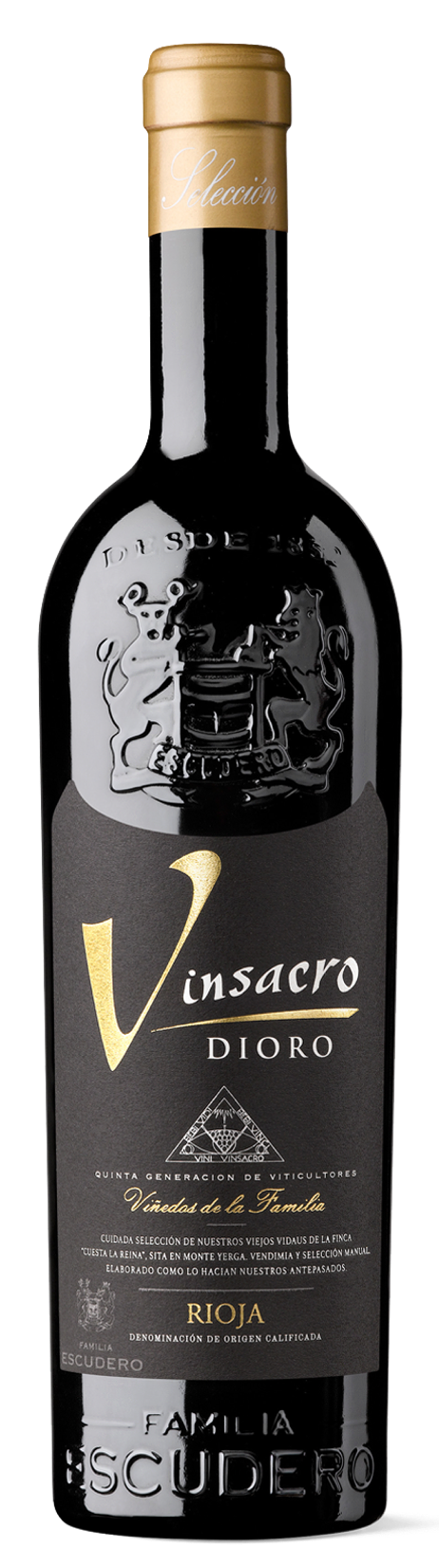
Vinsacro Dioro Seleccion is made from 100% Vidau (Blend of the de varietals Tempranillo, Graciano and Mazuelo with predominance of 70+ years old Garnacha).
A wine to enjoy.Vinsacro Dioro, a wine inspired by the Egyptian, Greek and Roman cultures that worshipped wine and gave it a sacred meaning associated with joy and festivity. It is the fruit of our best vineyards, living witnesses to the work and passion of the four generations that preceded us.
Pair with Roast lamb or pork, game, beef steaks, stewed meats. During the aperitive, it will accompany as well with aged and blue cheese.
14% Vol.
Grapes selected manually from our vineyards located on the southern slopes of Monte Yerga in the “Cuesta la Reina” estate. Grapes that are harvested with the utmost care, transported at low temperature in fruit boxes to the winery to avoid any damage to the fruit.
Fermentation is carried out with indigenous yeasts and the wine is kept in maceration for 30 days while breaking the cap daily. Afterwards, the wine is transferred to oak barrels where it remains for 17 months before bottling.
"Really sophisticated and polished with vanilla, coffee, earth and spice scents and oaky flavours. Long, brooding finish."
- Decanter World Wine Award (April 2022), 94 pts
"The 2019 Vinsacro Dioro Selección is a Vidau field blend sourced from Monte Yerga in Rioja Oriental. Aged for 18 months in French and Eastern European oak barrels, it is only released after five years in the cellar. Dark garnet in color, time in the glass reveals soy sauce, bay leaf and thyme notes, along with black fruit and chutney-like undertones. Dry and rich on the palate, it flows with softened tannins and a clingy mouthfeel, lingering long with an impression of tomato leaf. This is a complex, nuanced and solar red that will warmly captivate your palate. - Joaquin HIDALGO"
- Antonio Galloni's Vinous (April 2024), 94 pts
The Valsacro Estate
The Escudero family has been making wine and growing grapes for generations in the rugged, semi-desert foothills around Grávalos in the southwestern corner of the Rioja Baja region. Over the last 15 years or so, the Escudero brothers led by Bordeaux-trained winemaker Amador have transformed the small family "bodega" into a major Rioja wine producer. The changes have come gradually and in addition to the new winery at Pradejón (near Calahorra) they have greatly extended vineyard acreage, a very successful "cava" sparkling wine venture (one of the few non-Catalonian cava makers), and extensive Chardonnay plantings (disallowed in Rioja, but OK for cava). Amador, now in his mid-forties, is not one to shy away from taking risks to make things happen. The Valsacro project is an excellent case in point.
"One of the most adventuresome of "new Rioja" producers; amazing Dioro selection has explosive fruit; new project in Navarra called Logos bears watching."
- Anthony Dias Blue's pocket guide to wine 2006
The Valsacro Vineyards
Operating from the small Grávalos facility, Amador realized that some of his vineyards offered the potential to do something better (and different). These old vineyards, some over 100 years planted in the old fashioned "vidau" style offered the kind of raw material needed to make a modern-style premium wine - a Rioja with a difference. ["Vidau" is a mixed variety vineyard - a field blend ready to pick.] The vineyards include Tempranillo, Mazuelo, Graciano & Garnacha. A typical Valsacro is about 40% "vidau" (majority is Garnacha with Tempranillo & Garnacha), 50% Tempranillo from 28 year old vines and 10% Mazuela (Carignan) from 25 year old vines.

Dark ruby color. Aromas of cherry, currant, vanilla bean and hint of tar. Full-bodied, with flavors of cherries, cocoa powder and oak. A touch of sweetness on entry with a little bit of air with soft tannins that are starting to integrate well.
The latest step in the project is Vinsacro (formerly Valsacro) Dioro. The earlier Valsacros were made from a field selection of the older vineyards. Now, thanks to the new facility Amador has been able to build an upmarket version of Vinsacro (formerly Valsacro) with a four-stage selection process that includes an initial field selection of the fruit followed by a second table selection as the grapes come into the winery. After fermentation wine from selected tanks is transferred to new French oak barrels for 12-14 months of barrel age. Finally, the best barrels are set aside for Dioro and the remainder used to "upgrade" the normal Vinsacro.
Vinsacro Dioro is a blend of grapes from 100+ year old "vidau" vineyards where many varieties were planted together in the same plot.
Today the grapes are harvested and vinified separately. The final blend depends on the vintage but typically it's Tempranillo (50%), Garnacha (20%) and remaining 30% is a mix of mainly Graciano (10%) & Mazuelo (10%) with a little of Monastrell (5%) & Bobal (5%).
Review:
"The 2019 Vinsacro Dioro is a Vidau field blend, incorporating a mix of grapes such as Tempranillo, Garnacha, Graciano, Monastrell and Bobal, sourced from Monte Yerga in Rioja Oriental. Aged for up to 17 months in oak barrels and cellared for five years before release, this dark garnet wine presents a nose with notes of soy sauce, wild herbs, blackberry and sour cherry. On the palate, it is dry, juicy and fine-grained, lingering long with a flavorful finish. Well-served by the aging process, this wild yet balanced wine will evolve with grace. - Joaquin HIDALGO"
- Antonio Galloni's Vinous (December 2023), 93 pts

A deep powerful Gran Reserva from one of Rioja Alavesa’s most enduring family run wineries. The hillside terraced vineyards are sheltered by the Sierra Cantabria Mountains to the north from harsh weather extremes. Small plot production is utilized in this region of infertile chalky clay soil to produce clusters of excellent quality. Almost 900 plots are needed to complete the approximately 400 hectares of estate-owned or cellar-controlled vineyards, some with vines more than 100 years in age.
Tasting notes
Ruby red color with earthy tones. The wine shows finesse, elegance and complexity with good concentration of black fruit, thyme and rosemary with secondary aromas of leather and tobacco leaves. In the palate it is polished and rounded, making it pleasant and easy to drink. Fleshy with both elegance and power. It has touches of black fruit jam and liquorice. A long, delicious and persistent finish.
Suitable for pairing with a long, copious meal where it can accommodate braised vegetables, cold cuts, peppers stuffed with hake and shrimp, mushroom omelettes, cod Rioja style, both red and white meat... and so on.
-150x300.jpg "Valminor Albarino Rias Baixas 2024")
Valminor Albarino Rias Baixas is made from 100 percent Albarino.
Albariño is a Portuguese grape, native to the Miño River region, which separates Galicia & the Rias Baixas DO from Portugal. Albariño has a characteristic citrus aroma & high acidity.
Valminor Albarino presents a yellow straw color. On the nose, the wine shows a wide fruity range of aromas, with notes of fresh grapefruit, apricot and melon. In the mouth, Valminor combines fruity flavors and freshness with a rounded acidity, resulting in a balanced wine that boasts an opulent taste and slight spritziness.
Review:
"Elaborate swirls of lime, lemon, passionfruit and white peach entice the nose whilst the pristine purity of acidity and mineral freshness disarms the terroir-driven palate. Salty, linear and tangy, demonstrating Atlantic style at its best."
- Decanter World Wine Awards 2025, 97 pts and Platinum Medal

Young and present, this is an energetic and bold expression of violets, lavender, and cassis mixed with dark chocolate, cherry, plum, and graphite. A wine happy to be tucked away in the cellar, and it’s also expressing itself beautifully now.
Review:
Lovely fragrant blackberry and black cherry fruit, cassis, and rich tobacco spices with lovely fresh earth notes and a sweet kiss of new wood cedar. Incredibly concentrated dark berry fruit with fabulously angular tannins with smooth long beams with crisp edges. Purple florals, dried sagebrush, and chocolate shavings with lids of graphite and deep iron-like mineral character. And a finish of dark saturated fruit that goes and goes for days. There are purple floras too. Polished and bright, with vivacious acidity and freshness evident from the sip to the finish. Wow, this wine.
-Decanter 98-100 Points

Argot Bastard Tongue Pinot Noir is made from 100 percent Sonoma Pinot Noir.
Inheriting an unbroken string of success, the “Bastard Tongue” arrives fully-formed and ready to impress. Always a blend from multiple Pinot Noir vineyards, this iteration of “BT” was selected from three distinct sites, each making their own unique contribution of Sonoma County terroir to the wine’s character.
Exploding forth on a tidal wave of high-toned, intense red and black fruits, this is a Pinot Noir that no stemware can contain. The palate’s profound depth is balanced by an inherent freshness, allowing the wine to crackle with brambly energy, while sustained by bass notes of underbrush, black tea, pie spice and baker’s chocolate. A formidable rendition of “Bastard Tongue”, and a deserving successor to its line.
Night harvested by hand throughout September, cluster and berry sorted by hand, de-stemmed, no crushing. 7-day cold soaks, followed by native fermentation in open-top bins. Average time on the skins, 14 days. Aging 20 months in French oak, 100% new. Never racked prior to bottling. Bottled unfined, unfiltered.
Very versatile for pairing. Goes well with grilled meat, vegetable, fish, poultry and cheese.
Review:
"The 2022 'Bastard Tongue' Pinot Noir from Argot is utterly mind-blowing. It immediately draws you in with its seductive aromatic of fresh black raspberries, wild strawberries and even a touch of blueberry all woven together with sweet spices, cinnamon, crushed violets and earthy undertones. On the palate, the wine is both rich and graceful, with a lively acidity that elevates the sweet red fruit notes of red currant and black raspberries. Fine, polished tannins provide a round, silky texture that leads into a supple finish that lingers with sweet berries and sweet spices. This Pinot Noir offers a beautiful balance of elegance and complexity, drinking beautifully now, with a depth that promises further enjoyment. This is one of the most delicious bottles of Pinot Noir I can recall." - 98 Points, International Wine Report

“1752” is the name of the Damilano Barolo Cannubi Riserva, in honor of the year in which the historic bottle was first marked “Cannubi”. It still exists today perfectly conserved by the Manzone family in Bra, close to Barolo. The bottle is clearly marked as being of “1752” vintage, indicating that Cannubi historically precedes Barolo.
About the Vineyard:
The Cannubi Cru is in found within one of the 6 core zones which comprise a UNESCO heritage site in Italy. A mixture of Tortonian and Helvetian calcareous marl gives the grapes intense aromas of cherry, plum and tobacco, rose and violet in sequence. Its low potassium and high calcium/magnesium content offer the wine a fine and polished touch. The vineyard is located at about 270 m. a.s.l. and has a south-east sun exposure. Barolo Riserva Cannubi 1752 It is a small plot of about 2 hectares of Nebbiolo vines, currently between 30 and 50 years of age.
Tasting Notes:
Garnet ruby red in color, the bouquet is intense and balanced, with notes of violet, red fruit, cherry and plum, spices, liquorice, cocoa, leather and tobacco. Dry, robust, full-bodied, very persistent, rich and velvety
Food Pairing:
This wine is excellent with typical piedmontes pasta (tajarin, ravioli); perfect with red meat, braised and roast meat, game and absolutely ideal with all types of cheeses.
Review:
“Incredible, reserved ripeness and depth already evident on the nose after one whiff, offering plum, cedar, rose hip, sandalwood, and licorice. Full-bodied with superb depth of fruit and an abundance of polished tannins that give the wine poise and grace, even though it’s long and powerful. The quality of the tannins are exceptional. Sheer and refined. This comes from the center of Cannubi.”
-James Suckling 99 Points
Dark ruby color. Aromas of cherry, currant, vanilla bean and hint of tar. Full-bodied, with flavors of cherries, cocoa powder and oak. A touch of sweetness on entry with a little bit of air with soft tannins that are starting to integrate well.
The latest step in the project is Vinsacro (formerly Valsacro) Dioro. The earlier Valsacros were made from a field selection of the older vineyards. Now, thanks to the new facility Amador has been able to build an upmarket version of Vinsacro (formerly Valsacro) with a four-stage selection process that includes an initial field selection of the fruit followed by a second table selection as the grapes come into the winery. After fermentation wine from selected tanks is transferred to new French oak barrels for 12-14 months of barrel age. Finally, the best barrels are set aside for Dioro and the remainder used to "upgrade" the normal Vinsacro.
Vinsacro Dioro is a blend of grapes from 100+ year old "vidau" vineyards where many varieties were planted together in the same plot.
Today the grapes are harvested and vinified separately. The final blend depends on the vintage but typically it's Tempranillo (50%), Garnacha (20%) and remaining 30% is a mix of mainly Graciano (10%) & Mazuelo (10%) with a little of Monastrell (5%) & Bobal (5%).
Review:
"The 2019 Vinsacro Dioro is a Vidau field blend, incorporating a mix of grapes such as Tempranillo, Garnacha, Graciano, Monastrell and Bobal, sourced from Monte Yerga in Rioja Oriental. Aged for up to 17 months in oak barrels and cellared for five years before release, this dark garnet wine presents a nose with notes of soy sauce, wild herbs, blackberry and sour cherry. On the palate, it is dry, juicy and fine-grained, lingering long with a flavorful finish. Well-served by the aging process, this wild yet balanced wine will evolve with grace. - Joaquin HIDALGO"
- Antonio Galloni's Vinous (December 2023), 93 pts

The grapes come from the property owned vineyards in the municipality of Grávalos, south of Monte Yerga at the foothills of the “Cordillera Ibérica” at an altitude between 700–800 meters above sea level. A very high located area where you obtain fresh wines with little alcohol content and with very fine and elegant aromas.
The Pinot Noir variety originating in Burgundy is one of the three most important varieties in Champagne. Harvested around the second and third week of September. The collection of the grapes is done manually, selecting the grapes, preventing any deteriorated grapes from reaching the press or not complying with the quality required to elaborate our cavas.
Raspberry pink with steely glare. Fine bubble that forms a small rosary of slow evolution. Fruity aromas of strawberry, raspberry and flowers (rose petals). Pleasant and potent in the mouth with light acidity and a bubble very well integrated. Persistent and elegan
Review:
Wine Enthusiast Magazine (December 2023), 94 pts

Aalto P.S. Pagos Seleccionados Tinto is made from 100 percent Tempranillo.
Climatic conditions
The farming year began with a mild autumn and little precipitation. A very dry winter started with -9ºC reaching at the end higher temperatures than normal for that time of the year. Spring and summer characterized by little rain, only some rain showers in July and late August avoided the hydric stress of the vines. The vegetative cycle of the vine developed with big variations of temperatures, alternating warm and atypical low temperatures of 4ºC for mid-June. The ripening of the grapes happened under very good conditions and the harvest started on 24th September 2019.
100% Tinto Fino (Tempranillo) primarily from very old vines – 60 to 90 years old – from selected plots in La Horra and La Aguilera. The harvest was done by hand, in small boxes of 15 kilos that are thoroughly inspected, bunch by bunch, on the selection table.
Tasting notes
Review:
Color: dark cherry, Aroma: toasty, spicy, fine cocoa, black fruit, Mouth: tasty, toasty, fine bitterness, ripe tannins
Guia Penin 94 Points

Luis Canas Reserva Seleccion de la Familia Rioja is made from 85% Tempranillo and 15% Cabernet Sauvignon
Aged for 20 months in new oak barrels - 50% French 50% American.
45 years old vines
Alcohol: 14,5º
Total acidity: 5,73 g./l.
Volatile acidity: 0,73 g./l.
PH: 3,53
Free SO2: 28 mg./l.
Reducing sugars: 1,3 g./l.
The “family reserve” from one of Rioja Alavesa’s most enduring family-run wineries. Wines destined to be the Reserva de la Familia label are made from a selection of grapes from old vines, those which combine a series of characteristics such as good orientation and exposure to the sun, and a poor soil which ensures low yields.
This wine is one of very few Rioja wines to blend Cabernet Sauvignon with Tempranillo. Bodegas Luis Cañas was granted permission by the D.O.Ca. to plant this variety as an experiment in the early 1980s.
Tasting notes
A brilliant garnet color with cherry hints on the edges.
The nose offers a complex variety of aromas that combine to bring an intense and sophisticated wine. Initially we can find very ripe berry fruits, smoky notes, raisins and liquor. After a certain amount of aeration, the cinnamon and jam notes appear and, with a little more time, the roasted and spiced aromas are noticed more clearly.
The palate is full, with a good presence of tannins, although these are offset by the glycerine like character, resulting in a fleshy sensation. Long lasting and lingering finish.
Winemaking and aging:
The grapes were cold macerated for 72 hours upon arrival at the winery. They underwent fermentation at 26º C in sealed cement tanks under constant thermal control, with the must pumped over daily. With the paste devatted by gravity, spontaneous malolactic fermentation took place after 45 days.
The wine was aged for 20 months in 50% medium toasted American and 50% French oak barrels. The barrel ageing not only adds tannins from the wood, but stabilizes the wine naturally. After the final racking, it was clarified in tanks with a small amount of natural egg white, decanted after 30 days and bottled directly without any type of filtration. Because this wine’s evolutionary cycle is quite slow, only corks of the highest quality available were used to ensure that it could be prolonged for several years.
Review:
Including 15% Cabernet Sauvignon, the Tempranillo-dominated 2019 Rioja Reserva Selección de la Familia is a crème de la crème selection that was aged 20 months in oak. Its deep purple hue is followed by a sensational nose of ripe black and blue fruits, cedarwood, graphite, smoked tobacco, and chocolate. This carries to a full-bodied Rioja with a powerful, layered mouthfeel, ripe yet building tannins, and serious length on the finish.
-Jeb Dunnuck 95 Points
Aalto P.S. Pagos Seleccionados Tinto is made from 100 percent Tempranillo.
Climatic conditions
The farming year began with a mild autumn and little precipitation. A very dry winter started with -9ºC reaching at the end higher temperatures than normal for that time of the year. Spring and summer characterized by little rain, only some rain showers in July and late August avoided the hydric stress of the vines. The vegetative cycle of the vine developed with big variations of temperatures, alternating warm and atypical low temperatures of 4ºC for mid-June. The ripening of the grapes happened under very good conditions and the harvest started on 24th September 2019.
100% Tinto Fino (Tempranillo) primarily from very old vines – 60 to 90 years old – from selected plots in La Horra and La Aguilera. The harvest was done by hand, in small boxes of 15 kilos that are thoroughly inspected, bunch by bunch, on the selection table.
Tasting notes
Review:
Lots of depth here, with ripe blackberries and some nicely baked black cherries, roasted herbs, incense, dark spices, mussels and a balsamic tinge. An admirably fine dollop of tannins on the palate, which are immaculate and juicy, as they thoroughly dunk into the black fruit, melting into a persistent finish that lasts for over a minute. Very impressive. Drink or hold.
-James Suckling 96 Points

This wine reveals a complex and elegant bouquet that combines ripe fruit, leather and a fine woodiness. Round and warm on the attack, the palate is supported by solid tannins and a pleasant freshness in this harmonious and well textured wine.
The Merlot bring fruity notes and minerality from the clay-limestone terroir, enhanced by the incredibly expressive and spicy Cabernet Franc.
Review:
"A terrific effort from this large and immaculately maintained property on the clay-limestone slopes of the Côtes de Castillon, the 2019 d'Aiguilhe exhibits aromas of cherries and cassis mingled with notions of burning embers, licorice and warm spices. Medium to full-bodied, layered and concentrated, with lively acids, powdery tannins and a mineral finish, it's intelligently matured in tank and large-format oak as well as small barriques. - William Kelley"
- Robert Parker's Wine Advocate (April 2022), 92 pts
"The 2019 d'Aiguilhe has a really lovely bouquet of ample black cherry, mulberry and light floral scents, very pure and delineated. The palate is medium-bodied with cedar-infused red fruit. While not as exuberant as the aromatics, this is nicely detailed and quite poised on the finish. No, I still cannot pronounce its name, but this Castillon Côtes de Bordeaux is well worth seeking out. - Neal Martin"
- Antonio Galloni's Vinous (February 2022), 92 pts

All older vintage wines have been purchased from a single collectors cellar. Pictures can be requested before shipment.

O'Shaughnessy Estate Napa Valley Cabernet Sauvignon is made from 89% Cabernet Sauvignon, 3% Malbec, 3% Petit Verdot, 3% St. Macaire, 1% Cabernet Franc, and 1% Carmenère.
Blended from our three Estate vineyards in arguably the three best appellations within the Napa Valley: Howell Mountain, Mt. Veeder and Oakville. Howell Mountain gives us structure and ripe red fruit, while Mt. Veeder adds an extra punch of tannins along with savory mineral driven qualities, Oakville balances out the mountains with its silky texture and pure fruit. This Cabernet is deep ruby red with an opaque center. Bold aromas of aged leather, black currant, and rum raisin, creating a layered and complex bouquet. A luxuriously sweet and rich entry, unfolding with ripe blackberry and velvety cocoa powder. The texture is smooth yet structured, balanced by moderate tannins and a medium level of acidity, leading to a long, elegant finish.
Review:
Based on 89% Cabernet Sauvignon, 3% Malbec, 3% Petit Verdot, 3% St. Macaire, 1% Cabernet Franc, and 1% Carmenère and aged two years in French oak (60% new, 40% second year), the 2022 Cabernet Sauvignon offers blackcurrants, scorched earth, iron, sappy herbs, and tobacco. It's rich and medium to full-bodied, nicely concentrated, and has a layered, textured mouthfeel, ripe underlying tannins, and outstanding length. I slightly prefer the overall structure and balance here to the Mt. Veeder bottling, but both are successful 2022s with 10-12 years of longevity.
-Jeb Dunnuck 93 Points



