" We don't sell the wine without touching the vine "
| BUY MORE! SAVE MORE! | ||||||||||||||||||||
|
| Country: | Spain |
| Region: | Rioja |
| Winery: | Luis Canas |
| Grape Type: | Tempranillo |
| Vintage: | 2019 |
| Bottle Size: | 750 ml |
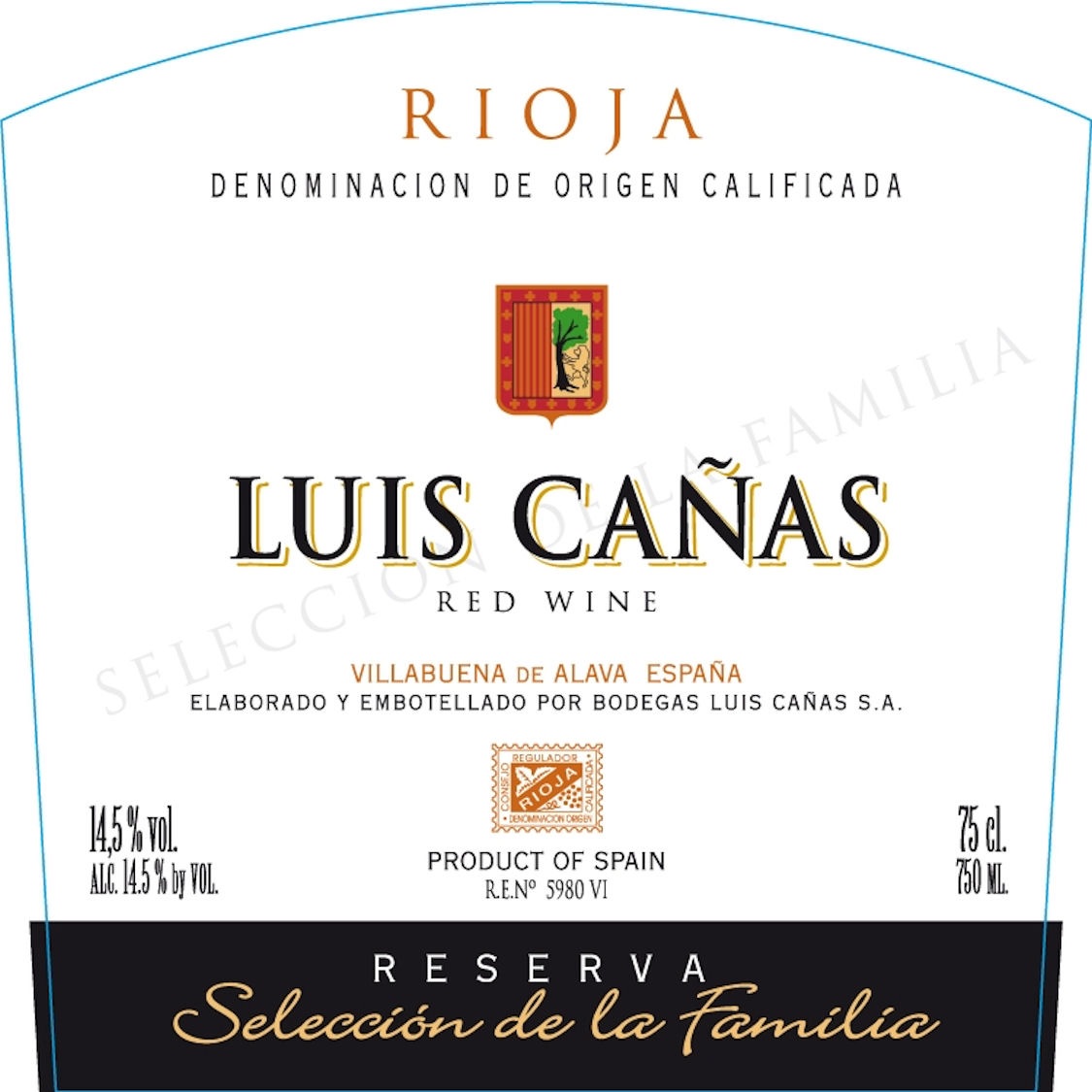
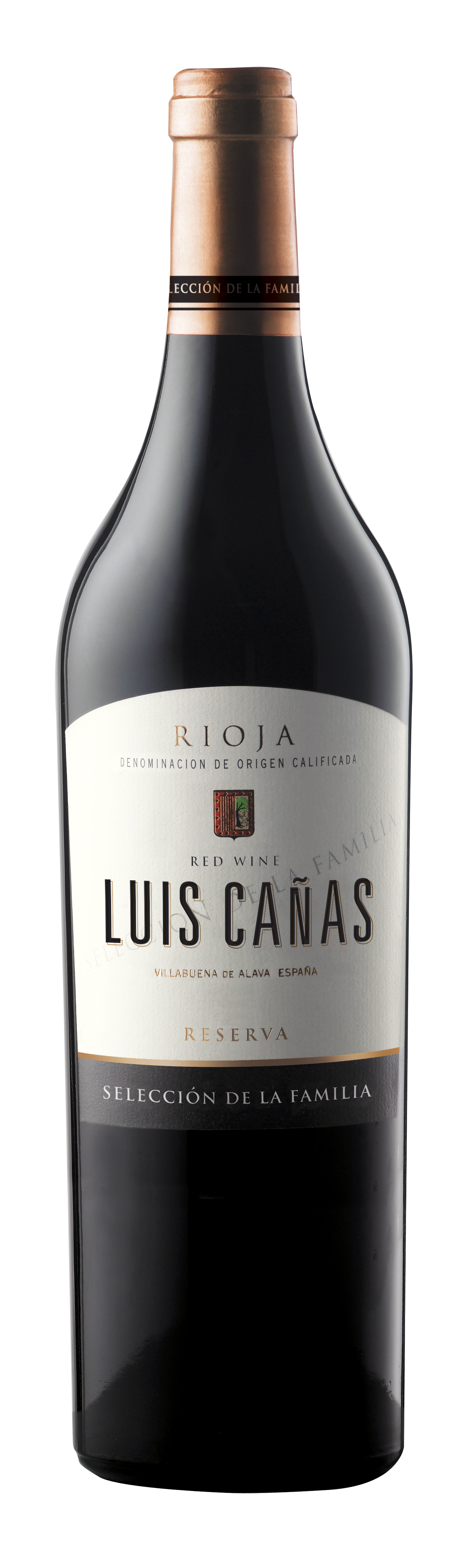
Luis Canas Reserva Seleccion de la Familia Rioja is made from 85% Tempranillo and 15% Cabernet Sauvignon
Aged for 20 months in new oak barrels - 50% French 50% American.
45 years old vines
Alcohol: 14,5º
Total acidity: 5,73 g./l.
Volatile acidity: 0,73 g./l.
PH: 3,53
Free SO2: 28 mg./l.
Reducing sugars: 1,3 g./l.
The “family reserve” from one of Rioja Alavesa’s most enduring family-run wineries. Wines destined to be the Reserva de la Familia label are made from a selection of grapes from old vines, those which combine a series of characteristics such as good orientation and exposure to the sun, and a poor soil which ensures low yields.
This wine is one of very few Rioja wines to blend Cabernet Sauvignon with Tempranillo. Bodegas Luis Cañas was granted permission by the D.O.Ca. to plant this variety as an experiment in the early 1980s.
Tasting notes
A brilliant garnet color with cherry hints on the edges.
The nose offers a complex variety of aromas that combine to bring an intense and sophisticated wine. Initially we can find very ripe berry fruits, smoky notes, raisins and liquor. After a certain amount of aeration, the cinnamon and jam notes appear and, with a little more time, the roasted and spiced aromas are noticed more clearly.
The palate is full, with a good presence of tannins, although these are offset by the glycerine like character, resulting in a fleshy sensation. Long lasting and lingering finish.
Winemaking and aging:
The grapes were cold macerated for 72 hours upon arrival at the winery. They underwent fermentation at 26º C in sealed cement tanks under constant thermal control, with the must pumped over daily. With the paste devatted by gravity, spontaneous malolactic fermentation took place after 45 days.
The wine was aged for 20 months in 50% medium toasted American and 50% French oak barrels. The barrel ageing not only adds tannins from the wood, but stabilizes the wine naturally. After the final racking, it was clarified in tanks with a small amount of natural egg white, decanted after 30 days and bottled directly without any type of filtration. Because this wine’s evolutionary cycle is quite slow, only corks of the highest quality available were used to ensure that it could be prolonged for several years.
Review:
Including 15% Cabernet Sauvignon, the Tempranillo-dominated 2019 Rioja Reserva Selección de la Familia is a crème de la crème selection that was aged 20 months in oak. Its deep purple hue is followed by a sensational nose of ripe black and blue fruits, cedarwood, graphite, smoked tobacco, and chocolate. This carries to a full-bodied Rioja with a powerful, layered mouthfeel, ripe yet building tannins, and serious length on the finish.
-Jeb Dunnuck 95 Points
The Luis Canas & Amaren Estate
Bodega Luis Cañas is a family winery which for more than two centuries has devoted itself to viticulture and winemaking. However, it was not until 1970 when Luis Cañas first hit the market selling its young bottled wine which until then it had sold only in bulk. From this date onwards, it begins to experience a rise in sales and what is today one of the leading wineries in the Rioja Alavesa begins to take shape.
1989 marks a new milestone in the winery’s transformation when Juan Luis Cañas, the only son of Mr Luis Cañas takes charge of the same. Aged 33 , he brings fresh ideas to the table and begins to develop new wines at the same time as he promotes increasingly aged wines, beginning to lay the foundations of what would later become the new winery.
The Region
-The Climate: Fundamentally Atlantic, which thanks to the protection that the Sierra Cantabria provides from the coldest northern winds as well as Continental and Mediterranean influence.
The average annual temperature oscillates between 12.6º and the 13.2º. There are large fluctuations in the temperature between the morning and the night at harvest time, which is very positive for the quality of the grapes.
Average rainfall is around 400 mm. and 600 mm
- The Soil: The soil is poor and of a clay loam or chalky clay type, ideal for obtaining grapes of an extraordinary quality.
- Altitude: Our vineyards are located between 450 and 600 meters in altitude.
- Grape Varietals:
TEMPRANILLO: The most important indigenous red variety in the D.O. RIOJA. And one of the biggest varieties in the world. It produces wines for length ageing, very balanced in their alcoholic degrees, color and acidity.
GRACIANO: An indigenous red variety with a great future in Rioja and so its surface area is increasing. It produces wines with considerable acidity and polyphonelic content, ideal for growing, whose aroma is superior in intensity to the rest of the Rioja verities. A perfect complement to the Tempranillo for ageing.
VIURA: The most extensive white variety in Rioja. It produces fruity wines, with a floral aroma and a notable degree of acidity, ideal for preparing both young white and vintage wines.
MALVASÍA: A White variety that produces wines of great oiliness and aromatic intensity.
The Luis Canas & Amaren Estate
Bodega Luis Cañas is a family winery which for more than two centuries has devoted itself to viticulture and winemaking. However, it was not until 1970 when Luis Cañas first hit the market selling its young bottled wine which until then it had sold only in bulk. From this date onwards, it begins to experience a rise in sales and what is today one of the leading wineries in the Rioja Alavesa begins to take shape.
1989 marks a new milestone in the winery’s transformation when Juan Luis Cañas, the only son of Mr Luis Cañas takes charge of the same. Aged 33 , he brings fresh ideas to the table and begins to develop new wines at the same time as he promotes increasingly aged wines, beginning to lay the foundations of what would later become the new winery.
The Region
-The Climate: Fundamentally Atlantic, which thanks to the protection that the Sierra Cantabria provides from the coldest northern winds as well as Continental and Mediterranean influence.
The average annual temperature oscillates between 12.6º and the 13.2º. There are large fluctuations in the temperature between the morning and the night at harvest time, which is very positive for the quality of the grapes.
Average rainfall is around 400 mm. and 600 mm
- The Soil: The soil is poor and of a clay loam or chalky clay type, ideal for obtaining grapes of an extraordinary quality.
- Altitude: Our vineyards are located between 450 and 600 meters in altitude.
- Grape Varietals:
TEMPRANILLO: The most important indigenous red variety in the D.O. RIOJA. And one of the biggest varieties in the world. It produces wines for length ageing, very balanced in their alcoholic degrees, color and acidity.
GRACIANO: An indigenous red variety with a great future in Rioja and so its surface area is increasing. It produces wines with considerable acidity and polyphonelic content, ideal for growing, whose aroma is superior in intensity to the rest of the Rioja verities. A perfect complement to the Tempranillo for ageing.
VIURA: The most extensive white variety in Rioja. It produces fruity wines, with a floral aroma and a notable degree of acidity, ideal for preparing both young white and vintage wines.
MALVASÍA: A White variety that produces wines of great oiliness and aromatic intensity.
The Luis Canas & Amaren Vineyards
The vineyard is the star of a landscape where the plots of land, mainly located on slopes and terraces, being protected to the north by the imposing presence of the Sierra Cantabria.
Villabuena is a town located to the south of the province of Álava, where the city of the vineyard and the preparation of wines is practically the sole activity that is carried on.
It is in this region of Rioja Alavesa where the most suitable conditions arise for obtaining large vineyards of a superior quality.
22 hectares of vines of over 60 years of age and 30 hectares of between 30 and 60 years make up a vineyard which is the strongest indication of the wine cellar.
The old vineyards achieve a perfect balance given their low production level, having very deep roots that offer the wines complexity, minerality and personality as well as making them more resistant to drought.
Vines that are checked and run by the agronomic engineers from our field department in which rational wine-growing that is respectful of the environment.
All of the forms of treatment that are carried on at the vineyard are restricted to minimally aggressive products and methods which include amongst others, the prohibition against the use of herbicides and the use of fertilizers that are always organic.
The purpose is to make use of a vineyard with a powerful defensive system that is capable of being defended from external threats with no need for artificial assistance. In this way we achieve complete respect for the land. The native soil is a fundamental part of the distinguishing personality of each region. We also manage to make the vines healthier.
22 hectares of vines of over 60 years of age and 30 hectares of between 30 and 60 years make up a vineyard which is the strongest indication of the wine cellar.
The old vineyards achieve a perfect balance given their low production level, having very deep roots that offer the wines complexity, minerality and personality as well as making them more resistant to drought.
Vines that are checked and run by the agronomic engineers from our field department in which rational wine-growing that is respectful of the environment.
All of the forms of treatment that are carried on at the vineyard are restricted to minimally aggressive products and methods which include amongst others, the prohibition against the use of herbicides and the use of fertilizers that are always organic.
The purpose is to make use of a vineyard with a powerful defensive system that is capable of being defended from external threats with no need for artificial assistance. In this way we achieve complete respect for the land. The native soil is a fundamental part of the distinguishing personality of each region. We also manage to make the vines healthier.

Matthews Winery Columbia Valley Cuvee is made from 65% Merlot, 27% Cabernet Franc, 8% Malbec.
The 2021 Columbia Valley Cuvée sparkles with purple and deep garnet in the glass. Meadow flowers, fresh red berry, black plum, and cocoa powder aromas exhilarate leading to flavors of morello cherry liqueur, cardamom, mountain blackberry, and licorice snaps. This merlot-dominant blend is plush and weighty on the palate with powdery tannins. Dark stone fruits and dusty minerality coat the palate for a long, seamless finish.
Reviews:
A handsome blend, structured and polished, with expressive black cherry flavors accented by tarragon, mocha espresso and toasty spices that sail toward refined tannins. Merlot, Cabernet Franc and Malbec. Drink now through 2031.
-Wine Spectator 93 Points
This Merlot-based blend is a part of the Matthews tradition. Wildly fruity aromatics with whole berries, destemmed aromas driven by red berries, mountain blueberries, and a touch of green peppercorn and mocha dust. A streak of graphite underlines red berries, early season blackberries and a savoury herbal character that mingles complexity with fresh ripe fruits.
-Decanter 93 Points

Carl von Schubert Maximin Grunhaus Pinot Noir is made from 100 percent Pinot Noir.
A concentrated yet elegantly refined Pinot Noir grown in the blue slate soils of the Grosse Lage (grand cru) Abtsberg vineyard.
Review:

Proelio Puerto Rubio Rioja Tempranillo 2019 is 100% Tempranillo.
Sourced from a vineyard at 505 metres above sea level in San Vicente de la Sonsierra, the wine takes its name from the site it is located on. The soils are primarily composed of depleted limestone in the subsoil and pebbles on the topsoil. These types of soils offer long-ageing capacity, freshness, volume and structured wines.
Fresh, structured and complex, this wine is very aromatic, with intense aromas of wild black fruits, accompanied by deep balsamic aromas and licorice. A silky texture and mineral notes, it is round, powerful and polished on the palate with flavors of black fruits, prunes, balsamic and spice. A long and persistent finish.
Meat and game, either grilled, baked or stewed, pastes, creams and soups, all kind of meat recipes, roast lamb.
Review:
This is a spicy Rioja with aromas of mulberries, spiced cherries, cinnamon stick, licorice and dill. Turns to walnuts and roasted chestnuts. Chewy and full-bodied, with firm yet polished tannins. Well structured, deep and persistent. Drink from 2024.
-James Suckling 94 Points

Alain Jaume Tavel Rose Le Cretace is made from 60% Grenache, 30% Syrah and 10% Mourvedre
Rosé de saignée (bleed technique) with a vibrant ruby color, complex and elegant, notes of crushed strawberries and rose petals.
Tavel Le Cretace Rose gives up vibrant wild strawberry, watermelon, crushed flowers and hints of spice to go with a medium-bodied, layered and seamless profile on the palate. A classic rose from this appellation, enjoy this beauty with food over the coming year or two.
Pair with roasted and/or spicy Turkey, sushi, seafood and grilled fish, Asian food.

Pago de Carraovejas Ribera Del Duero is made from 90% Tempranillo, 6% Cabernet Sauvignon and 4% Merlot
The most honest interpretation of the Carraovejas Valley.
Body, structure and balance with a vibrant background. Delicacy, harmony and passion for detail are perceived in a wine that reflects the unique character of the valley in an outstanding way.
The 2022 vintage was characterized by cool winter months and extremely low rainfall, reaching limits that had not been observed for years. Due to the good rainfall of the previous year, the vines had good accumulated water reserves, which allowed the vineyard to have a good phenological cycle and normal development. Budding and flowering were perfectly developed in each of the varieties worked, and a homogeneous and balanced development of the plants was achieved. The summer was excessively hot, with several episodes of heat waves, which were mitigated by drip irrigation. Veraison, which was slower than in previous years, and ripening began in early August and the berries developed very uniformly. Harvest began on September 12 and ended on September 28.
Pago de Carraovejas 2022 is the most honest reflection of the valley to which it owes its name. An environment in which the vines climb the slopes to form a unique landscape. On the surface, its tertiary soil of limestone marl, clay and sandstone outcrops force the vines to self-regulate and give their best. Plots that converge in an orography marked by its unique mesoclimate. The vineyards are distributed from the middle zones to the moors that exceed 900 meters in altitude; from the gentle undulation that descends towards the stream, to the plots that exceed 30% slope. South- and north facing slopes, each with its own personality, create the profile of the Carraovejas Valley.
The grapes for Pago de Carraovejas 2022 were harvested by hand after an initial selection of bunches in the vineyard. Subsequently, in the winery, a double selection was made: first by cluster then by berry. Gravity must production allows maximum respect for the raw material. During the fermentation process, indigenous yeasts and lactic bacteria from our own estate were used. The wine was aged in French and American oak barrels for 12 months. The entire process was marked by precision and care in every detail. For greater protection, the wine contains sulfites. Finally it was clarified with natural egg white and bottle in spring of 2024.
Review:
Freshly cut vanilla, dark cherries and ripe plums on the nose, with a touch of blue flowers. Medium to full body with firm, fine-grained tannins and a juicy, medium-long finish. Drink now or hold.
-James Suckling 92 Points

Roland Champion Champagne Blanc de Blancs NV is aged for minimum 30 months (the minimum for NV is 15 months). This cuvee is made from 100% Chardonnay and is produced from the free run juice only. The current release is the result of the blend of the 2005, the 2006 and the 2007 vintage.
Fresh and delicate, its fine bubbles and wide range of aromas will be perfect as an aperitif. This Champagne will also match very well with seafood and shellfish.
dosage : 8 grams per liter
ageing : 30 months on laths
Even if it doesn't say on the label, 100% of the production is RD (Recently Disgorged)
Total Production for this Cuvée : 1,500 cases (9 liter equivalent) per year
Reviews:
"Golden yellow color. Lively, fruity, toasty leesy aromas of honeyed brioche and apple tart with a satiny, tangy, dry-yet-fruity medium body and a sleek, interesting, snappy lemon curd, nougat, and chalk finish with silky, soft, fruit tannins. A classic example of blanc de blanc champagne, delicious."
- Beverage Testing institute , 93 pts
"Spiced with ground anise and ginger accents, this offers notes of poached pear, lemon meringue pie, hazelnut and stony mineral. Very elegant and well-meshed throughout, with a silky finish. Tasted twice, with consistent notes. 1,500 cases made. –AN"
- Wine Spectator 92 pts
"This cuvée made from 100% Chardonnay offers a fresh aromatic nose of light toast, dried yellow fruit and nuances of yeast. On the palate it has a creamy mouth feel of toasted nuts and rich autolytic notes. This is a beautiful wine, rich and complex."
International Wine review 92+ pts
"Small grower. Autumn fruits dominate the aromas of this wine, which is blatantly more like a wine than we normally expect a champagne to be. Some may find that unexpected and even off-putting, while others will find it intriguingly delicious."
- Washington Post - EXCELLENT
"Roland Champion is a small family-owned producer, now with the fourth generation, in the village of Chouilly (”shoo-ee”), which has only Grand Cru vineyards. Made from 100 percent chardonnay grapes, this Champagne offers ethereal grace and poise and harmony; if I were fighting a duel tonight, I would ask for this Champagne as my last beverage. The nose here is about the richness of warm biscuits and hazelnuts, dried fruit and spice, like a Platonic, ineffably light fruitcake; in the mouth, however, it’s about a structure that encompasses an incredible marriage of power and elegance, like the delicacy and strength of the finest bone china. And there’s something porcelain-like about this Champagne, in its notable crisp, lively character, its transparency and its slightly chalky, shale-like mineral elements. Forget the Champagnes that come on with heavy toasty, caramel qualities; here, instead, is a wealth of subtlety and nuance touched with a racy, dynamic edge. Exceptional."
Biggerthanyourhead.net

Luis Canas Rioja Reserva is made from 100 percent 95% Tempranillo and 5% Graciano
A classic style Rioja Reserva from one of the regions most enduring family run wineries. The hillside terraced vineyards are sheltered by the Sierra Cantabria Mountains to the north from harsh weather extremes. Small plot production is utilized in this region of infertile chalky clay soil to produce clusters of excellent quality. Almost 900 plots are needed to complete the approximately 400 hectares of estate-owned or cellar-controlled vineyards, some with vines more than 100 years in age.
Tasting notes
Rich color. Very pleasant on the nose, subtle and elegant, complex, with aromas of fine wood, ripe fruit, coffee. Thick, unctuous and round on the palate with solid structure and juicy tannins. The second nose shows spiced nuances and black ripe fruit aromas.
Winemaking and aging
Upon entering the bodega, bunches undergo a manual selection and then individual grapes are sorted based on their weight. Following this double selection process, they are de-stemmed and crushed before undergoing fermentation and then aceration in stainless steel tanks for a total of 8 days, obtaining better color extraction as well as much more complex and tannic wines, suitable for prolonged aging.
After its primary fermentation, the wine is placed in barrels where it undergoes malolactic fermentation and is aged for 18 months in French (70%) and American (30%) oak barrels, then aged minimum 18 months in bottle before release.
Total acidity: 5 g./l. Volatile acidity: 0,6 g./l. PH: 3,59 Free SO2: 25 mg./l. Residual sugar: 1,9 g./l.
Excellent with red or white meats, all types of game, roasts, oily fish, rice with meat and cheese. Within Rioja cuisine it is perfection accompanying peppers stuffed with cod, artichokes with ham, migas pastoriles and trotters

Luis Canas Rioja Crianza is made from 95% Tempranillo and 5% Garnacha
A classic style Rioja from one of the regions most enduring family run wineries.. The hillside terraced vineyards are sheltered by the Sierra Cantabria Mountains to the north from harsh weather extremes. Small plot production is utilized in this region of infertile chalky clay soil to produce clusters of excellent quality. Almost 900 plots are needed to complete the approximately 400 hectares of estate-owned or cellar-controlled vineyards, some with vines more than 100 years in age.
Tasting notes
Made from 95% Tempranillo, 5% Garnacha of 30 years of age, the wine shows a ruby red color, a clean nose with nuances of balsamic, plum and cedar. The palate is smooth and velvety, complex and structured, with fruit, spice flavors with toasted oak. A pleasant finish with red fruits and hints of eucalyptus.
The harvest
This year in Rioja Alavesa the weather has been especially cold, the summer short and dry, and there has been plenty of rain in early September. This has produced wines with great aromatic notes, particularly those coming from high altitude areas, very fragrant and with great structure.
Winemaking and aging
Upon entering the bodega and passing the selection table, the grapes are de-stemmed and crushed before undergoing fermentation and then maceration in stainless steel tanks for a total of 8 days, obtaining better color extraction as well as much more complex wines, suitable for prolonged aging. The wine is clarified with vegetable gelatines and follows anicrobic filtration.
It is ideal to pair with meats; red meat, poultry, small game, oily fish, semi-cured cheeses, spicy dishes and hot dishes such as beans or potatoes Rioja style.
After its primary fermentation, the wine is placed in barrels where it undergoes malolactic fermentation and is aged for a minimum of 12 months. It is then bottled for at least another 12 months.
Review:
"Juicy Bing cherries, peppery herbs, leather, and cedarwood notes all emerge from the 2021 Rioja Crianza, a medium-bodied, concentrated, round, layered red that has supple tannins, beautiful fruit, and a great finish. This classic Rioja has tons to love."
- Jeb Dunnuck (Importer Highlight: Fran Kysela ; July 2024), 91 pts
Luis Canas Rioja Crianza is made from 95% Tempranillo and 5% Garnacha
A classic style Rioja from one of the regions most enduring family run wineries.. The hillside terraced vineyards are sheltered by the Sierra Cantabria Mountains to the north from harsh weather extremes. Small plot production is utilized in this region of infertile chalky clay soil to produce clusters of excellent quality. Almost 900 plots are needed to complete the approximately 400 hectares of estate-owned or cellar-controlled vineyards, some with vines more than 100 years in age.
Tasting notes
Made from 95% Tempranillo, 5% Garnacha of 30 years of age, the wine shows a ruby red color, a clean nose with nuances of balsamic, plum and cedar. The palate is smooth and velvety, complex and structured, with fruit, spice flavors with toasted oak. A pleasant finish with red fruits and hints of eucalyptus.
The harvest
This year in Rioja Alavesa the weather has been especially cold, the summer short and dry, and there has been plenty of rain in early September. This has produced wines with great aromatic notes, particularly those coming from high altitude areas, very fragrant and with great structure.
Winemaking and aging
Upon entering the bodega and passing the selection table, the grapes are de-stemmed and crushed before undergoing fermentation and then maceration in stainless steel tanks for a total of 8 days, obtaining better color extraction as well as much more complex wines, suitable for prolonged aging. The wine is clarified with vegetable gelatines and follows anicrobic filtration.
It is ideal to pair with meats; red meat, poultry, small game, oily fish, semi-cured cheeses, spicy dishes and hot dishes such as beans or potatoes Rioja style.
After its primary fermentation, the wine is placed in barrels where it undergoes malolactic fermentation and is aged for a minimum of 12 months. It is then bottled for at least another 12 months.

A deep powerful Gran Reserva from one of Rioja Alavesa’s most enduring family run wineries. The hillside terraced vineyards are sheltered by the Sierra Cantabria Mountains to the north from harsh weather extremes. Small plot production is utilized in this region of infertile chalky clay soil to produce clusters of excellent quality. Almost 900 plots are needed to complete the approximately 400 hectares of estate-owned or cellar-controlled vineyards, some with vines more than 100 years in age.
Tasting notes
Ruby red color with earthy tones. The wine shows finesse, elegance and complexity with good concentration of black fruit, thyme and rosemary with secondary aromas of leather and tobacco leaves. In the palate it is polished and rounded, making it pleasant and easy to drink. Fleshy with both elegance and power. It has touches of black fruit jam and liquorice. A long, delicious and persistent finish.
Suitable for pairing with a long, copious meal where it can accommodate braised vegetables, cold cuts, peppers stuffed with hake and shrimp, mushroom omelettes, cod Rioja style, both red and white meat... and so on.

Luis Canas Rioja Hiru 3 Racimos is 100% Tempranillo
60 years old vines
Alcohol: 14,5º
Total acidity: 6,0 gr/l
Volatile acidity: 0,50 gr/l
PH: 3,47
Free SO2: 25 mg/l
Reducing sugars: 1,8 gr/l
This wine is a response to our quest to find the perfect wine, one that combines structure, complexity and balance. It is the result of a careful selection of grapes not from the vines but from the appropriate clusters, those that naturally produce three or less clusters and which are 60 or more years of age. Vines situated on slopes and terraces of limestone and clay soil, well exposed to the sun. These grapes are harvested in small boxes at the very best moment, then inspected on the selection table and vinified in small groups at a controlled temperature. After alcoholic fermentation they are macerated to extract their full potential. The resulting most is then settled in new French and American oak barrels to undergo malolactic fermentation. This second fermentation ensures the wine gains in complexity and aromatic intensity, it also stabilises its colour.
Fully ripened and concentrated fruit aromas with balsamic and spicy mineral nuances, notes of blackberry and blueberry preserve wrapped in creamy oak, caramel and milky coffee tones. The palate is concentrated, unctuous in the centre, balanced, sweet, with fine tannins. Very long finish, expressive, clearly marked with the character of the soil.
Hiru 3 racimos is a complex wine and so is its pairing with food. We must consider two options, either drink it in light sips so that the wine itself is the star of the feast, or serve with solid dishes that can match its vigour. An Iberian pork loin with roasted peppers, steak with mushrooms and plums, wild boar stew or pheasant in port are dishes that blend incredibly with this characterful wine.

In 2007, production was just less than 5000 kg per hectare. This wine is prepared with Tempranillo 100% grapes from our vineyards.
The grapes are initially subjected to a six-day pre-fermentation cold maceration below 14ºC. They then undergo 30 days of alcoholic fermentation at a controlled temperature of 28ºC, after which the wine is removed from the tanks without pressing the grape skins. The malolactic fermentation is slow and relaxed at a temperature of 20 ºC for 28 days without the addition of bacteria.
The wine is aged for18 months in new French oak barrels and is decanted into new barrels every six months. At the end of this period, the wine is blended and bottled without undergoing any type of filtration, clarification or cold treatment.
Prepared with Tempranillo grapes (100%), this wine has a ruby red colour with very pure, intense garnet tones.
Its bouquet has fine complexity with tones of ripened fruit, especially cherries, blue berries and black currants, which are in harmony with tones of good wood, spices (vanilla and coconut) and a liquorice undertone.
In the mouth, this wine displays great balance, proving pleasing to the taste, sweet due to the maturity of its tannins and exuberant on account of its pleasant level of acidity.
Vineyard:
Pago de los Capellanes, Pedrosa de Duero.
Variety composition:
100% Tempranillo.
Type of soil:
Clayey and chalky.
Aging:
18 months in barrel and remainder on rack.
Type of oak:
100% French oak, medium toast.
Serving:
Uncork and decant one hour before serving at a temperature of 16-18 ºC.
The 2019 Ribera del Duero Reserva is also terrific, with gorgeous aromatics of black and blue fruits supported by Asian spices, lead pencils, cedarwood, and violets. It's beautifully textured, medium to full-bodied, has a concentrated, powerful mouthfeel, and ripe, integrated tannins.
-Jeb Dunnuck 95 Points

Hickinbotham Trueman Cabernet Sauvignon is made from 100 percent Cabernet Sauvignon.
Trueman represents Cabernet in Clarendon at its best. Its purity, its elegant style, its supple, polished nature ... it’s a wine of its own.Distinct in character, this is not like Cabernet from the Vales below or the hills to the east. From its pretty, delicate florals and musk, through to its silky blackcurrant and kalamata juice and down to its dark carbon soul - Trueman is a modern Cabernet that encapsulates all the toil and antiquity of Clarendon. Echoing the unearthed prose of wine writer Ebenezer Ward from 1886 on theCabernet sown from this very land – Trueman is “an excelled wine, of very marked flavor and bouquet”.
Review:
Deep garnet/purple, the 2012 Cabernet Sauvignon Hickinbotham Vineyard has a classic nose showing pronounced fresh blackcurrant and blackberry highlighted by cloves, menthol, pencil shavings and earth notes. Medium to full-bodied, taut and muscular, the palate has grainy tannins, nice freshness and a long finish.
-Wine Advocate 93 Points

Pearmund Cellars Viognier Vinecroft Vineyard is made from 100 percent Viognier.
Explosive tropical fruit flavors: Pineapple and peach with hints of grapefruit. Powerful, yet feminine.
Sweet and ripe on the palate with peach, apricot, pineapple, and mango notes. Long and flavorful finish.