" We don't sell the wine without touching the vine "
| Country: | France |
| Regions: | Rhone Tavel |
| Winery: | Alain Jaume |
| Grape Type: | Grenache |
| Vintage: | 2025 |
| Bottle Size: | 750 ml |

Alain Jaume Bellissime Cotes du Rhone Rose is made from 50% Grenache Noir, 25% Cinsault, 20% Syrah and 5% Mourvedre
Salmon-pink color, clear and brilliant. The nose is fruity and spicy, reminiscent of wild strawberry and fine Provencal spices. The palate is full, well-balanced and fruity, with a long, fresh finish. A beautiful and delicate rosé.
A part is drawn off the skins with short maceration and the other part is from direct press. Fermentation in stainless steel at cool temperature. Bottling 5 months after harvest.

Alain Jaume Ventoux Les Gelinottes is made from 50% Grenache and 50% Syrah
The colour is intense, purple-tinged garnet. The aromatic range of the nose goes from fresh berries to black fruit (blackcurrant, blackberry). The palate is full-flavoured, with very soft tannins and aromas of the fruit already mentioned. This is a gorgeous style of wine, fruity driven, for every day drinking...anytime !
Soil types
The wine is produced from hilly vineyards that are mainly planted on sandy and clay soils. They are located on the East side of the Rhone valley, in the Vaucluse area. Welcome to the foothills of the well known “Mont Ventoux” Mountain.
Winemaking and aging
Stainless steel fermentaion at cool temperature to preserve the fruits and typicity. Bottling 8 months after the harvest.
Goes well with quite a lot of food such as Pizza, Pasta, hamburger, mild cheese or even on its own.
Alain Jaume Bellissime Cotes du Rhone Rose is made from 50% Grenache Noir, 25% Cinsault, 20% Syrah and 5% Mourvedre
Salmon-pink color, clear and brilliant. The nose is fruity and spicy, reminiscent of wild strawberry and fine Provencal spices. The palate is full, well-balanced and fruity, with a long, fresh finish. A beautiful and delicate rosé.
A part is drawn off the skins with short maceration and the other part is from direct press. Fermentation in stainless steel at cool temperature. Bottling 5 months after harvest.

Alain Jaume Cairanne Les Travees is made from 65% Grenache, 35% Syrah, 5% Mourvèdre.
Our selected vines for this cuvée are on slopes facing south.
.
The wine delivers an intensive nose, with loads of black fruits.
Starting full and concentrated, with silky tannins, the mouth reveals blackcurrant and a cherry fruit typicity.
It finishes with typical notes of pepper and earth.
Enjoy with roasted lamb or braised or BBQed pork. gpoes also very well with mild cheese, such as brie or camenbert.
Review:
-James Suckling 92 Points
Alain Jaume Cairanne Les Travees is made from Grenache, Syrah and Mourvèdre.
The selected vines for this cuvée sit on south-facing slopes in Cairanne, one of the southern Rhône's finest villages.
The wine delivers an intense nose of black fruit. Full and concentrated on the palate with silky tannins, it reveals blackcurrant and cherry before a finish carrying the pepper and earthy notes typical of Cairanne. Enjoy with roasted lamb, braised or grilled pork, or a mild cheese such as brie or camembert.
Review:
-Jeb Dunnuck 90 Points

Alain Jaume Chateauneuf Du Pape Rouge Vieux Terron is made from 85% Grenache, 10% Syrah, 5% Mourvèdre
An intense purple color is followed by ripe red fruit aromas, such as sweet black cherry.
The palate reveals clearly the aromatic complexity: spices and black fruit are boasted with soft tannins. The finish is long with aromatic hints of liquorice and pepper. Red raspberries, star anise and hints of cinnamon.
It will accompany game, red meat or meat in sauce and strong cheeses.
Soil types
Châteauneuf du Pape vineyards are mostly located on plateaux. Stony-clay soil covered with large rolled stones. Some plots are more sandy.
Winemaking and aging
Harvest is destemmed and crushed. Fermentation temperature is controlled at 30°C. Vatting period of 18 to 21 days. Matured in vats (80%) and oak casks (20%).
Review:
-Decanter World Wine Awards 93 Points
-Jeb Dunnuck 91 Points
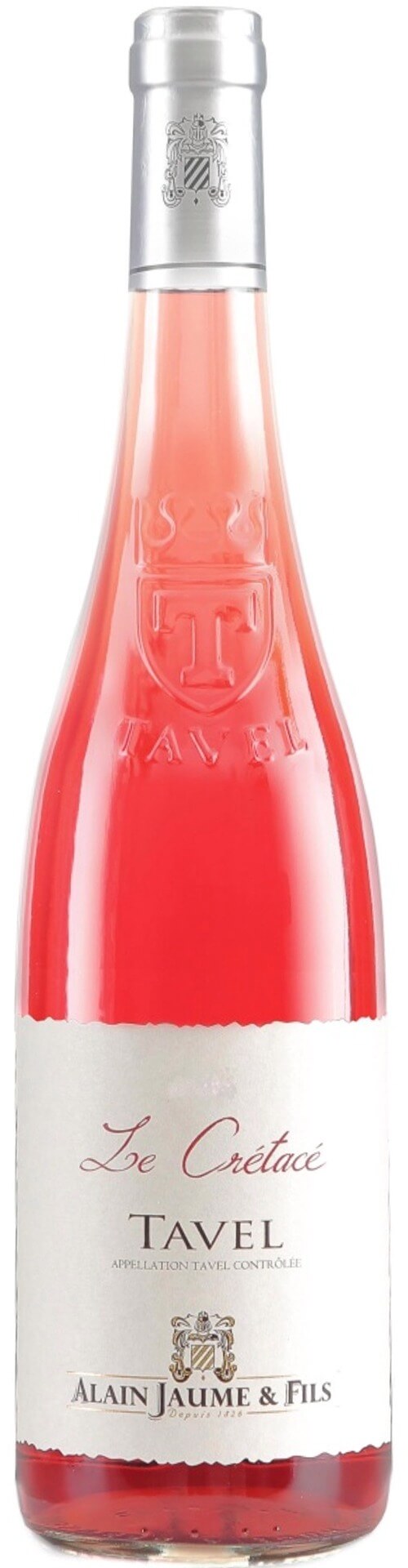
Alain Jaume Tavel Rose Le Cretace is made from 60% Grenache, 30% Syrah and 10% Mourvedre
Rosé de saignée (bleed technique) with a vibrant ruby color, complex and elegant, notes of crushed strawberries and rose petals.
Tavel Le Cretace Rose gives up vibrant wild strawberry, watermelon, crushed flowers and hints of spice to go with a medium-bodied, layered and seamless profile on the palate. A classic rose from this appellation, enjoy this beauty with food over the coming year or two.
Pair with roasted and/or spicy Turkey, sushi, seafood and grilled fish, Asian food.
The Alain Jaume Winery
Established in 1826 in the Northern part of Chateauneuf du Pape, the Alain Jaume Winery boasts both the exceptional terroir of the Southern Rhone Valley and a long line of dedicated winemakers. Alain Jaume works in accordance with certified organic agricultural practices for both the Grand Veneur and Clos de Sixte vineyards. They strive to let the true terrior be expressed in their wines.
The principal winemaker is Alain Jaume. His sons Sebastien and Christophe are both heavily involved with the winery in sales and marketing and winemaking respectively. The Alain Jaume winery consists of 40 acres in Chateauneuf du Pape, 50 acres in Lirac, and 75 acres of Cotes du Rhone vines. The family produces wines under two labels: Domaine Grand Veneur and Alain Jaume.
In 1320 Pope Jean XXII planted the first vines of Chateauneuf-du-Pape, but it was only in 1360 that the wines of the region first gained fame. Oddly, the wine that gave Chateauneuf-du-Pape its original reputation was the White and not the Red. The white wine was a favorite of Pope Innocent VI. The Domaine dates back to 1826, having been founded at that time by Mathieu Jaume. Since 1979, Alain Jaume has run the Domaine and now has the help of his two sons: Sebastien and Christophe.
"Popes throughout history have liked their juice, and when the papal see moved to Avignon in the 13th century, that juice was Chateauneuf-du-Pape ("the pope's new castle") made from grapes grown nearby in the Southern Rhône. The castle is a ruin now, the papal court long gone back to Rome, but the wines that bear the pope's coat of arms emblazoned on the bottle are still produced more or less according to the long-standing recipe. Not every winemaker uses all 13 of the grapes in the proscribed blend, though. At Domaine Grand Veneur, an estate that dates to 1826, Alain Jaume and his sons Sebastien and Christophe emphasize Grenache blended with Syrah and Mourvèdre."
- Los Angeles Times
"Improved Chateauneuf with very accomplished, stylish reds since the late 1990s; also very good Vacqueyras and Cotes-du-Rhône Villages." - Anthony Dias Blue's pocket guide to wine 2006
"Grand Veneur is one of the most brilliant estates in Chateauneuf du Pape as well as the force behind the negociant wines sold under the Alain Jaume label. Virtually everything they produce has merit. Some of this estate’s 2009 red wines are just hitting the market as they are bottled early to preserve their fruit and freshness. I can’t say enough about the job Alain Jaume’s two sons, Sebastian and Christophe, have done with this estate. The impeccable attention to detail in the vineyards, the meticulous vinification, and the careful bottling benefit every consumer." - Wine Advocate (#190, August 2010)
"Great bargains continue to emerge from Domaine Grand Veneur as well as from their negociant arm of the business, labeled Alain Jaume" - Wine Advocate (#195, June 2011)
"One of the best-run and highest quality estates of the Southern Rhone is Domaine Grand Veneur, now run by the younger generation of the Jaume family, Sebastien and Christophe. The brothers have done a fabulous job taking over for their quality-oriented father, Alain. These are their less expensive wines, but I will follow up later this year with my reviews of their 2010 Chateauneuf du Papes as well as the 2011s, which I have not yet tasted. They have certainly gotten a good start on their 2011 less expensive Cotes du Rhone selections. The Jaumes are some of the finest practitioners of white winemaking in the Southern Rhone and showcase that with their least expensive offerings, which are creative blends that over-deliver." - Wine Advocate (Issue #201, June 2012)
Some wines by Alain Jaume Winery:
Any Alain Jaume wines we have in stock are listed below, if you don’t see the wine you are looking for please don’t hesitate to ask for it.

Mordoree Lirac Blanc Reine des Bois is made from 30% Grenache, 20% Clairette, and 15% each Viognier, Roussanne, and Marsanne, as well as splashes of Picpoul and Bourboulenc.
Color : green gold
Aromas : white fruits, peach, apricot, pear, violet.
Palate : rounded, long finish, highly flavoured.
Ageing Potential : 4-5 years.
Surface : 4 Ha. Yield : 35 Hl./Ha. Vineyard age : 30 years Terroir : Clay / chalk with pebble stones. Harvest : by hand Vinification : skin maceration and direct pressing with temperature control. Fermentation : oak barrel fermentation for 25% of the total volume
Pairs well with appetizers, fish, seafood.
Review:
-Yohan Castaing (Robert Parker) 92 Points

Booker Vertigo Red Blend is made from 7% Syrah, 32% Mourverde, 9% Grenache, 7% Petite Syrah, 5% Tannat.
Vertigo is our Syrah-heavy "G-S-M". It is spicy, structured, and always performs. The name is a nod to the steepness of the hillside on our estate where we grow the fruit for this wine. Starts with aromas of spice, dark chocolate and soft purple fruits on the nose. The palate surprises you with a touch of cayenne amongst juicy ripe fruit. We recommend making this your BBQ staple. Pair with pork ribs, bourbon chicken, or “bring on the bacon” to quote our tasting room team!
Review:
-James Suckling 95 Points

Lismore Estate Syrah is made from 100 percent Syrah.
A careful selection of the best of the vintage that exemplifies the extraordinary terroir of Lismore.
An exotic experience which shifts your mind to another place. Cassis, brambles and succulent cherry. White pepper, classic garrigue and the strong floral perfume of crushed violets. Light and elegant, but structured with a fresh acidity. To experience the best this wine has to offer, decanting is suggested.
The grapes were fermented 40% whole bunch in a 5000 litre wooden fermenter with gentle pigeage throughout. The process allowed for a long extraction period which lends to the fruit expression of this wine. The wine was left for a 30 day extended maceration on the skins and then pressed in a traditional baskets press. Matured in 500 litre barrels for 10 months (35% new). Time in the bottle will allow integration, the deepening of layers and full expression of the fruit.
Review:
The 2022 Syrah Estate Reserve was dry-farmed on steep shale slopes with long hang-time on the vine. This vintage includes 50% whole bunch and aged in 500- and 700-liter barrels. It has an intense nose with black cherry, raspberry, Provençal herbs and wild thyme. The harmonious palate has a slightly powdery texture and wonderful backbone, reminiscent of a Côte-Rôtie, with white pepper and subtle fennel notes toward the nish. It feels quite linear at the moment, perhaps holding something back for later? Fabulous. - Neal Martin" - Antonio Galloni's Vinous (August 2024), 95 pts "Dominated by grapes from Elgin, with a smaller Stanford component, this is the sort of Syrah that you want to drink by the bottle. Fifty per cent whole bunches add some perfume and texture to a palate of subtle vanilla spice from 15% new oak and layers of white pepper, bramble, liquorice and red cherry. 2025-30" - Tim Atkin (SA Special Report 2024), 93 pts "In a tricky stage when I tasted it twice in the Cape, this needs more time in bottle to show at its best. Aromas of earth, beetroot, fynbos and blood usher you into a palate that's dense, compact and firm, with muscular tannins, redcurrant and damson fruit, plenty of acidity and minerality and well-integrated oak. 2025-30"
-Tim Atkin 94 Points
"The 2022 Syrah comes from a selection of vineyards, mostly from Elgin but with some fruit from Stanford. It includes 50% whole cluster and was aged in large oak barrels. This has an open, complex bouquet with red cherries, bergamot and light ferrous scents, gaining mineralité in the glass. Hints of violet emerge with time. Fresh and saline, the palate is medium-bodied with fine-grained tannins, revealing a dash of white pepper and clove toward the precise finish. Superb. - Neal Martin" - Antonio Galloni's Vinous (August 2024), 94 pts
Domaine de la Janasse Chateauneuf-du-Pape Cuvee Chaupin is made from 100 percent Grenache.
Chaupin is Domaine de la Janasse's single-parcel expression of old-vine Grenache, drawn mostly from the sandy-soiled Chapouin lieu-dit with smaller parts from La Crau and Janasse, some of the oldest vines planted in the early twentieth century. The Sabon family has run the estate near Courthezon since 1967 - today the brother-and-sister team of Christophe and Isabelle - and Janasse stands among Chateauneuf-du-Pape's benchmark producers. Partially destemmed and aged twelve months in foudre and demi-muids, Chaupin is the purest, most perfumed side of Grenache in its homeland.
Review:
All Grenache sourced mostly from the Chapouin lieu-dit with a splash from Janasse, the 2023 Châteauneuf Du Pape Cuvée Chaupin shows a medium ruby hue followed by a pretty, perfumed, remarkably elegant profile. It has a core of sweet red and black berry fruits, absolutely heavenly Provençal aromatics of herbes de Provence, black olive, pepper, and flowers, plus ripe, velvety tannins, flawless balance, and a great finish. Partially destemmed and aged 12 months in 70% foudre and 30% demi-muids, this heavenly 2023 will drink beautifully over the coming two decades. There are roughly 1,500 cases produced. Drink 2025-2045.
-Jeb Dunnuck 99 Points

Argot Bastard Tongue Pinot Noir is made from 100 percent Sonoma Pinot Noir.
Inheriting an unbroken string of success, the “Bastard Tongue” arrives fully-formed and ready to impress. Always a blend from multiple Pinot Noir vineyards, this iteration of “BT” was selected from three distinct sites, each making their own unique contribution of Sonoma County terroir to the wine’s character.
Exploding forth on a tidal wave of high-toned, intense red and black fruits, this is a Pinot Noir that no stemware can contain. The palate’s profound depth is balanced by an inherent freshness, allowing the wine to crackle with brambly energy, while sustained by bass notes of underbrush, black tea, pie spice and baker’s chocolate. A formidable rendition of “Bastard Tongue”, and a deserving successor to its line.
Night harvested by hand throughout September, cluster and berry sorted by hand, de-stemmed, no crushing. 7-day cold soaks, followed by native fermentation in open-top bins. Average time on the skins, 14 days. Aging 20 months in French oak, 100% new. Never racked prior to bottling. Bottled unfined, unfiltered.
Very versatile for pairing. Goes well with grilled meat, vegetable, fish, poultry and cheese.
Review:
“The 2022 ‘Bastard Tongue’ Pinot Noir from Argot is utterly mind-blowing. It immediately draws you in with its seductive aromatic of fresh black raspberries, wild strawberries and even a touch of blueberry all woven together with sweet spices, cinnamon, crushed violets and earthy undertones. On the palate, the wine is both rich and graceful, with a lively acidity that elevates the sweet red fruit notes of red currant and black raspberries. Fine, polished tannins provide a round, silky texture that leads into a supple finish that lingers with sweet berries and sweet spices.”

Paul Hobbs Russian River Pinot Noir is made from 100 percent Pinot Noir.
Sourced predominately from the estates that are defined by their proximity to the coast and Russian River climate, the wine displays vivid crimson and aromas of violet, Morello cherry, and black tea. Velvet tannins on the palate ride along a juicy backbone of flavors such as cranberry, Blood orange, and Damson plum. The finish is long, powered behind a crisp acidity and appealing red clay-like minerality.
"Though Paul Hobbs is probably best known for his single vineyard wines, he is clearly no slouch at blending vineyards to make something special. This bottling is rich and deeply extracted, showing black cherry, raspberry, mace, cola and damp earth notes. It’s very lively for all its density, with seductive oak toast notes adding depth. It is already well integrated and promises a long life ahead. 96 Rich Cook"
-Wine Review Online 96 Points

Bertani Valpantena Amarone is made from 80% Corvina Veronese, 20% Rondinella.
The best grapes are selected so that only the healthiest and ripest bunches are sent to the drying rooms in the historic winery at Grezzana, where they are laid out in single-layer crates. In mid- January, the grapes are destemmed and crushed, then fermentation starts, at first at a temperature of 39°F- 41°F, which then reaches 72°F in the final stages.
WINEMAKING
The vines are vertical-trellised and Guyot-trained, with a planting density of 2024 plants per acre. Hand harvest is carried out in the middle of September.
This amarone is produced in the Valpantena hills, north of Verona. The soils are calcareous-marl in the east and calcareous-clay in the west, rich in iron.
TERROIR & VINTAGE NOTES
Bertani’s impact on Veneto wine making, particularly in Amarone production, is so considerable that ‘Bertani’ and ‘Amarone’ are nearly synonymous. Their 150+ year history is dotted with groundbreaking initiatives and royal accreditation. While respectful of their past, Bertani strives towards innovation, using progressive techniques and equipment allied with extensive experience and a deeply felt respect for tradition to provide wines of uncompromising quality.
On the nose, marked and intense aromas of very ripe cherries, sour cherries, spicy and nutty notes typical of the Valpantena. Good follow-through of red fruits on the palate, with supple tannins to give depth. This full bodied wine pairs well with rich dishes, mature cheeses and strong-flavored meats.

Setriolo Chianti Classico 2024 is made predominantly from Sangiovese, with a touch of Merlot. Setriolo is a tiny family estate at Castellina in Chianti, where the Soderi family have grown grapes since the early nineteenth century; after decades of selling their fruit, they bottled their first estate wine in 2005 and today farm just over three and a half hectares organically.
Hand-harvested and fermented in stainless steel with a two-week maceration, a portion aged a year in French oak, this is a classic, honest Chianti Classico: ruby red with aromas of fresh cherry and raspberry lifted by a note of licorice, with good tannic structure, softness and a savory Tuscan finish.