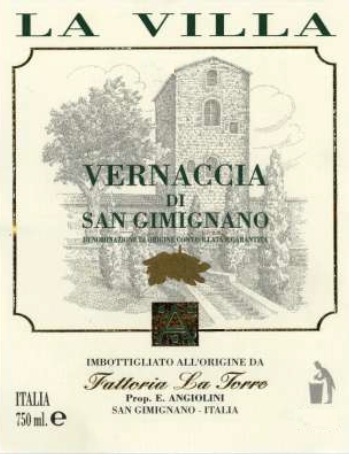
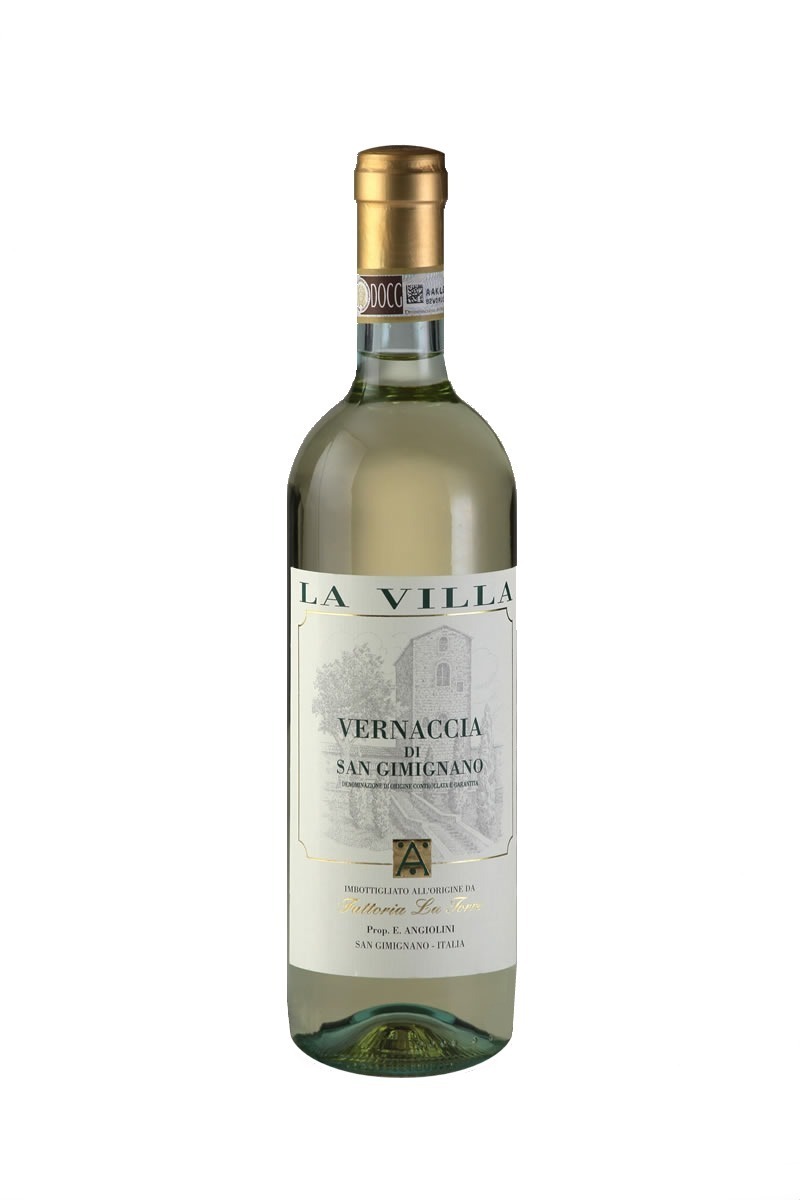
" We don't sell the wine without touching the vine "
| Country: | Italy |
| Region: | Tuscany |
| Winery: | Fattoria La Torre |
| Grape Type: | Vernaccia |
| Vintage: | 2016 |
| Bottle Size: | 750 ml |
Ruffino Romitorio di Santedame Chianti Classico Gran Selezione DOCG is made from 90% Sangiovese, 10% Colorino.
Romitorio di Santedame, a limited-production Gran Selezione from Castellina in Chianti, pays homage to a rich history while embracing a bright future. It originates from a single vineyard within the Chianti Classico's "golden basin" (Conca d'Oro) and is crafted from an exclusive blend of Sangiovese and Colorino. The latter is a native Tuscan grape variety that was nearly extinct but has experienced a revival through dedicated research and promotion efforts.
Fruity aromas typical of Sangiovese, including black cherry and ripe plum, with violet and complex chocolate and black pepper notes. The palate offers sweet tobacco and balsamic hints, while its balanced structure with refined tannins and lively acidity makes it suitable for extended aging.
Review:
You feel the oak here, suggesting vanilla and clove character, but it’s very well complemented by the dark fruit, ranging from blackberries to mulberries to dark cherries. Full-bodied, dense and decadent with a regal structure and muscular tannin backbone. The acidity cuts nicely through on the long finish and provides freshness. Drink from 2024.
-James Suckling 94 Points
Castellare di Castellina 'I Sodi di San Niccolo' Toscana IGT is a blend of Sangioveto (85%-90%) and Malvasia nera (15-10%)
Castellare’s top wine, ranked in the Wine Spectator Top 100 on multiple occasions and recognised with the prestigious Gambero Rosso’s Tre Bicchieri and Bidenda’s Cinque Grappoli ratings. The company takes great pride in demonstrating the greatness of the Sangioveto variety, paired with Malvasia Nera, achieving a worldwide position of sixth place.
Pairs well with cold cuts and meat rich in flavour, cheeses with a strong and aromatic taste, in particular, Pecorino Toscano and Parmigiano.
The masterpiece of Castellare, I Sodi di San Niccolo, has twice placed in the top 100 of Wine Spectator, and has been awarded “Three Glasses” by Il Gambero Rosso.
I Sodi di San Niccolo is produced solely with native varieties: 85-90% of Sangioveto and 10-15% of Malvasia Nera, I Sodi comes from the two best crus of the farm.
The word "I Sodi" was used by the Tuscan farmers to describe those grounds which had to be processed by hand, being too hard (in fact firm) or too steep to allow for the employment of the horses, unlike the "fields" that make the grounds more easily cultivable.
Reviews:
Clear ruby with a fine garnet sheen. Impressive nose, very finely drawn, aromas of juicy cherries, blood orange and dried thyme, some liquorice in the background. Polished and precise from the attack to the finish, finely-meshed, very well-integrated tannins, flows beautifully, finely worked out fruit, long finish.
-Falstaff 97 Points
Complex and deeply embedded aromas of ripe blackberries, spices and aromatic bark. Full-bodied and very firm for now, with impressive concentration of fruit and tannin. Very long, balanced finish. Great to taste now, but this is one for the cellar. Patience will be rewarded. Sangiovese and malvasia nera. This has always been a top Tuscan red. Best from 2027.
- James Suckling 96 Points
Super fragranced nose, patchouli, pot pourri, Turkish Delight, rose with caramelised red berries and a touch of smoke and incense - all quiet forward and expressive. The nose alone you could smell for hours such is its complexity and beguiling nature. Powerful and concentrated on the palate, this is broad and muscular, sinewy with depth and determination. Tannins are well integrated, really giving the support to the fruit and acidity, driving the flavours forward despite the clear weight and hold. Fragranced red berries continue on the palate with a touch of stone, graphite and matchstick. Rich and big on the mid palate, becoming more focussed towards the finish. Cleary well made with lots going on. Acidity is great, it's cool, clean, sleek and packed full of flavour. Almost too much, this is a big wine, so needs time, but has lots of appeal and mouthwatering freshness throughout. Released on the 9th March. Director and winemaker Alessandro Cellai.
- Decanter 96 Points

All older vintage wines have been purchased from a single collectors cellar. Pictures can be requested before shipment.
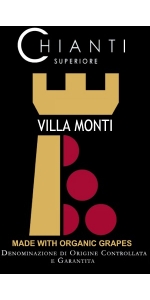
Villa Monti Chianti Superiore DOCG Organic is made from 90% Sangiovese, 5% Canaiolo and 5% Colorino.
Ruby red color, with delicious fruity and floral aromas, with a pleasant structure and tannic density, leading to a balanced and persistent finish.
The grapes are coming from Le Tire, Paradiso La Fonte parcels with good sun exposure that gives the wine a lot of roundness and juiciness.
Red meat, Game, Cheese.
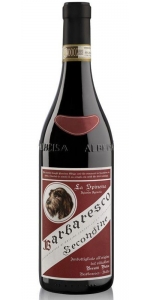
La Spinona Barbaresco Secondine is made from 100 percent Nebbiolo.
This single-vineyard Barbaresco comes from his 3.5 hectares on the cru of Secondine. It is the commune of Barbaresco below the zone of Rabaja Basa and Paje and is where Gaja’s San Lorenzo is located. It is 230 meters above sea level with a southern exposure.
Excellent with game, red meats, truffle dishes and aged cheeses.
Color: Deep ruby red with a hint of garnet in the reflections.
Bouquet: Bright bouquet full of cherries, raspberries, licorice and floral notes.
Taste: Elegant and refined with delicate, soft tannins. It is fresh, velvety and extremely well balanced.
Review:
Aromas of wild red berry, blue flower, crushed mint and oak-driven spice come to the forefront. Reflecting the nose, the full-bodied, polished palate features juicy Morello cherry, crushed raspberry, star anise and spearmint alongside lithe tannins. It's balanced, with bright acidity and closes on a note of bitter almond.
-Wine Enthusiast 93 Points
-150x300.jpg "Lambrusco Amabile Bruscus San Valentino Red 2018")
Lambrusco Amabile Bruscus San Valentino Red is 100% Lambrusco from grapes grown in the province of Modena and Reggio Emilia.
Traditional vinification methods combined with modern technology to produce wines of guaranteed quality. After the grapes are pressed, they are transferred to fermentation tanks where the must is racked off in an average of 70 hours. The wine then completes its first rapid fermentation process and passes to the slower fermentation phase, during which time it is racked off several times to improve its clarity. The wine is placed in an autoclave at strictly controlled temperatures wherein it undergoes a second fermentation. This is known as the Charmat Method. The temperature is controlled for full development of the bouquet and for the lively and natural sparkle so characteristic of this wine.
Deep ruby red with violet reflections and a fine perlage.
Intense vinous bouquet with hints of ripe red fruits.
Lively, fresh, sweet and inviting with bright fruit and a delightful sparkle.
Excellent by itself or with desserts of dark chocolate, gorgonzola, cheesecakes.
Torre La Villa Vernaccia di San Gimignano is made from 100% Vernaccia di San Gimignano
Color: Clear pale straw yellow with greenish reflections.
Bouquet: Intense floral bouquet with hints of almonds
Taste: The flavor is delicate, flinty and fresh with a long, slightly bitter finish.
Vineyards: La Torre is one of the original estates in San Gimignano and has 350 hectares in the hills of San Gimignano.. It has clay, marl and calcareous soil with a large percentage of rocks and stones for good drainage. The vineyards lie at 300 to 400 meters. Vines are an average of 10 years old.
Harvest: September– by hand.
Yield per hectare: 60 Quintals per hectare
Vinification: Fermentation in stainless steel at controlled temperatures. The juice is then racked and filtered immediately. Placed in stainless steel holding tanks for 6 months and undergoes a tartaric precipitation.
Aging: 6 months in bottle.
Acidity: 6
Alcohol: 12% by vol.
Pairs with salamis, pastas with cream sauces, almond dishes, white meats and fish.
La Torre farm takes its name from the antique 10th Century Medieval tower, which has been skilfully refurbished and even today is the distinguishing feature of the rural village, La Villa, located in the hills of San Gimignano, in the centre of the most suggestive and fascinating landscapes on earth: a land of vineyards and olive groves.
Vernaccia di San Gimignano was the first DOC in Italy for white wine and had a much more widespread recognition in the past than it does today. The Vernaccia of the past was a light golden-colored wine, full-bodied, rich and round, with a special freshness and elegance. This description alone gives the impression of a wine that can age and, in fact, Vernaccia di San Gimignano is the only Italian white wine that has the right to be called Riserva if aged for 1 year. Greed, over-production and poor administration has begun to wear away at the image of this wine and the traditional style that brought it so much acclaim in the past.
The fame of this varietal (100% Vernaccia) is as much tied to the city from which it comes as to the wine itself. San Gimignano is a beautiful Tuscan town renown for its towers. In a great show of one-upmanship during the 10th Century the inhabitants constructed 72 towers each one more beautiful and higher than the other. Today only 14 of those towers remain and one is on the 350 hectare estate of Enrico Angiolini, 42 of which are under vine. Angiolini is a traditionalist and he believes that more than just the fame of this city should be tied to the wine. He fought hard to see that the wine bearing the San Gimignano name is from grapes grown and bottled within the confines of the community. He was successful not only from blocking large Chianti houses from bottling Vernaccia outside the zone, but he was also responsible for its receiving a DOCG, Italy’s second white wine to be so honored.
Exceptionally aromatic with aromas of violets, hints of blackberry, blackcurrant and black plum on the nose. There is some spice that is balanced with fresh acidity and minerality. A long finish with ripe but firm tannins.
Dow's Senhora da Ribeira can be enjoyed anytime and pairs wonderfully with chocolate desserts and soft cheeses like creamy Stilton or Roquefort.
Review:
Rich and fruity, this wine is packed with intense black-currant flavors. It is perfumed, ripe with a good tannic background. The density of the wine and the firm structure point to a long aging process. Drink this beautifully structured wine from 2026.
-Wine Enthusiast 93 Points
Winemaking:
Senhora da Ribeira has one of the most advanced specialist wineries in the Douro, combining the best of traditional winemaking practice, evolved over centuries, and the latest state-of-the-art automated systems. Three granite ‘lagares’ for foot treading are complemented by three ‘robotic’ lagares, designed by the Symington family and installed in the quinta’s winery in 2001.
It has long been recognised that traditional treading produced some of the finest Ports, but there are some drawbacks involved in traditional treading; temperature control is difficult, there is a limit to how long people are willing to tread and they need to sleep. The winemaker’s options are therefore limited, he or she cannot order treading at different times through the night, or pull people off the picking team at will. Furthermore, emptying the traditional lagar takes a long time; in the meantime the fermentation process is accelerating away. A further handicap arose over recent years, when an increasing scarcity of labour obliged producers to look for less labour-intensive vinification solutions. The Symingtons opted to devise a mechanical means of replicating the proven method of foot treading. The result was the Symington ‘robotic lagar’, an automated treading machine which exactly replicates the gentle action of the human foot and which has revolutionised winemaking in the Douro Valley. This equipment is very expensive but the results have been so good that an increasing proportion of Dow’s finest wines are now made in these automated lagares. Approximately half of the wines for Dow’s much praised 2003 Vintage were vinified in them.
The Senhora da Ribeira’s Quinta Vintage Ports have amassed a highly impressive number of awards: three Gold Medals at the International Wine Challenge, (2008, 2006 and 2001, for the 2005, 2002 and 1999 Vintages, respectively) as well as seven Silver Medals and two Gold Medals at the International Wine & Spirit Competition (London, 2008 for the 2005 Vintage and 2002 for the 1998 Vintage). In September 2006, Jancis Robinson MW wrote, “One very exciting new bottling is Dow’s Quinta da Senhora da Ribeira 2004...this single quinta bottling demonstrates superb quality with wonderful vibrancy. Great wine in any context - not that unlike some California reds! This is definitely a wine to look out for when it is released.”
Wine Profile
The very hot climate through the summer at this vineyard results in highly complex and concentrated wines but very low yields. Colours of the musts in the fermentation tanks are always purple-black due to the very high skin to juice ratio. The old vines add further to the intensity of the wine as they make up a very large percentage of the vineyard. The resulting wine can be described as being the essence of Vintage Port, with powerful wild red-fruit flavours, leading into rich black chocolate notes, the whole balanced by complex, attractive and peppery tannins.
One of the Douro’s most beautiful vineyards, Senhora da Ribeira is located 24km (15 miles) upriver from Quinta do Bomfim in the remote Douro Superior. The vineyard commands a magnificent north bank position, overlooking a broad sweep of the Douro, directly opposite another famous Symington owned vineyard: Quinta do Vesuvio. Senhora de Ribeira was built close to an ancient river crossing, guarded by two 12th century castles on either side of the river built by the Moors during their centuries long occupation of Iberia. A small chapel dedicated to the ‘Lady of the River’ (literally: Senhora da Ribeira) has stood here for centuries and gave the quinta its name. Travellers would pause here to ask for a safe river passage and onward journey.
Senhora da Ribeira’s wines are some of the finest in the Douro and they complement those from Bomfim in the composition of Dow’s classic Vintage Ports. The quinta’s high proportion of old vines (45% are over 25 years old) is of critical importance. The old vines are very low-yielding, producing on average less than 1Kg of grapes each, giving intense and concentrated musts which are ideal for classic Vintage Port. The remainder of the vineyard was replanted as follows: 21% in 2001 and 34% from 2004, the latter involving mainly Touriga Nacional vines. This grape variety - very important for Vintage Port - now represents almost exactly a third of the total planted at the quinta. The entire vineyard has the maximum ‘A’ rating.
As with Bomfim, the consistency of the climate plays a key role, although the rainfall is only half of that experienced at Bomfim: 448mm is the 10 year average. This more extreme climate, hot dry summers and cold, equally dry winters results in wines with unique depth of colour and complexity.
As with Quinta do Bomfim, the best Ports from Senhora de Ribeira are used to make Dow’s Vintage Ports in the great and rare ‘Declared’ years. In the good year’s when Dow’s does not ‘declare’ a Vintage, the best wines of ‘The Lady of the River’ are bottled as Dow’s Quinta de Senhora da Ribeira Vintage Port. They will tend to mature a little earlier than the very rare ‘Declared’ years, but can be every bit as good as some other Vintage Ports.
Pazo de Senorans Seleccion de Anada Albarino is made from 100 percent Albarino.
Straw yellow with greenish tints, vivid and brilliant. High intensity and very expressive. Profusion of aromas with traces of mineral. Great volume and ample body leaving a lasting impression from beginning to end.
Reviews:
The 2015 Albariño Selección de Añada is nothing short of phenomenal. For some reason, I hadn't tasted the young 2015 Albariño at the time it was released. It comes from the Los Bancales vineyard planted some 50 years ago and fermented with indigenous yeasts but without malolactic fermentation. It has a bright, almost fluorescent color and a complex, subtle and nuanced, elegant and expressive nose, with notes of sea shells and sea breeze, grass and white flowers. It's very clean, and the palate shows great balance and even feels a bit young. It has remarkable acidity and freshness (seven grams of tartaric acid) with good ripeness and 13% alcohol. This matured in tank with lees for over 30 months and was bottled in June 2024. It feels more serious and less exotic than earlier vintages. 18,000 bottles produced. This is the finest vintage that I can remember. Bravo!
-Wine Advocate 97 Points
Tech: