
" We don't sell the wine without touching the vine "
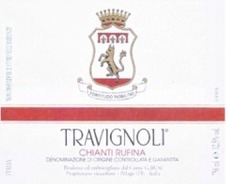
| Country: | Italy |
| Region: | Tuscany |
| Winery: | Travignoli |
| Grape Type: | Sangiovese |
| Vintage: | 2012 |
| Bottle Size: | 375 ml |
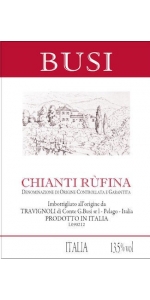
Busi Chianti Rufina (Half Bottle) is made from 100% Sangiovese.
Fresh, fruity, with classic tart cherry.
Appearance: ruby-red in color.
Aroma: clean, floral notes.
Flavor: well structured and harmonic on the palate; easy drinking with a soft and lingering finish. Ageing potential: 10/15 years.
Production area: amidst the hills of Pelago in the Chianti Rufina D.O.C.G. area, with a soil composition of marly, calcareous clay as typically found in the Arno valley east of Florence.
Aspect: south-facing.
Altitude: 200/350 m above sea level.
Cultivation method: spurred cordon.
Harvest period: from the 20th of September until the middle of October.
Vinification: the grapes are fermented in stainless steel tanks at a controlled temperature (26/28°C) for 10 days before racking and malolactic fermentation in stainless steel. After fermentation the wine is put into wooden barrels.
Fermentation in stainless steel at controlled temperatures for 7 to 8 days, with an additional 3 to 4 days on the skins. The wine is then racked and goes through malolactic. It is then racked again and stays another 7 months in stainless steel.
Adapts well to both light and more substantial dishes.
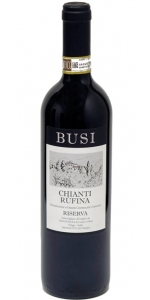
Busi Vin Santo del Chianti Rufina Riserva is made from 100% Sangiovese.
This is a Riserva level Chianti showing prestige and elegance, being powerful and elegant at the same time.
Color: Ruby red with garnet reflections.
Aromas: Intense, ethereal bouquet with hints of leather, tar and ripe cherry fruit.
Flavors: Full of ripe fruit with nuances of leather and liquorice. The taste is complex and round and rich with character. The finish is persistent and satisfying.
Pair with grilled, braised or roasted meats, dishes flavored with mushrooms, or rosemary. Excellent with polenta dishes.
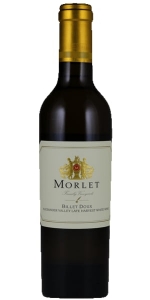
Morlet Family Vineyards Billet Doux Late Harvest Semillon 2012 (half-bottle) is made from Sémillon (65%) Sauvignon Blanc (31%) Muscat à Petits Grains (4%)
rowing in the gravelly soil of an ancient riverbed in the beautiful Alexander Valley, the old vines benefit from hot afternoons and cool, foggy mornings, favorable for the development of Botrytis (Noble Rot). Extremely small yields in the Sémillon, Sauvignon Blanc and Muscat vineyards lead to the immensely concentrated fruit. Just as one receives a note from one’s sweetheart, we present this wine as a precious ‘Love Note’ or ‘Billet Doux.’
Deep crystal clear gold. Intense and complex bouquet of dry apricot, pêche de vigne and Reine Claude yellow plum intermixed with notes of quince, honey, Muscat and a hint of sweet vanilla. Full bodied, the palate is reminiscent of the nose, with a creamy sweet texture and a great intensity. The large amount of sugar and glycerin creates a highlighted viscosity. Along with the wine’s great concentration, richness and opulence, the classical aromatic complexity reveals a flamboyant yet harmonious ensemble, leading to a very long, complex and smooth finish.
Proprietary name ‘Billet Doux’
Name meaning Love Note
Type of wine Late harvest white wine
Appellation Alexander Valley
Vineyard singularity 25-60 year old vines Loamy and gravelly soils from an ancient river bed One cluster per shoot ‘de rigueur’
Typical harvest date November Picking Manual, small lugs, refrigerated truck
Sorting Cluster by cluster
Fermentation In barrel through native yeast
Upbringing 16 months French Oak from selected artisan Coopers
Bottling Unfined, filtered to prevent Malolactic
Cellaring time Decades
Serving Chilled and decanted
Review:
Produced from 65% Sémillon, 31% Sauvignon Blanc and 4% Muscat, the 2012 Billet Doux has a medium golden color and profoundly scented nose of beeswax, honeyed nuts, orange marmalade, Manuka honey and preserved lemons. Full-bodied, full-on sweet, rich, concentrated and oh-so-unctuous, it delivers powerful flavor layers and epic length. 175 cases were made.
-Wine Advocate 97 Points
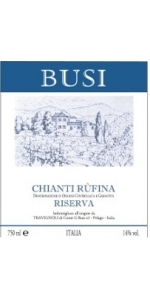
Busi Chianti Rufina Riserva is made from 100% Sangiovese
Vineyards: Travignoli, a name which literally means “Tra Vignoli” (between the vineyards) is located in the middle of Frescobaldi’s Nipozzano vineyard in the heart of the Rufina zone. There is documented evidence that wine was first produced there in the 5th C BC by the Etruscans who called it “Nectar of the Gods”. The Church acquired the land and constructed the cellars in 1100.
Count Busi and his family acquired the estate in the 1800’s. Overall, 91
hectares belong to the estate. The 60 hectares of vineyards are excellently
position on the slopes with a southerly exposure at an elevation between 270 to 370 meters. Clay, marl and calcareous soil with a large percentage of rocks and stones for good drainage. Vines are an average of 10–25 years old.
Harvest: October– by hand.
Yield per hectare: 40 Quintals per hectare
Vinification: Fermentation in stainless steel at controlled temperatures for 7 to 8 days with an additional 7 to 8 days on the skins. The wine is then racked and goes through malolactic. It is then racked again and stays another 3 months in stainless steel.
Aging: 25 to 30 hectoliter barrels of Slavonian oak for 18 months and 3 months in Allier barriques. There is a period of refinement of 4 to 5 months in the bottle.
Alcohol: 13% by vol.
Color: Ruby red with garnet reflections.
Bouquet: Intense, ethereal bouquet with hints of leather, tar and ripe cherry fruit.
Taste: The flavor is full of mature fruit with nuances of leather and liquorice. The taste is complex and round and rich with character. The finish is persistent and satisfying.
Foods: Grilled, braised or roasted meats, dishes flavored with mushrooms, or rosemary. Excellent with polenta dishes.
Total Production: 3,300 cases
Enologist: Mauro Orsoni
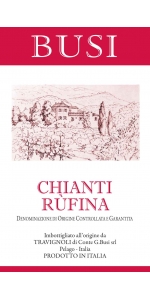
Busi Chianti Rufina is made from 100% 100% Sangiovese
Fresh, fruity, with classic tart cherry.
Appearance: ruby-red in color.
Aroma: clean, floral notes.
Flavor: well structured and harmonic on the palate; easy drinking with a soft and lingering finish. Ageing potential: 10/15 years.
Adapts well to both light and more substantial dishes.
Producer Information: Villa Travignoli Travignoli, a name which literally means “Tra Vignoli” (between the vineyards), is located in the middle of Frescobaldi’s Nipozzano vineyard, in the heart of the Rufina zone. Aged six months in wood and six months in stainless steel. Pairs well with salamis, pastas, grilled or roasted meats, dishes flavored with mushrooms, or rosemary. Excellent with polenta dishes.
THIS OFFER IS FOR HALF-BOTTLES
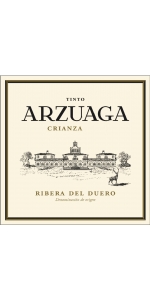
Arzuaga Ribera del Duero Crianza 95% Tempranillo and 5% Cabernet Sauvignon.
Dark cherry color with purple highlights. Powerful nose and high aromatic diversity of ripe red and black fruits, spicy and balsamic notes, and a roasted finish. Soft and mellow in the mouth with a great fruitiness and length.
Travignoli Chianti Rufina 2012 (Half Bottle) is 100 percent 100% Sangiovese.
A ruby red color with garnet reflections.
An intense, vinous bouquet with hints of leather and ripe cherry fruit. The flavor is full of mature fruit with nuances of leather and liquorice. The finish is persistent and rich.
Fermentation in stainless steel at controlled temperatures for 7 to 8 days with an additional 3 to 4 days on the skins. The wine is then racked and goes through malolactic. It is then racked again and stays another 7 months in stainless steel.
Pairs well with salamis, pastas, grilled or roasted meats, dishes flavored with mushrooms, or rosemary. Excellent with polenta dishes.
The Travignoli Estate
Travignoli was founded in the 1700’s and has been operating by the Busi family since the 1800s. Grapes have been grown on the property since the 1400’s. Travignoli translated means “through the vineyards” - you must go through the vineyards to reach the main house. Travignoli is partially surrounded by the vineyards of Frescobaldi, in the heart of the Rufina zone where wine has been produced since the 15th century.
The farm also produces olive oil within the confines of the group Laudemio, which is olive oil that is extra virgin in quality, vintage date, and less than .02% acid (normal extra virgin is .05% acid).
Giovani Busi is the winemaker with the advice of internationally enologist Giacomo Tachis. The cellars date backt to the 12th century but equipped with the latest technology.
The Travignoli Vineyard
Total farm size 90 hectares (222.3 acres): 60 hectares of vines (148.2 acres), 25 hectares of olive trees. The vineyard surface is broken down as follow:
A. 50.5 ha Chianti Rufina
B. 8.0 ha Cabernet Sauvignon
C. 1.0 ha Chardonnay
D. 0.5 ha Merlot
Chianti Rufina, the smallest Chianti area, is located northeast of Florence on the sandy calcareous lower slopes of the Apennines. It is said to be "one of Tuscany's most priviliged vineyard areas where Chianti reaches heights of size and longevity rivalled only on privileged parts of Classico".
The Chianti Rufina vineyard is planted on clay, marl and calcareous soil with a large percentage of rocks stones for good drainage. The vines are an average of 10-25 years old.
Bernardins Beaumes de Venise Rouge Cru Cotes du Rhone is made from 65% Grenache, 25% Syrah, 5% Mourvedre and 5% Grenache Blanc.
Bright ruby color with cherry tinges. Complex black fruit aromas on the nose enhanced by spicy notes. Rounded palate with good length.
The wine is drinking well right now and can be kept for another 10 years.
Situation
Spreads out over the south-east side of the Dentelles de Montmirail hills, in Beaumes de Venise in the southern part of the Rhone valley.
Terroir
On a poor sandy, hungry and arid soil consisting of tender limestone and gritty zones of sandy mollasse.
In the vineyard
The vineyards and their terroir are the essence of our wines. This is where everything starts and where we focus our efforts throughout the year. You can’t make great wine without great grapes.
The viticulture is essentially done by hand. Five people work full-time in the vineyards. They are supplemented by seasonal employees who work during bunch thinning and the harvest in order to bring out the very best in our vines. Working by hand and the attention each vine gets are fundamental. Pruning, de-budding, trellising, leaf removal and picking are thus carried out by hand with the utmost care.
We prepare the soil by using good old-fashioned ploughing. Organic compost is made from grape marc (the discarded stalks and skins).
As a way of protecting the plants, we only use phytosanitary products when necessary and within strict guidelines by staggering the treatments appropriately, to minimise the amount of chemicals used. We prefer to use as much as possible manual and organic techniques . Leaving natural grass cover, removing buds and leaves from the vines, preserving biodiversity around the vineyard: olive, almond and cypress trees, wild rosemary and capers.
Winemaking
We make two red wines at the estate. Terroir wines shaped by the two classic Côtes du Rhône varieties: Grenache and Syrah. We don’t follow any winemaking recipe but are constantly searching for the perfect expression of terroir and each vintage’s particular characteristics. We don’t go for overripe grapes and over-extraction, as we think the wine has to stay refreshing and balanced.
Leaving the wine for 15 days in concrete vats, we try to gently extract the tannins and anthocyanins essential for the wine’s structure and colour. The wine doesn’t come into any contact with wood during ageing. This way the characteristics of our terroir can fully express
Serve with a meal especially red meat, game and cheese.
Review:
"Smoky bacon, bay leaf and olive brine. This is very fine for a whole-bunch style, with lovely tannic finesse and texture. Powerful, tannic and cleansing, yet compact, with driving acidity, a dry, savoury finish and perfect balance. A good vintage, for what is a reliably good-value southern Rhône pick. Vineyards in conversion to organic; fruit is whole-bunch fermented.- Matt WALLS"
- Decanter (October 1st 2024), 94 pts
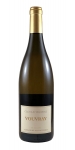
Gaudrelle Monmousseau Clos le Vigneau Vouvray is made from 100% Chenin Blanc
Clos Le Vigneau is a single vineyard from an area known as "les Gués d'Amant" or "Lover's Gap". Most of the vines were planted in 1929.
Off dry in style with honey, earth and apricot notes. Wines from the town of Vouvray have been known to age well for 40 years. This particular bottling should hold for at least 5-7 years.



