
" We don't sell the wine without touching the vine "
| Country: | South Africa |
| Region: | Elim |
| Winery: | Indwe |
| Grape Type: | Syrah |
| Organic: | Yes |
| Vintage: | 2014 |
| Bottle Size: | 750 ml |
Lismore Estate Syrah is made from 100 percent Syrah.
A careful selection of the best of the vintage that exemplifies the extraordinary terroir of Lismore.
An exotic experience which shifts your mind to another place. Cassis, brambles and succulent cherry. White pepper, classic garrigue and the strong floral perfume of crushed violets. Light and elegant, but structured with a fresh acidity. To experience the best this wine has to offer, decanting is suggested.
The grapes were fermented 40% whole bunch in a 5000 litre wooden fermenter with gentle pigeage throughout. The process allowed for a long extraction period which lends to the fruit expression of this wine. The wine was left for a 30 day extended maceration on the skins and then pressed in a traditional baskets press. Matured in 500 litre barrels for 10 months (35% new). Time in the bottle will allow integration, the deepening of layers and full expression of the fruit.
Review:
Bursting with purple flowers and savory, spicy notes, the 2022 Estate Reserve Syrah was made with 50% whole-cluster fruit, offering a crunchy, red-fruited nose that pops with delightful tertiary expressions of turned earth and pencil lead. Light to medium-bodied and with 12% alcohol, the wine compresses slightly to show an earthy, graphite edge on the palate while slightly stemmy notes sway with fine-grained tannins across the mid-palate. Flavors of potpourri with spiced cherry skin somersault with red and purple flower essences before finishing with hints of pink peppercorn over the elegant and elongated finish. Just under 5,000 bottles were produced after the wine spent 11 months in 25% new oak barrels.
-Wine Advocate 96 Points
Kershaw Syrah Deconstructed Lake District Cartref SH22 is made from 100 percent Syrah.
The inspiration for this Syrah stems from my belief that the Elgin region has both a signature grape as well as particular terroirs within its demarcated boundary that reflect regional credentials. This Syrah was selected from a sub-region of Elgin from a specific vineyard and an individual clone.
Sourced from a single parcel in the Western part of Elgin, the 22 clone produces fuller, well-colored yet finely structured wines. They tend to be more concentrated as yields are low with more black fruit, black pepper and meaty notes. The Cartref soils, a mixture of decomposed sandstone, pebbles and quartz, add gracefulness and heighten the fruit intensity.
The grapes were handpicked under autumnal skies into small lug baskets and then manually sorted on a conveyor before the stems were removed. The destemmed berries fell onto a vibrating table in order to remove jacks and substandard berries before dropping uncrushed into a small 500kg conical hopper and forklifted into open-topped fermenters. The grapes underwent a 3-day maceration before spontaneous fermentation began. A gentle pigeage (punch-down of the cap) program was charted and the grapes remained on skins for 26 days. The wine was then racked to barrel under gravity and the remaining pomace basket-pressed. Malolactic then proceeded in barrel followed by a light sulfuring and 17-month maturation. No finings were necessary and the wine was simply racked and bottled unfiltered.
Review:
"The 2017 Kershaw Deconstructed Lake District Cartref SH22, matured 50% in new oak for 17 months, is a little more open on the nose compared to the SH9c and delivers a touch more red berry fruit, quite candied in style and suggesting strawberry pastilles. The palate is medium-bodied with a saline entry, fine definition and a mélange of red and black fruit laced with licorice toward the poised finish. Excellent.- Neal Martin"
- Antonio Galloni's Vinous (April 2021), 93 pts
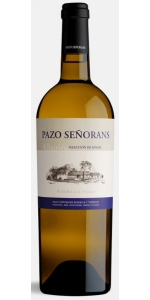
Pazo de Senorans Seleccion de Anada Albarino is made from 100 percent Albarino.
Straw yellow with greenish tints, vivid and brilliant. High intensity and very expressive. Profusion of aromas with traces of mineral. Great volume and ample body leaving a lasting impression from beginning to end.
Reviews:
I think the 2014 Albariño Selección de Añada could be the finest vintage of this characterful long-aging Albariño, from a year with a more moderate 13% alcohol and very high acidity (and low pH) that make the wine fresher and more vibrant. It is developing very slowly and showing quite young after it spent over 30 months with lees in 1,500- and 3,000-liter stainless steel tanks. It has a pale color and an elegant nose with notes of freshly cut grass, white flowers and wet granite. The palate is vibrant with effervescent acidity, and it has a long, dry and tasty finish with an austere sensation, far away from the tropical notes of some past vintages. This is superb and should continue developing nicely in bottle. Bravo! It wasn't bottled until April 2023, and 14,000 bottles were produced.
-Wine Advocate 96 Points
Tech:

All older vintage wines have been purchased from a single collectors cellar. Pictures can be requested before shipment.
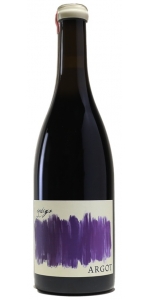
Argot Indigo Syrah is made from 100 percent Syrah.
The color of exaltation, opulence and elusiveness. The Indigo pigment has held sway over the heads and hearts of humans for centuries. Each vintage we honor this legacy by creating a Syrah which captures the might, richness and intrigue of the ‘Indigo’ legend. Profound, captivating and endlessly intriguing. Delicious.
Review:
The single-varietal 2021 Indigo Syrah is deep garnet-purple in color. Notes of plum preserves, fruitcake, and licorice jump from the glass, with nuances of rose oil, cardamom, and cumin seed. The full-bodied palate is concentrated and plush, with bright acidity to balance and a long spicy finish.
-Wine Palate 96 Points

No Syrah terroir in Sonoma County compares with Sonoma Mountain’s northwest crown—cool fog-affected mornings, sun-bathed afternoons, cooled by persistent coastal breezes, and temperate evenings. The soils in Steiner’s Syrah blocks — ashy and moondust-like, littered with decomposing sea bed — further contribute to the unique nature of this site. After a 3-vintage hiatus, I am thrilled to be back working with Steiner Vineyard’s Syrah. By its nature, this slow-to-ripen, cool-climate site produces fabulously deep, intense, structured wines. Now, raising a big, brawny Syrah is no rare act of alchemy. It is the wonder of Steiner’s terroir — a magical elegance and beauty, informing the inherent power, depth and intensity — that makes this bottling so special. 2016 produced a classic wine that deftly balances massive flavors and texture, while retaining vital freshness, and a palpable sense of cool. Production was low, so get it while you can. Simply a “WOW” wine, not to be missed.
VINEYARD: Steiner Vineyard. Located at 1,100 ft, on the northwest crown of Sonoma Mountain. CRUSH: Early morning harvest by hand, October 1st, cluster and berry sorted, destemmed and crushed. FERMENT: 5-day cold soaks, followed by 14 day native fermentation in open-top bins. AGING: 20 months, French oak, 100% new, mixture of 300L hogsheads and barrique shapes. Never racked prior to bottling. Bottled unfined, unfiltered.
Review:
"Refined and stylish, featuring a complex core wrapped in multilayered blackberry and blueberry flavors, laced with bitter chocolate, black licorice and smoky meat notes. Drink now through 2030.- Tim FISH"
- Wine Spectator Insider (January 15th 2020), 93 PTS
At the southern-most tip of Africa where the Atlantic and Indian Oceans meet, one finds the ‘Cape of Storms’. Better known as Cape Agulhas, the weather that boils up over the cold Atlantic meeting its warm Indian counterpart can be savage, with many a sailor’s voyage ending fatally upon the shallow reefs. To guide sailors away from disaster, the famous red and white lighthouse was built in 1848 and stands to this day housing a museum and restaurant. This area is also rich in archaeological discoveries from the ancient Khoi-Khoi people.
The Elim ward, that lies on this peninsular, derives its name from the Moravian Mission Station Elim - a quaint little town with thatched roof cottages the heart of which is the Moravian church. The name Elim, meaning “place of God” originates from the bible in Exodus 15:27. After crossing the Red Sea the Israelites came to Elim, where they found twelve springs and seventy palm trees, and they camped near the water. Today the town Elim symbolises the abolishment of slavery in 1834 by the British Empire.
Tasting Notes:
Succulent and spicy: shows off the advantages of growing Syrah in a cool climate to full effect. Poised and compact with an elegant persistence (or should that be a persistent elegance?) on the palate. Quite open and accessible given its youth.
The Indwe Estate
At the southern-most tip of Africa, where the Atlantic and Indian Oceans meet, one finds the ‘Cape of Storms’, or more commonly, Cape Agulhas. On this peninsula lies the Elim ward and Overberg region, where we source the grapes for Indwe Sauvignon Blanc. Indwe is the Xhosa name for the Blue Crane, South Africa’s national bird. It is an endangered species and endemic to South Africa, particularly the Overberg region. The Blue Crane is very special to the amaXhosa and amaZulu, often associated with warriors and royalty.
Owner and Winemaker is Trizanne Barnard. During her productive vinous career, she has seized every possible opportunity to broaden her knowledge and experience, pressing them for every drop of goodness they offered, enriching her life, her work and her wine. With a B.Sc Agric under her belt she stepped into the real world of wine, completing harvests in Western Australia, Alsace, Bordeaux, Rhone and Douro Valley.
Back on home soil, after a year at Klein Constantia she was challenged with setting up a winery in the Helderberg. After four successful years,she decided it was time to venture on my own, creating her own project.
The Indwe Estate
At the southern-most tip of Africa, where the Atlantic and Indian Oceans meet, one finds the ‘Cape of Storms’, or more commonly, Cape Agulhas. On this peninsula lies the Elim ward and Overberg region, where we source the grapes for Indwe Sauvignon Blanc. Indwe is the Xhosa name for the Blue Crane, South Africa’s national bird. It is an endangered species and endemic to South Africa, particularly the Overberg region. The Blue Crane is very special to the amaXhosa and amaZulu, often associated with warriors and royalty.
Owner and Winemaker is Trizanne Barnard. During her productive vinous career, she has seized every possible opportunity to broaden her knowledge and experience, pressing them for every drop of goodness they offered, enriching her life, her work and her wine. With a B.Sc Agric under her belt she stepped into the real world of wine, completing harvests in Western Australia, Alsace, Bordeaux, Rhone and Douro Valley.
Back on home soil, after a year at Klein Constantia she was challenged with setting up a winery in the Helderberg. After four successful years,she decided it was time to venture on my own, creating her own project.
The Vineyards
The historic mission settlement of Elim on the Agulhas Plain comprises 6 500 hectares of land.  Half of this land is under agriculture and for the past one hundred years has been cultivated and the remaining + 3 000 hectares of Elim ferricrete fynbos is managed by the Moravian Church and the community at the Elim mission station.
Elim was established in 1824 by Moravian missionaries and sacramental wine was required for church services, and the first vineyard planting in this region subsequently occurred over 100 years ago however viticulture didn’t really establish until 1997 when it resumed again.
First Vineyard plantings: 1996 – Lands End. After Lands End, The Berrio planted the next vineyards in 1997.
Producers in Elim:
Total hectares of vineyards 129.16 Ha = 319.161 Acres
White grape varietals found on Elim: approximately 80% Sauvignon Blanc, 15% Semillon and the rest is small parcels of Viognier, Nouvelle.

All older vintage wines have been purchased from a single collectors cellar. Pictures can be requested before shipment.
Arzuaga Ribera del Duero Crianza 95% Tempranillo and 5% Cabernet Sauvignon.
Dark cherry color with purple highlights. Powerful nose and high aromatic diversity of ripe red and black fruits, spicy and balsamic notes, and a roasted finish. Soft and mellow in the mouth with a great fruitiness and length.



