
" We don't sell the wine without touching the vine "

| Country: | France |
| Region: | Loire |
| Winery: | Trois Freres |
| Grape Type: | Chardonnay |
| Vintage: | 2008 |
| Bottle Size: | 750 ml |
All older vintage wines have been purchased from a single collectors cellar. Pictures can be requested before shipment.
The Trois Freres Estate
The Couillaud brothers, Bernard, Michel and François, joined together in 1979 and expanded the original small family holding to the present size. They export their wines in England, Japan, Germany, Holland, Belgium, and the U.S.A.
"This estate has been one of my value picks in other vintages, and they still offer very good quality for bargain hunters." Robert Parker's Wine Advocate, June 2012
The Trois Freres Vineyard
Located on a south-facing slope of granitic soil near the village of Vallet, in the heart of the Muscadet de Sèvre et Maine appellation, the vineyard measures 66 hectares (145.73 acres): 36 hectares (88.92 acres) planted with Melon de Bourgogne (Muscadet), 27 hectares (66.69 acres) with Chardonnay and 3 hectares (7.41 acres) with Gros-Plant.
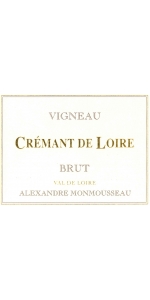
Made from 50% chenin blanc and 50% chardonnay
It is an interesting experience as a sparkling wine for people who want to have a fine and elegant wine comparable to Champagne for a very good price.
This methode traditionnelle sparkling wine is aged for minimum 18-24 months in cave before disgorging. The dosage is 12 g/l residual sugar and the wine is aged for minimum 3 months after disgorging .
Review:
"The two sparkling wines should not be missed. They're both terrific examples of how good sparkling Vouvray can be. Both are 100% Chenin Blanc cuvees. Even better is the slightly richer, more honey and lemon-scented and flavored non-vintage Cremant de Loire. A blend of equal parts Chenin Blanc and Chardonnay aged for a minimum of 18 to 24 months in their cellars before disgorgement, this is a real beauty and a superb wine. Unfortunately, just under 100 cases are imported to the United States." -Wine Advocate 92 pts
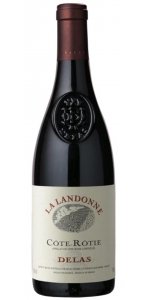
Delas Freres Cote Rotie La Landonne Rouge is made from 100 percent Syrah.
This very ancient region dates back to the Roman Era and is located on the right bank of the Rhône. It is said that during the Middle Ages, “The Seigneur de Maugiron” gave a hillside to each of his two daughters - one was brunette and the other fair - thus, were born the names of “Côte Brune” and “Côte Blonde.” Wines from the Côte Blonde tend to be more delicate and lighter in character than the fuller wines of the Côte Brune. Together, they make a wine of style and substance. This cuvée is a vineyard plot selection. The grapes come exclusively from a plot within the named slope of “La Landonne.”
This cuvée‘s first vintage was 1997. The wine is only made in the very best years. Its highly limited production never exceeds 2,500 bottles per year.
The steep, terraced hillsides along the river produce wines that are among the "biggest" reds of France. The Delas Côte-Rôtie is primarily Syrah with an addition of up to 10 to 20% of Viognier grapes in the crop. The soils of the northern part of the Côte Brune vineyard consists of extremely steep, terraced slopes of ferruginous mica schists which are covered with schist sand (arzel). The Côte Blonde has a varied geology with gneiss and granite predominating at the most southern side of the appellation. The area has dry, hot summers with regular rainfalls during other seasons. The grapes for the “La Landonne” cuvée are picked by hand at maximum maturity. Fermentation takes place in traditional open-topped concrete tanks, following three days of pre-fermentation cold maceration. Before fermentation, the maceration process continues under controlled temperatures of 82°F to 86°F. Daily cap pushing down and pumping over are carried out for about 10 days with total vatting time of up to 20 days. The wine is aged for 14 to 16 months in new or one year old oak casks. The barrels are topped up regularly.
Food Pairing: This wine pairs wonderfully with fine meats, roasted beef, water games, truffles and spicy stews. The bottle should be opened 1 to 3 hours before drinking. This wine needs at least 3 years cellaring before it can open up its complexity. In such case it is strongly recommended to decant before serving.
Tasting Notes: The wine‘s deep color is underscored by plummy hues. A complex nose shows deep, fruity aromas with hints of licorice and roasted coffee. Endowed with a dense and silky tannic structure, this is a full, fleshy wine that provides an ample and generous palate. Its lasting finish speaks of considerable ageing potential.
Reviews:
This is dark and still a bit reticent, with a cast iron cloak around the core of dark currant, plum and blackberry paste flavors, showing lots of sweet bay leaf, anise and singed apple wood notes in the background. There's serious grip through the finish. For the cellar.
-Wine Spectator 96 Points
Very open, spicy and fresh on the nose, you could almost open this now. Struck flint notes assist in teasing out notes of leaf tea, tobacco, rosemary and rose. Very full-bodied, generous but powerful on the palate, tense and mineral. Mouthcoating ripe, sweet tannin and robust amounts of sweet baking spices, along with more tobacco and black fruit on the palate. Has depth, length, power and impressive balance despite the high alcohol. Drink from now into 2022, or from 2031 to 2040. Lieu-dit La Landonne, from the Brune side (mica schist bedrock). Matured in new and one-year-old barrels for 14 months.
-Decanter 96 Points
The 2019 Côte Rôtie La Landonne comes from one of the greatest sites for Syrah in the world, the La Landonne lieu-dit located close to the center of the appellation, on the Côte Brune side. It reveals a deeper purple hue (it's slightly more opaque than the Seigneur de Maugiron) and offers a brilliant nose of ripe cassis, black raspberries, scorched earth, smoked herbs, and seared meat. Full-bodied and powerful on the palate, this is a deep, spicy, concentrated Côte Rôtie with a plush, layered mouthfeel, sweet tannins, beautiful balance, and a great, great finish. This puppy brings the fruit, opulence, and texture of the vintage yet still has a classic Côte Rôtie character.
-Jeb Dunnuck 96 Points
Fresh aromatic layers of mint sit atop crushed red cherries and wild strawberries, with light clove and thyme on the nose. The palate is rich and enticing with black cherries, plums, rhubarb, pomegranate seeds, black olives and freshly picked rosemary leaves. Tremendous texture, structure, and refreshing acidity carry this wine to a robust finish of orange zest and black tea leaves. Maisons Marques & Domaines USA.
- Wine Enthusiast 96 Points
This very ancient region dates back to the Roman Era and is located on the right bank of the Rhône. It is said that during the Middle Ages, “The Seigneur de Maugiron” gave a hillside to each of his two daughters - one was brunette and the other fair - thus, were born the names of “Côte Brune” and “Côte Blonde.” Wines from the Côte Blonde tend to be more delicate and lighter in character than the fuller wines of the Côte Brune. Together, they make a wine of style and substance. This cuvée is a vineyard plot selection. The grapes come exclusively from a plot within the named slope of “La Landonne.”
This cuvée‘s first vintage was 1997. The wine is only made in the very best years. Its highly limited production never exceeds 2,500 bottles per year.
The steep, terraced hillsides along the river produce wines that are among the "biggest" reds of France. The Delas Côte-Rôtie is primarily Syrah with an addition of up to 10 to 20% of Viognier grapes in the crop. The soils of the northern part of the Côte Brune vineyard consists of extremely steep, terraced slopes of ferruginous mica schists which are covered with schist sand (arzel). The Côte Blonde has a varied geology with gneiss and granite predominating at the most southern side of the appellation. The area has dry, hot summers with regular rainfalls during other seasons. The grapes for the “La Landonne” cuvée are picked by hand at maximum maturity. Fermentation takes place in traditional open-topped concrete tanks, following three days of pre-fermentation cold maceration. Before fermentation, the maceration process continues under controlled temperatures of 82°F to 86°F. Daily cap pushing down and pumping over are carried out for about 10 days with total vatting time of up to 20 days. The wine is aged for 14 to 16 months in new or one year old oak casks. The barrels are topped up regularly.
Tasting Notes
The wine‘s deep color is underscored by plummy hues. A complex nose shows deep, fruity aromas with hints of licorice and roasted coffee. Endowed with a dense and silky tannic structure, this is a full, fleshy wine that provides an ample and generous palate. Its lasting finish speaks of considerable ageing potential.
Food Pairing
This wine pairs wonderfully with fine meats, roasted beef, water games, truffles and spicy stews. The bottle should be opened 1 to 3 hours before drinking. This wine needs at least 3 years cellaring before it can open up its complexity. In such case it is strongly recommended to decant before serving.
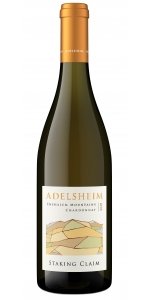
Adelsheim Vineyard Chardonnay Staking Claim is made from 100% Chardonnay.
Review:
Grapefruit pith, flint, roasted almonds and toasted lemons here. It’s medium-bodied, flinty and gently toasty with bright acidity and a fresh, tight finish. Sustainable.
-James Suckling 92 Points
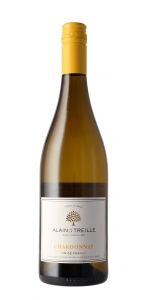
This chardonnay has a characteristic pale yellow color with a shade of gold and subtle nose that will remind you the fresh butter nuts and roasted almonds. On the palate, it is full bodied and fruity with a pleasant roundness.
Average age of the vines is 25 years old.
We produce a part of this cuvee with 12 hours skin maceration and another part from directly pressed grapes.
Wine was slightly filtered before bottling to insure the wine remains stable.
Best friend as an aperitive or with freshwater fish, shellfish and goat cheeses.
This chardonnay has a characteristic pale yellow color with a shade of gold and subtle nose that will remind you the fresh butter nuts and roasted almonds. On the palate, it is full bodied and fruity with a pleasant roundness.
Average age of the vines is 25 years old.
We produce a part of this cuvee with 12 hours skin maceration and another part from directly pressed grapes.
Wine was slightly filtered before bottling to insure the wine remains stable.
Best friend as an aperitive or with freshwater fish, shellfish and goat cheeses.
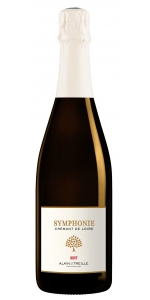
Alain de la Treille Symphonie Cremant de Loire Brut is made from 90% Chenin Blanc and 10% Orbois (also known as Arbois or Menu Pineau)
The wines of Alain de la Treille reflect their vineyard of origin and are produced following the estate's unique guidelines: a strict selection of terroirs and vines, elaboration according to the traditional method and long maturation “sur lattes” in order to obtain the purest and most elegant expression of the Loire terroirs.
Elegant pale yellow color. The nose is delicate and complex with an array of fruity aromas such as grapefruit and peach with a touch of brioche. The flavors are fresh with floral character and a fresh finish.
Ideal for the aperitif, with a nice seafood platter or simply your favorite dessert.
-75x150.jpg "Philippe Milan Bourgogne Blanc 2022")
Philippe Milan Bourgogne Blanc is made from 100% Chardonnay
The wine is produced from vines planted in the commune of Chassey le Camp at high elevation, which brings freshness to this Chardonnay. Ripe fruit is nicely balanced with delicate notes of oak and a hint of citrus on the finish. Full flavored and complex.
Robert Mondavi Winery Oakville Cabernet Sauvignon is made from 83% Cabernet Sauvignon, 11% Cabernet Franc, 2.5% Petit Verdot, 2% Merlot, 1.5% Malbec.
Aromas of plum, blackberry, fig, black tea leaf, subtle vanilla notes, sage, and tarragon. Layers of ripe dark fruit, baking spice, toast, and vanilla. Rich and juicy with a pretty structure and fine, well-integrated tannins.
Reviews:
Intense blackberries and black cherries on the nose lead to vivid focused cherries, blueberries and minty, spicy accents on the palate. Firm in tannins and fresh with good acidity, this outstanding wine is well-balanced.
-James Suckling 94 Points
The 2021 Cabernet Sauvignon Oakville is almost all from To Kalon. Dark blue/purplish fruit, lavender, mocha and licorice all build nicely in the glass.
-Vinous 94 Points



