" We don't sell the wine without touching the vine "
| Country: | France |
| Region: | Bordeaux |
| Winery: | Cambon la Pelouse |
| Grape Type: | Merlot |
| Vintage: | 2016 |
| Bottle Size: | 750 ml |

All older vintage wines have been purchased from a single collectors cellar. Pictures can be requested before shipment.
All older vintage wines have been purchased from a single collectors cellar. Pictures can be requested before shipment.

No Syrah terroir in Sonoma County compares with Sonoma Mountain’s northwest crown—cool fog-affected mornings, sun-bathed afternoons, cooled by persistent coastal breezes, and temperate evenings. The soils in Steiner’s Syrah blocks — ashy and moondust-like, littered with decomposing sea bed — further contribute to the unique nature of this site. After a 3-vintage hiatus, I am thrilled to be back working with Steiner Vineyard’s Syrah. By its nature, this slow-to-ripen, cool-climate site produces fabulously deep, intense, structured wines. Now, raising a big, brawny Syrah is no rare act of alchemy. It is the wonder of Steiner’s terroir — a magical elegance and beauty, informing the inherent power, depth and intensity — that makes this bottling so special. 2016 produced a classic wine that deftly balances massive flavors and texture, while retaining vital freshness, and a palpable sense of cool. Production was low, so get it while you can. Simply a “WOW” wine, not to be missed.
VINEYARD: Steiner Vineyard. Located at 1,100 ft, on the northwest crown of Sonoma Mountain. CRUSH: Early morning harvest by hand, October 1st, cluster and berry sorted, destemmed and crushed. FERMENT: 5-day cold soaks, followed by 14 day native fermentation in open-top bins. AGING: 20 months, French oak, 100% new, mixture of 300L hogsheads and barrique shapes. Never racked prior to bottling. Bottled unfined, unfiltered.
Review:
"Refined and stylish, featuring a complex core wrapped in multilayered blackberry and blueberry flavors, laced with bitter chocolate, black licorice and smoky meat notes. Drink now through 2030.- Tim FISH"
- Wine Spectator Insider (January 15th 2020), 93 PTS
Avennia Justine Red Blend 56% Grenache, 31% Mourvèdre, 13% Syrah
Justine reflects our belief that Washington is capable of producing world class blends of grape varieties traditional to the Southern Rhone region of France. The name is inspired by one of the great heroines of recent literature, who also sprung from the imagination of the Mediterranean. Dark, seductive, complex, with a chasm of depth: The Justine is a great reflection of Avennia's mission of expression, and Washington's generous terroir.
Tasting Note: Big black cherry, blackberry, hints of orange peel, fresh herbs and loam on the nose. Plush and round on the palate. Dark earthy fruits from the Mourvedre, along with citrus high notes, mountain flowers, jasmine, and savory herbs. Balanced and complex without forgetting its hedonistic roots in the Southern Rhone.
Review:
A blend of 56% Grenache, 31% Mourvèdre, 13% Syrah brought up all in older oak, the 2016 Justine offers a great core of black fruits as well as lots of peppery herbs, earth, and classic meatiness. It looks to be a great vintage for this cuvée."
- Jeb Dunnuck (April 2018), 92-94 pts
Avennia Red Willow Cabernet Sauvignon is made from 100% Cabernet Sauvignon.
The Red Willow Cabernet is a true blockbuster.
Coming from one specific block of 30 year old vines at this iconic vineyard, then strictly barrel selected, this is the essence of powerful, old vine Washington Cabernet. After all of our efforts promoting the idea of the Bordeaux blend, it would take a pretty compelling argument to suspend that idea and make a 100% varietal Cabernet. In 2016 Red Willow provided us with just that. Each time we tasted it in the barrel, the belief grew that this was something special. Something we can't make every year. In the end we were won over, and decided to make a limited amount of this wine. But don't be fooled, as this too is a blend and a selection. Each year as we are tasting the grapes as harvest approaches, we notice that the vines near the bottom of this long, steep west-facing slope, are a little different. The vines at the bottom are in a little richer soil, and get a little more water, so we pick them separately, sometimes even a week or ten days apart, and keep them separate in barrel.
This wine is all from the top of the vineyard, with its lower yield and poorer soils giving more concentration and interest. Then further, nearly every combination of new and used French oak barrels were trialed to find the best blend. It's not enough just to use the four best barrels, but to trial each combination to see how they complement each other. For a wine with this much mass, 100% new French oak was used for the first time at Avennia. It is a wine that needs a little cellaring to start, but should last a very long time.
Review:
"The 2016 Cabernet Sauvignon Red Willow Vineyard is 100% Red Willow Cabernet Sauvignon that will spend roughly 20 months in close to 100% new French oak. Blackcurrants, smoked herbs, chocolate, and graphite notes all give way to a full-bodied, plump, rich, concentrated effort that's going to be better with short-term cellaring and keep for two decades."
- Jeb Dunnuck (April 2018), 94-96 pts
Avennia Valery Red Blend is made from 86% Merlot and 14% Cabernet Franc
Valery is named for the patron saint of wine in the St. Emilion region that inspired it.
We started with old vine Merlot from a stony block in the heart of the Yakima Valley and added complex, aromatic Cabernet Franc from the Horse Heaven Hills. The result is a balanced, complex wine with the elegance and ethereal perfume that this blend of two of Washington’s best varietals are known for.
The nose on this wine is very perfumed, almost exotic with notes of fresh violets, red plum, winter mint, fresh herbs and crushed limestone qualities. The palate is poised and balanced, with red fruits and mocha powder encapsulated in limestone. The finish lingers delicately, with the Cabernet Franc asserting a light tobacco and herb note, giving depth. A compelling wine that will continue to unwind for 7-10 years in the cellar.
Review:
"Brought up in 30% new French oak, the 2016 Valery (70/30 Merlot and Cabernet Franc) offers more black cherry and earthy, herbal notes as well as a medium-bodied, seamless, beautifully balanced style. It too shows a vibrant, fresh, yet concentrated style that has a Bordeaux feel in its weight and texture."
- Jeb Dunnuck (April 2019), 93 pts
"Good medium-dark red. Aromas of blueberry, mocha, licorice and violet are a bit darker than those of the 2015 version. Dense and penetrating, with wild flavors of dark berries, licorice and game given lift by rocky minerality and a minty nuance. Chris Peterson slightly acidified his Cabernet Franc from Champoux Vineyard, which he added to the wine for richness. This beauty may yet tighten up in the bottle.- Stephen Tanzer"
- Antonio Galloni's Vinous (November 2018), 92+ pts
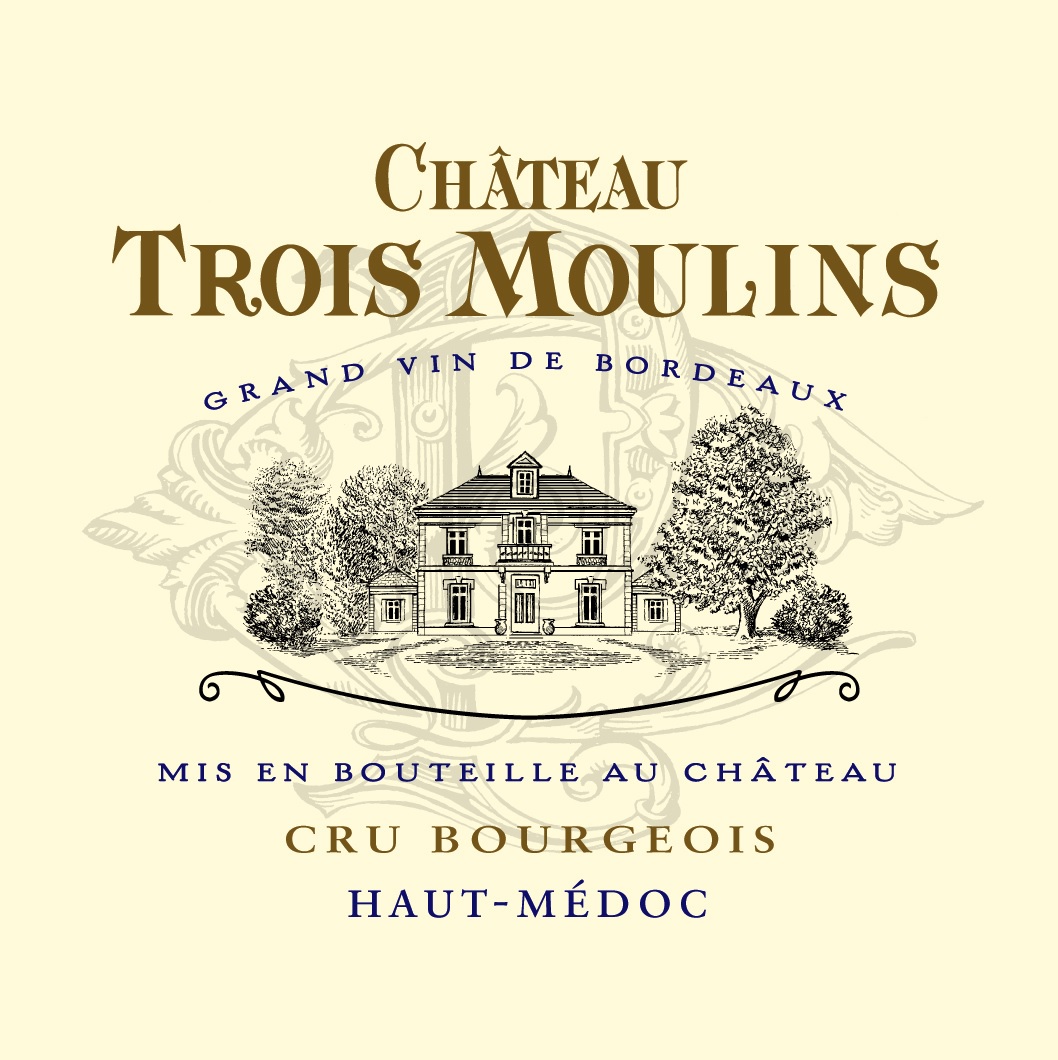
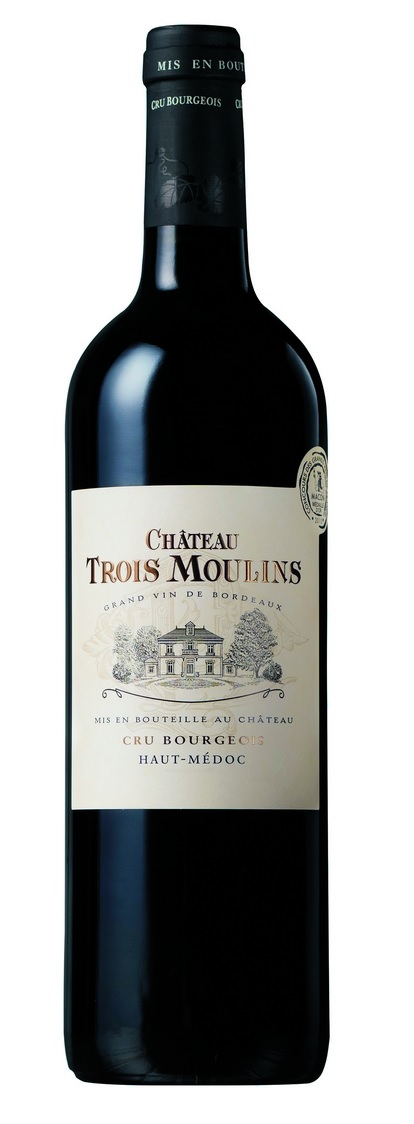
Trois Moulins Haut-Medoc Cru is amde from 52% Merlot, 33% Cabernet Sauvignon and 15% Cabernet Franc.
Average age of vines: 19 years.
Aged 8 months in French oak barrels (1 year old barrels)
This wine is ripe and firm on the palate. Flavors of black plum skin and blackberry form a rich wine that is approachable at an early age. This wine is weighted enough to balance the intense tannins, with enough acidic structure to lift the finish.
Review:
"This offers some herbal notes with an array of red fruit and bell peppers. The palate has quite a taut build of fine tannins and delivers a sturdy, fine but firm texture at the finish. A blend of 45 per cent merlot, 40 per cent cabernet sauvignon and 15 per cent cabernet franc. Try from 2022."
- James Suckling (February 2019), 92 pts
The Cambon la Pelouse Estate
Cambon la Pelouse is located in Macau, between Chateau Giscours and Chateau Cantemerle, just outside the Margaux appellation. Mr de Cambon founded the estate during the French Revolution. Annick and Jean-Pierre Marie took it over in 1996 and made some great investments to renovate the property.
The Cambon la Pelouse Vineyard
The vineyard spreads over 60 hectares of vines with an average of 30 years. The soil is made of fine and larger gravel from the quaternary period.
The vineyard is farmed under the "culture raisonnee" method (sustainable). Hand-harvesting, pruning, thinning out of the leaves, green harvesting, destemming ensure the perfect quality of the grapes.
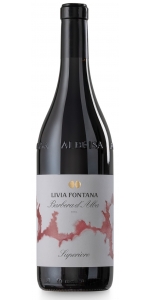
Livia Fontana Barbera d'Alba Superiore is made from 100 percent Barbera.
Organoleptic characteristics: intense ruby red color. Fresh and intense aromas with currants and berries notes. Warm, full, rich and persistent taste, full body. Suitable for long aging.
Excellent accompaniment to warm appetizers, rich first courses, red meat and the medium-seasoned cheeses.
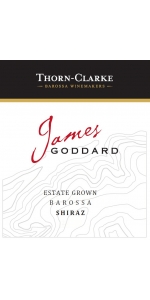
James Goddard was an ancestor of the Clarke family. Born in West Sussex, England in 1823, James spent his 74 years as a sailor, a whaler, a bullock driver, farmer, prospector, miner and hotel keeper. From an illiterate runaway living rough on the streets of London, he became a rich, successful and admired pillar of South Australian society.
James arrived in Adelaide in 1839 as a 16-year-old sailor. Twelve years later, his life changed forever with the news of gold findings. For the next 20 years, James roamed the country learning the geology that improved his chances of prospecting.
James Goddard Shiraz is made from 100 percent Shiraz.
In 1870, he tried his luck near his farm in the Barossa Valley and discovered the region’s first gold deposits, creating the prosperous Lady Alice Mine. The Lady Alice Mine, though it is no longer operational, was & still is the most successful gold mine in South Australia. From these roots, the Thorn-Clarke family has been connected to the region for the last 150 years.
James Goddard Shiraz is a blend Shiraz sourced from the Milton Park vineyard in the north of Eden Valley, and the St Kitts vineyard in the far northern area of the Barossa. Fruit is harvested in the cool of the night to maintain maximum flavour and freshness and it is fermented for 8 days. The ferment is pumped over twice daily to extract the colour and flavour from the fruit. Once finished fermentation the wine was then matured in a blend of French and American oak for a period of 10 to 12 months depending on the vintage.
Deep vibrant red with purple hues to the rim. The nose shows lifted plums, vibrant purple berries and a delicate spice note. The palate has concentrated satsuma plum, blackberry with lovely charry oak in the background. Long, juicy and even with plush fruit on the finish.
Review:
“Blended from two estate vineyards, St. Kitts and Milton Park, this shiraz offers its richness without any aggression or overt perfume. It’s just lush and delicious, a friendly embrace of firm tannins and purple-red fruit. The texture and flavor combine in a saturated meatiness, for Korean barbecue.”
- Wine & Spirits Magazine, 92 points
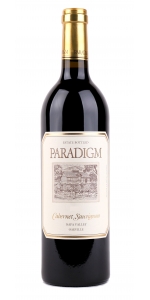
Paradigm Cabernet Sauvignon is made from 90% Cabernet Sauvignon, 8% Merlot, 1% Petit Verdot, 1% Cabernet Franc
20 months in French oak (only about a third of that is new oak) and for 20 more months in bottle before release
Our winemaking "style" is solely determined by this place or terrior we call "Paradigm." Winemaking is agriculture when you own your vineyards and are able to farm them to promote the very best Earth will give you. All of our selections of wines are made from five varietals on the estate. Every wine is 100% farmed and grown by us.
Complexity in our wines supported by luscious fruit and acidity is our hallmark. Our efforts during harvest and barrel cellaring concentrate on maintaining the freshness from the first day we handpicked each vineyard block. Simple winemaking protocols are employed while crucial “timing” oriented winemaking decisions rule each day.
The 2015 vintage produced delicious concentrated wines in smaller quantity than normal. This black raspberry colored Cabernet has lovely open aromatics of black cherry, berry, and plum layered with a perfect balance of new and used French Oak.
Reviews:
"Owned and managed by the Harris family, Paradigm winery produced its first vintage in 1991 in Oakville with winemaker Heidi Barrett. A self-contained winery estate with 50 acres of vineyards, Paradigm maintains a hands-on approach to all winemaking and vineyard operations. The 2015 Cabernet Sauvignon consists of 89% Cabernet Sauvignon, 6% Merlot, 3% Petit Verdot and 2% Cabernet Franc, and is aged in both new and used French oak for 20 months, then aged a further 20 months in bottle before release. The total production for this vintage was 5,544 bottles." Blind tasted by Dave Allen, Stephen Brook, Terry Kandylis (at Decanter Magazine's December 2019 Californian Cabernet 2015 Panel Tasting, London, 17 Sep 2019) - Decanter 95 Points

All older vintage wines have been purchased from a single collectors cellar. Pictures can be requested before shipment.
Grand Veneur Cotes du Rhone Rouge Reserve is made from 60% Grenache Noir, 35% Syrah and 5% Cinsault.
The colour is purple-tinged garnet.The aromatic range of the nose goes from fresh berries (wild raspberry, blackcurrant, blackberry) to spices.The palate is big and full-flavoured, with silky-smooth tannins and aromas of the fruit already mentioned. The finish introduces touches of liquorice and pepper. A Côtes du Rhône with great complexity for an every day drinking.
A classic Rhône to drink between 1 and 4 years.