
" We don't sell the wine without touching the vine "
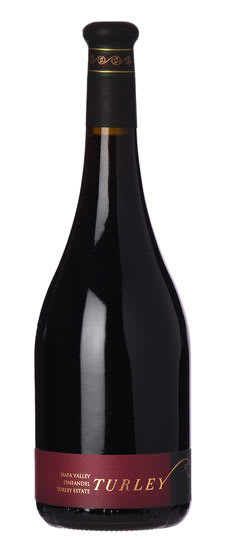
| Country: | United States |
| Regions: | California California (Napa) |
| Winery: | Turley |
| Grape Type: | Zinfandel |
| Organic: | Yes |
| Vintage: | 2022 |
| Bottle Size: | 750 ml |

Turley Zinfandel Buck Cobb is made from 100 percent Zinfandel.
Organically farmed head-trained vines planted at 1500' in the granite and quartz soils of the Sierra Nevada Mountains. Primarily savory and red-fruited, with characteristics of black pepper, dried meats and fine-grained tannin texture.
This would be an excellent pairing with wood-fired pizza.
Review:
-Antonio Galloni (Vinous) 92 Points

Turley Pesenti Zinfandel is made from 100 percent Zinfandel.
This certified organic estate-owned vineyard was planted in the 1920s on primarily limestone soil. Though the vines are head-trained and dry-farmed, the soil plays the most important role in distinguishing this vineyard on the west side of Paso Robles. The wines have a brightness, with chalk and floral characteristic aromas unique to the site, and to Zinfandel in general.
Review:
-Wine Spectator 93 Points
-Antonio Galloni (Vinous) 94 Points

Hailing from over two dozen vineyards across the beautiful Golden State, the Turley Juvenile is more of a clear bellwether for a vintage than any other wine we make. Fragrant, lifted aromas of ripe dark fruits like black raspberry and blood orange on the nose. Superb balance between acidity, tannin, and spice, with a succulent, profoundly satisfying texture.
Review:
The 2024 Zinfandel Juvenile is a very pretty entry-level offering from Turley. Crushed flowers, sweet red berry fruit, spice and mint give this mid-weight, perfumed red tons of character. The 2024 is an especially delicate, gracious Zinfandel. What a beauty.
-Vinous 91 Points

Brown Estate Chaos Theory is made from 37% Cabernet Franc 21% Cabernet Sauvignon 21% Zinfandel, 13% Merlot 8% Barbera
Dark garnet core, ruby rim. Maraschino cherry, red licorice, effervescent citrus, rose garden, chamomile blossom, Italian leather, and creme de cassis followed by cardamom, clove, cinnamon, churned cream, fresh vanilla, and a touch of graphite. Full body with juicy, creamy mouthfeel and supple tannins.
Reviews:
Mulberry, heather, and sarsaparilla are uniquely joined in this plush blend of Cabernet Franc, Cabernet Sauvignon, and Zinfandel. Notes of cardamom, cinnamon stick, chocolate-raspberry cake are dreamy. Vivid acid structure is within a frame of spiced, dried spring flowers and plum liqueur.
-Tasting Panel 93 Points
This concentrated Merlot-Zinfandel-Petite Sirah blend brings waves of cherry gastrique, raspberry liqueur, violets and caramel on the nose, while the palate leans into ripe blueberries, dark chocolate and raspberry coulis with expansive texture and velvety tannins.
-Wine Enthusiast 93 Points

Chappellet Pritchard Hill Estate Vineyard Cabernet Sauvignon is made from 94% Cabernet Sauvignon & 6% Petit Verdot.
Chappellet's Pritchard Hill Cabernet Sauvignon has been, since the beginning of their winemaking career, the most sought after wine of their portfolio. The wine is truly a love letter to the winegrowing potential of Pritchard Hill. The wine was inspired by Bordeaux, and like most left bank Bordeaux, the wine is a blend of predominately Cabernet Sauvignon with remaining amounts other classic Bordeaux blend varieties. The vines grow upon rocky, mountainside vineyards. After harvest and fermentation, the wine was aged for 22 months in 100% new French oak barrels.
Review:

Our organically farmed high-density Estate parcel sits at the top of the ridge amongst the diverse coastal forest. Although the soil is sandy, there’s a vein of clay in the subsoil that holds winter rain and allows us to dry-farm the vines. The tight spacing keeps the clusters and soil shaded during the summer heat, which allows the fruit to retain all the nuance of the site. The wine produced here has a character - a signature - all to itself and cannot be replicated elsewhere; it's the antithesis of fruity, forward, easy-to-understand Californian Chardonnay. The grapes are small with thick skins, producing a high level of fruit extract, which translates to deep texture and structure in the wine itself. Concentration allied to freshness is the essence of this wine, and it ages beautifully in bottle for ten to twelve years.
The wine’s aromas and flavors are incredibly complex and diverse, akin to citrus oil, preserved lemon, sage, fennel and caraway. The wine is deep, powerful, and layered with oyster shell freshness cutting through the natural density. Lemongrass, spearmint, and grapefruit power the finish, which pulsates with intensity. You could decant this for an hour before serving to hasten its development. Drink between 2025 and 2030. Serve no cooler than 55º F.
Review:
-Jeb Dunnuck 96 Points
-James Suckling 97 Points
Certified organic, head-trained, dry-farmed field blend of vines planted at the winery in the heart of Napa Valley. Red and black fruits, garrigue, and distinctive black pepper nose. Broad and deep on the palate, with further notes of Provencal herbs and earth; though most definitely a classic Napa wine, it has an almost Southern French sensibility.
Review:
The 2022 Zinfandel Turley Estate is composed of three generations of plantings that commenced in 1996. Medium to deep ruby in the glass, it opens with pure, deep, characteristic aromas of grilled yellow peaches, red cherry, redcurrant, lavender, leather and angostura bitters, revealing finer detail as it spends time in the glass. The palate is massively rich, full-bodied and powerful, with a brooding density that melds with grainy tannins and mouthwatering acidity. The finish is layered, dramatic and perfumed, with an overarching youthful density that will take a few years in bottle to unwind. This is a lovely effort that combines modern density with a classically framed structure.
-Wine Advocate 95 Points
Turley Wine Cellars was founded in Napa Valley by former emergency room physician Larry Turley in 1993. Under the direction of winemaker Tegan Passalacqua, Turley now makes 50 different wines from over 50 vineyards across California, primarily Zinfandel and Petite Syrah, with many vines dating back to the late 1800s. By farming organically and focusing on old vine vineyards of these varieties, Turley aims to both create and preserve California’s unique winemaking culture.
Born in Tennessee and raised in Georgia, Larry has spent the better part of his life on a farm. This being the south, they were primarily tobacco and dairy farms; nevertheless, his respect for the land and its cultivation began at a young age. As an adult, Larry channeled this passion for preservation towards people, studying medicine and working as an emergency room physician. After moving to California in the mid-seventies, Larry came home from the ER one night to discover someone camped on his property. After first driving his motorcycle through the tent (this was, after all, the 1970’s in the “wild wild west”) he met its occupant, John Williams, the soon-to-be winemaker at Spring Mountain. After sharing a glass of wine, they became friends; a few bottles later, they became business partners. Frog’s Leap Winery was begat in 1981, with Larry on a tractor by day and suturing by night.
The winery enjoyed quick success; however, much like Athena originated as an ache in Zeus’ head, the impetus for a smaller, more focused project began to take shape in Larry’s mind. He’d taken a shining to the wines made from Zinfandel & Petite Syrah, growing particularly fond of those made from old vine vineyards. Eventually he sold his half of Frog’s Leap to John and started Turley Wine Cellars in 1993.
Because Larry has never met an old vine vineyard he didn’t like, Turley now makes 47 separate wines from over 50 different vineyards, some with vines that date back to the late 1800’s. Often weak and decaying, these old vine vineyards require extra care and attention in order to restore them to their former glory. After twenty-five years in the emergency room, Larry can now focus his resuscitative skills on the various old vineyards that comprise the wines he loves.

Deep red with a slight purple hue on release. The wine has a rich mix of dark chocolate infused with coffee bean and black liquorice, then scents of tar, aniseed, raw (pure) soy and black olive on the nose. The palate is expansive, and yet balanced and finessed. An amalgam of dark berried flavors and textural sensations. The 100% new oak is completely absorbed, meshed with ripe tannins, completing a palate of impressive length and youthfulness.
Parcels of fruit for this wine were identified in the vineyard by the winemakers. Daily fruit inspection led to the fruit being harvested at optimum flavor ripeness. The fruit was harvested at night and quickly transported to the winery. The fruit was destemmed to 6T open fermenters for fermentation. A Shiraz specific yeast was selected to ferment the wine and fermentation was carried out at a maximum of 28°C. The fermenter was manually pumped over twice daily in the first half of fermentation to give the winemakers control of color, flavor and tannin extraction. Pump over regimes were adjusted toward the end of fermentation to suit the tannin and flavor extraction of the wine. The cap was completely broken up on each pump over. The wine remained in fermenters for 6-8 days (dependent on parcel) before being pressed, inoculated with malolactic bacteria and filled to American oak (100% new barrels). The wine was racked post malolactic fermentation and returned to the same barrels. The wine was topped every month and after six months racked and returned to the same barrels again. Prior to bottling the parcels were emptied from oak and blended. Minimal fining and filtration was carried out prior to bottling.
Review:
-Jeb Dunnuck 96 Points
-Wine Spectator 94 Points

Paul Hobbs West Sonoma Coast Pinot Noir is made from 100 percent Pinot Noir.
Hailing from the newly established West Sonoma Coast AVA,.
Lovely ruby red shades catch the eye, while exotic notes of tart Morello cherry and pungent pine forest swirl with fresh raspberry. Bright, pure fruit carries through on the palate, layered with earthy hints of damp loam and rocky salinity, all backed by the elegant, fine-grained tannins and stylish grip that cool West Sonoma Coast offers at its best.
Review:
-Tasting Panel 97 Points

Paul Hobbs Russian River Pinot Noir is made from 100 percent Pinot Noir.
Sourced predominately from the estates that are defined by their proximity to the coast and Russian River climate, the wine displays vivid crimson and aromas of violet, Morello cherry, and black tea. Velvet tannins on the palate ride along a juicy backbone of flavors such as cranberry, Blood orange, and Damson plum. The finish is long, powered behind a crisp acidity and appealing red clay-like minerality.
"Though Paul Hobbs is probably best known for his single vineyard wines, he is clearly no slouch at blending vineyards to make something special. This bottling is rich and deeply extracted, showing black cherry, raspberry, mace, cola and damp earth notes. It’s very lively for all its density, with seductive oak toast notes adding depth. It is already well integrated and promises a long life ahead. 96 Rich Cook"
-Wine Review Online 96 Points

Beatus began with a dream and a friendship. Our dream was to make wine in Châteauneuf du Pape, one of the first regions to inspire the desire to pursue winemaking in general, and of working with Grenache in particular.
We developed a long-standing friendship with Anne-Charlotte Melia-Bachas, Proprietor of Chateau de la Font du Loup, who approached us with the idea to craft a wine together a number of years ago.
This has all come to fruition with Beatus, a wine that we have decided to make ongoing, every year — since tasting the exciting results of the first vintage in barrel.
The vineyard parcel selected for this wine is a single plot of 80-year old Grenache at the top of La Crau in Châteauneuf du Pape, the highest location in the AOC. It sits on a north-facing slope that helps guard against the sometimes intense summer heat that can affect the surrounding areas.
This plot is called “Le Poteau” and has been generously granted to us by Anne-Charlotte as the core of this wine, with supplementation of Syrah and Mourvèdre from surrounding parcels also grown on the Chateau de la Font du Loup estate, to round out the blend.
The winemaking is directed by myself and carried out by Anne-Charlotte, Stéphane Dupuy d’Angeac and their team. It is our hope to bring you one of the finest expressions of Grenache from this special region each and every vintage.
Yields from this block are very small due to the age of the vines, therefore only up to 100 cases of Beatus will be produced each year, depending on the conditions of the vintage.
Our first release was in November of 2022.
– Winemaker Todd Alexander
Review:
Made in collaboration with Chateau de la Font Du Loup, the 2020 Beatus is an extraordinary bottling that rivals some of the top wines of this region. The nose is hugely perfumed with red rose petals, potpourri, sage and shades of red currants. The palate displays the same level of concentration as it does on the bouquet. Beautiful guava and ripe strawberry fruits parade with copious minerals and a sinfully good texture on the palate. Fresh and vibrant, this is just sensational stuff to enjoy in its heady youth.
Owen Bargreen 97 Points

Grand Veneur Chateauneuf-du-Pape Rouge Les Origines is made from 50% Grenache, 30% Mourvedre and 20% Syrah
Matured in vats (grenache) and in oak casks (syrah and mourvèdre).
Deep and brilliant, purple-red colour. An exciting nose with aromas of black fruit (blackcurrant, cherry) spices and vanilla. This great aromatic complexity is found on the palate : the spices and ripe fruit appear with an elegant woodiness and harmonious tannins. The finish has good aromatic length and introduces a touch of liquorice and pepper.
A terrific Châteauneuf du Pape with great concentration and finesse.
Best between 2 and 20 years. Best to decant if young (less than 5 years old).
Soil type Extreme north of Châteauneuf du Pape. This plateau is made with a high quantity of red clay mixed with rocks. This area is considerated to be one of the best to produce rich and powerful red wines. By definition, LES ORIGINES will always deliver a great complexity and ageing potential. Winemaking & ageing Harvest is sorted by hand, destemmed and crushed. Fermentation temperature is controlled at 30°C. Vatting period of 18 to 20 days. Matured in vats (grenache) and in oak casks (syrah and mourvèdre).
Review:
-Joe Czerwinski (Robert Parker) 95 Points
-Wine Enthusiast 94 Points
-Jeb Dunnuck 94 Points
-Josh Raynolds (Vinous) 94 Points

A slope (un talud) leading up to a mountain where centuries of rock falls have left the soil beneath full of large angular rocks, and therefore useless for most agriculture. Deposited hugger-mugger amongst the clay and sand however, they offer perfect drainage and allow vines to grow, forcing their roots ever downwards in search of water, picking up minerals along the way. If you wanted to explain to someone what Cabernet Sauvignon tasted like, you could do a lot worse than showing them this beautiful expression of the variety which demonstrates great purity, concentration and elegance.
Review:
Talud is from the oldest cabernet sauvignon vineyards on Tabalí’s estate in the coastal Maipo zone, 50 kilometers from the Pacific, planted in 1999. The soils are colluvial, which often deliver firm, pointed tannins, and those are present here, but they’re very nicely accompanied by juicy red fruit and bright acidity that allows this wine to put its fresh, vibrant facet in the foreground. Take note, however, there are deep, dense flavors here. It’s still a very young cabernet, so make room in the cellar.
-Patricio Tapia - Descorchados 95 Points

In 1992 the Hill-Smith family counted themselves amongst those fortunate enough to own a vineyard upon the famous Coonawarra terra rossa soil over limestone. Experimentation, innovation, minimalist intervention and small batch winemaking has resulted in The Menzies’ reputation as a wine of longevity, elegance and structure.
Situated in the heart of Coonawarra’s terra rossa strip, The Menzies Estate vineyard lies on a flat plain, approximately 70km from the coast. Given the terrain and influence of the cooling Bonney upwelling, Coonawarra is an ideal location to grow premium Cabernet Sauvignon. Our soil is red sandy loam over limestone, which is classic Cabernet Sauvignon country. The grapes for The Menzies 2017 are from vines planted in 1994 and 1996. Bunches are usually small with small berries, giving concentration via an ideal skin to juice ratio favouring the making of fullbodied reds.
Aromas of fresh rosemary, mulberry, violets and exotic spices. Take a sip and you will feel the poise and tension for which great Cabernet is renowned. A wine of great complexity with flavors of blackcurrant, bitter chocolate, and mulberries, wrapped in divine tannins and a lovely sweet, dark fruit finish. With decanting in its youth, it is enjoyable as an elegant full-bodied red wine.
Review:
-Wine Advocate 95 Points

Orin Swift Machete is made from Petite Sirah, Syrah and Grenache.
Machete is one of Dave Phinney’s signature Orin Swift reds — a dark, dense California blend led by Petite Sirah, with Syrah and Grenache, aged in French oak. Brooding and plush, it layers black fruit, cracked pepper, cigar box, and dark chocolate, carrying the swagger and striking artwork that made Orin Swift a cult name.
Winery Info: Orin Swift Cellars was founded by Dave Phinney in St. Helena, Napa Valley, in 1998. Built on boldly sourced fruit from across California and instantly recognizable, provocative label art, Orin Swift has become one of the most talked-about names in modern American wine.
Review:
The 2020 ‘Machete’ is a proprietary blend of Petite Sirah, Syrah and Grenache that was stored in 34% new French oak for 14 months before bottling. A soft texture greets you as green peppercorns greet you alongside black currant jelly, cigar ash and dark chocolate shavings with kirsch cordial notes. Considering the vintage, this is a really good effort.
–Owen Bargreen, 92 Points



