
" We don't sell the wine without touching the vine "
| BUY MORE! SAVE MORE! | ||||||||||||||||||||
|
Franz Prager, co-founder of the Vinea Wachau, had already earned a reputation for his wines when Toni Bodenstein married into the family. Bodenstein’s passion for biodiversity and old terraces, coupled with brilliant winemaking, places Prager in the highest echelon of Austrian producers.
Smaragd is a designation of ripeness for dry wines used exclusively by members of the Vinea Wachau. The wines must have minimum alcohol of 12.5%. The grapes are hand-harvested, typically in October and November, and are sent directly to press where they spontaneously ferment in stainless-steel tanks.
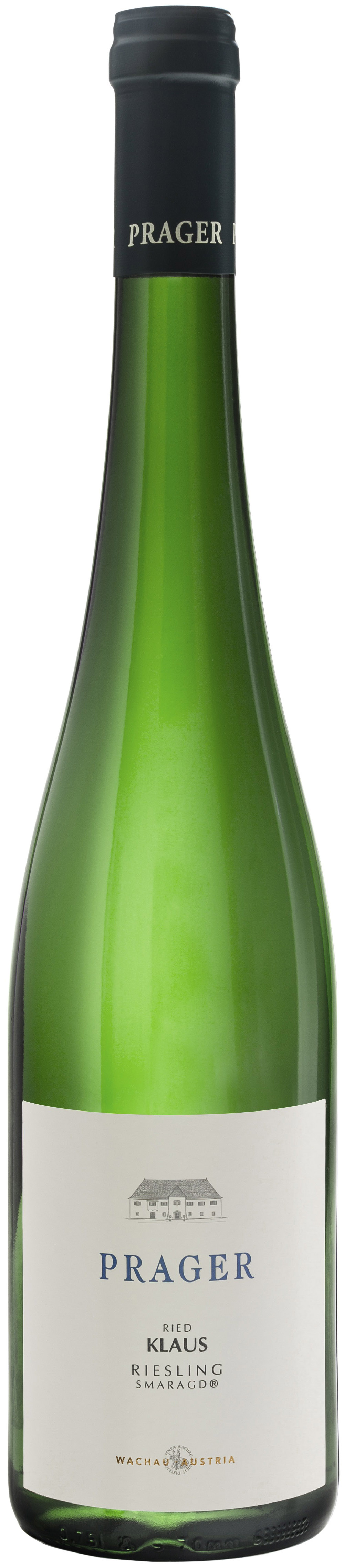
Klaus sits adjacent to Achleiten and is one of the Wachau’s most famous vineyards for Riesling. The vineyard is incredibly steep with a gradient of 77% at its steepest point. The southeast-facing terraced vineyard of dark migmatite-amphibolite and paragneiss produces a tightly wound and powerful wine. The parcel belonging to Toni Bodenstein was planted in 1952.
Tasting Notes:
Austrian Riesling is often defined by elevated levels of dry extract thanks to a lengthy ripening period and freshness due to dramatic temperature swings between day and night. “Klaus is not a charming Riesling,” says Toni Bodenstein with a wink. Klaus is Prager’s most assertive and robust Riesling.
Food Pairing
Riesling’s high acidity makes it one of the most versatile wines at the table. Riesling can be used to cut the fattiness of foods such as pork or sausages and can tame some saltiness. Conversely, it can highlight foods such as fish or vegetables in the same way a squeeze of lemon or a vinaigrette might.
Review:
Superbly cool, restrained and refined, this austere, beautiful dry riesling is a slow-burn masterpiece that's only just beginning to reveal its complex white-peach, white-tea, wild-herb and dark-berry character. Super-long and mineral finish. Drink or hold.
-James Suckling 97 Points
Thus, in the Wachau, vineyards follow vineyards – each a great soloist, together an unmistakable orchestra.
A single, artistically designed garden on the banks of the great river Danube: That is the Wachau. Weathered walls give the soil - worn down "primeval rock" - support and support. These terraces, which ubiquitously watch over the valley, act like the defensive lines of mighty fortifications.
This is where the wine of the Wachau matures: on barren soil, in the struggle with the forests, also with the cold that penetrates from the north, from Bohemia, over the hills of the Waldviertel to the Danube. Right here, on the edge of what is still possible, fine, distinctive wines of rare quality are created.
Dionysian expression of a unique landscape
Diverse contrasts in a small space, unique soil formations and a subtle microclimate characterize the “nursery” of the grapes. Wachau wine is correspondingly unmistakable.
The subtle differences between the individual vineyard sites are almost unfathomable, and their facets and nuances are enormously diverse. Whether Klaus or Achleiten, Steinriegl or Hollerin or the Riesling “Growth Bodenstein” grown at 460 meters above sea level: they all represent the Wachau and yet each location stands for itself – a uniqueness that is deeply rooted in the original.
Centuries ago, monks in the Wachau vineyards recognized quality limits and drew dividing lines. Because their striving was not only aimed at the best wine. Her passion was also the - sometimes clear, sometimes only very fine - differences between the individual sites and thus between the wines.
Whether intuition or myth, whether feeling or reality: What is certain is that a specific plant can only be pressed in a specific place at a specific time by one or more specific people. That's the great thing about wine.
... that's the motto of Ilse and Toni Bodenstein. Their goal: to bring individual, unmistakable wines into the glass, which must be a reflection of their respective origin. The work in the vineyard and cellar follows traditional paths, but is supplemented with necessary and sensible innovations - always striving for the best possible quality.
The special appreciation of the Prager winery belongs to the Grüner Veltliner and the Riesling. Anno 1302 - on the occasion of the first documentary mention of the building "located on the Chling in the Ritzling, belonging to the Michaelbeuern monastery, with the ship mill in pertinenz" - the origin of the Riesling here in the Wachau is suspected in the name Ritzling.
"Riesling" comes from "to tear", from trickling through the flower. At least that is the explanation given by the ampelographers. Riesling is rightly considered the king of white wine varieties. Its late maturity and high demands on soil and climate make it an individualist. Characteristic are its elegance and finesse, its mineral play and the delicate scent of white peaches.
The second typical regional grape variety that has been cultivated in the Prager winery for generations is Grüner Veltliner. Particularly noteworthy are the up to 60-year-old vines of this variety in the Achleiten and Zwerithaler sites. The great age of the vines gives the wine an incomparable density and a particularly pronounced minerality.
For Toni Bodenstein, the great genetic diversity of these old vines is particularly important, because hardly any of these old vines are alike. Therefore, old vine stocks represent an important genetic reserve for the future!
Tradition and innovation are equally among the strengths of the winery. With the possibilities of modernity and the knowledge of previous generations, Toni Bodenstein tries to track down the secret of the terroir, to fathom the fathomable, to approach the unfathomable. His passion: to produce unmistakable wines in a unique landscape, which are a reflection of the vineyard from which they come.
Weingut Prager Achleiten Riesling Smaragd is made from 100 percent Riesling.
Franz Prager, co-founder of the Vinea Wachau, had already earned a reputation for his wines when Toni Bodenstein married into the family. Bodenstein’s passion for biodiversity and old terraces, coupled with brilliant winemaking, places Prager in the highest echelon of Austrian producers.
Smaragd is a designation of ripeness for dry wines used exclusively by members of the Vinea Wachau. The wines must have a minimum alcohol of 12.5%. The grapes are hand-harvested, typically in October and November, and are sent directly to press where they spontaneously ferment in stainless-steel tanks.
Achleiten sits east of Weißenkirchen and is one of the most famous vineyards in the Wachau. The steeply-terraced vineyard existed in Roman times. Some sections have just 40 cm of topsoil over the bedrock of Gföler Gneiss, amphibolitic stone, and slate. “Destroyed soil,” as Toni Bodenstein likes to say.
Tasting Notes:
Austrian Riesling is often defined by elevated levels of dry extract thanks to a lengthy ripening period and freshness due to dramatic temperature swings between day and night. Wines from Achleiten’s highly complex soils are famously marked by a mineral note of flint or gun smoke, are intensely flavored, and reliably long-lived.
Food Pairing:
Riesling’s high acidity makes it one of the most versatile wines at the table. Riesling can be used to cut the fattiness of foods such as pork or sausages and can tame some saltiness. Conversely, it can highlight foods such as fish or vegetables in the same way a squeeze of lemon or a vinaigrette might.
Review:
The 2020 Ried Achleiten Riesling Smaragd offers a well-concentrated, fleshy and spicy stone fruit aroma with crunchy and flinty notes. It needs some time to get rid of the stewed fruit flavors, though. Full-bodied, fresh and crystalline, this is an elegant, complex and finely tannic Riesling that needs some years rather than a carafe to polymerize the tannins and gain some finesse. Tasted at the domain in June 2021.
At Prager, I could not determine that 2020 would be inferior to the 2019 vintage; on the contrary, the 2020 Smaragd wines fascinated me enormously in their clear, cool, terroir-tinged way. A 38% loss had occurred mainly because of the hail on August 22, although predominantly in the Federspiel or Riesling vineyards. There was no damage in the top vineyards such as Ried Klaus, Achleiten or Zwerithaler. "Interestingly, the vines are in agony for about two weeks after the hail. There was no more growth, no development of ripeness and sugar," reports Toni Bondenstein. The Veltliner then recovered earlier, while even picking a Riesling Federspiel in October was still a struggle. "Why Riesling reacted more intensively to the hail, I don't know myself either," says Bodenstein. Whole clusters were pressed to preserve acidity and to compensate for the lower extract, and compared to 2019, the 2020s were left on their lees longer. In June, however, the 20s in particular showed outstanding early shape.
-Wine Advocate 94 Points
Light yellow-green, silver reflections. Yellow stone fruit nuances with a mineral underlay, notes of peach and mango, a hint of tangerine zest, mineral touch. Juicy, elegant, white fruit, acidity structure rich in finesse, lemony-salty finish, sure aging potential.
-Falstaff 95 Points
Weingut Prager Achleiten Riesling Smaragd is made from 100 percent Riesling.
Franz Prager, co-founder of the Vinea Wachau, had already earned a reputation for his wines when Toni Bodenstein married into the family. Bodenstein’s passion for biodiversity and old terraces, coupled with brilliant winemaking, places Prager in the highest echelon of Austrian producers.
Smaragd is a designation of ripeness for dry wines used exclusively by members of the Vinea Wachau. The wines must have a minimum alcohol of 12.5%. The grapes are hand-harvested, typically in October and November, and are sent directly to press where they spontaneously ferment in stainless-steel tanks.
Achleiten sits east of Weißenkirchen and is one of the most famous vineyards in the Wachau. The steeply-terraced vineyard existed in Roman times. Some sections have just 40 cm of topsoil over the bedrock of Gföler Gneiss, amphibolitic stone, and slate. “Destroyed soil,” as Toni Bodenstein likes to say.
Tasting Notes:
Austrian Riesling is often defined by elevated levels of dry extract thanks to a lengthy ripening period and freshness due to dramatic temperature swings between day and night. Wines from Achleiten’s highly complex soils are famously marked by a mineral note of flint or gun smoke, are intensely flavored, and reliably long-lived.
Food Pairing:
Riesling’s high acidity makes it one of the most versatile wines at the table. Riesling can be used to cut the fattiness of foods such as pork or sausages and can tame some saltiness. Conversely, it can highlight foods such as fish or vegetables in the same way a squeeze of lemon or a vinaigrette might.
Review:
The 2020 Ried Achleiten Riesling Smaragd offers a well-concentrated, fleshy and spicy stone fruit aroma with crunchy and flinty notes. It needs some time to get rid of the stewed fruit flavors, though. Full-bodied, fresh and crystalline, this is an elegant, complex and finely tannic Riesling that needs some years rather than a carafe to polymerize the tannins and gain some finesse. Tasted at the domain in June 2021.
At Prager, I could not determine that 2020 would be inferior to the 2019 vintage; on the contrary, the 2020 Smaragd wines fascinated me enormously in their clear, cool, terroir-tinged way. A 38% loss had occurred mainly because of the hail on August 22, although predominantly in the Federspiel or Riesling vineyards. There was no damage in the top vineyards such as Ried Klaus, Achleiten or Zwerithaler. "Interestingly, the vines are in agony for about two weeks after the hail. There was no more growth, no development of ripeness and sugar," reports Toni Bondenstein. The Veltliner then recovered earlier, while even picking a Riesling Federspiel in October was still a struggle. "Why Riesling reacted more intensively to the hail, I don't know myself either," says Bodenstein. Whole clusters were pressed to preserve acidity and to compensate for the lower extract, and compared to 2019, the 2020s were left on their lees longer. In June, however, the 20s in particular showed outstanding early shape.
-Wine Advocate 94 Points
Light yellow-green, silver reflections. Yellow stone fruit nuances with a mineral underlay, notes of peach and mango, a hint of tangerine zest, mineral touch. Juicy, elegant, white fruit, acidity structure rich in finesse, lemony-salty finish, sure aging potential.
-Falstaff 95 Points
Franz Prager, co-founder of the Vinea Wachau, had already earned a reputation for his wines when Toni Bodenstein married into the family. Bodenstein’s passion for biodiversity and old terraces, coupled with brilliant winemaking, places Prager in the highest echelon of Austrian producers.
Smaragd is a designation of ripeness for dry wines used exclusively by members of the Vinea Wachau. The wines must have minimum alcohol of 12.5%. The grapes are hand-harvested, typically in October and November, and are sent directly to press where they spontaneously ferment in stainless-steel tanks.
Zwerithaler is a sub-site of Buschenberg and sits to the east of Weißenkirchen. The name Zwerithaler, meaning "nestled between the valleys," is a near monopole of Weingut Prager. It has a complex soil of paragneiss with alternating layers of dark and calcareous rock. Zwerithaler Kammergut is a 0.34-hectare parcel planted before WWI. The wine from these ungrafted, 100-year-old vines was bottled separately by Prager for the first time in 2015.
Light greenish yellow, silver reflections. Fine savory, delicate nuances of anise, tobacco notes, delicate yellow fruit, a touch of mango and honey blossom. Full-bodied, juicy white apple fruit, well-integrated, silky acidity structure, finesse and long persistence, saline finish, lingers for minutes, Veltliner at its best.
-Falstaff 99 Points
"The aromas of this old-vine gruner veltliner leap out and shake you to the core. Full-bodied and full of weighty and balanced layers of papayas, mangoes, nectarines, chives, white tea and oranges. Fantastic concentration, giving so much pleasure already, but it will keep blossoming if you give it time. From vines planted in 1907. Sustainable. Drink or hold."
-James Suckling 98 Points
Prager Smaragd Klaus Riesling is made from 100 percent Riesling.
Franz Prager, co-founder of the Vinea Wachau, had already earned a reputation for his wines when Toni Bodenstein married into the family. Bodenstein’s passion for biodiversity and old terraces, coupled with brilliant winemaking, places Prager in the highest echelon of Austrian producers.
Smaragd is a designation of ripeness for dry wines used exclusively by members of the Vinea Wachau. The wines must have minimum alcohol of 12.5%. The grapes are hand-harvested, typically in October and November, and are sent directly to press where they spontaneously ferment in stainless-steel tanks.
Klaus sits adjacent to Achleiten and is one of the Wachau’s most famous vineyards for Riesling. The vineyard is incredibly steep with a gradient of 77% at its steepest point. The southeast-facing terraced vineyard of dark migmatite-amphibolite and paragneiss produces a tightly wound and powerful wine. The parcel belonging to Toni Bodenstein was planted in 1952.
Tasting Notes:
Austrian Riesling is often defined by elevated levels of dry extract thanks to a lengthy ripening period and freshness due to dramatic temperature swings between day and night. “Klaus is not a charming Riesling,” says Toni Bodenstein with a wink. Klaus is Prager’s most assertive and robust Riesling.
Food Pairing
Riesling’s high acidity makes it one of the most versatile wines at the table. Riesling can be used to cut the fattiness of foods such as pork or sausages and can tame some saltiness. Conversely, it can highlight foods such as fish or vegetables in the same way a squeeze of lemon or a vinaigrette might.
Review:
What a stunning example of cool climate riesling. It’s full-bodied and deep, but so cool and delicate, packing in sleek layers of honeysuckle, apricots, lemons and grapefruit married to thyme and crushed rock. So long and seamless, with tension and focus that just keeps going. Sustainable. Try from 2025.
-James Suckling 98 Points
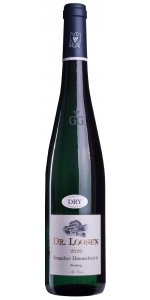
A heavenly, full-bodied dry Riesling with forceful minerality from 100-year-old vines grown in the blue slate soil of Graach.
Graach is a small village in the Mosel valley. It’s steep slate slopes produce wines that combine elegance with rustic strength. Grosses Gewächs (GG) is the designation for an estate’s best dry wine from a Grosse Lage (grand cru) vineyard. This limited-production wine was fermented with indigenous yeasts and kept in the barrel, on the full lees, for a year before bottling. The extended maturation time allows the wine to develop greater texture and a deeper natural harmony. This is a fully ripe wine, with vibrant aromatics and a pronounced acidity that gives it a brilliant structural precision.
Review:
Convincing proof that 2020 is an excellent vintage for dry GG on the Mosel! Cool and stony with delicate white-peach and white-currant aromas. Really takes off at the intensely slatey and racy finish.
-James Suckling 95-96 Points
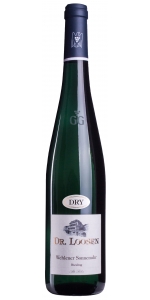
Dr. Loosen Wehlener Sonnenuhr Alte Reben Riesling Grosses Gewachs is made from 100 percent Riesling.
This is one of the greatest vineyards in the Middle Mosel. This precipitously steep, rocky vineyard consistently yields some of the most elegant and sophisticated white wines in the world. Citrus and white peach flavors predominate when the wines are young, turning to a pure expression of the mineral soil as they age.
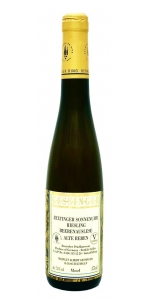
Gessinger Zeltinger Sonnenuhr Riesling Beerenauslese is made from 100 percent Riesling.
This deep yellow-colored wine offers a quite aromatic nose made of mirabelle, ripe apple, almond cream, date, ether oil, and earthy spices. It proves nicely complex and delicately oily on the otherwise focused and delicately racy palate, and leaves a subtly unctuous and still quite sweet feel of honeyed dried fruits, starfruit, kumquat, and almond cream in the precise and persistent finish. Some fresher elements of citrusy fruits and grapefruit already lighten up the aftertaste and hint at the greatness to come. This beautiful dessert wine is still really in its infancy but will develop into quite a beauty at maturity, once the candy floss driven sweetness will have receded into the background.
The Riesling Beerenauslese remains on the lees for several months to add a creamy texture to the mineral notes and to enhance the mouth-feel and drinkability.Zeltinger Sonnenuhr Riesling Beerenauslese Alte Reben was made from botrytized fruit hand-picked at a whopping 150° Oechsle from old ungrafted vines, spontaneously fermented and vegan. Fermentation with preferably wild yeasts gives this wine a unique and authentic taste, reflecting the extreme vineyard sites of the Mosel Valley. A cool temperature allows a slow fermentation which can continue for as long as the wine and the vintage requires.
Perfect match to sweet-and-sour dishes as well as spicy food.
Domaine de la Janasse Chateauneuf-du-Pape Cuvee Vieilles Vignes is made from 65% Grenache, 20% Mourvèdre, 10% Syrah, 5% divers.
In contrast to Chaupin, which is made from old-vine Grenache on sandy soils, the cuvée Vieilles Vignes is from old vines of Grenache, Mourvedre, Syrah along with smaller percentages of other permitted varieties that are grown in these old vineyards. The wine is sourced from 4 terroirs: pebbly clay, sand, gravelly red clay and sandy limestone. Vieilles Vignes is always the most powerful and concentrated Châteauneuf-du-Pape cuvée made at Domaine de la Janasse.
Review:
The 2020 Châteauneuf Du Pape Vieilles Vignes also saw some stems (the estate started keeping some stems with the 2016 vintage) and was 75% destemmed, with the blend being 70% Grenache, 20% Mourvèdre, and the rest Syrah, Cinsault, and Terret Noir. As usual, it’s a more powerful, black-fruited wine comparted to the Cuvée Chaupin and has lots of crème de cassis, liquid violet, crushed stone, woodsmoke, and peppery herbs. It displays the vintage’s purity and freshness yet brings the concentration as well as the structure. I’ll be shocked if it’s not in the handful of top wines in the vintage.
-Jeb Dunnuck 96-98 Points
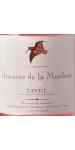
Mordoree Tavel Rose Dame Rousse is made from Grenache 60 %, Cinsault 10%, Syrah 10 %, Mourvèdre 10%, Clairette 5%, and Bourboulenc 5%.
Nose : steady rose, brilliant and limpid.
Aromas : very complex with flowers, red and white fruits aromas.
Palate : rounded, full bodied with a long lasting aniseed and fruity finish.
Ageing potential : 4 to 6 years
Surface : 9 Ha. Yield : 44 Hl./Ha. Vineyard age : 40 years Terroir : Clay / chalk and sandy with pebble stones. Harvest : by hand Vinification : 100% destemming, cold maceration during 48 h., pneumatic pressing, fermentation at 18° C. Estate bottle
Food pairing: cold meat and delicatessen, poultry, white meats, grilled meats, fried fish, fish soup, pastas, pizzas and all Asian cuisine.



