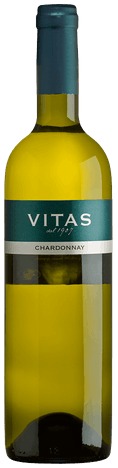
" We don't sell the wine without touching the vine "
| Country: | Italy |
| Region: | Friuli |
| Winery: | Vitas |
| Grape Type: | Chardonnay |
| Vintage: | 2014 |
| Bottle Size: | 750 ml |

Pazo de Senorans Seleccion de Anada Albarino is made from 100 percent Albarino.
Straw yellow with greenish tints, vivid and brilliant. High intensity and very expressive. Profusion of aromas with traces of mineral. Great volume and ample body leaving a lasting impression from beginning to end.
Reviews:
I think the 2014 Albariño Selección de Añada could be the finest vintage of this characterful long-aging Albariño, from a year with a more moderate 13% alcohol and very high acidity (and low pH) that make the wine fresher and more vibrant. It is developing very slowly and showing quite young after it spent over 30 months with lees in 1,500- and 3,000-liter stainless steel tanks. It has a pale color and an elegant nose with notes of freshly cut grass, white flowers and wet granite. The palate is vibrant with effervescent acidity, and it has a long, dry and tasty finish with an austere sensation, far away from the tropical notes of some past vintages. This is superb and should continue developing nicely in bottle. Bravo! It wasn't bottled until April 2023, and 14,000 bottles were produced.
-Wine Advocate 96 Points
Tech:

Henriot Brut Millesime 2014 is made from 50% Chardonnay, 50% Pinot Noir.
If the expression is intense and heady, it is nevertheless of an extraordinary finesse and elegance. A strength of character emerges, powerful, virile yet restrained and humble. The register is fresh, floral, vanilla, greedy. In the mouth the structure is solid, constructive, rectangular. The tannins take place and last after tasting. The freshness is present throughout the tasting, ending with a delicate bitter touch.
Review:
Showing floral notes of acacia and jasmine alongside sourdough, lemons and green apples. Walnuts and apricots, too. Open and inviting, with gentle nutty undertones, a medium to full body and a fine mousse. Long and persistent. 50% chardonnay and 50% pinot noir. Disgorged October 2022. This will be released later in 2023. Drink or hold.
- James Suckling 93 Points

All older vintage wines have been purchased from a single collectors cellar. Pictures can be requested before shipment.

Adelsheim Vineyard Chardonnay Staking Claim is made from 100% Chardonnay.
Review:
Grapefruit pith, flint, roasted almonds and toasted lemons here. It’s medium-bodied, flinty and gently toasty with bright acidity and a fresh, tight finish. Sustainable.
-James Suckling 92 Points

This chardonnay has a characteristic pale yellow color with a shade of gold and subtle nose that will remind you the fresh butter nuts and roasted almonds. On the palate, it is full bodied and fruity with a pleasant roundness.
Average age of the vines is 25 years old.
We produce a part of this cuvee with 12 hours skin maceration and another part from directly pressed grapes.
Wine was slightly filtered before bottling to insure the wine remains stable.
Best friend as an aperitive or with freshwater fish, shellfish and goat cheeses.
This chardonnay has a characteristic pale yellow color with a shade of gold and subtle nose that will remind you the fresh butter nuts and roasted almonds. On the palate, it is full bodied and fruity with a pleasant roundness.
Average age of the vines is 25 years old.
We produce a part of this cuvee with 12 hours skin maceration and another part from directly pressed grapes.
Wine was slightly filtered before bottling to insure the wine remains stable.
Best friend as an aperitive or with freshwater fish, shellfish and goat cheeses.
Straw yellow color with greenish overtones, intense and warm aromas of citrus, pineapple and peach., Full-bodied palate sustained by a acidic grip and a hint of mineral presence. Well-balanced and velvety on the finish.
The grapes are hand-harvested towards the end of August and beginning of September and gently whole-cluster pressed. The free-run juice is kept separate from the press fraction and allowed to cold settle prior to alcoholic fermentation at 18°C. The young wine remains in tank on its lees, with periodical stirring until bottling.
Pairs with lean hors-d'oeuvres and entrees, delicate soups, fish and cream cheese.
The Vitas Estate
The winery has been in the family since 1935, for four generations. It is located in the wine-producing area of DOC Friuli Aquileia, on a clayey-marly and sandy-calcareous soil (the so-called Magredi), one of the ingredients which, together with the influence of the sea, a friendly sun, an average temperature of 14° and the absence of night frosts, create a perfect microclimate for vine-growing.

While the wine has sufficient tannins and structure for long-term bottle aging, Caymus Cabernet is dark and concentrated, with ripe, luxurious, fruit-driven softness that shows from the day of release.

Castellare di Castellina 'I Sodi di San Niccolo' Toscana IGT is a blend of Sangioveto (85%-90%) and Malvasia nera (15-10%)
Intense ruby red in color and with a great olfactory concentration, thanks to the presence of a ripe red fruit that leads to notes of jam, but also spices, vanilla and licorice. In the mouth the wine is characterized by a dense and elegant texture, also supported by the important acidity of the Sangiovese, the tannins are absolutely sweet and the finish is long and of great persistence.
Excellent with cured meats and savory meats, with succulent dishes and mature cheeses. Much appreciated when paired with Tuscan Pecorino and Parmigiano.
The masterpiece of Castellare, I Sodi di San Niccolo, has twice placed in the top 100 of Wine Spectator, and has been awarded “Three Glasses” by Il Gambero Rosso.
I Sodi di San Niccolo is produced solely with native varieties: 85-90% of Sangioveto and 10-15% of Malvasia Nera, I Sodi comes from the two best crus of the farm.
The word "I Sodi" was used by the Tuscan farmers to describe those grounds which had to be processed by hand, being too hard (in fact firm) or too steep to allow for the employment of the horses, unlike the "fields" that make the grounds more easily cultivable.
Reviews:
Packed with ripe, juicy cherry, blackberry, pomegranate and floral aromas and flavors, this red is supple and beautifully integrated. Earth, iron and tobacco accents add detail as this winds down on the lazy, resonant aftertaste, showing terrific energy. Sangioveto and Malvasia Nera. Best from 2026 through 2043.
-Wine Spectator 97 Points
#35 Wine Spectator Top 100 of 2024
Vinous 97+ Points