
" We don't sell the wine without touching the vine "
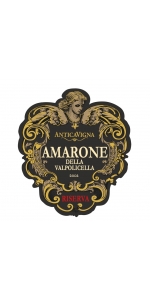
Antica Vigna Amarone della Valpolicella Riserva is made from 65% Corvina, 20% Rondinella, 10% Corvinone, 5% Merlot.
Amarone DOCG has maintained unchanged its typicality, so that “the essence of the territory” of Valle di Mezzane and Cazzano di Tramigna powerfully emerges. Rich in color, firmly structured but with fresh notes.
WINEMAKING AND AGING:
Manual harvest early October with selection of the best bunches.
Drying: natural drying in fruit cellar for 3/4 months with a sharp drop in weight of around 30%.
Vinification: soft crushing of destemmed grapes in the months of January and February.
Fermentation: at a controlled temperature of 18/21°C. Fermentation time: about 30 days
Aging:· 80% in oak barrels for 30 months of which 2/3 in American and French barriques, half of which are used for the second and third time, 1/3 in large
THE TERRITORY:
Geographical location: Tenuta di Mezzane, Tenuta di Cazzano di Tramigna
Height: 350/400 meters asl
Exposure: south
Soil type: limestone
Vineyard training system: guyot and pergola
Vine planting year: from 1972 to 2009
Vine density: 4,000 to 5,400 vines per hectare Vineyard management: sustainable agriculture and great attention to natural
cycles
Pairs well with grilled and roasted meats, as well as cheese.
Timeless Notes:
Dark cherry in color, firm on the palate with a vibrant acidity underbelly. Thought lush on the palate the flavors are complex and elegant from entry to mid-palate with hints of currant and wild berries. The finish brings in a touch of tobacco and leather notes ,classic examples of this region, with more ripe fruit flavors that linger on long strain tannin finish. Complex with depth and elegance on the palate. This one is drinking now, but can handle more time in the cellar with ease. An excellent value in the Riserva category.
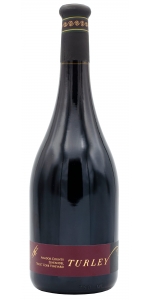
Turley Zinfandel Buck Cobb is made from 100 percent Zinfandel.
Organically farmed head-trained vines planted at 1500' in the granite and quartz soils of the Sierra Nevada Mountains. Primarily savory and red-fruited, with characteristics of black pepper, dried meats and fine-grained tannin texture.
This would be an excellent pairing with wood-fired pizza.
Review:
The 2023 Zinfandel Buck Cobb Vineyard is bold, juicy and expressive. Dark cherry, plum, gravel, spice, herbs and lavender are front and center. This shows terrific depth and plenty of character to match its exuberant personality.
Vinous 90-92
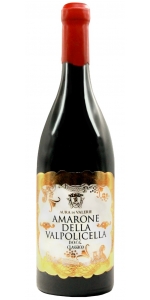
The first kosher Amarone! Amarone undergoes a very unique process prior to fermentation. In late October, grapes are harvested and allowed to dry for around 120 days. Known as the “appassimento” technique, the drying process traditionally occurs on straw mats or in temperature controlled drying chambers. This process helps concentrate the juices and increases skin contact, giving the wine a very ripe, full-bodied flavor. There is no other wine like it! The unique flavors of Amarone, including dark chocolate, coffee, dark fruit and light notes of cherry, pair beautifully with steak, stews, and bold cheeses.
The color is deep bright, ruby red with a violet edge. Powerful bouquet and intense aromas of cherry, ripe plum, toasted almond, and vanilla. A full bodied wine with round and rich flavor.
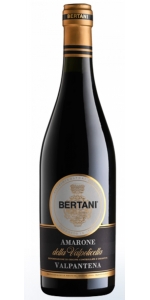
Bertani Valpantena Amarone is made from 80% Corvina Veronese, 20% Rondinella.
The best grapes are selected so that only the healthiest and ripest bunches are sent to the drying rooms in the historic winery at Grezzana, where they are laid out in single-layer crates. In mid- January, the grapes are destemmed and crushed, then fermentation starts, at first at a temperature of 39°F- 41°F, which then reaches 72°F in the final stages.
WINEMAKING
The vines are vertical-trellised and Guyot-trained, with a planting density of 2024 plants per acre. Hand harvest is carried out in the middle of September.
This amarone is produced in the Valpantena hills, north of Verona. The soils are calcareous-marl in the east and calcareous-clay in the west, rich in iron.
TERROIR & VINTAGE NOTES
Bertani’s impact on Veneto wine making, particularly in Amarone production, is so considerable that ‘Bertani’ and ‘Amarone’ are nearly synonymous. Their 150+ year history is dotted with groundbreaking initiatives and royal accreditation. While respectful of their past, Bertani strives towards innovation, using progressive techniques and equipment allied with extensive experience and a deeply felt respect for tradition to provide wines of uncompromising quality.
On the nose, marked and intense aromas of very ripe cherries, sour cherries, spicy and nutty notes typical of the Valpantena. Good follow-through of red fruits on the palate, with supple tannins to give depth. This full bodied wine pairs well with rich dishes, mature cheeses and strong-flavored meats.
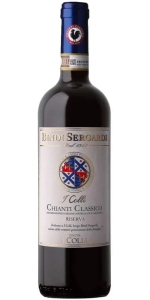
Intense ruby red color. Hints of spices, fruit and flowers, a bouquet that reflects the soil on which it is born, rich in Alberese. In the mouth it is soft, with a pleasant acidity that makes the wine fresh and lively. Sweet and ripe tannins give the wine a pleasant persistence. Riserva dei Colli is an excellent expression of the Estate's Sangiovese, so much so that it bears its name.
Review:
Bordering on opulent, this red features blackberry, black currant, plum, iron and spice aromas and flavors, matched to a velvety texture. Firms up as the resonant tannins emerge, yet remains harmonious and long. Drink now through 2032. 1,700 cases made, 570 cases imported.
-Wine Spectator 93 Points
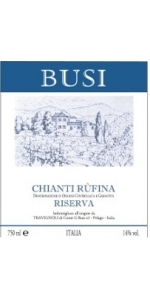
Busi Chianti Rufina Riserva is made from 100% Sangiovese
Vineyards: Travignoli, a name which literally means “Tra Vignoli” (between the vineyards) is located in the middle of Frescobaldi’s Nipozzano vineyard in the heart of the Rufina zone. There is documented evidence that wine was first produced there in the 5th C BC by the Etruscans who called it “Nectar of the Gods”. The Church acquired the land and constructed the cellars in 1100.
Count Busi and his family acquired the estate in the 1800’s. Overall, 91
hectares belong to the estate. The 60 hectares of vineyards are excellently
position on the slopes with a southerly exposure at an elevation between 270 to 370 meters. Clay, marl and calcareous soil with a large percentage of rocks and stones for good drainage. Vines are an average of 10–25 years old.
Harvest: October– by hand.
Yield per hectare: 40 Quintals per hectare
Vinification: Fermentation in stainless steel at controlled temperatures for 7 to 8 days with an additional 7 to 8 days on the skins. The wine is then racked and goes through malolactic. It is then racked again and stays another 3 months in stainless steel.
Aging: 25 to 30 hectoliter barrels of Slavonian oak for 18 months and 3 months in Allier barriques. There is a period of refinement of 4 to 5 months in the bottle.
Alcohol: 13% by vol.
Color: Ruby red with garnet reflections.
Bouquet: Intense, ethereal bouquet with hints of leather, tar and ripe cherry fruit.
Taste: The flavor is full of mature fruit with nuances of leather and liquorice. The taste is complex and round and rich with character. The finish is persistent and satisfying.
Foods: Grilled, braised or roasted meats, dishes flavored with mushrooms, or rosemary. Excellent with polenta dishes.
Total Production: 3,300 cases
Enologist: Mauro Orsoni
Black cherry color, pours thick, and with rich flavors. Bing cherries and Kirsch on the nose. Flavors like a ripe Châteauneuf du Pape with ample extract, red liquorice, and a persistent finish.
“This wine rates 95-99 points in quality” – Francis J. Kysela V, MS
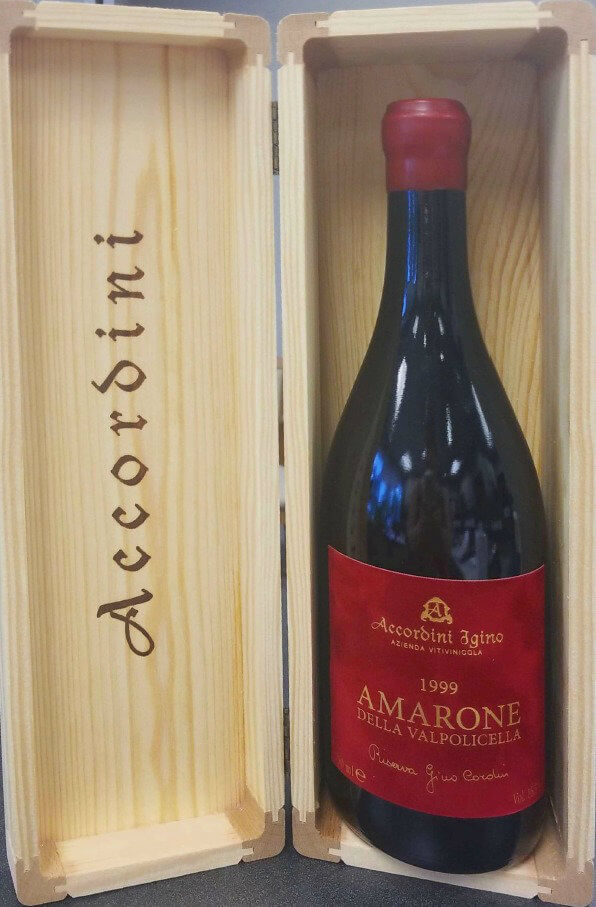
The wine is aged 60 months in oak barrels, then aged 24 months in tank, and another 10 years in the bottle before release.
Enjoy it with mature cheeses such as Parmigiano Reggiano and Grana Padano. Goes well with grilled meats, roasts. An excellent sipping wine and a great match with chocolate desserts.
The Accordini Winery
The Accordini Winery is settled in the heart of the classic Valpolicella, Pedemonte. The estate is approximately 25 hectares in Negrar. The Accordini Winery focuses on three varietals: Corvina, Rossignola, Rondinella, Corvinoni, Garganega. The focus is the Ripassa style and Corvina grape, where Accordini dominates.
Guido Accordini, the family’s third generation winemaker, wanted to make the winery a leader in high quality wines production. Guido’s father built a new cellar for this high quality production. Here the most famous “Amarone” was made.
"A tiny Amarone producer of impeccable quality; the Le Bessole bottling has traditional spice, earth notes, and deep fruit; the Riserva is tannic; most of the wines offer elegance and food-friendly acidity."
- Anthony Dias Blue's pocket guide to wine 2006
Some wines from the Accordini Winery:
Any Accordini wines we have in stock are listed below, if you don’t see the wine you are looking for please don’t hesitate to ask for it.
Long Shadows Pirouette Meritage is made from 68% Cabernet Sauvignon 15% Merlot 8% Petit Verdot 6% Cabernet Franc 3% Malbec
Philippe Melka, named one of the top nine winemakers in the world by Robert Parker, used small lots from Washington State's finest vineyards to craft this enticing red blend.
Like the last several growing seasons, 2016 was another hot year that required extra care in the vineyards. Building on the success of our canopy managment program over the last few vintages, we worked with growers throughout the season to encourage growth of the canes and outside foliage to protect against the sun while opening up the fruit zone for even maturation. Warm temperatures in the fall hastened ripening, but the Columbia Valley's cool autumn nights protected the grapes' acidity, yielding bright, vibrant wines that will drink well in their youth but also promise to bring enjoyement to those who cellar.
A variety of fermentation methods were used to enhance complexity and richness in this classic Bordeaux blend. Hand-harvested Cabernet was fermented in 400L French oak barrels that were gently rolled throughout fermentation to integrate the oak with refined, dark fruit flavors and give the wine its silky mouthfeel. All other varieties were fermented in traditional stainless steel tanks, with select lots enjoying longer skin contact to enhance the wine's dark color and mid-palate. The finished wine was aged 22 months in French oak barrels (75% new) before bottling unfiltered and unfined.
Review:
"The 2016 Pirouette is made by Philippe Melka and it's a total blockbuster based on 68% Cabernet Sauvignon, 15% Merlot, and the palate Petit Verdot, Cabernet Franc, and Malbec that was fermented in barrel and aged 22 months in 75% new oak. Crème de cassis, blackberries, toasted spices, cedar, and forest floor notes all emerge from this deep, rich, opulent red that has sweet tannins, a thrilling texture, no hard edges, and a monster finish. This is another best-to-date from this estate and it's an awesome wine." -Jeb Dunnuck 97 Points

Argot Bastard Tongue Pinot Noir is made from 100 percent Sonoma Pinot Noir.
Inheriting an unbroken string of success, the "Bastard Tongue" arrives fully-formed and ready to impress. Always a blend from multiple Pinot Noir vineyards, this iteration of "BT" was selected from three distinct sites, each making their own unique contribution of Sonoma County terroir to the wine's character.
Exploding forth on a tidal wave of high-toned, intense red and black fruits, this is a Pinot Noir that no stemware can contain. The palate's profound depth is balanced by an inherent freshness, allowing the wine to crackle with brambly energy, while sustained by bass notes of underbrush, black tea, pie spice and baker's chocolate. A formidable rendition of "Bastard Tongue", and a deserving successor to its line.
Night harvested by hand throughout September, cluster and berry sorted by hand, de-stemmed, no crushing. 7-day cold soaks, followed by native fermentation in open-top bins. Average time on the skins, 14 days. Aging 22 months in French oak barriques (95% new). Never racked prior to bottling. Bottled unfined, unfiltered.
Very versatile for pairing. Goes well with grilled meat, vegetable, fish, poultry and cheese.
Review:
"The 2023 'Bastard Tongue' is an utterly delicious Pinot Noir from Argot. It is both vibrant and expressive, with lifted aromas of raspberries, dark cherries and sweet cranberries woven together with notes of lavender, dried violets, baking spices, tea leaf, and mossy notes that remain persistent throughout. On the palate, it reveals a mouthwatering core of juicy red/dark fruit wrapped in supple tannins, with a gorgeous silky texture that speaks to its finesse. What sets this wine apart is its freshness—bright acidity energizes the layers of flavor, giving the wine a lively structure and a clean, extended finish. It's a Pinot Noir that balances depth and elegance with remarkable complexity." - 97 Points, International Wine Report
"Explosive red fruits, cool pine forest, loamy underbrush, five-spice and bakers chocolate. This wine marches down the palate with red-fleshed strawberries, Luxardo cherries and a hint of blood orange. As the finish spins into infinity, the fruit profile evolves from red to black, crescendoing on the palate's persistent lift of sweet and floral spice notes. Magnificent." - 96 Points, Jeb Dunnuck



