" We don't sell the wine without touching the vine "
| BUY MORE! SAVE MORE! | ||||||||||||||||||||
|
| Country: | Italy |
| Region: | Piemonte |
| Winery: | Ferraris Agricola |
| Grape Type: | Malvasia |
| Vintage: | 2024 |
| Bottle Size: | 750 ml |
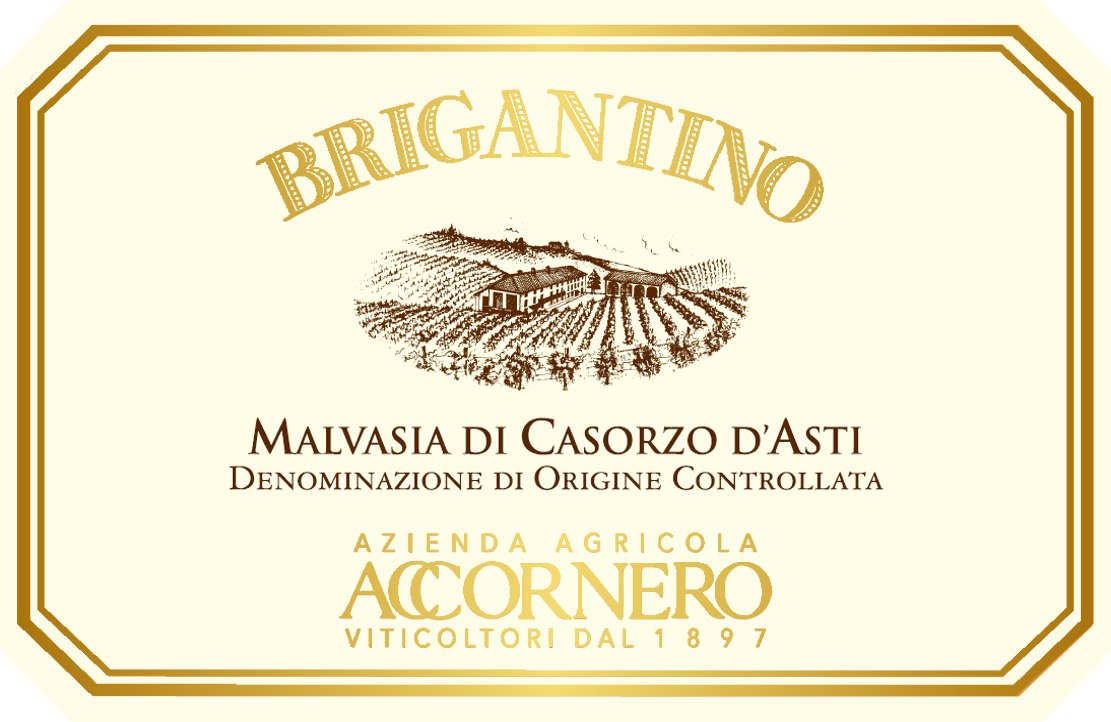
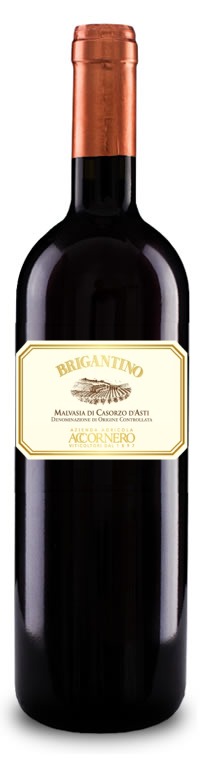
Accornero Brigantino Malvasia di Casorzo is made from 100% Malvasia.
Malvasia is a pleasant, sweet wine, low in alcohol content, that can be enjoyed at any time of day. Made exclusively from grapes grown in the hilltop vineyards of Casorzo and neighboring , it’s the pride and prestige of the area. It has always been the star wine of all local festivals. A comfort wine for all seasons and reasons, it has an aroma evocative of roses. The rich, aromatic wine is ruby-red, vibrant and slightly frothy. lt can be paired with desserts, fruit salads and sweets, but it can also be enjoyed as an aperitif or as a drink for any party occasion.
Color: Vibrant Ruby red
Bouquet: Sweet and aromatic, floral
Taste: Aromatic with rose fragrances
Great companion to desserts, such as biscotti / cantucci (Italian almond biscuits from Piemonte)
The Ferraris Estate produces about 130,000 bottles of wine (about 50,000 of Ruchè) from 18 vineyards covering 25 hectares. Luca Ferraris Agricola is the largest family owned agricultural company in the seven municipalities of the Ruchè-growing region.
Date Founded: 1999
To understand how the Luca Ferraris winery came about we must trace the story back to the nineteenth century when Luca’s great-grandfather Luigi Ferraris emigrated to America during the gold rush. Striking gold, he sent the money back to his wife Bruno Teresa, giving her the chance to realize her dream. After her husband passed away in 1921, she bought the house in Via al Castello that until recently housed Luca’s winery. Two years later, Luca’s grandfather Martino purchased II Casot, at the time nothing more than a simple rural hut in the middle of 40,000 square meters of land. Martino planted vines and bought barrels to make wine with his own grapes in his own cellar. He started by selling his wine to wholesalers in the area, then later began to increase his business by selling larger bottles to individuals traveling back and forth to Turin every week on horseback. Today on that land we have one of our most representative vineyards: Vigna del Casot.
Following the footsteps of Luca’s grandfather Martino, it was up to his father to decide what to do with the family’s passion for wine. In the time of the great industrialization by Fiat in Turin, he moved to the city as his peers did, but he also decided to keep his passion for the vineyards alive by collecting and giving its grapes to the agricultural cooperative in the village. That continued every year until 1999, when after graduation as an agriculturist, Luca began working at the family business, restoring the old cellar and starting to make wine from the vineyards. It was the turning point for the operation, and perhaps even for the Ruchè variety. In the area of the seven municipalities producing Ruchè, Luca was the first to thin vineyards to improve their quality. He wanted the company to specialize exclusively in high-quality production and also began to travel the world looking for new customers and markets. Production was raised from 10,000 bottles in the 2000 vintage to 60,000 in 2003 thanks to a partnership with Randall Grahm, the Californian winemaker founder of already famous for his Bonny Doon Vineyard. Today the Ferraris estate produces about 130,000 bottles of wine (about 50,000 of Ruchè) from 18 vineyards covering 25 hectares. Luca Ferraris Agricola is the largest family owned agricultural company in the seven municipalities of the Ruchè-growing region.
Winery:
The new Luca Ferraris winery was built in 2009. It was finished on August 31, just in time to press its Viognier harvest the following day. The switch to a more modern winery was necessary – despite the global economic climate, the company was growing rapidly, thanks in no small measure to the increasing popularity of Ruchè. The building, 1,000 square meters wide and three stories high, is on the main road between Asti and Castagnole Monferrato. The cellar and storage room are underground, where the temperature and humidity are constant year-round. The ground floor is where all production, from pressing to bottling, takes place. Advanced machinery allows Ferraris to produce the best possible wines without interfering with their natural characteristics. This is possible only through the combination of modern technology and the knowledge of old winemakers. Luca’s family taught him not to pander to a wider but less-educated public by producing wines that betray the typical characteristics of each variety. Also on the ground floor, behind the bottling line, are the company offices where the Luca Ferraris team meets to discuss production and marketing strategies. Above the offices on the first floor is the wine tasting room that seats up to 30 people. Large windows overlook the production area allowing tasters a view across the winery – illustrating the total transparency in Ferraris’ production.
Carra Beaujolais-Villages Gamay Noir Non filtré is a new project for 2024.
We wanted a very fruity style of Beaujolais Villages using a good amount of carbonic maceration during the vinification.
The wine has a very nice ruby red color and a very pure and delicate nose of pure strawberries and cream that is very defined and seductive.
The palate is medium-bodied with crisp tannins, lively red cherry fruit and pleasing weight on the finish.
Excellent with charcuterie (garlic sausage, dry sausage, boudin noir), but also delicious with Coq au vin (Chicken cooked in a red wine sauce).
The wine will also goes well with fresh fruit and a splash of Crémant de Bourgogne for a Burgundian Sangria.

Dog Bone is a serious wine with a fun label!
We wanted to make a great wine at a fair price and help dogs across the country. 10% of all profits will go to Humane Societies in places we sell Dog Bone. Sales of this wine are also helping North Coast Grape farmers by finding a home for their excess grapes.
The 2024 growing season delivered ripe, clean fruit with great flavors. The nose has notes of Cherry blossom and Rose hips. On the palate the wine shows ripe Black Cherry and Cola notes and has beautiful balance.
pH: 3.75g/L
TA: 5
ABV: 13.5%
El Grifo Lias Malvasia Volcanica is made from 100% Malvasia Volcanica.
Color: Straw yellow, with light golden hues. Clear and bright.
Aroma: Medium-high intensity of a wine in evolution. Fresh, citrus (orange peel) and tropical (passion fruit and mango) fruits. Flowers (orange blossom, jasmine, violets), fennel, and complex aromas such as silex or flint (phosphorus). Yeast autolysis is reminiscent of the aromas of baked goods and yeast. Bottle ageing brings out hints of dried fruits, honey and caramel.
Taste: Full-bodied, with a lengthy and unctuous texture, very strong natural acidity, citrus freshness, mineral notes and saltiness. Persistent finish.
Residual Sugar 0.5 g/L
Total Acidity 6.02 g/L
pH 3.36
Total SO2 91 mg/L
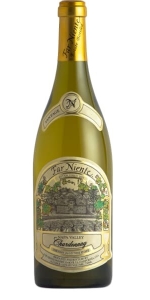
The 2024 Far Niente Winery Estate Bottled Chardonnay is a white wine from California known for its buttery and complex style, made from Chardonnay grapes grown in the Coombsville region. It features notes of citrus, melon, and pear, with a silky texture and a long, elegant finish that is complemented by hints of spice from oak aging.
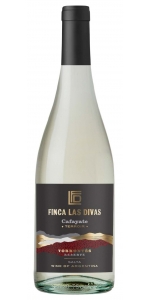
Finca las Divas Torrontes Reserve Cafayate is 100% Torrontes.
Named in honor of different divas because of the detailed attention to each varietal and plot, consequence of the terroir, origin of the Andes slopes.
Intense and bright yellow with gold hues. On the nose it offers delicate aromas, floral notes, orange peel and subtle hints of vanilla resulting from it aging on oak. On the palate it is a wine with character, with exotic and intense flavors, good acidity, with good structure and weight; fresh and balanced with a long persistence.
Pairs with fish, seafood, risotto, pasta, sushi, lamb and hard cheeses.
Review:
"The only wine in the Riglos range that doesn’t come from Gualtallary, this is a foudre fermented and aged Torrontés from Salta that’s made in the north of Argentina. Elderflower, tangerine and passion fruit flavours combine appealingly on the palate here, supported by fresh acidity and a touch of wood spices. 2025-27."
Tim Atkin (April 2024), 90 pts
El Grifo Lias Malvasia Volcanica is made from 100% Malvasia Volcanica.
Color: Straw yellow, with light golden hues. Clear and bright.
Aroma: Medium-high intensity of a wine in evolution. Fresh, citrus (orange peel) and tropical (passion fruit and mango) fruits. Flowers (orange blossom, jasmine, violets), fennel, and complex aromas such as silex or flint (phosphorus). Yeast autolysis is reminiscent of the aromas of baked goods and yeast. Bottle ageing brings out hints of dried fruits, honey and caramel.
Taste: Full-bodied, with a lengthy and unctuous texture, very strong natural acidity, citrus freshness, mineral notes and saltiness. Persistent finish.
Residual Sugar 0.5 g/L
Total Acidity 6.02 g/L
pH 3.36
Total SO2 91 mg/L
The Tempest was one of the first wines, and the first Proprietary Blend, we produced. At the time, it seemed almost uncanny that we were able to access three grape varietals at the same time from the same vineyard; it was blind luck or perhaps the proverbial “perfect storm.” The resulting wine reflected a fierce determination to brave the storm as well as a new desire to realize the possibilities of Merlot. The Tempest is still made with outstanding grapes, from vineyards such as Blair in Calistoga and cooler sites like Farella and Orchard. Predominantly Merlot with lesser amounts of Cabernet Sauvignon depending on vintage, The Tempest is a roiling cauldron of fresh red and blue fruit and silky tannins – a wine that shows what Merlot can be in the right hands, from the right vineyards.
Red fruit; silky tannins; more approachable in its youth
Review:
The 2022 The Tempest is a blend of 67% Merlot, 10% Cabernet Franc, and 23% Cabernet Sauvignon. Deep garnet-purple colored, it comes skipping out of the glass with bright, cheery notes of black raspberries, mulberries, and kirsch, leading to hints of lavender, wild sage, and aniseed. The medium to full-bodied palate delivers bright, crunchy fruit with firm, fine-grained tannins and great tension, finishing on a lingering peppery note. This was bottled in March 2024.
Boussey Bourgogne Blanc Cote d'Or Vieilles Vignes is made from 100 percent Chardonnay.
The grapes for Bourgogne Blanc Chardonnay Vieilles Vignes are grown on a parcel located within the city of Meursault.
The wine displays a refreshing nose of lime, citrus fruits, flint, honey and a touch of dried fruit. The palate is full of flavors, with honeysuckle, citrus and some salinity with an excellent balance between acidity and roundness.
Pair with cheese, seafood, nems, Spanish tapas and apple tart.