" We don't sell the wine without touching the vine "
| Country: | France |
| Region: | Loire |
| Winery: | Maison Alain de la Treille |
| Grape Type: | Melon de Bourgogne |
| Organic: | Yes |
| Vintage: | 2022 |
| Bottle Size: | 750 ml |
Alain de la Treille Chinon is 100 percent Cabernet Franc.
Our Chinon, with its bright intense purple colour, offers complex and mineral aromas and finally red fruits scents like blackcurrant and blueberry.
MAISON ALAIN DE LA TREILLE is located in the heart of Loire Valley since 1885. Vineyards owner and winemaker, ALAIN DE LA TREILLE creates diverse and delicate wines on the most prestigious vineyards: Muscadet, Touraine, Vouvray, Sancerre.
Average age of the vines is 20 years old.
Classic red vinification and Maturation in stainless steel vats
Wine was slightly filtered before bottling to ensure wine will remain stable
Pairs with roasted meats, « charcuteries » or any good cheese.
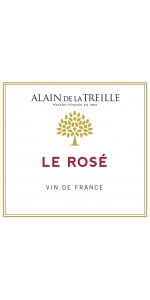
This dry Rosé is very aromatic on the fruitiness with a great style and elegance.
Average age of the vines is 25 years old.
We produce a part of this cuvee with 12 hours skin maceration and another part from directly pressed grapes.
Wine was slightly filtered before bottling to insure the wine remains stable.
This wine is the perfect friend for barbecue, salads and of course aperitif. This is ideal for warm days in the garden, as well as elegant poultry dishes.
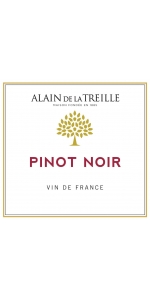
Alain de la Treille Pinot Noir is beautifully balanced with an elegant ruby robe. The mouth is velvety with black cherry aromas.
Average age of the vines: 25 years.
Classic red vinification and Maturation in stainless steel vats.
Malolactic fermentation.
Wine is filtered before bottling.
It delights those who prefer drinking red wine with fish and is an ideal partner with charcuterie, white meats and mild cheeses.
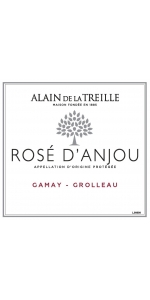
Alain de la Treille Rose d'Anjou is made from 50% Gamay, 50% Grolleau
The Rosé d'Anjou AOC, also known as Anjou Rosé AOC, produces medium-sweet rosés. Wines are made predominantly from Grolleau, with percentages of Cabernet Franc, Cabernet Sauvignon, Gamay, Malbec and Pineau d'Aunis permitted. Anjou soils reflect the geological identity of its border position between Armorican and Parisian basins. The terroirs consist of metamorphic and crystalline rocks (schist, sandstone) known as Anjou Noir, and ‘Terres Blanches’ (white earth) limestone known as Anjou Blanc. The AOC covers 1,890 hectares (4,668 acres).
The Grolleau grape derives its name from the French word ‘grolle’, meaning crow – a reflection of the dark black color of the grapes.
Crisp and refreshing with vibrant aromas of strawberry and raspberry. Juicy and well-balanced with a long finish.
Selective juice extraction to preserve color & aromas. Temperature controlled fermentation is followed by aging on the fine lees. No malolactic fermentation; no oak.
To be served chilled (10°C/50°F) with barbecued meats, salads, any spicy food, poultry dishes and of course appetizers.
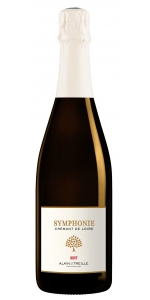
Alain de la Treille Symphonie Cremant de Loire Brut is made from 90% Chenin Blanc and 10% Orbois (also known as Arbois or Menu Pineau)
The wines of Alain de la Treille reflect their vineyard of origin and are produced following the estate's unique guidelines: a strict selection of terroirs and vines, elaboration according to the traditional method and long maturation “sur lattes” in order to obtain the purest and most elegant expression of the Loire terroirs.
Elegant pale yellow color. The nose is delicate and complex with an array of fruity aromas such as grapefruit and peach with a touch of brioche. The flavors are fresh with floral character and a fresh finish.
Ideal for the aperitif, with a nice seafood platter or simply your favorite dessert.
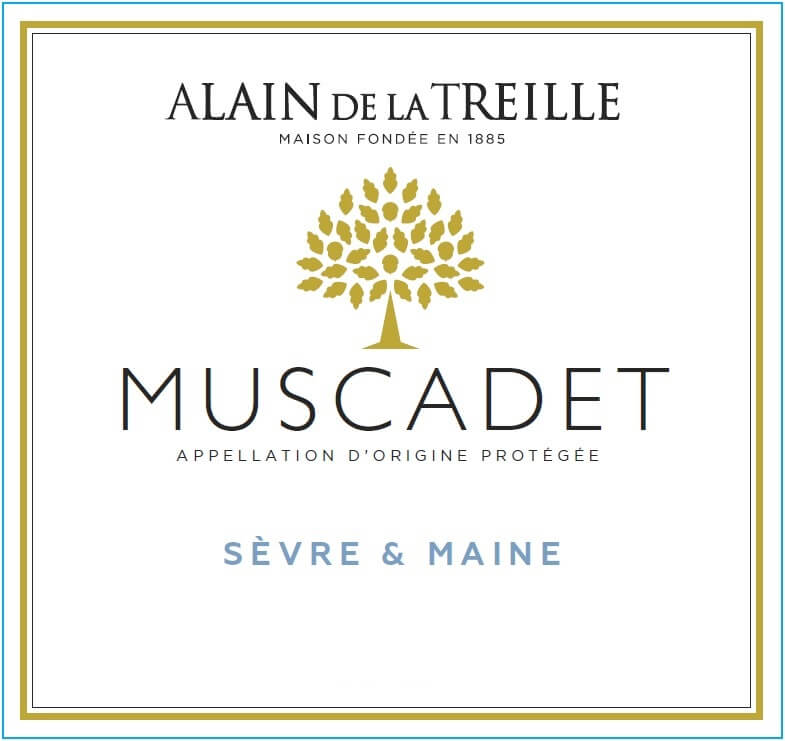
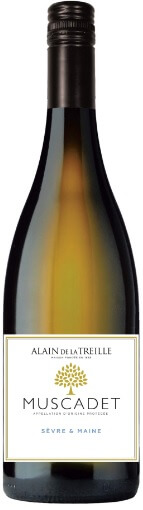
Alain de la Treille Muscadet Sevre et Maine is made from 100 percent 100% Melon de Bourgogne
This great dry white wine offers a unique style with a fine and delicate minerality... Beautiful tension on the palate followed by hints of flower, melon and lime, that finishes with a refreshing crispness.
MAISON ALAIN DE LA TREILLE is located in the heart of Loire Valley since 1885. Vineyards owner and winemaker, ALAIN DE LA TREILLE creates diverse and delicate wines on the most prestigious vineyards: Muscadet, Touraine, Vouvray, Sancerre...
Average age of the vines is 20 years old.
We produce a part of this cuvee with 12 hours skin maceration and another part from directly pressed grapes
Wine was slightly filtered before bottling to ensure wine will remain stable.
Ideal with all fishes, seafood and for sure oysters but do not hesitate to match it as well with a great goat cheese.
MAISON ALAIN DE LA TREILLE is located in the heart of Loire Valley since 1885. Vineyards owner and winemaker, ALAIN DE LA TREILLE creates diverse and delicate wines on the most prestigious vineyards with the same passion and aim: Offering the best expression of the French Terroir, keeping the highest respect of land and people.
Lionel Métaireau is the winemaker of MAISON ALAIN DE LA TREILLE since 2008. He is native of Le Pallet in the Muscadet Vineyard, close to Nantes. Belonging to the 6th generation of his family domain, Lionel is born in the winemaking world. He joined the MAISON ALAIN DE LA TREILLE in 2008 with the aim of revealing French varietal grapes with a local and unique style.
Vines are located outside the AOC boundaries, hence the wine is classified as Vin de France.
The winery is quite modern and the stainless steel tanks are thermoregulated in order to achieve specific profile (cold maceration).
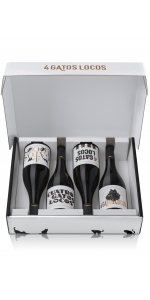
4 Gatos Locos Cabernet Sauvignon Gualtallary is made from 100% Cabernet Sauvignon.
4 Gatos Locos is a project created by Gabriel Bloise, Facundo Bonamaizon, Mariana and Juan Pelizzatti - winemaker, viticulturist and founders of Chakana Winery (respectively). The project centers on a 20-hectare vineyard in Alto Gualtallary, the most prominent growing region in Argentina. The vineyard is situated 1,360 meters above sea level, on a 10% slope on the Sierra del Jaboncillo - a relatively old geological formation near the alluvial fan of the Las Tunas river, in the Tupungato area. The long exposure to arid conditions of calcium rich gravel has created one of the most calcium carbonate-rich areas in Mendoza. This combination of altitude, slope, gravel and the calcium carbonate create uniquely deep, textured wines, with intense color and mineral freshness. Moderate high temperatures controlled by high altitude in sunny conditions produce perfectly ripe grapes of unusually intense color and great vitality, balanced by the mineral freshness of calcium carbonate. Local aromatic plants, naturally occurring in native vegetation areas interspersed in the vineyard, give the wine a unique herbal touch that underline the character of the place.
Deep purple red colored with intense complex notes of red berries and spice, well integrated aromatic oak and very fine tannins structuring a powerful and elegant palate.
Four or more bottle orders will include the box the wine comes in.
Domaine Jean Grivot Nuits-Saint-Georges Premier Cru Aux Boudots is made from 100 percent Pinot Noir.
Domaine Jean Grivot is among the great names in Burgundian wine. Étienne Grivot and his wife Marielle took over from Étienne’s father Jean Grivot in 1987. The vineyards are densely planted and farmed organically “sans certification” while the aim in the cellar is for balance and clear expression of terroir.
Jean Grivot’s 38.3 acres spread across 22 appellations with vineyards in the communes of Vosne-Romanée, Vougeot, Chambolle-Musigny, and Nuits-Saint-Georges. Besides the three grand crus, there are 8 premier crus including the much lauded Les Beaux Monts and Suchots in Vosne-Romanée. The grapes are completely de-stemmed and fermentation is spontaneous.
Nuits-Saint-Georges Aux Boudots 1er cru lies in the “Zone Vosnoise” or northern end of Nuits-Saint-Georges just below Les Damodes. It borders Vosne-Romanée Aux Malconsorts 1er just to its north. Its position slightly lower on the slope with deep soil full of pebbles results in a richer and fuller wine.
The grapes are destemmed and maceration à froid usually lasts just a day or two. The alcoholic fermentation is spontaneous and malolactic fermentation occurs in barrel. Depending on the vintage, the proportion of new oak is around 30-60% for the premier crus.
The wine shows aromas and flavors of red berries, herbs, and purple flowers. The palate is rich with ripe fruit and medium weight with bright acidity and fine tannins. Aging in 30-60% new Burgundian pièce brings notes of vanilla, toast, and baking spices.
Red Burgundy might be the world’s most flexible food wine. The wine’s high acidity, medium body, medium alcohol, and low tannins make it very food-friendly. Red Burgundy, with its earthy and sometimes gamey character, is a classic partner to roasted game birds, grilled duck breast, and dishes that feature mushrooms, black truffles, or are rich in umami.
Reviews:
‘The 2020 Nuits Saint-Georges Aux Boudots Ter Cru has the best aromatics among Grivat Nuits Saint-Georges with very well defined red berry fruit, briary and lignt sous-bois aromas. The palate is medium-badied with fine-grain tannins, slightly savory on the entry, fresh and saline on the finish. This has real verve and class, though it will benefit from time in bottle
-Vinous 93-95 Points
A wine with the substance and structure to support the generous lashings of new oak used for maturation, and the overall effect is elegant and classic in style. Aux Boudots, where Grivot has 0.85ha, is at the northern edge of Nuits, just over the border from Vosne-Romanée Malconsorts. They began to pick on the 3rd of September – Etienne specified that they are very particular that the tannins are ripe and do what they can to prolong the vegetative cycle. Still, the grapes were picked with an entirely correct pH of around 3.4.
-Decanter 94 Points
Deep inky dark fruit aromas alongside gravelly minerals, violet, and Kalamata. The palate flavors follow the aromas with a sweet core of blackberry pastille wrapped up in a coating of cocoa nib and cassis liqueur. The wine is quite densely packed with clear deep intensity before turning silky and graceful on an elegant lavender-infused finish.
Review:
The 2022 Syrah Wild Mountainside comes from two vineyards harvested on September 6 and September 15. It was fermented with a large proportion of whole clusters and matured in around 10% to 15% new oak. The nose is bursting with detailed, expressive aromas of blueberry, black cherry, bacon fat, woodsmoke and aniseed. The medium-bodied palate is expertly restrained in terms of ripeness, with a pleasing touch of crunch to its fruit. It's structured by powdery tannins and mouthwatering acidity and has a long, expressive finish.
- Robert Parker's Wine Advocate 94 Points