
" We don't sell the wine without touching the vine "
| Country: | Spain |
| Region: | Getariako Txakolina |
| Winery: | Alleme |
| Grape Type: | Hondarrabi Zuri |
| Organic: | Yes |
| Vintage: | 2021 |
| Bottle Size: | 750 ml |
Alleme Getariako Txakolina is 100% Hondarribi Zuri
A very fruity, persistent and clean Txakoli. It reminds the white exotic fruits, such as lichy. It has a straw yellow color, without the slightest tone of rust and a faint natural gas pearl crown, due to the grape juice fermentation. In the mouth, it is greasy and unctuous, with a good balance of structure and acidity. In order to get such a Txakoli, we have combined the most traditional and the most innovative production methods to create it. Thanks to the batonnage (stirring of the lees), we have attained the characteristic unctuosity of this Txakoli.
After harvesting and pressing, the must is left to ferment in stainless steel tanks. Traditionally, and until recently, this was done in oak or chestnut barrels, called kupels, in Basque. Fermentation lasts 20–25 days and then the txacolí is left to lie on its lees. The CO2 prevents oxidation and dissolves the sediments and gives the wine its sparkling characteristic. The wines is not racked so it does not lose its sparkle and is clarified by natural sedimentation by gravity in the tank or barrel. Traditionally, the wine is tasted on the feast of San Antonio on 17 January, which is known as Txacolí Day (Txacoli Eguna, in Basque).
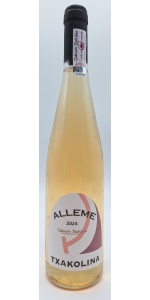
Alleme Getariako Txakolina Rosado is made from 50% Hondarrabi Zuri and 50% Hondarrabi Beltza
Limpid pink. Bright and energetic on the nose and palate, displaying vibrant, mineral-tinged cranberry, blood orange and white pepper qualities and a touch of pungent flowers. Racy and sharply focused, carrying no excess fat. Finishes tight and dry, displaying repeating citrus character and good persistence.
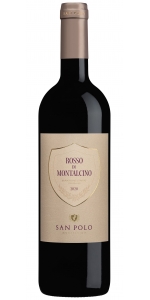
Bright and glossy ruby red in color. On the nose it reveals aromas of small fresh berries and a trace of sour cherry, melded with hints of blackberries and black cherries, followed by a hint of vanilla. A fragrant wine with satisfying intensity. On the palate it is warm, smooth and a medium-bodied with finely-balanced tannins. Dry and sinewy yet fresh with a persistent, aromatic finish.
It naturally accompanies dishes that are typical of Tuscan cuisine with its bold, authentic flavors, such as pasta and risottos made with mushrooms or truffles, pork, grilled meats and medium-matured cheeses.
Review:
Notes of ripe cherries, dried flowers and walnuts with hints of anisette and licorice. Medium- to full-bodied, compact and dense with creamy tannins and steady acidity. Weighty and structured. Drink or hold.
-James Suckling 91 Points
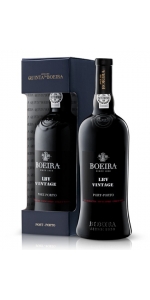
On the nose there are fresh and intense aromas of black fruit with spicy notes.
On the palate, the flavor of black fruits (cherries and blackberries) is balanced by ripe, soft tannins with an intense and long finish.
Pair as digestive or pairing with strong cheeses and dark chocolate desserts.
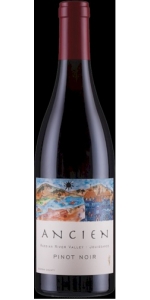
Ancien Pinot Noir Russian River Jouissance is made from 100 percent Pinot Noir.
Jouissance is sourced from the single vineyard established and farmed by Mark Lingenfelder at his home estate. Mark’s decades of experience as a vineyard manager and consulting viticulturalist have provided him the depth of experience to reach the pinnacle at his own property. Having worked with storied wineries over the years, we are grateful our paths have crossed enabling us to work with him for our Russian River designate. He tends the vines himself while relying on neighbor Lee Martinelli to provide additional help at the peak times. We work with a mix of Pommard and Dijon 667 vines from his oldest and youngest blocks – aged wisdom combines with youthful vigor!
The 2021 growing season was a welcome success after a more varied and challenging 2020. The vines came on with aplomb, demonstrating the rich fruit concentration we expect – even if the crop was meager. The ongoing drought in California served to further accentuate the character and concentration of the fruit. While warmer conditions have prevailed in other areas, the coastal areas of California continue to benefit from the maritime influence and moderating influence that it brings.
We fermented in our one ton, open-top tanks after filling by gravity. A warm fermentation with a combination of native and isolated Burgundian yeasts produced excellent and focused flavor extraction, complemented with traditional punch-downs by hand. The wine was aged entirely in Francois Freres cooperage, 40% new, and racked once, gently, prior to bottling. Grapes, must, and wines were moved using gravity through to the barrel and using inert gas through racking and bottling. 151 cases produced.
Bright fruit notes dominate the aromas with bright cherry, plum, and boysenberry underlaid by allspice and clove. On the palate the wine is liquid velvet, it’s silkiness segueing into a burst of fruit and spice that rides high on the palate while gradually opening to deeper berry, tea, and baking spices. It is a refreshing and lively Pinot Noir in its youth that will continue to fill out in depth and complexity over the next 2-5 years.
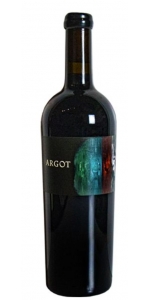
Among the tapestry of historic vineyards in Napa Valley, there are a few standout names, but even fewer sites, if any, involve the rare combination of legendary wine, romance, and a touch of mystery. Bonny’s Vineyard is such a place. This four-acre vineyard in the Oakville District is both a special piece of land and a unique part of Napa history. It was planted in 1974 by Justin Meyer, the winemaker and co-founder of Silver Oak Cellars, as a gift to his wife, Bonny. Ideally situated in a gravelly spot adjacent to Conn Creek on the valley floor, Bonny’s Vineyard was responsible for a memorable string of Silver Oak vintages over the course of two decades.
Justin Meyer stopped producing the Bonny's Vineyard designate after the 1991 vintage. After replanting in 1999, the family has again decided to make a single vineyard bottling. True to the orignal, this is 100% Cabernet Sauvignon aged in 100% American oak barrels for almost 3 full years. The nose exhibits dark fruit aromas of cherry and plum mingling with cedar and cardamom and a hint of eucalyptus. The palate is the heart of this wine, with concentrated fruit on the entry and luscious, silky tannins filling the mouth with an almost endless finish.
As distinct and impressive a terroir as we farm in the Napa Valley. The rocky, gravel-rich soils contribute a distinct sauvage/mineral character, creating a stunning complexity to play off of Cabernet’s natural robust and fruit-driven personality from Oakville. In 2021 Argot added a new vineyard block to our holdings at Bonny’s. Deeper gravel and the famously low-yielding Disney clone conspire towards awesome complexity, and a deeply mysterious, brooding personality. A wholly different Cabernet from its 2021 siblings that you will not want to miss. Only 150 cases produced.
Review:
"Opaque purple-black colored, the 2021 Cabernet Sauvignon Bonny's Vineyard prances out with showy scents of Morello cherries, wild blueberries, and black raspberries, leading to a core of black currant jelly and violets. The full-on, full-bodied palate is densely laden with black and blue berry layers, framed by fine-grained tannins and well-knit freshness, finishing long and earthy."
- 97 Points, Lisa Perrotti Brown, The Wine Independent
Alleme Getariako Txakolina is 100% Hondarribi Zuri
A very fruity, persistent and clean Txakoli. It reminds the white exotic fruits, such as lichy. It has a straw yellow color, without the slightest tone of rust and a faint natural gas pearl crown, due to the grape juice fermentation. In the mouth, it is greasy and unctuous, with a good balance of structure and acidity. In order to get such a Txakoli, we have combined the most traditional and the most innovative production methods to create it. Thanks to the batonnage (stirring of the lees), we have attained the characteristic unctuosity of this Txakoli.
After harvesting and pressing, the must is left to ferment in stainless steel tanks. Traditionally, and until recently, this was done in oak or chestnut barrels, called kupels, in Basque. Fermentation lasts 20–25 days and then the txacolí is left to lie on its lees. The CO2 prevents oxidation and dissolves the sediments and gives the wine its sparkling characteristic. The wines is not racked so it does not lose its sparkle and is clarified by natural sedimentation by gravity in the tank or barrel. Traditionally, the wine is tasted on the feast of San Antonio on 17 January, which is known as Txacolí Day (Txacoli Eguna, in Basque).
The Alleme Estate
Alleme is produced at Bodega Talai Berri. Located in the town of Zarautz (in the Spanish side of the Basque Country).
Zarautz is a small fishing towns on the coast of the Bay of Biscay, in the province of Guipuzcoa, Basque Country, Spain.
Built in 1992, the winery lays on the sunniest slopes of Mount Talai Mendi, surrounded by 12 ha of vineyards.
Bixente Eizagirre Aginaga represents the fourth dynasty generation, and his daughters, Itziar and Onditz, the fifth generation making Txakoli out of their vineyards fruits.
The Region
- History: The Denominación de Origen Txacolí de Getaria was created in 1990 and covers around 227 hectares of vineyards, down from over 1,000 hectares at the turn of the 20th century. However, wine had traditionally been made in this manner for hundreds of years and was popular from the Middle Ages up to the end of the 19th Century, when the vines were devastated by the phylloxera virus and the effects of industrialization of the Basque Country. There are now 26 wineries (bodegas) registered with the DO.
- The Climate: The DO area is protected from the cold northerly winds by the coastal hills, and enjoys a relatively mild climate, with an average annual temperature of 13.5°C, and moderate sunlight hours. Hail is a serious risk for the grapes. The rainfall of 1,600 mm/yr is the highest of all the Spanish wine regions.
- Grape Varietals: The only authorized grapes are Hondarrabi Zuri (white) and Hondarribi Beltza (red)
The Alleme Vineyards
The vineyards are all located near the coast where they are protected from the spring frost and from the summer heat. They are planted on the southeast facing slopes for additional protection from the sea breezes and in order to receive more sunlight. The slopes are often very steep and sometimes not terraced. The vines are trained over wires and sometimes over earthen or stone pillars. They can be anywhere between 10 and 100 meters above sealevel. The subsoil is predominantly clay covered by a layer of sandy soil.
Talai Berri owns 12 hectares.
Wolfberger Auxerrois is made from 100% Auxerrois
Auxerrois blanc is thought to have originated in Lorraine, rather than near Auxerre in the Yonne. Recent DNA fingerprinting suggests that it is a cross between Gouais blanc and Pinot noir, the same ancestry as Chardonnay. The name Auxerrois blanc has actually been used as a synonym for Chardonnay in the Moselle region in France, which explains why there is also a longer name (Auxerrois Blanc de Laquenexy) for the grape variety.
This pale yellow Auxerrois Pinot Blanc shows an intense nose of fresh white fruits, rhubarb and spring flowers. Easy to drink and fresh on the palate, this wine ends on a fruity and crunchiness tast.
Alcoholic fermentation at 16°C followed by a short fermentation at 18°C allowing to keep some crispiness to the wine.
Then the wine was aged on the fine lees for 6-7 months. No Oak.
No Malo-Lactic fermentation.
Right before bottling, the wine was filtered using a tangentiel filtration system.
Quiche, grilled fish, rhubarb pie, mixed salad, and also fresh sheep milk cheese.
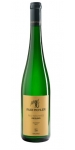
Wachau Riesling is dry and often defined by high levels of dry extract (due to a lengthy ripening period) and a pleasing freshness (due to dramatic temperature swings between day and night). Sedimentary soils of sand and stone give Kirchweg Riesling a dense mineral texture and fine fruity flavors.
Review:
Welcome to the dark side of Wachau dry riesling! Deep and delicately spicy nose that’s full of mystery. Incredible concentration and massive wet stone character on the very precise medium-bodied palate. Radical mineral energy and garden herb freshness at the enormously long and tightly-focused finish.
-James Suckling 98 Points
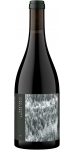
Zena Crown Vineyard The Sum Pinot Noir is made from 100 percent Pinot Noir.
Massed from multiple vineyard blocks and clones, this wine has a timeless beauty that can be inherently understood by innate human nature. Wines of this stature, much like great art, reflect the complex and compelling relationship between humanity and Earth. Expressing Autumn, S (The Sum) leads with Gala
apple, Japanese plum, gun powder, dirt, and garlic power on the nose, with barely ripe cherry on the finish. 60% whole-cluster fermentation bolsters the wine, sustaining the tannic imprint and tension that uncoils like a rattlesnake strike on the finish.
Review:
A jeweled ruby hue, the 2021 Pinot Noir The Sum takes on fantastic crystalline and pure aromas of wild strawberries, raspberries, dark stones, menthol, and cedar spice, but it’s not very oaky. Medium-bodied, it has ripe tannins, with ripe acidity and a bit more modest acidity compared to the other wines from Zena Crown, but it’s long on the palate, with a more autumnal sensibility, and it’s going to show its best over the next 12-15 years.
-Jeb Dunnuck 95 Points



