
" We don't sell the wine without touching the vine "
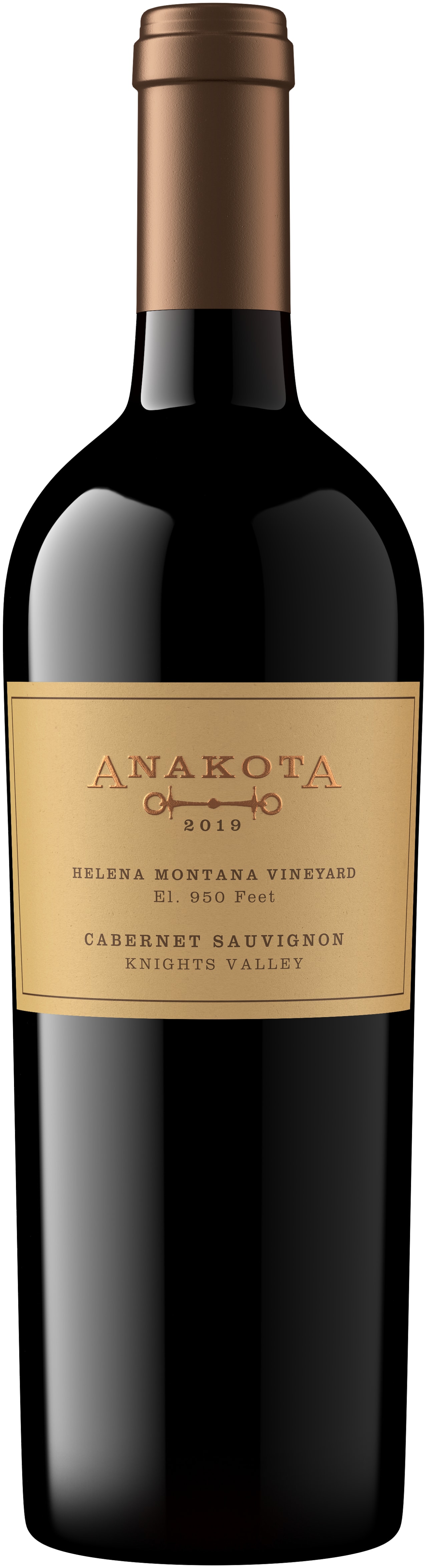
| Country: | United States |
| Regions: | California California (Sonoma County) |
| Winery: | Anakota |
| Grape Type: | Cabernet Sauvignon |
| Organic: | Yes |
| Vintage: | 2019 |
| Bottle Size: | 750 ml |

Alejandro Bulgheroni Lithology Beckstoffer Dr. Crane Vineyard Cabernet Sauvignon 99% Cabernet Sauvignon, 1% Cabernet Franc.
Here the Cabernet comes to us typically flawless, and the wines are as such. There is blue fruit, blueberries, black plums, blackberries, and cassis to the aromas, as well as stones, mineral, chocolate, fresh tobacco, and subtle herbs. It is incredibly full-bodied, but at the same time effortlessly drinkable, with ultra-smooth tannins and a positive, long, upturned finish. 70-75% new French oak is the norm for us with Dr. Crane, and those flavors are absorbed to become a vanillin complexity, sweetness, and length. An unbelievable wine.
Review:
You don’t see many Cabernet Franc-dominated wines from this site, but the 2019 Cabernet Franc Lithology Beckstoffer Dr. Crane Vineyard is certainly impressive. Offering more herbal, chocolate, gravelly earth, and espresso aromas and flavors, it has full-bodied richness and, as expected, is a powerful, opulent expression of this noble variety. The blend is 83% Cabernet Franc and 17% Cabernet Sauvignon, aged 20 months in 80% new French oak. It will benefit from short-term bottle age and drink nicely for 20 years.
-Jeb Dunnuck 97 Points

Alejandro Bulgheroni Lithology Beckstoffer To Kalon Vineyard Cabernet Sauvignon is made from 100 percent Cabernet Sauvignon.
Alejandro Bulgheroni Estate Lithology is a series of single vineyard and AVA-designated wines made from select sites within Napa Valley. Lithology Beckstoffer To Kalon Vineyard is produced solely from fruit grown in the historic Beckstoffer to Kalon Vineyard planted in 1865 by W.H. Crabb and represents Oakville's famous bench land.
Review:
The 2019 Cabernet Franc Lithology Beckstoffer To Kalon Vineyard just shines for its bouquet, which is classic To Kalon with its floral, incense, spicy, red and black-fruited aromatics. These all flow to a medium to full-bodied, utterly seamless Cabernet Franc that’s balanced, has laser-like precision, and a great finish. This isn’t the biggest or richest wine in the lineup, but it’s Cabernet Franc in all its glory, with soaring aromatics and complexity, ample richness and texture, and a beautiful sense of finesse and elegance. It’s going to keep for 15-20 years with no issues.
-Jeb Dunnuck 98 Points
Composed of 90% Cabernet Sauvignon and 10% Cabernet Franc, the 2019 Lithology Cabernet Sauvignon Beckstoffer To Kalon Vineyard is a barrel sample with a deep garnet-purple color. It needs a fair bit of coaxing to unlock scents of blackberry pie, warm blueberries and cassis plus suggestions of spice cake, underbrush, candied violets and chocolate box. The full-bodied palate brings forth loads of earthy layers to accent the rich, black fruits, framed by plush tannins and lovely freshness, finishing long and fragrant.
-Wine Advocate 97 to 99 points
The 2019 Cabernet Sauvignon Lithology Beckstoffer To Kalon Vineyard is one of the very finest wines I have tasted from Alejandro Bulgheroni's Napa Valley project. The 2019 To Kalon captures all the pedigree of this iconic Oakville vineyard, and yet also remains nuanced and wonderfully finessed for an intense wine. To Kalon Cabernets are rarely this elegant, but the Bulgheroni 2019 sure is.
-- Antonio Galloni 97 Points

Argot Napa Cabernet Sauvignon Sugarloaf Vineyard is made from 100 percent Cabernet Sauvignon.
Sugarloaf’s terroir continues to impress with its expression of classically-styled Napa Valley Cabernet Sauvignons — impeccably pure black and red fruit character; broad, rich, perfectly ripe tannins; classic Napa Valley notes of cigar leaf, eucalyptus, and freshly-tilled earth; and definitive complexities of clove, all-spice and bay leaf. Having assessed past vintages with a few years of age, we have come to greatly value the significant reward Sugarloaf delivers after a few years in the cellar.
From Block 6, an acre of fiercely steep, ferociously rocky hillside, located in Napa’s far south-eastern foothills, deeply affected by the cooling influences of San Pablo Bay. One of the latest harvests in all of Napa Valley each vintage. Mother Nature was kind to this site in 2019, being our most bountiful year here ever. With perfect set, and vines displaying great health, this normally stingy hillside delivered superlative quality, without restraint of yield. After a slow start in the Spring, 2019’s particularly warm September and October played beautifully to the vineyard’s strengths, and delivered a classic Halloween-time harvest.
Review:
"It is not often that you see a 100% Cabernet Sauvignon coming from this rising star, cooler-climate vineyard in south Napa. This wine comes exclusively from the low-yielding, steep, rocky "Block 6." Deep purple-black in color, the 2019 Cabernet Sauvignon Sugarloaf Vineyard needs a little coaxing to reveal wonderfully pure scents of blackcurrant cordial, juicy blueberries and ripe blackberries, plus suggestions of iris bulb, dark chocolate, molten licorice and cedar chest. The big, rich, seductive, full-on full-bodied palate is laden with ripe, energetic black berry layers, framed by firm, ripe, grainy tannins and seamless freshness, finishing long and perfumed. A stunning, true-blue Napa blockbuster with its own very evocative signature, this comes highly recommended! 175 cases were made. - Lisa Perrotti-Brown"
- Robert Parker's Wine Advocate (November 2021), 97+ pts

A dramatic, ridgetop landscape — rising 1500 feet above Lake Hennessey, staring west over Pritchard Hill — persistently influenced by a push/pull draw between The Valley’s floor and Lake Berryessa. This wild, untamed, eastern frontier of Napa Valley, produces singular, terroir-driven wines of captivating beauty, power and lift. An unseasonably wet and cool springtime produced significant shatter at Sage Ridge in 2019, reducing our yields by 50%, leading to a particularly flamboyant edition of this wine.
An incomparable expression of Cabernet Sauvignon — massively pure red fruit character, delivered on a ribbon of ultra-suave tannins and gorgeously seductive high tones. The palate never relents its come-hither posture. Aromatically, puts forth an intriguing botanical complexity that is unmistakably site-specific. As our experience with this one-of-a-kind terroir deepens, we remain endlessly excited for the potential of these unique ridgetop vineyards. Get your hands on a bottle and pull the cork…a wine built for immense near-term gratification.
Review:
"Deep garnet-purple colored, the 2019 Cabernet Sauvignon Sage Ridge Vineyard opens with open-knit notes of plum preserves, baked blackberries and boysenberry jam, leading to a core of crème de cassis, mocha, camphor and Indian spices with a touch of unsmoked cigars. The palate is full-bodied, concentrated and dense with black fruit preserves, framed by soft tannins and seamless freshness, finishing very long and very spicy. Only 75 cases were made. - Lisa Perrotti-Brown"
- Robert Parker's Wine Advocate (November 2021), 95 pts

Neyer's Cabernet Sauvignon Red Wine has a bright ruby hue with aromas of wild cherries, chocolate and fresh tobacco leaf. The finished wine is remarkable for its flavor and complexity, and the wine looks to be one that will improve for many years. Planted in 1992 by David Abreu, this fruit is located on ground higher than 600 feet on rocky land rich with basalt. This vineyard is one of the rare 10% in Napa Valley capable of producing great Cabernet Sauvignon and is planted around the Neyers Ranch.
Review:
-Decanter 93 Points
-Wine Enthusiast 93 Points

Paul Hobbs Beckstoffer To Kalon Vineyard Cabernet Sauvignon is made from 100 percent Cabernet Sauvignon.
Farmed with a unique precision to match the unparalleled terroir of this historic Oakville site, this vintage is ethereal, delicate, and nuanced. An attractive deep garnet in appearance, this wine expresses soft red cherry, strawberry, floral, and graphite. The palate is full and lively with flavors of blueberry, blackberry, sandalwood, and dried herbs, supported by a lovely grip of tannins and well-tensioned texture that leads to a long, refined finish.
Review:
More expressive and open-knit, the 2019 Cabernet Sauvignon Beckstoffer To Kalon Vineyard sports a similar ruby/purple to go with an incredible array of black raspberry, cassis, flowery incense, orange blossom, smoked tobacco, and exotic spice. As are all To Kolans, it's incredibly perfumed and complex aromatically, and it's one of those wines that changes every time you come back to the glass. Full-bodied on the palate, it offers beautiful richness and depth, a light, graceful mouthfeel, silky tannins, and a heavenly finish. It's another magical wine from this talented winemaker that readers will absolutely love.
-Jeb Dunnuck 99 Points
The 2019 Helena Montana is characteristically powerful & complex on the nose, showing ripe red and black cherry, along with dried herbs de Provence, and subtle hints of toasted clove, cinnamon, and nutmeg spices. The palate is loaded with structure and complexity, showing concentrated fruit and non-fruit flavors, framing a powerful core of firm tannin and juicy acidity. The finish is very long, and balanced.
Review:
Incredibly spicy and aromatic with pumice and cloves. Pops out of the glass. Cedar, too. Full-bodied with soft, polished tannins adding tension and creaminess. Long and beautiful. All about class and breeding. Try after 2025.
-James Suckling 99 Points
The story of Anakota begins deep in the heart of Knights Valley in rural Sonoma County. Located in an ancient volcanic zone, this relatively untouched and unknown place offers incredibly unique and diverse soils with a climate perfectly suited to Bordeaux varietals.
Sourced from estate-owned vineyards, Anakota is a collection of single vineyard, single varietal, wines that personify the rustic elegance and spirit of rural Sonoma County.
Rising more than 4,000 feet above sea level, Mount St. Helena looks down on our two prized estate-owned vineyards Helena Dakota and Helena Montana which are quietly situated on the rugged flanks of the Mayacamas Mountain Range.
Knights Valley is a remote winegrowing region bridging Sonoma and Napa Counties. It’s a place where time dilates. It’s an untamed landscape defined by rugged mountains, steep hillsides, placid meadows and abundant wildlife. Even though this AVA has produced some of the world’s greatest wines, it is still a mystery to most. Set along the flanks and foothills of Mount St. Helena and the Mayacamas Mountains, this rustic sanctuary possesses the sparse volcanic soils and cusp maritime climate needed to produce elegant, profound and age-worthy Cabernet Sauvignons.
HISTORY OF KNIGHTS VALLEY
In 1843, Knights Valley – or Mallacomes Valley as it was called back then – was a part of the 17,742-acre land grant to Jose de los Santos Berryessa. After taking possession of the property, Berryessa built an adobe lodge for his guests and used the land as a private hunting preserve. After the Mexican-American war, Thomas B. Knight, a Vermont immigrant and participant in the Bear Flag Revolt, bought 9,000 acres of Mallacomes Valley and added a second story to the lodge.
In 1858 and 1861, Calvin Holmes and his wife purchased a sizable portion of Knights Valley and erected a large Victorian house that still stands today. In 1875, real estate barons F.E. Kellogg and W.A. Stuart began developing a small resort town at the intersection of Ida Clayton Road and Highway 128. The town, which included a general store, school, homes and a hotel, burned down in the fires of 1964 and 1965.
Up until Prohibition, wine grapes were the largest agricultural crop in Knights Valley. From 1919 until the 1970s, the population declined, and the region regressed into a more bucolic state. In the mid-1970s, Knights Valley was rediscovered, and vineyards were planted by savvy winemakers looking for new sources of high-quality fruit. Today there are more than 30 growers and 2,000 acres of vines strewn throughout Knights Valley.
Back in the late 1990s, we began exploring new locations to grow Grand Cru-level Cabernet Sauvignon. Our goal was to find a site that could deliver the opulence and concentration of Napa coupled with the acidity, precision and age-worthiness of Sonoma. We found the perfect site in the Knights Valley AVA, a little-known wine region that earned AVA status in 1983. We named our ranch Anakota and in 1997 began surveying the terrain, analyzing the soils and planting vines.
Today, under the direction of Vigneron Pierre Seillan, we produce small quantities of single-vineyard Cabernet Sauvignons from our two hillside estate vineyards: Helena Dakota and Helena Montana.
Over his half-century of winemaking, Pierre has developed and refined his proprietary “micro-cru” farming/winemaking principles. Based on experience, observation, experimentation and intuition, this system considers that every vineyard is an intricate patchwork of soils, microclimates, exposures and elevations. Rather than treat each site as a single entity, Pierre divides each property into small blocks and sub-blocks. These vineyards-within-vineyards – often as small as one acre – are designed to mirror the subtle changes in the soils, terrain and microclimates. These micro-crus are farmed individually to ensure uniformly ripe grapes that bear the message of the soil. Each micro-cru is harvested and vinified separately. Two wines vinified from identical clones and rootstocks, but originating in radically different micro-crus, will produce radically different wines.

Falletto di Bruno Giacosa Asili Riserva is made from 100 percent Nebbiolo.
Intense red garnet color with orange highlights. Notes of raspberry and wild strawberry are layered with floral aromas of rose and violet. On the palate, good structure is matched with freshness of fruit and sweet, silky tannins.
Review:
Sweet and succulent aromas of tangerines, freshly cut ripe strawberries, cherries and flowers follow through to a full-bodied palate with sleek and dense tannins that run the length of the wine and then fan out into a dense, vivid finish of fruit. It’s chewy and seriously structured with finesse and energy. Silky texture. This needs at least four or five years to come together and open.
-James Suckling 98 Points

Laurent-Perrier Grand Siecle No. 26 is a blend of 58% Chardonnay, 42% Pinot Noir
white gold in color with delicate and persistent bubbles, Grand Siecle No. 26 offers a very complex nose which mixes honeysuckle, lemon, clementine and fresh butter aromas, followed by notes of hazelnut and a touch of honey. The feel in the mouth is very delicate and fresh with candied lemon and fresh hazelnut aromas. The palate is silky and mineral with notes of honeysuckle, flaked almonds and clementine.
It pairs with high quality produce and refined dishes, including shellfish, noble fish and white meats such as Thai style langoustine tartare and fine roasted poultry.
Vintage in Champagne is usually synonymous with excellence for Prestige Cuvées. Contrarily, Laurent‑Perrier believes that only the art of assemblage can offer what nature can never provide, that is, the perfect year.
The expression of the perfect year is that of a great champagne wine that has long ageing potential and over time develops depth, intensity and aromatic complexity yet retains its freshness and vibrancy.
Since 1959, Grand Siècle has been revealed only 26 times in bottle format and 23 times in magnum.
The « Grand Siècle » (Great Century) is the name given to one of the most prosperous periods (17th century) in the history of France known for the capacity of man, through his works, to create what nature cannot. Louis XIVth, known as the « Sun King », by creating the « Château de Versailles » and its gardens, was the architect of this model of harmony, balance and perfection.
The symmetry and perspective of the « Jardins à la française », the capacity to grow Mediterranean fruits (especially Oranges inside the « Orangerie ») in such a Northern climate, creating the Grand Canal, the fountains and ponds with no nearby rivers are many illustrations of this ability of man to sublimate natural elements. The name of Grand Siècle was chosen for Laurent‑Perrier’s Prestige Cuvée based on this common vision to reach a perfection that Nature, on its own, cannot provide.
Review:
This is really something. Electric on the palate. The aromas are so complex with sliced fresh and dried ginger, subtle pie crust, tarte tatin and hints of nutmeg with some salted caramel. Toasted bread, too. Always subtle. The palate is full- to medium-bodied yet hemmed-in with a freshness and balance that draws you back. Savory and vibrant. It's full of energy. Spectacular. Fascinating. Symphonic blend of 2012, 2008 and 2007. 65% of the 2012, 25% of the 2008 and 10% of the 2007. Eight grand cru. Chardonnay 58% and 42% pinot noir. Disgorged February 2023. 10 years on the lees. 7g/L dosage.
-James Suckling 100 Points

Domaine Zind-Humbrecht Riesling Heimbourg is made from 100 percent Riesling.
Bright yellow color. The nose expresses an immediate sense of strong mineral and limestone influence. After aeration or decanting, it will show eventually bright citrus, bergamot, spices and an expected slight austerity. It is very expressive today, but it is easy to see that this wine still has much more to show in the future. The mouth is tight, dry, showing a bright acidity and elegant finish.
Review:
What a fascinating peachy, flinty and smoky nose this great dry Riesling has. Power, energy and vitality on the generous palate, but also a profoundly chalky and flinty minerality. Long juicy finish that pulls you back for more. From biodynamically grown grapes. Drink or hold.
-James Suckling 95 Points

La Jota Howell Mountain Cabernet Franc is made from 100% Cabernet Franc.
The 2019 Cabernet Franc opens with aromas of cassis and graphite when poured in the glass. The firm tannins set the stage on the palate melded with rich flavors of boysenberry and pain de grille with a silky mouthfeel and lingering finish.
Review:
Savory in black pepper, smoked meat and cigar box, this wine is high-toned aromatically, with lovely hints of violet and dried herb, sage and bay leaf. Mountain-sturdy tannins give it structure, power and room to age, with lasting acidity to keep it fresh. Enjoy best from 2029–2039
.-Wine Enthusiast 95 Points

The 2019 Ulysses Cabernet Sauvignon has notes of truffle, blackberries, cassis bud and tobacco with tight polished tannins. A vertical structure and persistent intensity.
Review:
The 2019 Cabernet Sauvignon is mostly Cabernet Sauvignon (90%) with the rest Cabernet Franc and Petit Verdot. Incredible aromatics of red and black currants, spring flowers, graphite, camphor, and cedar define the aromatics, and it's incredibly polished and elegant on the palate, with medium to full body, gorgeous tannins, and a great finish. This is another awesome 2019 that matches ample richness and depth with a terrific sense of finesse.
-Jeb Dunnuck 97 Points

Johann Michel Cornas Cuvee Jana is 100% Syrah.
Black raspberry aromas, licorice, sizzled bacon and smoke. Elegant and pure with depth and well-integrated tannins.
Jana is the name of Johann and Emmanuelle's daughter.
Manual harvest, selection of the grapes from the "Chaillot" parcel, full clusters, fermentation in tanks for 3 weeks, daily remontage and pigeage. Malolactic fermentation in oak barrels and aging on the lees for 12-18 months in barrels (new old barrels) The average age of the vines is 11 years. Yield: 25 hl/ha
Review:
"Dark purple. Highly perfumed, oak-spiced black and blue fruits, incense, vanilla and potpourri on the hugely perfumed nose, along with hints of licorice, smoked meat and mocha. Stains the palate with concentrated, spice-laced blueberry, cassis, cherry-vanilla and espresso flavors that turn sweeter as the wine opens up. Broad, polished tannins add shape to a strikingly long, smoke- and spice-driven finish that strongly echoes the floral and blue fruit notes. - Josh Raynolds"
- Antonio Galloni's Vinous (December 2022), 97 pts

“1752” is the name of the Damilano Barolo Cannubi Riserva, in honor of the year in which the historic bottle was first marked “Cannubi”. It still exists today perfectly conserved by the Manzone family in Bra, close to Barolo. The bottle is clearly marked as being of “1752” vintage, indicating that Cannubi historically precedes Barolo.
About the Vineyard:
The Cannubi Cru is in found within one of the 6 core zones which comprise a UNESCO heritage site in Italy. A mixture of Tortonian and Helvetian calcareous marl gives the grapes intense aromas of cherry, plum and tobacco, rose and violet in sequence. Its low potassium and high calcium/magnesium content offer the wine a fine and polished touch. The vineyard is located at about 270 m. a.s.l. and has a south-east sun exposure. Barolo Riserva Cannubi 1752 It is a small plot of about 2 hectares of Nebbiolo vines, currently between 30 and 50 years of age.
Tasting Notes:
Garnet ruby red in color, the bouquet is intense and balanced, with notes of violet, red fruit, cherry and plum, spices, liquorice, cocoa, leather and tobacco. Dry, robust, full-bodied, very persistent, rich and velvety
Food Pairing:
This wine is excellent with typical piedmontes pasta (tajarin, ravioli); perfect with red meat, braised and roast meat, game and absolutely ideal with all types of cheeses.
Review:
The purity of this wine is pretty phenomenal with blackberries, strawberries, fresh flowers and licorice. Hints of tar. It’s full-bodied, yet composed and compact with ultra fine tannins and a long, flavorful finish. Very structured. Try after 2024.
-James Suckling 97 Points

Quercia Nelle Langhe Langhe Arneis is made from 100% Arneis.
A fresh, aromatic white wine from the Langhe hills of Piemonte. Pale straw yellow with greenish highlights. Delicate aromas of white peach, almond, and white flowers. Crisp and refreshing on the palate with good acidity and a pleasant, lingering finish.



