" We don't sell the wine without touching the vine "

Salmon hue with bright red tints. Fine and energetic bubbles. A ripe, complex and youthful bouquet of slightly tangy red fruit (redcurrants, blackcurrants), ripe citrus (blood orange) and roasted cocoa beans. After some time in the glass, the wine reveals sappier, floral and sweet notes with a saline, almost briny, core. The first impression of the wine is of a generosity, softness and concentration. One has the sensation of biting into juicy, ripe fruit and blood orange, it is a fabulous aromatic explosion with luscious and slightly tangy overtones. The concentrated and dense body takes over and reinforces the impression of substance, of concentrated liqueur on the mid-palate. The finish stretches out, perfectly-honed, gradually revealing umami notes thanks to the precise and crisp mineral freshness.
Reviews:
The 2015 Brut Vintage Rosé is generous and demonstrative, bursting with aromas of peach, orange and pear mingled with hints of red berries, fresh bread and ginger. Full-bodied, layered and vinous, it's rich and enveloping, its textural attack segueing into an ample, fleshy core that's girdled by bright acids and enlivened by a pillowy mousse. Long and expansive, it's more generous and gourmand than its racier 2014 predecessor, but just as good.
-Wine Advocate 94 Points
This shows lots of cotton candy and peach, together with strawberries and cream. But not overpowering. Some cranberry, too. It’s medium-to full-bodied with fine bubbles and a lively finish. Dosage 8g/L. Drink now or hold.
-James Suckling 94 Points

Bindella Vino Nobile di Montepulciano is made from 85% Sangiovese, 15% Colorino del Valdarno, Canaiolo nero and Mammolo.
Elegant, with typical hints of iris, rose and red berries together with balsamic notes after several years of ageing in the bottle. Balanced, pleasantly tannic and well-bodied on the palate.
A wine of great authenticity to accompany pasta with elaborate sauces, red meat, truffles and soft or mature cheeses.

Louis Roederer Cristal Vinotheque Edition Brut Millesime 1997 is made from Pinot noir (62%) and Chardonnay (38%).
Color
A bright and shimmering golden color, animated by an ultra-fine and swirling effervescence.
Nose
The bouquet is pure, precise and complex, mixing aromas of white flowers, almond, honey and nougat. Upon aeration, notes of red fruits and smoke are revealed, followed by warm and caramelized nuances reminiscent of macaroon, baked apples and tarte tatin.
Palate
Indulgent and velvety, the palate is rich while maintaining a great freshness thanks to a delicate effervescence. The flavors of candied Corsican citron stretch out on a finish marked by a chalky, powdery and iodized freshness, offering a dense texture and a serene length.
The property
Founded in 1776 in Reims, the Louis Roederer Champagne House has remained family-owned and independent. After more than 200 years of existence, the Louis Roederer House is still in the hands of the same family. Today led by Frédéric Rouzaud, who represents the seventh generation of the lineage, the Louis Roederer House embodies the excellence of Champagne wines around the world thanks to cuvées crafted like a work of art.
The vineyard
With nearly 241 hectares of vines, the Louis Roederer House draws its strength from its extraordinary vineyard, composed only of Grands and Premiers Crus in the Marne Valley, the Montagne de Reims and the Côte des Blancs. A true mosaic of terroirs, the Louis Roederer House's vineyard is divided into 410 plots that reflect all the diversity of the Champagne soils.
The wine
Cristal Vinothèque 1997 is made from three great vineyards known as "La Rivière", "La Montagne" and "La Côte".
The vintage
The spring of 1997, mild at first, was marked by an early bud break followed by severe frosts in April that damaged the vineyards of Verzenay and Verzy. After an early flowering in June, the rainy and cold weather until August favored the development of mildew and rot. Fortunately, the return of warm and sunny weather in August and September saved the vintage, with harvests taking place under radiant sunshine from September 15 to October 1.
Vinification and aging
Vinification is carried out in wood to the extent of 6%. Malolactic fermentation (16%). The cuvée was aged for 15 years on lees, 5 years on points and benefited from a rest of 4 years after disgorging. The dosage of this 1997 vintage champagne is 8 g/liter.
Review:
Intense nose of preserved lemons, salted yellow plums, walnuts, toast, salted caramel, roasted chestnuts and dried pineapple. Beautiful and complex, from 15 years, 5 years en pointe, before disgorgement in 2018. Delicious, salty toffee character. Soft, silky bubbles. Long and powerful. Thought-provoking. Unique. Will be launched in September 2022. Drink on release or hold.
-James Suckling 99 Points

The Grade Cellar Kingly Project Cabernet Sauvignon is made from Napa Valley Cabernet Sauvignon.
"This is a noble expression of Cabernet Sauvignon" in full regalia, with decadent aromas and a mouthfeel viscous and sleek. "This vintage of the Kingly Project Cabernet Sauvignon enters the scene" -- Thomas Rivers Brown
Review:
The 2018 Cabernet Sauvignon Kingly Vineyard is endowed with tremendous richness and concentration. It emerges from the best spots within Block 5, which is a bit more protected from the elements. The 2018 is a bit closed today, but it has a lot of promise. Time in the glass brings out layers of inky dark fruit and the savory, minerally notes that are such signatures. This potent Calistoga Cabernet needs time to shine, but it is impressive today just the same.
-Vinous 96 Points

The Grade Napa Cabernet Sauvignon Winfield Vineyard is made from Napa Valley Cabernet Sauvignon.
“This wine expresses a focused balancing act of dark, rich black fruit, and a fine tannin structure, illuminated through the core with a laser-like acidity. The wine displays a deep purple-red hue with a cranberry halo. Aromas of cassis, cinnamon, citrus oil, roasted meat, and lilac swell from the glass.
“The palate is marked by a wave of jet-black brambly fruit up front, followed by an exotic spice mid-palate and a long, complex finish that lasts and lasts expressing notes of flowering jasmine, and oolong tea. The silky tannins hold everything together and will certainly allow this wine to evolve in the cellar for at least 7-10 years.” - Thomas River Brown
Review:
The 2018 Cabernet Sauvignon Winfield Vineyard is an absolutely gorgeous wine that conveys a striking interplay of richness, power and nuance. Silky and restrained for this site, the Winfield offers up a compelling melange of red fruit, iron, cedar, tobacco, rose petal and dried herbs, all in a mid-weight style that is incredibly appealing. The Winfield is a selection taken from Blocks 1, 4 and 5.
-Vinous 94 Points

Antica Vigna Amarone della Valpolicella Riserva is made from 65% Corvina, 20% Rondinella, 10% Corvinone, 5% Merlot.
Amarone DOCG has maintained unchanged its typicality, so that “the essence of the territory” of Valle di Mezzane and Cazzano di Tramigna powerfully emerges. Rich in color, firmly structured but with fresh notes.
WINEMAKING AND AGING:
Manual harvest early October with selection of the best bunches.
Drying: natural drying in fruit cellar for 3/4 months with a sharp drop in weight of around 30%.
Vinification: soft crushing of destemmed grapes in the months of January and February.
Fermentation: at a controlled temperature of 18/21°C. Fermentation time: about 30 days
Aging:· 80% in oak barrels for 30 months of which 2/3 in American and French barriques, half of which are used for the second and third time, 1/3 in large
THE TERRITORY:
Geographical location: Tenuta di Mezzane, Tenuta di Cazzano di Tramigna
Height: 350/400 meters asl
Exposure: south
Soil type: limestone
Vineyard training system: guyot and pergola
Vine planting year: from 1972 to 2009
Vine density: 4,000 to 5,400 vines per hectare Vineyard management: sustainable agriculture and great attention to natural
cycles
Pairs well with grilled and roasted meats, as well as cheese.
Timeless Notes:
Dark cherry in color, firm on the palate with a vibrant acidity underbelly. Thought lush on the palate the flavors are complex and elegant from entry to mid-palate with hints of currant and wild berries. The finish brings in a touch of tobacco and leather notes ,classic examples of this region, with more ripe fruit flavors that linger on long strain tannin finish. Complex with depth and elegance on the palate. This one is drinking now, but can handle more time in the cellar with ease. An excellent value in the Riserva category.
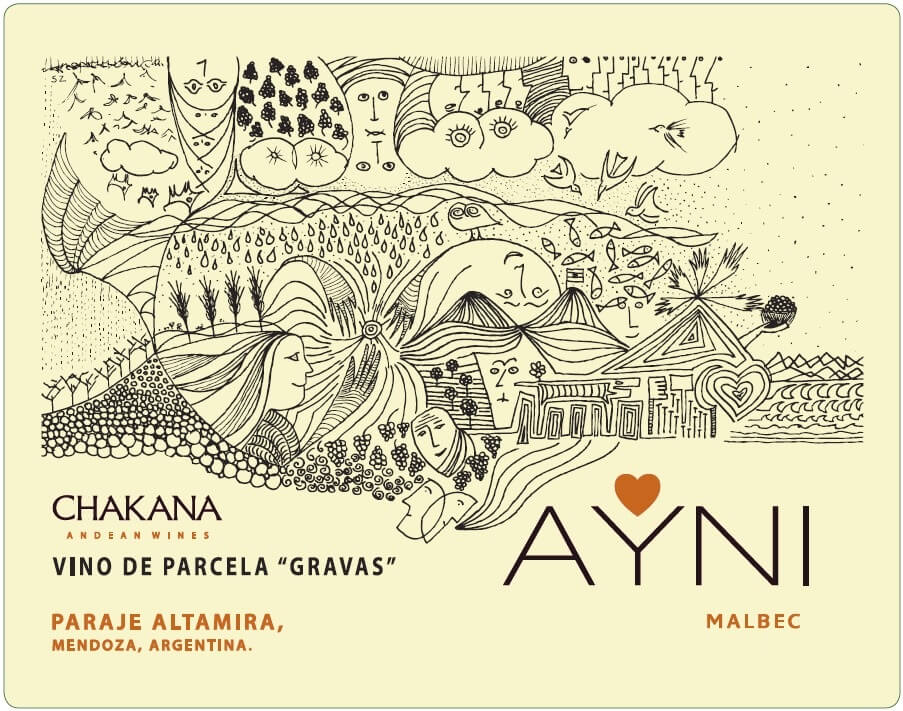
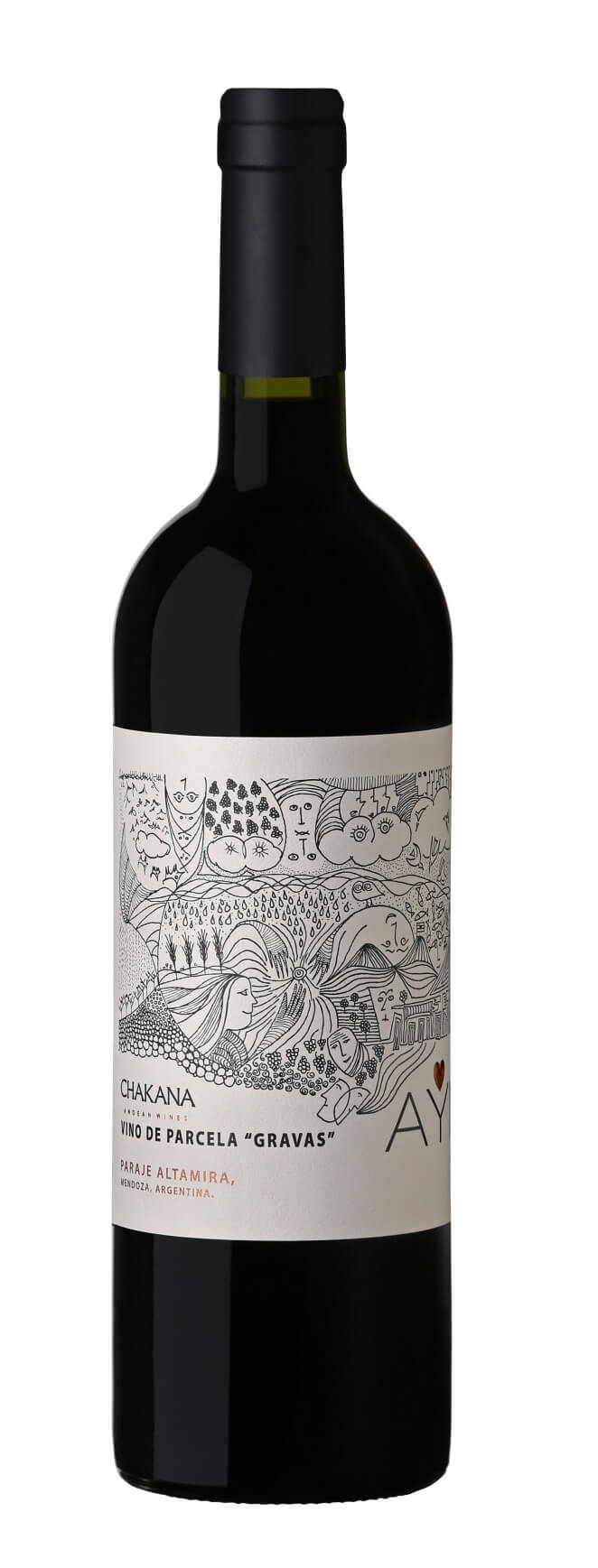
Ayni Vino de Parcella Gravas is 100% Malbec
Ayni Gravas was created show the diversity of wine profiles that can be derived from Paraje Altamira’s terroir. The goal with this particular wine is to show a markedly calcareous profile that derives in a more intense black fruit flavor profile and a chalky tannin structure with great age potential, as opposed to the more feminine and elegant style which is typical from Paraje Altamira wines.
Chakana plans to further develop this wine, increasing its accents through vineyard selection and oak aging. Over time, production can potentially increase to 10,000 bottles (maximum).
Ayni Gravas is produced from smaller plots of a 20 hectare vineyard in Paraje Altamira, Valle de Uco, Mendoza. Paraje Altamira is a Geographical Indication (IG) located on the alluvial cone of the Tunuyan River. The Ayni vineyard has been planted on virgin soils on the upper (south western) side of the cone. The vineyard is crossed by numerous smaller river beds that once formed the river delta, and these create a pattern of different soil depths and gravel formations, imparting very different characteristics on the wine. Ayni Gravas is produced only with the sections of the vineyard where the calcium carbonated gravels come to the surface and the vines grow amongst them with no soil. Only a smaller percentage of the vineyard (approximately 20%) features these conditions.
Pairs well with grilled meats and stews.
Review:
"This limited release from Paraje Altamira is much more mineral than the other Ayni Malbec bottling. It’s a tad austere at the moment, as well as showing more oak, but there’s plenty of structure here, with savoury tannins, dense fruit and a chalky finish. Just needs more time in bottle. 2019-28"
- Tim Atkin (Argentina Special Report 2017), 94 pts
"The grapes for this wine come from Chakana’s Altamira vineyards, a selection of the property’s most stony/gravel soils (shallow). It’s aged in untoasted wooden vats (foudres) for a full year and today is the new brother of Ayni, Chakana’s traditional red. As seen in recent releases from this producer, especially in the last two vintages that we’ve tasted at “Descorchados”, it’s the red fruit, bracing, and with zip that predominates. Rather than make a more ambitious ripe & woody monster, they opted to lengthen it, to make in more linear, more vertical. This is a little stunner from one of the wineries to keep track of today in Mendoza."
- Descorchads 2018, 95 pts
Red-plum, pomegranate and wild-berry aromas make for a potpourri of fruit on the nose of this Malbec from gravelly soils in the Altamira district of the Uco Valley. A tight sinewy palate is structured, while this deals a hardy mix of plum and berry flavors with no interference from oak. A racy tight finish is mildly astringent. This should benefit from more time in the cellar. Drink from 2019–2030. – Wine Enthusiast 92 Points & Top 100 Cellar Selection for 2019
The Ayni Estate
Ayni is produced in a state-of-the-art winery, Chakana, built with the purpose of achieving outstanding quality.
Chakana winery was founded by Juan Pelizzatti on May 2nd, 2002. Juan was driven to enter the wine industry first and foremost by his passion for wine, and also by the desire to invest his time and money on a product of agriculture. Although Juan did not know it at the time, the company was founded on the same day the Chakana was celebrated on the Andes highlands: on that same day, the Southern Cross (the Chakana for the Inca people) becomes vertical in the night Andean sky.
Juan's mission is to create an integral experience to introduce world consumers to the taste and culture of the Andes. His vision is to become one of the top 20 exporters of wine from Argentina, by consistently offering outstanding value for money.
Wine is currently produced in four different levels at Chakana, by winemaker Gabriel Bloise:
Entry Level: Maipe
Reserve Level: Maipe Reserve, Cueva de las Manos, Nuna
Estate Selection
Ayni
The winemaking process is focused on treating the grapes with great care and with strict control of every step of the production.
Wines are designed under the responsibility of the renowned international wine consultant Alberto Antonini.
The winery is located on a 150 ha. estate, 34 km South of the city of Mendoza, in Agrelo, Lujan de Cuyo.
The grapes grown are 35 year-old Malbec, Bonarda and Cabernet Sauvignon.
Deep and textured soils facilitate plant development and confer great body and structure to the wines.
The year-long sunny and dry conditions allow almost organic viticulture practices. The outstanding feature includes a great daily thermal amplitude, with mild days and cold nights, permitting a particular richness of polifenols that improves the wines flavors and color.
A drip irrigation system has been set up to achieve a precise control of the vegetative cycle and a rational use of water. Waters are processed and used in the vineyards.
The Ayni Vineyards
Chakana sources grapes from their own four estates:
Agrelo
Acreage: 150 ha, 120 ha with vineyards
70 ha entry level
40 ha reserve level
10 ha estate & ayni
Acreage by varietal at Agrelo Estate:
Malbec: 50 ha
Cabernet Sauvignon: 30 ha
Syrah: 10 ha
Bonarda: 10 ha
Tannat: 2,5 ha
Petit Verdot: 2.5 ha
Cabernet Franc: 1.5 ha
Aspirant Bouchet: 2.5 ha
Ancellotta: 2 ha
Sauvignon Blanc: 4 ha
Viognier: 2.5 ha
Chardonnay: 2.5 ha
Wine Profile: Medium bodied, elegant, fresher fruit. Round tannin on gravels.
Terroir: Very heterogeneous – deep clay to sandy clay gravels; cool climate
Altamira I
Acreage: 15 ha, Malbec high density. Planted in 2010, not in production
Wine Profile: Full bodied, impressive tannic structure and roundness, spicy and complex.
Terroir: Sandy clay gravel, limestone; cooler climate
Altamira II
Acreage: 36 ha, 26 ha with vineyards
20 ha malbec, estate and ayni level
4 ha chardonnay, entry level and reserve
2 ha pinot noir (used for sparkling wine)
Wine Profile: Medium bodied, elegant, fresher fruit. Round tannin on gravels.
Terroir: Very heterogeneous – deep clay to sandy clay gravels; cool climate
Terrada
Acreage: 21 ha, all in vines
100% malbec, old vines, high density
Reserve – Estate Selection
Wine Profile: Complex, ripe fruit, medium bodied, elegant.
Terroir: Sandy clay gravels, 70cm. soil depth, Some limestone; warmer climate.
They also source wines from contract suppliers in Ugarteche and Medrano, for entry level wines, and in Vista Flores, for Estate Selection & Ayni levels.

The nose here is brilliantly red fruited, with layer upon layer of subtle spice, bright floral notes, herbs, and stone. Its not all poetry and pageantry, though, and the first impression of the wine was simply, “oh that’s goooood.” A fair assessment, and sometimes that it all one requires. Further tastes show fine tannin throughout, a juicy, vibrant mouthfeel that is very likeable, and deft, long-developing layers of fruit that reveal themselves severally.
Patton Valley's flagship wine, The Estate is the most comprehensive expression of their vineyard site, and the wine that truly defines their place in a given vintage.
Review:
"Glistening red. Vibrant red fruit, floral and spice scents show very good clarity that picks up subtle hints of succulent herbs and smoky minerals with air. Juicy and energetic in the mouth, the 2017 offers gently sweet cherry raspberry and rose pastille flavors and a touch of spicecake. Smooth, well-integrated tannins make a late appearance on a long, floral-tinged finish that shows no rough edges.
- Josh Raynolds" - Antonio Galloni's Vinous (August 2020), 92 pts

Castelmaure Col des Vents Corbieres is made from 50% Carignan, 30% Grenache, 15% Syrah and 5% Cinsault.
"Col des Vents" means "Windy Mountain Pass" as it is quite windy and located at the foothills of the Pyrenees mountains.
Originally, the label was a replicate of a Max Savy's painting.
Brambly berry, cherry and raspberry, spices, black pepper ... all are present in this authentic French country wine. There are also some aromas of Garrigue (Rosemary, thyme and lavender) giving a minty, herbal notes, that are quite refreshing as well.