" We don't sell the wine without touching the vine "
| Country: | France |
| Regions: | Rhone Beaumes de Venise |
| Winery: | Bernardins |
| Grape Type: | Muscat |
| Organic: | Yes |
| Vintage: | 2022 |
| Bottle Size: | 750 ml |
-150x300.jpg "Bernardins Muscat Beaumes Venise VDN 2023")
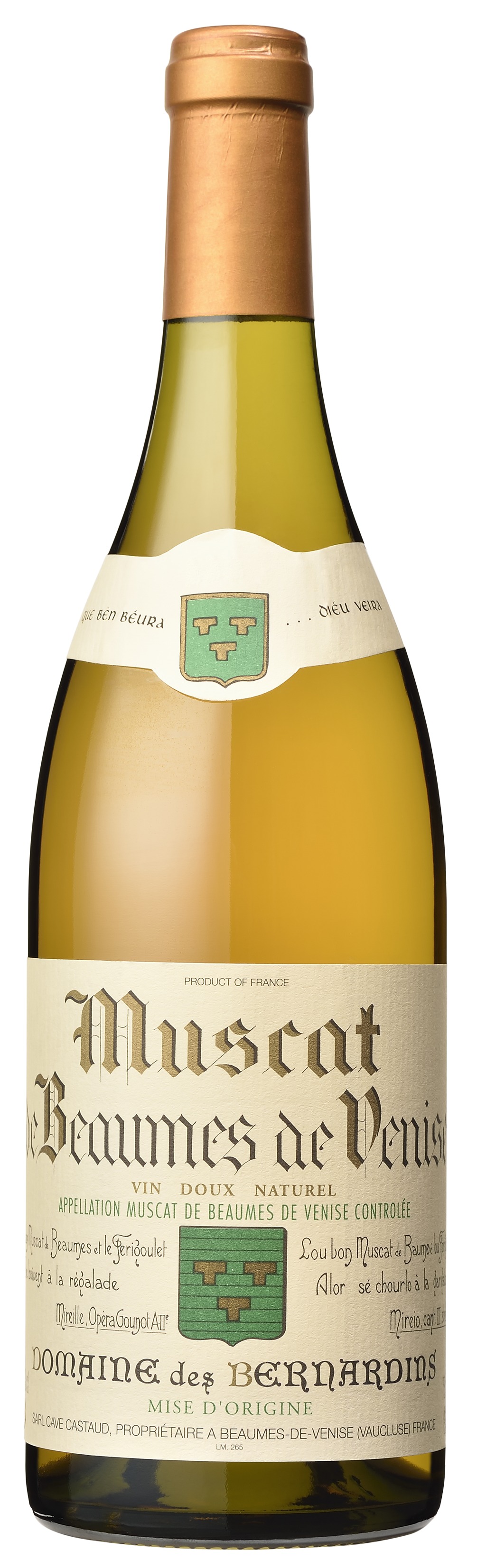
Bernardins Muscat Beaumes Venise VDN 100% Muscat petits grains (75% Blanc, 25% Red)
Copper/rose hue and ripe soft aromas of orange, spice and flowers. The wine is full bodied with the texture of silk and flavors of orange custard, white peach, pear, apricot, toffee and orange peel.
The vineyards and their terroir are the essence of our wines. This is where everything starts and where we focus our efforts throughout the year. You can’t make great wine without great grapes.
The viticulture is essentially done by hand. Five people work full-time in the vineyards. They are supplemented by seasonal employees who work during bunch thinning and the harvest in order to bring out the very best in our vines. Working by hand and the attention each vine gets are fundamental. Pruning, de-budding, trellising, leaf removal and picking are thus carried out by hand with the utmost care.
We prepare the soil by using good old-fashioned ploughing. Organic compost is made from grape marc (the discarded stalks and skins).
As a way of protecting the plants, we only use phytosanitary products when necessary and within strict guidelines by staggering the treatments appropriately, to minimise the amount of chemicals used. We prefer to use as much as possible manual and organic techniques . Leaving natural grass cover, removing buds and leaves from the vines, preserving biodiversity around the vineyard: olive, almond and cypress trees, wild rosemary and capers.
In the spirit of respecting traditional techniques and the best elements of modern technology, cellar manager Andrew Hall and his winemaker son Romain Hall take family traditions very seriously.
When making our wines, the Muscat de Beaumes de Venise plays a central role and requires great care. After picking the grapes by hand, we press them straightaway to ferment the juice without skins. We don’t add any yeasts and keep the alcoholic fermentation in check by temperature control. Vin Doux Naturel winemaking involves stopping fermentation to preserve the grapes’ natural sweetness. During vinification, we watch the vats day and night and add the fortifying spirit just at the right moment. At this stage, the wine’s final balance is at stake. The wine is then aged in stainless steel tanks for 6 months before bottling.
Review:
"Butterscotch and apricot jam aromas. A lighter vintage of this cuvée, but very fresh and drinkable, and the best Muscat of the vintage by far. 110g/L residual sugar. In conversion to organic. - Matt WALLS"
- Decanter (November 2024), 91 pts
-150x300.jpg "Bernardins Muscat Beaumes Venise VDN 2024")
Bernardins Muscat Beaumes Venise VDN 100% Muscat petits grains (75% Blanc, 25% Red)
Copper/rose hue and ripe soft aromas of orange, spice and flowers. The wine is full bodied with the texture of silk and flavors of orange custard, white peach, pear, apricot, toffee and orange peel.
The vineyards and their terroir are the essence of our wines. This is where everything starts and where we focus our efforts throughout the year. You can’t make great wine without great grapes.
The viticulture is essentially done by hand. Five people work full-time in the vineyards. They are supplemented by seasonal employees who work during bunch thinning and the harvest in order to bring out the very best in our vines. Working by hand and the attention each vine gets are fundamental. Pruning, de-budding, trellising, leaf removal and picking are thus carried out by hand with the utmost care.
We prepare the soil by using good old-fashioned ploughing. Organic compost is made from grape marc (the discarded stalks and skins).
As a way of protecting the plants, we only use phytosanitary products when necessary and within strict guidelines by staggering the treatments appropriately, to minimise the amount of chemicals used. We prefer to use as much as possible manual and organic techniques . Leaving natural grass cover, removing buds and leaves from the vines, preserving biodiversity around the vineyard: olive, almond and cypress trees, wild rosemary and capers.
In the spirit of respecting traditional techniques and the best elements of modern technology, cellar manager Andrew Hall and his winemaker son Romain Hall take family traditions very seriously.
When making our wines, the Muscat de Beaumes de Venise plays a central role and requires great care. After picking the grapes by hand, we press them straightaway to ferment the juice without skins. We don’t add any yeasts and keep the alcoholic fermentation in check by temperature control. Vin Doux Naturel winemaking involves stopping fermentation to preserve the grapes’ natural sweetness. During vinification, we watch the vats day and night and add the fortifying spirit just at the right moment. At this stage, the wine’s final balance is at stake. The wine is then aged in stainless steel tanks for 6 months before bottling.
Bernardins Muscat Beaumes Venise VDN 100% Muscat petits grains (75% Blanc, 25% Red)
Copper/rose hue and ripe soft aromas of orange, spice and flowers. The wine is full bodied with the texture of silk and flavors of orange custard, white peach, pear, apricot, toffee and orange peel.
The vineyards and their terroir are the essence of our wines. This is where everything starts and where we focus our efforts throughout the year. You can’t make great wine without great grapes.
The viticulture is essentially done by hand. Five people work full-time in the vineyards. They are supplemented by seasonal employees who work during bunch thinning and the harvest in order to bring out the very best in our vines. Working by hand and the attention each vine gets are fundamental. Pruning, de-budding, trellising, leaf removal and picking are thus carried out by hand with the utmost care.
We prepare the soil by using good old-fashioned ploughing. Organic compost is made from grape marc (the discarded stalks and skins).
As a way of protecting the plants, we only use phytosanitary products when necessary and within strict guidelines by staggering the treatments appropriately, to minimise the amount of chemicals used. We prefer to use as much as possible manual and organic techniques . Leaving natural grass cover, removing buds and leaves from the vines, preserving biodiversity around the vineyard: olive, almond and cypress trees, wild rosemary and capers.
In the spirit of respecting traditional techniques and the best elements of modern technology, cellar manager Andrew Hall and his winemaker son Romain Hall take family traditions very seriously.
When making our wines, the Muscat de Beaumes de Venise plays a central role and requires great care. After picking the grapes by hand, we press them straightaway to ferment the juice without skins. We don’t add any yeasts and keep the alcoholic fermentation in check by temperature control. Vin Doux Naturel winemaking involves stopping fermentation to preserve the grapes’ natural sweetness. During vinification, we watch the vats day and night and add the fortifying spirit just at the right moment. At this stage, the wine’s final balance is at stake. The wine is then aged in stainless steel tanks for 6 months before bottling.

Bernardins Muscat de Beaumes de Venise Hommage is made from 75% Muscat petits grains blancs, 25% Muscat petits grains noirs.
The wine shows a golden hue with orangy highlights. Endearing nose of grape, orange peel and a honeyed accent. Mild at point of entry, spendid aromatic intensity, sultana, candied orange, rose petal and refined spice. Our Muscat de Beaumes de Venise has a great age ability.
For every vintage of our Muscat de Beaumes de Venise, the grapes are picked by hand. We press them straightaway to ferment the juice without skins. We don’t add any yeasts and keep the alcoholic fermentation in check by temperature control. Vin Doux Naturel winemaking involves stopping fermentation to preserve the grapes’ natural sweetness. During vinification, we watch the vats day and night and add 95% grape spirit just at the right moment. At this stage, the wine’s final balance is at stake. For the Hommage, we blend different vintages, aged in stain steel vats, to create the complexity of a long lasting wine.
The Hommage is a versatile companion to many deserts. Most expressive with dry biscuits and dry fruits, it retains all its character served with a fruit tart, puff paestry and chocolate or coffe desserts. To appreciate as well with duck breasts and figs. Served with a roquefort or a silton, it is marvellous. Simply as an aperitif with some dry fruit or grilled almonds. It's also a good compagnion for a classy cigars.

Bernardins Beaumes de Venise Rouge Cru Cotes du Rhone is made from 65% Grenache, 25% Syrah, 5% Mourvedre and 5% Grenache Blanc.
Bright ruby color with cherry tinges. Complex black fruit aromas on the nose enhanced by spicy notes. Rounded palate with good length.
The wine is drinking well right now and can be kept for another 10 years.
Situation
Spreads out over the south-east side of the Dentelles de Montmirail hills, in Beaumes de Venise in the southern part of the Rhone valley.
Terroir
On a poor sandy, hungry and arid soil consisting of tender limestone and gritty zones of sandy mollasse.
In the vineyard
The vineyards and their terroir are the essence of our wines. This is where everything starts and where we focus our efforts throughout the year. You can’t make great wine without great grapes.
The viticulture is essentially done by hand. Five people work full-time in the vineyards. They are supplemented by seasonal employees who work during bunch thinning and the harvest in order to bring out the very best in our vines. Working by hand and the attention each vine gets are fundamental. Pruning, de-budding, trellising, leaf removal and picking are thus carried out by hand with the utmost care.
We prepare the soil by using good old-fashioned ploughing. Organic compost is made from grape marc (the discarded stalks and skins).
As a way of protecting the plants, we only use phytosanitary products when necessary and within strict guidelines by staggering the treatments appropriately, to minimise the amount of chemicals used. We prefer to use as much as possible manual and organic techniques . Leaving natural grass cover, removing buds and leaves from the vines, preserving biodiversity around the vineyard: olive, almond and cypress trees, wild rosemary and capers.
Winemaking
We make two red wines at the estate. Terroir wines shaped by the two classic Côtes du Rhône varieties: Grenache and Syrah. We don’t follow any winemaking recipe but are constantly searching for the perfect expression of terroir and each vintage’s particular characteristics. We don’t go for overripe grapes and over-extraction, as we think the wine has to stay refreshing and balanced.
Leaving the wine for 15 days in concrete vats, we try to gently extract the tannins and anthocyanins essential for the wine’s structure and colour. The wine doesn’t come into any contact with wood during ageing. This way the characteristics of our terroir can fully express
Serve with a meal especially red meat, game and cheese.
Bernardins Beaumes de Venise Rouge Cru Cotes du Rhone is made from 65% Grenache, 25% Syrah, 5% Mourvedre and 5% Grenache Blanc.
Bright ruby color with cherry tinges. Complex black fruit aromas on the nose enhanced by spicy notes. Rounded palate with good length.
The wine is drinking well right now and can be kept for another 10 years.
Situation
Spreads out over the south-east side of the Dentelles de Montmirail hills, in Beaumes de Venise in the southern part of the Rhone valley.
Terroir
On a poor sandy, hungry and arid soil consisting of tender limestone and gritty zones of sandy mollasse.
In the vineyard
The vineyards and their terroir are the essence of our wines. This is where everything starts and where we focus our efforts throughout the year. You can’t make great wine without great grapes.
The viticulture is essentially done by hand. Five people work full-time in the vineyards. They are supplemented by seasonal employees who work during bunch thinning and the harvest in order to bring out the very best in our vines. Working by hand and the attention each vine gets are fundamental. Pruning, de-budding, trellising, leaf removal and picking are thus carried out by hand with the utmost care.
We prepare the soil by using good old-fashioned ploughing. Organic compost is made from grape marc (the discarded stalks and skins).
As a way of protecting the plants, we only use phytosanitary products when necessary and within strict guidelines by staggering the treatments appropriately, to minimise the amount of chemicals used. We prefer to use as much as possible manual and organic techniques . Leaving natural grass cover, removing buds and leaves from the vines, preserving biodiversity around the vineyard: olive, almond and cypress trees, wild rosemary and capers.
Winemaking
We make two red wines at the estate. Terroir wines shaped by the two classic Côtes du Rhône varieties: Grenache and Syrah. We don’t follow any winemaking recipe but are constantly searching for the perfect expression of terroir and each vintage’s particular characteristics. We don’t go for overripe grapes and over-extraction, as we think the wine has to stay refreshing and balanced.
Leaving the wine for 15 days in concrete vats, we try to gently extract the tannins and anthocyanins essential for the wine’s structure and colour. The wine doesn’t come into any contact with wood during ageing. This way the characteristics of our terroir can fully express
Serve with a meal especially red meat, game and cheese.
Review:
"Smoky bacon, bay leaf and olive brine. This is very fine for a whole-bunch style, with lovely tannic finesse and texture. Powerful, tannic and cleansing, yet compact, with driving acidity, a dry, savoury finish and perfect balance. A good vintage, for what is a reliably good-value southern Rhône pick. Vineyards in conversion to organic; fruit is whole-bunch fermented.- Matt WALLS"
- Decanter (October 1st 2024), 94 pts
Bernardins Muscat Beaumes Venise VDN 100% Muscat petits grains (75% Blanc, 25% Red)
Copper/rose hue and ripe soft aromas of orange, spice and flowers. The wine is full bodied with the texture of silk and flavors of orange custard, white peach, pear, apricot, toffee and orange peel.
The vineyards and their terroir are the essence of our wines. This is where everything starts and where we focus our efforts throughout the year. You can’t make great wine without great grapes.
The viticulture is essentially done by hand. Five people work full-time in the vineyards. They are supplemented by seasonal employees who work during bunch thinning and the harvest in order to bring out the very best in our vines. Working by hand and the attention each vine gets are fundamental. Pruning, de-budding, trellising, leaf removal and picking are thus carried out by hand with the utmost care.
We prepare the soil by using good old-fashioned ploughing. Organic compost is made from grape marc (the discarded stalks and skins).
As a way of protecting the plants, we only use phytosanitary products when necessary and within strict guidelines by staggering the treatments appropriately, to minimise the amount of chemicals used. We prefer to use as much as possible manual and organic techniques . Leaving natural grass cover, removing buds and leaves from the vines, preserving biodiversity around the vineyard: olive, almond and cypress trees, wild rosemary and capers.
In the spirit of respecting traditional techniques and the best elements of modern technology, cellar manager Andrew Hall and his winemaker son Romain Hall take family traditions very seriously.
When making our wines, the Muscat de Beaumes de Venise plays a central role and requires great care. After picking the grapes by hand, we press them straightaway to ferment the juice without skins. We don’t add any yeasts and keep the alcoholic fermentation in check by temperature control. Vin Doux Naturel winemaking involves stopping fermentation to preserve the grapes’ natural sweetness. During vinification, we watch the vats day and night and add the fortifying spirit just at the right moment. At this stage, the wine’s final balance is at stake. The wine is then aged in stainless steel tanks for 6 months before bottling.
The Bernardins Estate
Domaine des Bernardins is a sixth generation family owned estate on the edge of the tiny village of Beaumes de Venise. The owners are Elizabeth Hall (the granddaughter of Louis Castaud) and her husband Andrew Hall. The area has been populated since the time of the cave dwelling peoples (the name "Beaumes" means caves) who came from the town of Venise which existed near Carpentras. The first Beaumes de Venises granted A.O.C. status was in 1945 with the 1943 vintage.
The Bernardins Vineyard
The vineyards consist of 22 hectares (54.34 acres) in total, 15 hectares of Muscat (which yields 30 hl/ha) and 7 hectares of red grapes (Syrah and Cinsault) for Cotes du Rhone Rouge production.

Wolfberger Alsace Grand Cru Hengst Gewurztraminer is made from 100 percent Grand Cru Gewurztraminer.
Hengst means stallion in alsatian.
Floral nose, yellow fruits, sweet spices. The mouth is ample with the same aromatic.
Tangential filtration before bottling.Vinification in stainless steel tanks at 16°C then aging on fine lees until spring of the following year.
Full-bodied cheese (munster, époisses), curry, dessert with fresh fruit

Corinne Perchaud Chablis Premier Cru Fourneaux is made from 100 percent Chardonnay.
This is the south facing portion of the slope and very hot, heavy "Fourneaux" or "oven" effect.
The wine is expressive and vivacious with beautiful aromas.
Well-balanced, round and fruity wine with a fine minerality on the finish.
1er Cru Fourneaux is located on the Fleys village and faces the field. the plots are very steep and exposed full south on soil type Kimmeridgian consists of marl clay-limestone with shallow ground and a very stony ground. After a slight settling, the juice starts its fermentation in tank, then ¼ of juice is racked in barrels. Both wines perform their alcoholic fermentation and malolactic and their aging on the lees, separately. The two cuvées are blended six months after harvesting. The wine is then filtered and is bottled 15 months after harvesting. 2013 Conditions and Harvest The relatively high temperatures at the end of winter allowed an early bud vines in early March. With a hot, dry spring flower took place in good conditions. In July, a hailstorm located did some damage to our Fourchaume plot. July and early August, rainy and stormy brought the water needed by the vineyards. The dry and sunny weather of the second half of August brought the grapes to maturity. The harvest began on September 2 under cloudy skies.
Coquille St. Jacques (scallops) with leeks and cream.

Le Bihan Touraine Chenonceaux Sauvignon Blanc is made from 100 percent Sauvignon Blanc.
Touraine Chenonceaux "Revelation" is a limpid and brilliant colored wine with pale gold highlights. The nose is intense and expressive, full of floral aromas. It is dry and harmonious on the palate, with a tangy edge and a lively finish.
To drink as Aperitif, or with white meat, Loire asparagus and seafood.

Jean Arthaud Bourgogne Blanc is made from 100% Chardonnay.

La Despensa Boutique Cinsault is made from 100% Cinsault.
A genuinely unique wine - they are the only producers of Cinsault in Colchagua! From a new vineyard planted in 2017, the team at La Despensa thinks they’ve hit the jackpot with this variety in this valley. Much more structure, color and intensity than the typical Chilean Cinsaults from further south, this is an easy drinking but serious version of this wonderfully fruity variety!

Average age of the vines: 30 years old (between 20 and 60 years old). Skin contact maceration: between 2 and 5 days depending on the parcels.
Beaujolais-Nouveau has been very popular with almost every Thanksgiving dish - from turkey to ham, green beans to mashed potatoes, and gravy to cranberry sauce.
The Beaujolais Villages Nouveau is deeper red, with flavors reminiscent of strawberries and roses, plus a mineral component. Fragrant and medium bodied; refreshing with a tart finish. Beaujolais Villages Nouveau is meant to be consumed young, within 5-7 months.
Beaujolais Nouveau originated about a century ago as a 'vin de l'année' - a cheap and cheerful drink produced by locals to celebrate the end of the harvest season. The Beaujolais AOC was established in 1937, and after WWII, the wine was sold outside of the area. By the 1970's, Beaujolais Nouveau day was a national event.
he region of Beaujolais is 34 miles long from north to south, and 7 to 9 miles wide. There are nearly 4,000 grape growers who make their living in this picturesque region just north of France's third largest city, Lyon.
The Gamay grapes that go into Beaujolais Nouveau are handpicked, as are all the grapes in the Beaujolais. Beaujolais & Champagne are the only vineyards where hand harvesting is mandatory. Gamay (Gamay noir Jus Blanc) is the only grape permitted for Beaujolais.
Beaujolais Nouveau cannot be made from grapes grown in the 10 crus (great growths) of Beaujolais; only from grapes coming from the appellations of Beaujolais and Beaujolais-Villages. Approximately 1/3 of the entire crop of the Beaujolais region is sold as Beaujolais Nouveau.
Nouveau is made with carbonic maceration, or whole-berry fermentation. This technique preserves the fresh, fruity quality of the grapes without extracting bitter tannins from the grape skins.


.jpg)