
" We don't sell the wine without touching the vine "
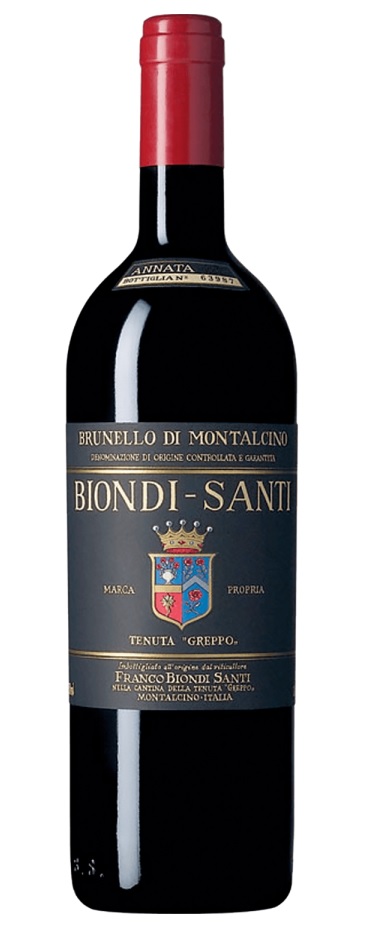
| Country: | Italy |
| Regions: | Tuscany Brunello di Montalcino |
| Winery: | Biondi Santi |
| Grape Type: | Sangiovese |
| Vintage: | 2012 |
| Bottle Size: | 750 ml |

This is a 6 pack with 2 bottles each from vintages from 2013, 2015, and 2016.
***Tenimenti Angelini Val di Suga Vigna Spuntali Brunello di Montalcino 2016:
The 2016 Vigna Spuntali Brunello di Montalcino is the most brooding of the lineup from Val di Suga and is sourced from the southwest of the region on sandy soils. There are aromatics of black raspberry, licorice, menthol, sage, cinnamon, and iron-rich earth. Its Mediterranean influence is felt on the palate with ripe black cherry, dried herbs, and sun-baked earth. This is the fullest bodied and most savory of the Val di Suga lineup, with more roundness and grip. Its structure will benefit from cellaring for several years and will be great drinking over the next 20 years or more. 2026-2040.
-Jeb Dunnuck 96 Points
***Tenimenti Angelini Val di Suga Vigna Spuntali Brunello di Montalcino 2015:
The 2015 Vigna Spuntali Brunello di Montalcino is more introverted on first opening, with notes of black plum, licorice, dried Mediterranean herb, and sun-baked earth. On the palate, it offers a tart dried fruit character, with a building tannin structure that finishes with tomato leaf, and bitter herbs. The most rustic and burly of the wines in the lineup of the 2015 Val di Suga vintage, it will benefit from allowing some time in cellar to see how this matures and its tarriness develops. Drink 2026-2036
-Jeb Dunnuck 94 Points
***Tenimenti Angelini Val di Suga Vigna Spuntali Brunello di Montalcino 2013:
Plenty of spices and fresh herbs on the nose, such as dried rosemary and nutmeg, to match the underlying dried redcurrants and cranberries. Full-bodied with plenty of concentration, but still shows a very sturdy, tannin backbone and punchy acidity, to drive this through to a long finish. Drink in 2021.
-James Suckling 94 Points

Capanna Brunello di Montalcino Riserva is made from 100 percent Sangiovese.
TYPE: DOCG
BLEND: 100% Sangiovese carefully selected in the oldest vineyards and only of the best harvests.
VINIFICATION:
Alcoholic fermentation with maceration of the skins (30-35 days) at a controlled temperature and spontaneous malolactic fermentation, both in truncated cone-shaped Slavonian oak vats.
AGEING:
In Slavonian oak casks of 10 to 25 hl for over 40 months; followed by ageing in bottles for at least 15 months.
NOTES:
Colour: deep ruby red, strong, lively.
Bouquet: very intense and complex, fruity and spicy, with red fruit, jam and liquorice shades; great prospects of future development.
Taste: great structure in the acid-tannin components, well supported by the soft ones; extremely persistent.
Food pairings: roast red meats, game and very aged cheeses.
Review:
Bright ruby in the glass. First impact is low key, with red cherry, leather, tobacco, fresh violet and balsamic notes. The attack is velvety, with a full body, lifted acidity and dense, ripe tannins. Character emerges from the glass, meaty and bloody. Thick, dry finish that’s fierce. Drink or hold
-James Suckling 95 Points

Collemattoni Brunello di Montalcino is made from 100 percent Sangiovese.
Color: brilliant red with burgundy reflects; Bouquet: penetrating with memories of wild black fruits, black cherry and noble wood; Taste: warm, dry and persistent
Coming from a parcel with 10-15 year old vines planted in sandy clay and marl soils.
Harvest is 100% destemmed with a soft pressing, fermentation in stainless steel tanks at controlled temperature of 28-30°C, pumping over for the first week of maceration followed by skin-contact maceration for 20-25 days with rack and return technique (delestage).
Malolactic fermentation completed.
Wine is slightly filtered before bottling.
Review:
This is a really balanced and pretty young Brunello with dark-cherry and citrus character on both the nose and palate. It’s medium-bodied with integrated tannins and a beautiful, succulent finish. Nicely done. Drinkable now, but better in two or three years.
-James Suckling 95 Points

Collemattoni Brunello di Montalcino Riserva is made from 100 percent Sangiovese.
Intense ruby red with brilliant burgundy reflects in color. Reminiscent of wild black fruits, vanilla and spices on the nose and dry, warm, slightly austere but velvety in the palate.
This wine comes from the oldest vineyard of Collemattoni: Fontelontano. Less than half hectare. It's one of the few Single Vineyard Brunello di Montalcino riserva.
Coming from a parcel with 15-18 year old vines planted in sandy clay and marl soils.
Harvest is 100% destemmed with a soft pressing, fermentation in stainless steel tanks at controlled temperature of 28-30°C, pumping over for the first week of maceration following by skin-contact maceration for 20-25 days with rack and return technique (delestage).
Malolactic fermentation completed. The delestage and the pumping over are then spaced out along the process.
Wine is slightly filtered before bottling.
Review:
This is intense with aromas of dried cherries, sweet licorice, cloves, crushed walnuts and hints of chocolate and undergrowth. Full-bodied, deep and structured with taut, tightly packed tannins. Long and persistent. Drink or hold.
-James Suckling 94 Points

Poggio Nardone Brunello di Montalcino is made from 100 percent Sangiovese Grosso.
The rich nose displays scents of spices combined with aromas of small red ripe fruits, blackberry and blueberry.
Well structured, determined and elegant, with round and silky tannins. Very nice finish.
Alcoholic fermentation was done in tank, malolactic fermentation in oak barrels. Wine was then aged for 3 years in French oak barrels.
Review:
Powerful and classic, it alternates in the best way the floral features of magnolias, gardenias and hawthorn with fruity notes reminiscent of plums, pressed blueberries and lemon juice. Medium-full body, smooth and relaxed in the sip, it closes harmonious and balanced. How beautiful! Better from 2024.
Raffaele Vecchione - WinesCritic.com 94 Points

Poggio San Polo Podernovi Brunello di Montalcino is made from Sangiovese.
Intense ruby red in color with garnet hues, clear and glossy. The bouquet exhibits typical aromas of violets and small red berries. Subtle nuances of forest undergrowth, aromatic wood, a touch of vanilla and jammy mixed fruit then give way to subtle hints of coffee. This Brunello is intense, persistent, broad and heady. Full-bodied and warm on the palate, with a densely-woven texture and robust body, it has a persistent finish with well-rounded tannins. The particular features of the terroir at San Polo produce a Brunello with a capacity for lengthy aging, while patient cellaring enhances the wine during ageing in the bottle.
Review:
Lovely purity of fruit with ultra fine tannins and depth, finesse and complexity. Black cherries, cedar and some flowers. It’s full-bodied with very fine tannins that drive the finish. Give it a year or two to open more, but already so enticing. Drink or hold.
-James Suckling 96 Points
The San Polo 2015 Brunello di Montalcino Riserva (with 8,000 bottles produced) is a textured wine with hearty fruit and touches of smoked meat and spice. At its core, the wine offers dark fruit, blackberry and ripe plum. The rich fruitiness of the wine cedes to campfire ash, mahogany and furniture wax. These results are sultry and even a bit flashy, with distant background tones of teriyaki and plum sauce. The wine is fermented in cylindrical oak fermenters and aged in oak for three years. We'll see this bottle hitting the market sometime after February 2021.
-Wine Advocate 95 Points
Biondi Santi Tenuta Greppo Annata Brunello di Montalcino is made from 100 percent Sangiovese.
The Biondi-Santi flagship wine, the Brunello di Montalcino embodies the spirit of Tenuta Greppo and the signature style of our winemakers, forged over 150 years of history with its balanced combination of fresh elegance, depth and aristocratic personality.
VINTAGE 2012
Review:
Underbrush, ripe berry, new leather and Mediterranean herb aromas slowly take shape in the glass. Showing youthful tension, the vibrant palate delivers red cherry, pomegranate, white pepper and pipe tobacco notes framed by bright acidity and taut, refined tannins. It already shows great balance and finesse but is still young and tight. Drink 2022–2035.
-Wine Enthusiast 96 Points
It is a rare phenomenon that a wine can trace its origins to a single man. Brunello di Montalcino, however, owes its existence to Ferruccio Biondi-Santi and its fame to his family. Now on the seventh generation of winemakers, the Biondi-Santi family continues to produce wines renowned for their elegance and extraordinary longevity. Located in the heart of Montalcino, the Tenuta Greppo estate spreads over 25 hectares of vines on soils rich in heavy stones and marl – perfect for the cultivation of Sangiovese Grosso. Defenders of a rich enological heritage, the family continues to employ traditional vinicultural methods started well over a century ago to highlight the wine’s unique characteristics, or tipicita.
Franco expanded Il Greppo from 4 acres to 25, but continued to be a staunch believer in traditional viniculture. Today, Franco’s son, Jacopo, and his son, Tancredi, represent the sixth and seventh generations carrying on the family legacy.
Starting in the mid-1800s, Clemente Santi, a renowned writer and scientist, recognized the quality of the vineyards and viticulture at Il Greppo. Long before it became standard practice, Clemente chose to focus on red wines suitable for aging, creating racking and barrel-aging practices far more advanced than his peers’. Clemente’s innovative winemaking earned him considerable recognition, including an award for his “select red wine (Brunello) 1865” at the 1867 Universal Exposition in Paris.
Following in the footsteps of his grandfather, Ferruccio Biondi continued to experiment in the vineyards. In fact, Ferruccio took such pride in the work his grandfather did, he united the two family names and became Ferruccio Biondi-Santi. Ferruccio worked diligently to combat the challenges posed by oidium and phylloxera. He used the work he had already begun on massal selection and identifying mother vines to his advantage, grafting only the best clones on American rootstock and replanting his vineyard with the offspring of the mother clones – propagating what would eventually become the Brunello Biondi-Santi, or BBS 11, clone. Ferruccio also made the bold decision to bottle a 100 percent Sangiovese wine, focusing, like Clemente did before him, on ageworthiness rather than quick profits. With this, the birth of modern-day Brunello di Montalcino began.
After Ferruccio’s death in 1917, his son Tancredi Biondi-Santi continued the line of succession and carried on the family tradition with meticulous care. He looked to the past to secure the future, laying away older vintages in the cellar. He even made the crucial call to secretly wall-up part of his cellar prior to World War II, concealing the oldest Riservas from the Front. In doing so, Biondi-Santi was eventually able to show the world how long-lived and complex Brunello could be. In 1966, Brunello di Montalcino became a DOC and the Italian government turned to Tancredi to assist in writing the regulations.
Tancredi brought the winery to new heights, but it was his son Franco who helped show the world what they could do. Franco traveled far and wide, promoting the wines and showing the power of the old Riservas. The reputation of the wines was only boosted in 1980 when Brunello di Montalcino became the first DOCG in Italy.
Vineyards:
Located just two miles from the town of Montalcino, Il Greppo sits on a 47-hectare parcel of land. The oldest vines on the property are over 80 years old, dating back to 1930. In 1988, Franco Biondi-Santi started an enormous undertaking in the vineyard, eventually increasing plantings from 4 to 25 hectares. He planted the vines on steep terraces, using the natural contour of the hills to create an amphitheater, setting Il Greppo’s cellar at center stage. The soils, rich in a stony marl known locally as galestro, are ideal for the cultivation of Sangiovese Grosso. Dry, warmer weather typically leads to a September harvest. Noted diurnal shifts ensure the characteristic aromas and acid levels that lead to the expressive, long-aging Brunellos typical of the estate.
Thanks to the meticulous cultivation and clonal selection of the different generations, the Brunello Biondi-Santi, or BBS11, became an officially recognized and registered clone – the first to be named after a single producer.

Tinel Blondelet Pouilly-Fume Genetin is made from 100 percent Sauvignon Blanc.
The soil is made of "caillottes" (limestone stones).
"Genetin" is a name given in homage to the original name for Sauvignon Blanc: Muscat Genetin. The Genetin bottling is normally reserved for the most powerful Cuvées in the winery. No oak.
Produced from 25 year-old vines coming from the Villiers limestone terroir, situated in Bouchot.
Traditional vinification in thermo-regulated stainless steel tanks. Following a gentle pressing the juice is then fermented at controlled temperatures before being left to mature on its fine lees to gain extra depth and concentration before bottling in the next spring.
Matured on fine lees bringing finesse to the wine and bottled late in order to let all its roundness evolve.
Yield: 55 hl/ha
A golden colored and mineral wine with elegance and finesse. Can be cellared for 2-3 years.
A mineral-laced smoky accent and citrus aromas. Elegant and powerful on the palate.
Food pairing: shellfish, goat cheese such as “Crottin de Chavignol”. Perfect also as an aperitif.
Review:
- Wine & Spirits (Regional Tasting Report, Spring 2022), 91 pts

Gap's Crown Vineyard has become one of the most iconic Pinot noir vineyards in the Sonoma Coast. It was originally developed by Premier Pacific Vineyards between 2002 and 2005 and later purchased by Price Family Vineyards in 2013. In 2007, Sojourn Cellars became one of the best to make a vineyard-designate wine from Gap's Crown. Our clone 115 block, planted in 2005 on 3309 root stock at 800 feet elevation, has been the foundation for Sojourn since we began making Pinot noir from this vineyard. Our clone 828 block was planted in 2002 on 420A root stock, and two clone 667 blocks round out the blend, both planted in 2004 on 3309 root stock. This hillside vineyard is situated on the western slope of Sonoma Mountain and is cooled by the persistent wind and fog of the Petaluma Gap.
WINEMAKER NOTES: The 2021 growing season offered optimal conditions in the Sonoma Coast to harvest grapes of exceptional quality. The air remained clear with no res in Sonoma and pandemic lock downs ended. Our spirits were lifted and the grape harvest and wine quality benefited. . Brief heat waves in August and September ripened the grapes to ideal maturity as the weather stayed dry until major rains arrived October 22, after our grapes were harvested. Yields were lower than average in 2021, with small berries and loose clusters creating wines of increased depth and concentration. In 2021 we blended destemmed clone 115 and clone 667, while fermenting all the clone 828 100% whole-cluster. The resulting wine, our 15th vintage of Pinot noir from Gap’s Crown Vineyard, offers complex layers of elegant fruit flavors with a bold strength at its core.
Review:
Like a majority of the Sojourn 2021 Pinot Noirs, the Gap’s Crown is also aged in 50% new French oak but sees approximately 15% whole cluster during fermentation. This Pinot Noir is always one of my favorites coming out of the Sonoma Coast, and the Sojourn 2021 is another beautiful example. A shimmering ruby-garnet core with a blueish rim in the glass, it assembles bountiful notes of dark cherry compote, fresh black raspberry, spiced blue plum skin, brown mushroom, salty sea breeze, liquid chocolate, and hints of dried lemongrass. Complex, engaging, and downright delicious, this should be a wine that everyone should seek out to try. 1025 cases were produced. Better in 2023 and then enjoy for the next 12–15 years. Highly recommended and editor’s choice.
- International Wine Report 97 Points

Filippino Elio Barolo Riserva is made from 100 percent Nebbiolo.
This 100% Nebbiolo offers a fruity, floral and spicy bouquet of red roses, raspberry, cinnamon and cocoa. It is generous, enveloping and elegant in the mouth, yet intense and full-bodied.
The grapes undergo a soft crushing and destemming leading to a clear must. This must ferments in steel tanks at a controlled temperature of 26°C and macerates for 20-25 days. After racking, the wine undergoes a lengthy maturation in oak barrels, which is continued with a lengthy bottle-ageing. Bottle-ageing confers the wine’s final character, at which time the wine is sent to market and from there to consumer tables.



