" We don't sell the wine without touching the vine "
| BUY MORE! SAVE MORE! | ||||||||||||||||||||
|
| Country: | France |
| Region: | Burgundy |
| Winery: | Boussey |
| Grape Type: | Pinot Noir |
| Organic: | Yes |
| Vintage: | 2021 |
| Bottle Size: | 750 ml |
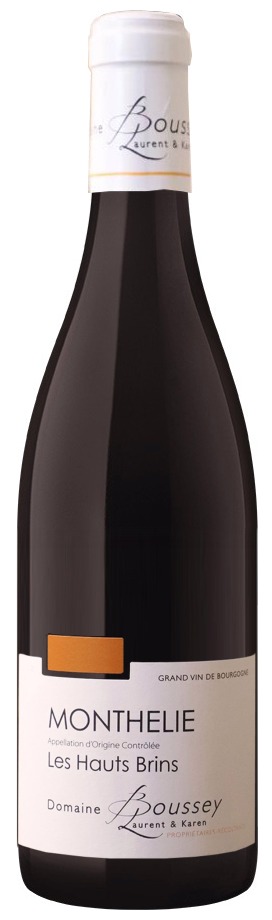
Boussey Monthelie Rouge Les Hauts Brins is made from 100 percent Pinot Noir.
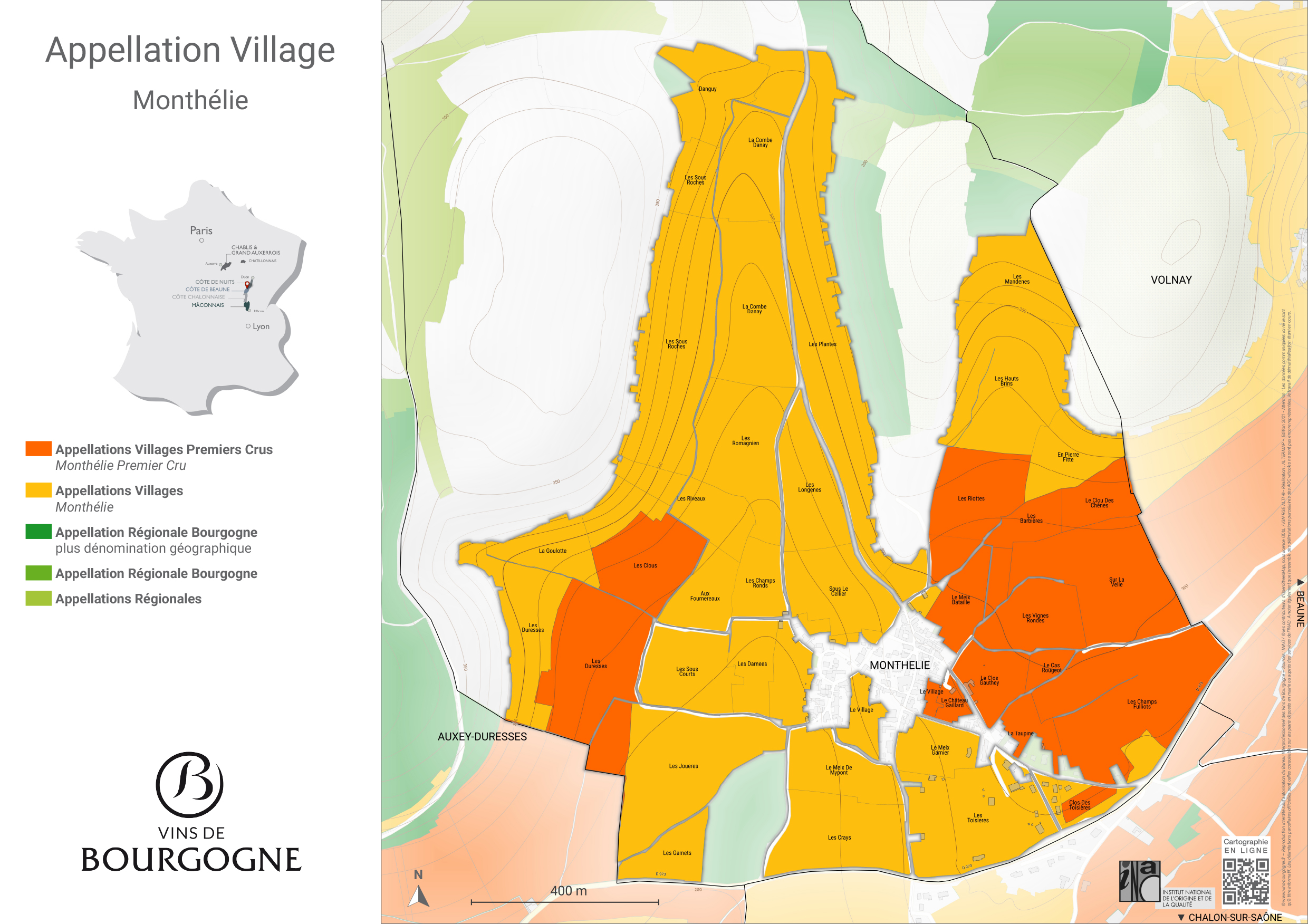
The vineyard for this wine is located in the North-Esat corner of the appellation (not too far away from Volnay) and it has a perfect South sun exposure.
Boussey Monthelie Rouge shows a beautiful light garnet color.
It displays classic aromas for the appellation with dark fruit and peony.
Excellent with beef and grilled vegatables.
Domaine de Boussey has been bequeathed from father to son for 5 generations. It is located in the heart of the well-known region of Burgundy, in the small village of Monthelie, near Meursault, Pommard and Beaune.
Laurent and Karen Boussey run the family estate today and have been cultivating their own vines since 2003. Laurent, Denis and Claudette's parents retired and Laurent took over the whole estate to perpetuate the family's winegrowing know-how of over 60 years. The vineyard now totals 15 hectares of vines spread over 24 different appellations.

Boussey Monthelie Rouge Les Hauts Brins is made from 100 percent Pinot Noir.
The vineyard for this wine is located in the North-Esat corner of the appellation (not too far away from Volnay) and it has a perfect South sun exposure.
Boussey Monthelie Rouge shows a beautiful light garnet color.
It displays classic aromas for the appellation with dark fruit and peony.
Excellent with beef and grilled vegatables.
Boussey Monthelie Rouge Les Hauts Brins is made from 100 percent Pinot Noir.
The vineyard for this wine is located in the North-Esat corner of the appellation (not too far away from Volnay) and it has a perfect South sun exposure.
Boussey Monthelie Rouge shows a beautiful light garnet color.
It displays classic aromas for the appellation with dark fruit and peony.
Excellent with beef and grilled vegatables.

Boussey Monthelie Rouge Premier Cru Sur La Velle is made from 100 percent Pinot Noir.
The grapes for this wine are coming from the parcel located in Monthelie, on the plateau right next to Volnay. They usually produce balanced wines, with a lot of freshness and elegance.
The wine displays aromas of red fruits, with floral notes (violet) and spice. After cellaring for a couple of years, the wine will develop some secondary aromas with truffle and forest flavors.
Delicious with game terrine, sirloin steaks and strong cheese.

Boussey Monthelie Blanc is made from 100 percent Chardonnay.
The name Monthelie comes from Mont Lyoei, mountain of Bacchus.
The Boussey Monthelie Blanc has a nice pale yellow color with green reflections. Aromas of white flowers, fresh almonds, lemon and minerality. The finish is long with a very good balance between the acidity and the ripeness.
Goes well with poultry, fish and crab cakes.
Boussey Monthelie Blanc is made from 100 percent Chardonnay.
The name Monthelie comes from Mont Lyoei, mountain of Bacchus.
The Boussey Monthelie Blanc has a nice pale yellow color with green reflections. Aromas of white flowers, fresh almonds, lemon and minerality. The finish is long with a very good balance between the acidity and the ripeness.
Goes well with poultry, fish and crab cakes.

Boussey Monthelie Blanc Premier Cru Sur La Velle is made from 100 percent Chardonnay.
The name Monthelie comes from Mont Lyoei, mountain of Bacchus. The "Sur la Velle" plot is located on the eastern edge of Monthélie. It borders the Volnay Clos des Chênes Premier Cru to the east. The vineyards here lie on broadly southeast facing slopes with just enough gradient to achieve good drainage.
The Monthelie Blanc Premier Cru Sur La Velle has a beautiful pale yellow color with green reflections.
It is complex and rich with delicious aromas of white flowers, fresh almonds, lemon and minerality.
The finish is long with a very good balance between the excellent ripeness and the perfect amount of acidity.
We recommend this wine with white meat, fish and seafood.

This 100% Chardonnay blend is made from Tête de Cuvée, or first pressing of the grapes, considered superior in quality, with a high percentage of reserve wines for extra complexity, depth and richness, and a low added dosage to preserve purity and freshness.

Shirley & David Maudry Menetou Salon Cuvée Essentiel is made from 100% Sauvignon Blanc.
Really fresh and balance wine with peppery and slightly minty notes. The nose is intense and aromatic with notes of citrus, peach and ripe fruit. The palate is fruity and fresh.
RS: <1g/L
TA: 4.5g/L