" We don't sell the wine without touching the vine "
| BUY MORE! SAVE MORE! | ||||||||||||||||||||
|
| Country: | France |
| Region: | Burgundy |
| Winery: | Boussey |
| Grape Type: | Chardonnay |
| Organic: | Yes |
| Vintage: | 2019 |
| Bottle Size: | 750 ml |
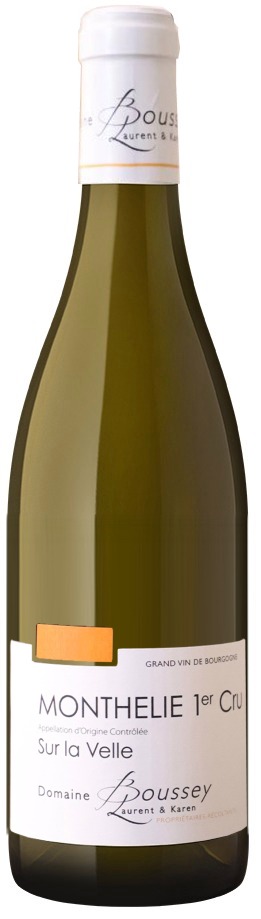
Boussey Monthelie Blanc Premier Cru Sur La Velle is made from 100 percent Chardonnay.
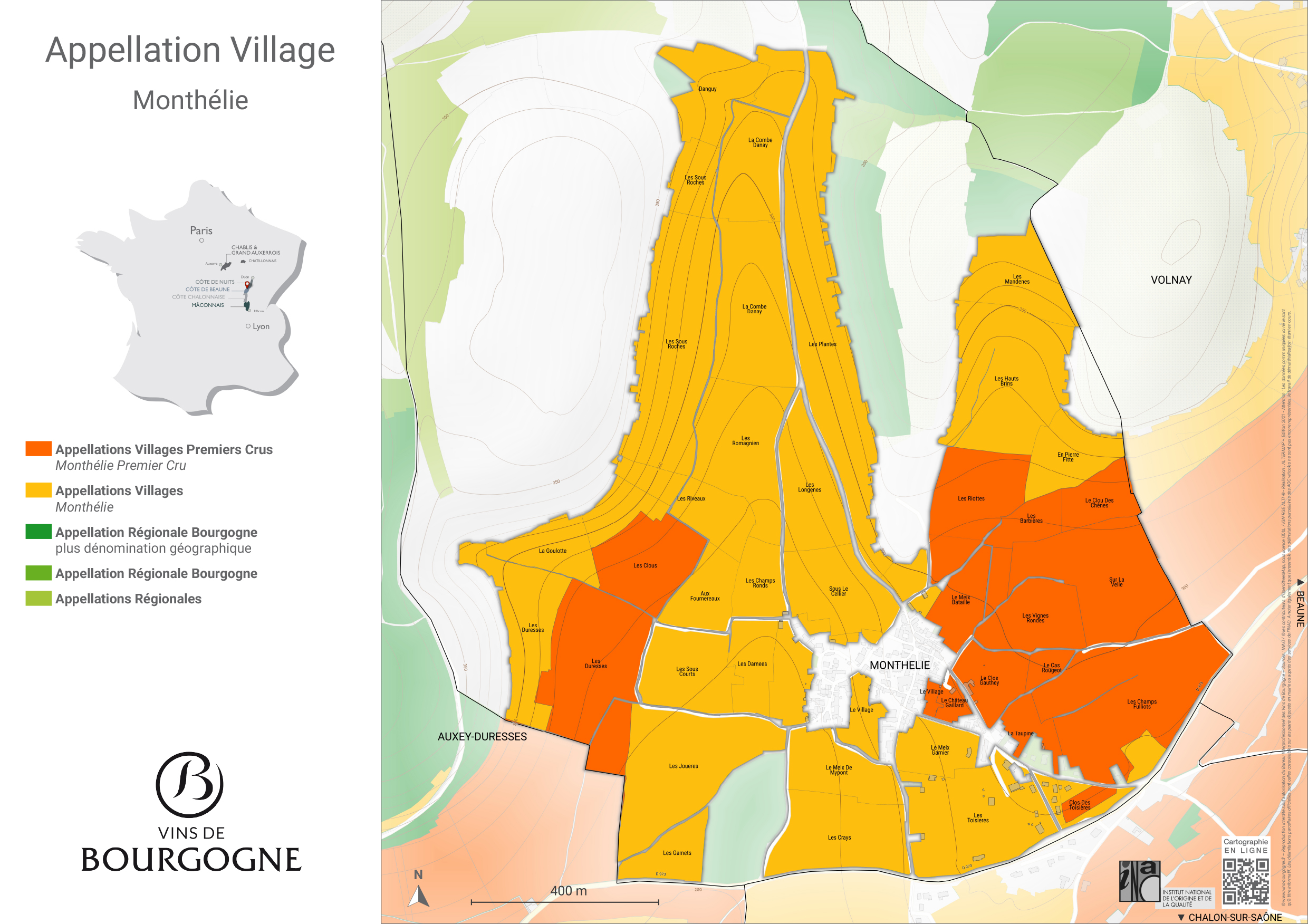
The name Monthelie comes from Mont Lyoei, mountain of Bacchus. The "Sur la Velle" plot is located on the eastern edge of Monthélie. It borders the Volnay Clos des Chênes Premier Cru to the east. The vineyards here lie on broadly southeast facing slopes with just enough gradient to achieve good drainage.
The Monthelie Blanc Premier Cru Sur La Velle has a beautiful pale yellow color with green reflections.
It is complex and rich with delicious aromas of white flowers, fresh almonds, lemon and minerality.
The finish is long with a very good balance between the excellent ripeness and the perfect amount of acidity.
We recommend this wine with white meat, fish and seafood.
Domaine de Boussey has been bequeathed from father to son for 5 generations. It is located in the heart of the well-known region of Burgundy, in the small village of Monthelie, near Meursault, Pommard and Beaune.
Laurent and Karen Boussey run the family estate today and have been cultivating their own vines since 2003. Laurent, Denis and Claudette's parents retired and Laurent took over the whole estate to perpetuate the family's winegrowing know-how of over 60 years. The vineyard now totals 15 hectares of vines spread over 24 different appellations.

Leindl Gruner Veltliner Seeberg Kamptal is made form 100 percent Gruner Veltiner. Medium yellow green. Fine yellow apple fruit, delicate hint of quince and honey, candied orange zest, highly attractive bouquet. Juicy, good complexity, extract core sweet, silky texture, fine acidity bow, fine and salty minerality, great length, secure aging potential, a very finesse Veltliner-style.
Review:
“Inviting nose, with layers of quince and elegant, aromatic herb leading through to a richly textured palate of opulent fruit and a fine acidity.”
- Decanter World Wine Awards 2023, 96 pts

Boroli Cerequio is made from 100 percent Nebbiolo.
The Boroli family is a family of entrepreneurs, with roots in Piedmont dating back to 1831. The family started their winemaking business in1997, when Silvano and Elena Boroli felt an ardent desire to step away from the pressures of their publishing business and reconnect to nature. Silvano and Elena grew the company until their son, Achille, stepped in to run the wine-growing and production business in 2012.
With the 2012 grape harvest Achille decided to radically change the methods used in vineyards and wineries, aiming for the highest quality in Barolo and its crus. He cut production levels, updated the winemaking technology, and focused on low intervention methods to raise the quality of the Boroli wines be on par with the finest Barolo wines.
About the Vineyard
The Cerequio cru lies just across the valley from the Boroli winery in the commune of La Morra and is considered one of the most prestigious sites in the Barolo DOCG zone. It is known to produce Nebbiolo wine of enormous elegance and finesse.
Wine Production
Cerequio is distinguished by a careful selection of grapes, precise destemming, and a long maceration with submerged cap.
Tasting Notes
A clear bright ruby color with very light garnet red reflections; intense and persistent aroma of red fruit with notes of plum and cherry. A pleasant aroma of wood is noticeable after the fruity aroma, anticipating the full taste of a great wine suitable for long lasting life. A succulent, rich, full-bodied and pleasant taste emerges after the woody one, with the presence of slightly ripe red fruit.
Food Pairing
Thanks to its viscosity and body, Barolo is the ideal wine to pair with elaborate dishes and dishes like truffle dishes, meat dishes, pasta with porcini mushrooms, game, and aged cheeses. Cerequio is also perfect with dry pastries or chocolate.
Review:
Elegant bright ruby red. Fragrant and inviting nose of strawberries with whipped cream, icing sugar, elderflower and roses. Flattering palate with clear fruit and appealing acidity, unfolds into a complex style, punchy on the palate with a clear, slightly salty finish.
-Falstaff 95 Points

Patricia Raquin Santenay 1er Cru Beaurepaire is made from 100 percent Chardonnay.
The animals shown on the label are dogs. The breed is called Borzoi, also called "Russian Wolfhound", which means "fast" in Russian. Patricia and Alain are proud owners of 2 Borzois and they designed this label so that the dogs will be guardian of the vaulted ageing cellar inside their house.
The Santenay Santenay is coming from the Premier Cru called Beaurepaire.
The wine is showing a great pale yellow color with gold highlights. The nose is very delicate displaying aromas of white blossoms with just a hint of oak. In the mouth, the wine is very soft with a great deal of minerality, superb length and a tangy finish.

Boussey Monthelie Blanc Premier Cru Sur La Velle is made from 100 percent Chardonnay.
The name Monthelie comes from Mont Lyoei, mountain of Bacchus. The "Sur la Velle" plot is located on the eastern edge of Monthélie. It borders the Volnay Clos des Chênes Premier Cru to the east. The vineyards here lie on broadly southeast facing slopes with just enough gradient to achieve good drainage.
The Monthelie Blanc Premier Cru Sur La Velle has a beautiful pale yellow color with green reflections.
It is complex and rich with delicious aromas of white flowers, fresh almonds, lemon and minerality.
The finish is long with a very good balance between the excellent ripeness and the perfect amount of acidity.
We recommend this wine with white meat, fish and seafood.

Boussey Monthelie Rouge Premier Cru Sur La Velle is made from 100 percent Pinot Noir.
The grapes for this wine are coming from the parcel located in Monthelie, on the plateau right next to Volnay. They usually produce balanced wines, with a lot of freshness and elegance.
The wine displays aromas of red fruits, with floral notes (violet) and spice. After cellaring for a couple of years, the wine will develop some secondary aromas with truffle and forest flavors.
Delicious with game terrine, sirloin steaks and strong cheese.

Boussey Monthelie Blanc is made from 100 percent Chardonnay.
The name Monthelie comes from Mont Lyoei, mountain of Bacchus.
The Boussey Monthelie Blanc has a nice pale yellow color with green reflections. Aromas of white flowers, fresh almonds, lemon and minerality. The finish is long with a very good balance between the acidity and the ripeness.
Goes well with poultry, fish and crab cakes.
Boussey Monthelie Blanc is made from 100 percent Chardonnay.
The name Monthelie comes from Mont Lyoei, mountain of Bacchus.
The Boussey Monthelie Blanc has a nice pale yellow color with green reflections. Aromas of white flowers, fresh almonds, lemon and minerality. The finish is long with a very good balance between the acidity and the ripeness.
Goes well with poultry, fish and crab cakes.

Boussey Monthelie Rouge Les Hauts Brins is made from 100 percent Pinot Noir.
The vineyard for this wine is located in the North-Esat corner of the appellation (not too far away from Volnay) and it has a perfect South sun exposure.
Boussey Monthelie Rouge shows a beautiful light garnet color.
It displays classic aromas for the appellation with dark fruit and peony.
Excellent with beef and grilled vegatables.
Boussey Monthelie Rouge Les Hauts Brins is made from 100 percent Pinot Noir.
The vineyard for this wine is located in the North-Esat corner of the appellation (not too far away from Volnay) and it has a perfect South sun exposure.
Boussey Monthelie Rouge shows a beautiful light garnet color.
It displays classic aromas for the appellation with dark fruit and peony.
Excellent with beef and grilled vegatables.

G.D. Vajra Bricco Delle Viole Barolo is made from 100 percent Nebbiolo.
The Barolo Bricco delle Viole shows the signature verticality of its vineyard. The wine is beautifully layered and - while restrained as it’s always the case in the youth of Bricco delle Viole - it also shows a complexity of layers with purple flowers, sweet spices and mineral tones. The palate is noble, with a refined acid spine and profound tannins that promise a long aging potential.
Among the historical vineyards of Barolo, Bricco delle Viole is the highest and the closest to the Alps. It rises from 400 to 480 meters above sea level, on the Western ridge of the village. Its name, “Hill of Violets”, originates from the flowers that blossom early here due to the perfect south exposure. Up above the fogs, Bricco delle Viole enjoys the earliest sunrise and the last sunset every day. Thanks to its vines dating back to 1949 and -now- 1931, a dramatic diuturnal temperature range and this pure light, Bricco delle Viole generates a sophisticated and profound Barolo DOCG of bright aromatics, chiseled tannins and subtle minerality. 2018 is a vintage that shows many nuances of Bricco delle Viole: beyond the signature verticality of this site, the wine offers high tones laced with mineral nuances and plenty of energy and youth.
Review:
The 2018 Barolo Bricco delle Viole is not super intense, but it is balanced in its own way. The wine is subdued but complete with softly yielding tannins to support an elegantly streamlined mouthfeel. Bricco delle Viole is a high and cool growing site in Barolo at 400 to 480 meters in elevation with characteristic Sant'Agata marl soils with fossils. The wine represents a selection of fruit from over seven hectares. With fermentation in steel tank and aging in large Slavonian oak, you are invited to a silky, lifted and beautifully delicate experience with an accessible personality.
-Wine Advocate 95 Points
An elegant version, this red features rose, black currant, cherry, mineral and a hint of eucalyptus aromas and flavors. Linear in profile, this is solidly built on a graceful frame, with finely woven tannins and vibrant acidity.
- Wine Spectator 95 Points

Brize Les Gres Anjou Blanc is made from 100% Chenin Blanc.
This is a dry wine. Easy to drink, fresh with good acidity. The aromas are persistent with apricot and peach.
The wine is made with grapes grown in a parcel called 'Les Grès'.
Pair with cheese and seafood.