
" We don't sell the wine without touching the vine "
| BUY MORE! SAVE MORE! | ||||||||||||||||||||
|
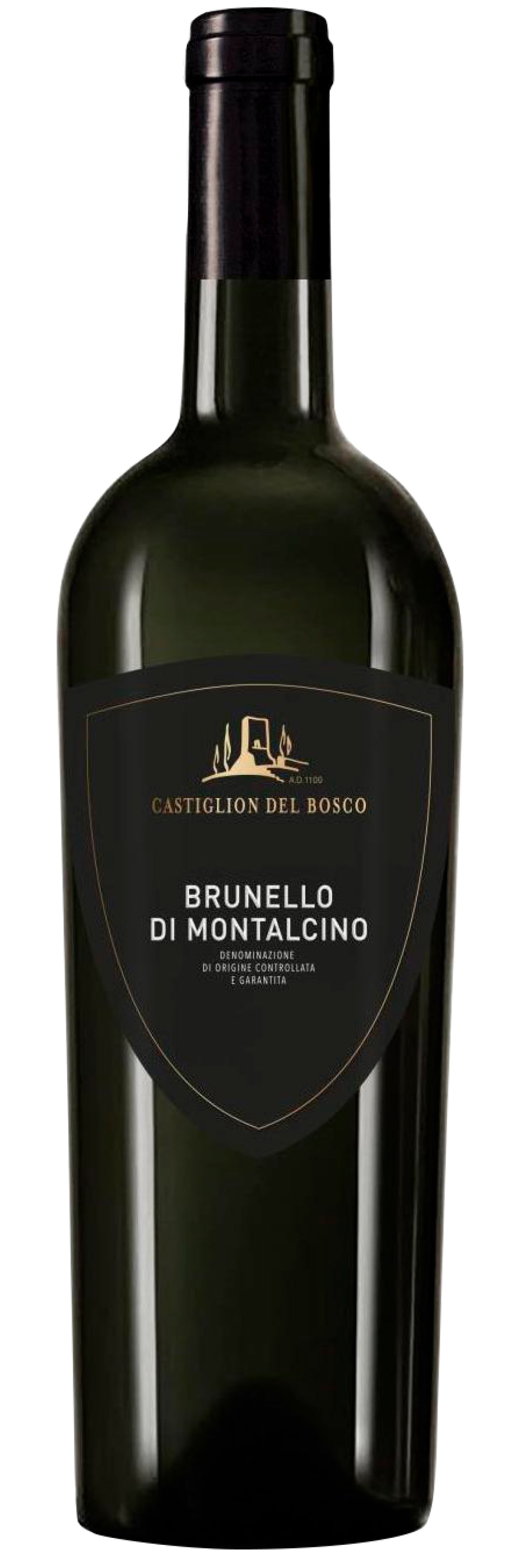
| Country: | Italy |
| Regions: | Tuscany Brunello di Montalcino |
| Winery: | Castiglion del Bosco |
| Grape Type: | Sangiovese |
| Organic: | Yes |
| Vintage: | 2017 |
| Bottle Size: | 750 ml |
The 2017 Brunello has certainly enjoyed the benefits of a careful selection in the parcels (including the Millecento vineyard). The wine has a wide nose. It maintains crisp fruit and floral notes. In the mouth it is elegant, complete and supported by an excellent acidity.
Review:
Aromas of ripe berries and plums with some flowers and nutmeg follow through to a full body with round tannins and a juicy finish. Slightly chewy, but friendly and succulent. Excellent 2017, despite the dry growing season.
-James Suckling 94 Points
Tuscany is a region whose countryside never ceases to amaze for its captivating beauty. Castiglion del Bosco also knows how to charm. Nature’s voice is heard loud and clear here, while man’s hand has always respected its verdant spaces and fine balance. The name itself revelas its character: the bosco,(wood), surrounding the Castiglion (walled castle), is the domain of deer, boars and pheasants. And of Sangiovese.
Castiglion del Bosco entered its new chapter in 2003, when it was transformed to its current glory by Massimo and Chiara Ferragamo. Renewal of both the architecture and the winemaking processes commenced immediately and today the wines of Castiglion del Bosco receive worldwide recognition for their excellence. In 2022 Castiglion del Bosco begins a new chapter in its history with its transfer to an international family office, who ensures the continuous development of the entire estate with a spirit of continuity.
The history of Castiglion del Bosco dates back to 1100 A.D., amidst armed struggles, assaults and the inprint of great Sienese families, who settled and brought here the artistic genius of Pietro Lorenzetti, whose precious Annunciazione dei Santi (1345 A.D.) still adorns the hamlets tiny church. Farming was always a mainstay, as seen in the stables, olive groves, farmed land, and vineyards. In more recent history, Castiglion del Bosco became a founding member of the Brunello di Montalcino Consortium in 1967.

Very complex nose. Elegance and finesse. A surprising aromatic complexity. A bouquet of aromas dominated by honey, brioche and notes of dried fruits, hazelnuts and sweets. Perfectly matured.
Juice exclusively 100% Grand Cru from Chouilly, chalky soil and subsoil.
It matches magnificently with foie gras!

Leindl Gruner Veltliner Seeberg Kamptal is made form 100 percent Gruner Veltiner. Medium yellow green. Fine yellow apple fruit, delicate hint of quince and honey, candied orange zest, highly attractive bouquet. Juicy, good complexity, extract core sweet, silky texture, fine acidity bow, fine and salty minerality, great length, secure aging potential, a very finesse Veltliner-style.
Review:
“Inviting nose, with layers of quince and elegant, aromatic herb leading through to a richly textured palate of opulent fruit and a fine acidity.”
- Decanter World Wine Awards 2023, 96 pts

Boroli Cerequio is made from 100 percent Nebbiolo.
The Boroli family is a family of entrepreneurs, with roots in Piedmont dating back to 1831. The family started their winemaking business in1997, when Silvano and Elena Boroli felt an ardent desire to step away from the pressures of their publishing business and reconnect to nature. Silvano and Elena grew the company until their son, Achille, stepped in to run the wine-growing and production business in 2012.
With the 2012 grape harvest Achille decided to radically change the methods used in vineyards and wineries, aiming for the highest quality in Barolo and its crus. He cut production levels, updated the winemaking technology, and focused on low intervention methods to raise the quality of the Boroli wines be on par with the finest Barolo wines.
About the Vineyard
The Cerequio cru lies just across the valley from the Boroli winery in the commune of La Morra and is considered one of the most prestigious sites in the Barolo DOCG zone. It is known to produce Nebbiolo wine of enormous elegance and finesse.
Wine Production
Cerequio is distinguished by a careful selection of grapes, precise destemming, and a long maceration with submerged cap.
Tasting Notes
A clear bright ruby color with very light garnet red reflections; intense and persistent aroma of red fruit with notes of plum and cherry. A pleasant aroma of wood is noticeable after the fruity aroma, anticipating the full taste of a great wine suitable for long lasting life. A succulent, rich, full-bodied and pleasant taste emerges after the woody one, with the presence of slightly ripe red fruit.
Food Pairing
Thanks to its viscosity and body, Barolo is the ideal wine to pair with elaborate dishes and dishes like truffle dishes, meat dishes, pasta with porcini mushrooms, game, and aged cheeses. Cerequio is also perfect with dry pastries or chocolate.
Review:
Elegant bright ruby red. Fragrant and inviting nose of strawberries with whipped cream, icing sugar, elderflower and roses. Flattering palate with clear fruit and appealing acidity, unfolds into a complex style, punchy on the palate with a clear, slightly salty finish.
-Falstaff 95 Points

Boussey Monthelie Blanc Premier Cru Sur La Velle is made from 100 percent Chardonnay.
The name Monthelie comes from Mont Lyoei, mountain of Bacchus. The "Sur la Velle" plot is located on the eastern edge of Monthélie. It borders the Volnay Clos des Chênes Premier Cru to the east. The vineyards here lie on broadly southeast facing slopes with just enough gradient to achieve good drainage.
The Monthelie Blanc Premier Cru Sur La Velle has a beautiful pale yellow color with green reflections.
It is complex and rich with delicious aromas of white flowers, fresh almonds, lemon and minerality.
The finish is long with a very good balance between the excellent ripeness and the perfect amount of acidity.
We recommend this wine with white meat, fish and seafood.

Collemattoni Brunello di Montalcino Riserva is made from 100 percent Sangiovese.
Intense ruby red with brilliant burgundy reflects in color. Reminiscent of wild black fruits, vanilla and spices on the nose and dry, warm, slightly austere but velvety in the palate.
This wine comes from the oldest vineyard of Collemattoni: Fontelontano. Less than half hectare. It's one of the few Single Vineyard Brunello di Montalcino riserva.
Coming from a parcel with 15-18 year old vines planted in sandy clay and marl soils.
Harvest is 100% destemmed with a soft pressing, fermentation in stainless steel tanks at controlled temperature of 28-30°C, pumping over for the first week of maceration following by skin-contact maceration for 20-25 days with rack and return technique (delestage).
Malolactic fermentation completed. The delestage and the pumping over are then spaced out along the process.
Wine is slightly filtered before bottling.
Review:
This is intense with aromas of dried cherries, sweet licorice, cloves, crushed walnuts and hints of chocolate and undergrowth. Full-bodied, deep and structured with taut, tightly packed tannins. Long and persistent. Drink or hold.
-James Suckling 94 Points

Roland Champion Champagne Brut Rose Grand Cru NV is the blend of 33% Chardonnay, 33% Pinot Meunier and 33% Pinot Noir.
The Champagne rose shows an orange salmon color coming from the red wine base. The pinot meunier brings red fruit aromas of strawberry and raspberry with hints of spices. The palate is juicy and harmonious with good depth and minerality. A delicate balance between Chardonnay, Pinot Meunier and Pinot Noir.
It is a blend of 93% White juice (made from 33% Chardonnay, 33% Pinot Meunier and 33% Pinot Noir) and 7% Pinot Noir red wine. The grapes used to produce the Coteaux Champenois red wine are coming from their vineyards near the Village of Verneuil.

Collemattoni Brunello di Montalcino is made from 100 percent Sangiovese.
Color: brilliant red with burgundy reflects; Bouquet: penetrating with memories of wild black fruits, black cherry and noble wood; Taste: warm, dry and persistent
Coming from a parcel with 10-15 year old vines planted in sandy clay and marl soils.
Harvest is 100% destemmed with a soft pressing, fermentation in stainless steel tanks at controlled temperature of 28-30°C, pumping over for the first week of maceration followed by skin-contact maceration for 20-25 days with rack and return technique (delestage).
Malolactic fermentation completed.
Wine is slightly filtered before bottling.
Review:
"Black cherry and plum with a touch of smoke , vanilla. And toast on the nose. Powdery tannins coat the mouth and has a long persistence. Powerful and fresh while a little warming on the finish."
- Decanter Wolrd Wine Awards (June 2023), 97 pts
Collemattoni Brunello di Montalcino is made from 100 percent Sangiovese.
Color: brilliant red with burgundy reflects; Bouquet: penetrating with memories of wild black fruits, black cherry and noble wood; Taste: warm, dry and persistent
Coming from a parcel with 10-15 year old vines planted in sandy clay and marl soils.
Harvest is 100% destemmed with a soft pressing, fermentation in stainless steel tanks at controlled temperature of 28-30°C, pumping over for the first week of maceration followed by skin-contact maceration for 20-25 days with rack and return technique (delestage).
Malolactic fermentation completed.
Wine is slightly filtered before bottling.
Collemattoni Brunello di Montalcino Riserva is made from 100 percent Sangiovese.
Intense ruby red with brilliant burgundy reflects in color. Reminiscent of wild black fruits, vanilla and spices on the nose and dry, warm, slightly austere but velvety in the palate.
This wine comes from the oldest vineyard of Collemattoni: Fontelontano. Less than half hectare. It's one of the few Single Vineyard Brunello di Montalcino riserva.
Coming from a parcel with 15-18 year old vines planted in sandy clay and marl soils.
Harvest is 100% destemmed with a soft pressing, fermentation in stainless steel tanks at controlled temperature of 28-30°C, pumping over for the first week of maceration following by skin-contact maceration for 20-25 days with rack and return technique (delestage).
Malolactic fermentation completed. The delestage and the pumping over are then spaced out along the process.
Wine is slightly filtered before bottling.
Review:
This is intense with aromas of dried cherries, sweet licorice, cloves, crushed walnuts and hints of chocolate and undergrowth. Full-bodied, deep and structured with taut, tightly packed tannins. Long and persistent. Drink or hold.
-James Suckling 94 Points

This is a 6 pack with 2 bottles each from vintages from 2013, 2015, and 2016.
***Tenimenti Angelini Val di Suga Vigna Spuntali Brunello di Montalcino 2016:
The 2016 Vigna Spuntali Brunello di Montalcino is the most brooding of the lineup from Val di Suga and is sourced from the southwest of the region on sandy soils. There are aromatics of black raspberry, licorice, menthol, sage, cinnamon, and iron-rich earth. Its Mediterranean influence is felt on the palate with ripe black cherry, dried herbs, and sun-baked earth. This is the fullest bodied and most savory of the Val di Suga lineup, with more roundness and grip. Its structure will benefit from cellaring for several years and will be great drinking over the next 20 years or more. 2026-2040.
-Jeb Dunnuck 96 Points
***Tenimenti Angelini Val di Suga Vigna Spuntali Brunello di Montalcino 2015:
The 2015 Vigna Spuntali Brunello di Montalcino is more introverted on first opening, with notes of black plum, licorice, dried Mediterranean herb, and sun-baked earth. On the palate, it offers a tart dried fruit character, with a building tannin structure that finishes with tomato leaf, and bitter herbs. The most rustic and burly of the wines in the lineup of the 2015 Val di Suga vintage, it will benefit from allowing some time in cellar to see how this matures and its tarriness develops. Drink 2026-2036
-Jeb Dunnuck 94 Points
***Tenimenti Angelini Val di Suga Vigna Spuntali Brunello di Montalcino 2013:
Plenty of spices and fresh herbs on the nose, such as dried rosemary and nutmeg, to match the underlying dried redcurrants and cranberries. Full-bodied with plenty of concentration, but still shows a very sturdy, tannin backbone and punchy acidity, to drive this through to a long finish. Drink in 2021.
-James Suckling 94 Points

Tenute Silvio Nardi Brunello di Montalcino is made from 100 percent Sangiovese.
Quite intense ruby red color with garnet highlights. Intense and complex aromas at the nose, rich in ripe fruits, spices and toasted notes. Smooth and bodied at the palate, with great persistence, elegant and wide concentration. Tannins are dense and velvety.
Reviews:
Blackberry, black-truffle and black-cherry aromas follow through to a medium body with juicy fruit and a long, flavorful finish. Polished, pretty tannins here. Nicely crafted. Drink after 2026.
-James Suckling 94 Points
In the bottle with the burgundy-colored label, the Tenute Silvio Nardi 2019 Brunello di Montalcino is a layered and generous wine with black fruit, cherry, spice and a hint of Provençal mixed herbs on black olive. There are further hints of underbrush, crushed slate, petrichor from schistic soils, and toasted almond that adds some sweetness from French oak. The tannins are velvety and soft, but this wine is regularly balanced throughout. It's well made in an ample production of 150,000 bottles.
- Robert Parker's Wine Advocate 94 Points
A spicy version, whose black pepper and Szechuan peppercorn notes highlight the core cherry and strawberry flavors. Underbrush and iron accents also enter the mix, while this stays balanced and long as the tannins leave their grip on the finish.
-Wine Spectator 94 Points

TYPE: DOCG
GRAPE VARIETY: 100% Sangiovese harvested from the oldest vineyards.
VINIFICATION: Alcoholic fermentation with maceration of the skins (25-30 days) at a controlled temperature and spontaneous malolactic fermentation, both in truncated cone-shaped Slavonian oak vats.
REFINEMENT: In Slavonian oak barrels from 10 to 32 hl for approx. 34-38 months; followed by bottle refinement of at least 6 months.
ON SALE BY:January of the 5th year after the harvest.
NOTE:
Color: intense ruby with garnet reflections.
Perfume: ethereal, of red fruit and vanilla, persistent.
Taste: harmonious, with excellent tannins and structure, very persistent.
Food pairings: roasted red meats, game, mature cheeses.
Review:
A jeweled ruby color, the 2019 Brunello Di Montalcino is forward with licorice spice on the nose and opens to notes of fresh black cherries, pine, and toasted rosemary. Medium to full-bodied, it offers wonderful energy from the start, with balanced, angular structure, ripe tannins, crunchy fresh acidity, and a long finish. Avery well styled Brunello, it will be in its prime in the coming 10-15 years.
-Jeb Dunnuck 95 Points
Aromas of redcurrants and red flowers, followed by a touch of pie crust and sandalwood. Full-bodied with steely and sturdy tannins and vivid acidity. Dried-herb character at the end. Masculine and structured. Hold until 2027.
-James Suckling 95 Points

This is a single vineyard, from the parcel "El Nogal" located in the town of Mambrilla de Castrejon grown at 850 meters above sea level. (2750 feet).
A hillside of tinto fino vines red in the village of Mambrilla, a short distance from the winery. Uninterrupted views of the Duero, the wind stirring the airy branches of the large walnut tree that guards the vineyard. A place with a special gift. Its sandy, stony soils, a feeling of harmony and a special microclimate: everything seems to enhance the talent of its surroundings.
We have been vinifying the evocative grapes of this plot for the past few years to produce an endlessly charming wine. Overwhelming, powerful and exquisite. With a vitalising force.
Review:

Cabrieres Chateauneuf du Pape Rouge Les Silex is made from 80% Grenache and 20% Syrah .
The vineyard is situated on the high tablelands, which are characteristic of the northern area of Châteauneuf-du-Pape. The terrain consists mainly of alpine diluvium and chalky Miocenian soil, with large flint pebbles covering the surface. These pebbles conserve the heat of the day during the night, thus avoiding too much evaporation.
This 2020 has opened up and is drinking great right now. A blend of 80% Grenache and 20% Syrah. Elegant cherry red color, with expressive notes of red fruits (strawberry and raspberry). Mellow tannins, well-balanced on the palate. I feel I need to point out the freshness, it is bright and lively on the palate, something we don’t see a lot of in this region. This also makes it extremely food friendly as it can hold up to fatty proteins.
Very good with white meat, red meat, charcuterie and cheese.



