" We don't sell the wine without touching the vine "
| Country: | Spain |
| Region: | Rioja |
| Winery: | Burgo Viejo |
| Grape Type: | Tempranillo |
| Vintage: | 2020 |
| Bottle Size: | 750 ml |

SALE!
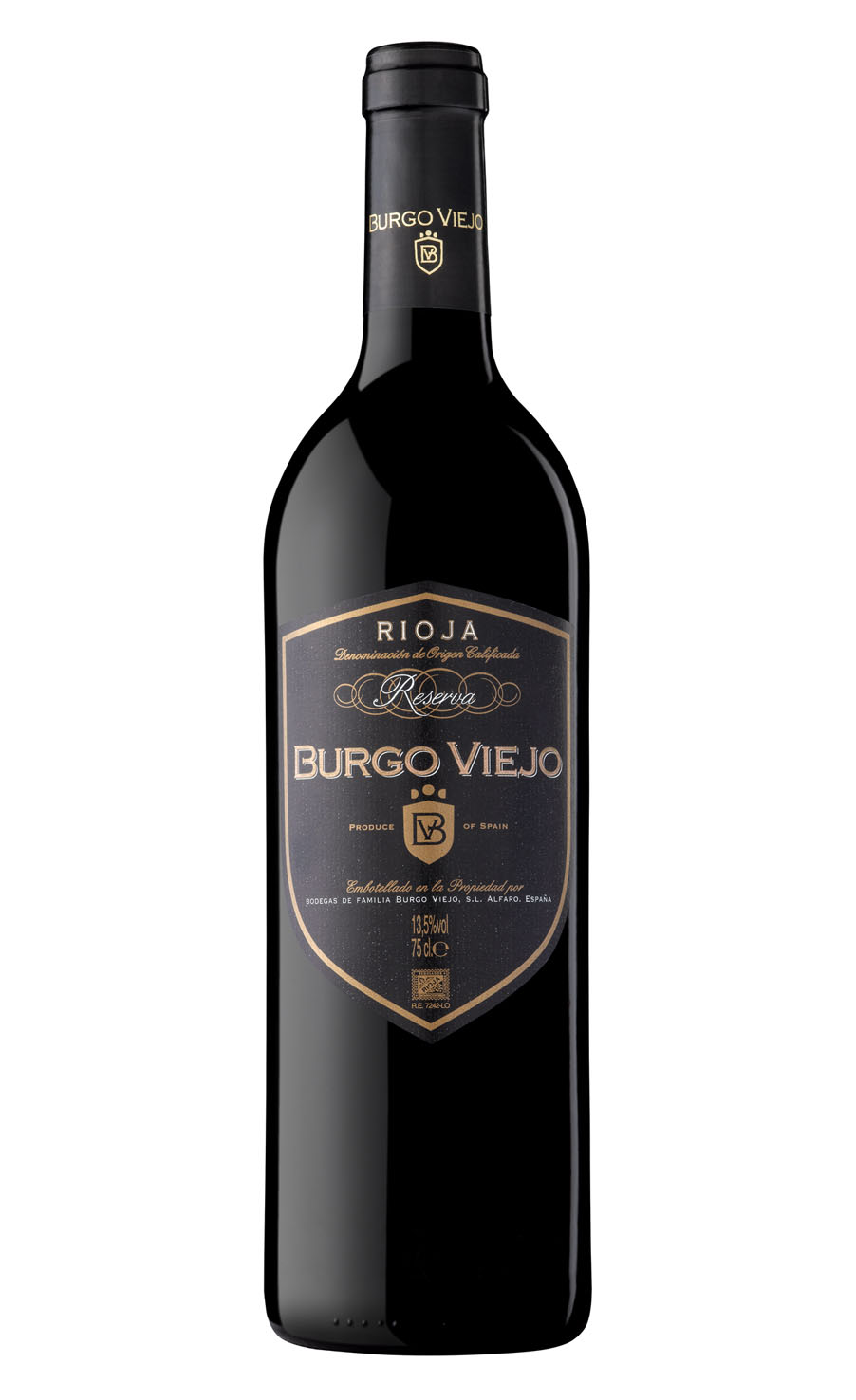
Burgo Viejo Rioja Reserva is made from 85% Tempranillo, 10% Garnacha & 5% Carignan.
Burgo Viejo Rioja Reserva presents with red ruby color; black pepper and vanilla flavors and some mature black fruit taste too. Well-balanced, well-structured and elegant in mouth displaying some splendid taste of fruit and bouquet too.
Burgo Viejo Reserva Wine vinification has occurred blending different grape varieties to produce an aged wine that will surely keep maturity and fullness from the vineyard until the very moment of uncorking.
VINIFICATION: Alcoholic fermentation in stainless steel vats at controlled temperature; aged in American and French oak barrels -50% each- for 18 months.
Enjoy it with red meat and game.
Review:
-Wine Enthusiast 92 Points
-James Suckling 91 Points
-Josh Raynolds (Vinous) 91 Points
Burgo Viejo Rioja Reserva is made from 85% Tempranillo, 10% Garnacha & 5% Carignan.
Burgo Viejo Rioja Reserva presents with red ruby color; black pepper and vanilla flavors and some mature black fruit taste too. Well-balanced, well-structured and elegant in mouth displaying some splendid taste of fruit and bouquet too.
Burgo Viejo Reserva Wine vinification has occurred blending different grape varieties to produce an aged wine that will surely keep maturity and fullness from the vineyard until the very moment of uncorking.
VINIFICATION: Alcoholic fermentation in stainless steel vats at controlled temperature; aged in American and French oak barrels -50% each- for 18 months.
Enjoy it with red meat and game.
Review:
"Elegant berries and spiced cherries with a hint of oranges and undergrowth on the nose. Juicy and evenly packed with a fluid, medium-bodied palate and soft tannins. Drink now - Zekun SHUAI (Senior Editor)"
- James Suckling (May 4th 2023), 91 pts
-Joaquín Hidalgo (Vinous) 90 Points
Burgo Viejo Rioja Reserva is made from 85% Tempranillo, 10% Garnacha and 5% Carignan.
Ruby red in the glass, with black pepper and vanilla over ripe, mature black fruit. Well-balanced, well-structured and elegant on the palate, with splendid fruit and a lifted bouquet.
Vinification: alcoholic fermentation in temperature-controlled stainless steel; aged 18 months in American and French oak barrels (50% of each).
Enjoy it with red meat and game.
Review:
-James Suckling 91 Points

Burgo Viejo Rioja Gran Reserva is made from 100 percent Tempranillo. 30 year old vines.
Burgo Viejo Gran Reserva shows a deep red ruby color and offers powerful aromas of blackberry jam, spice, leather, chocolate with toasty nuances. Smooth yet full-bodied with firm tannins and a long finish.
Review:
-Antonio Galloni's Vinous 92 Points
-Wine & Spirits 91 Points
-Antonio Galloni's Vinous 91 Points
Burgo Viejo Rioja Gran Reserva is made from 100 percent Tempranillo. 30 year old vines.
Burgo Viejo Gran Reserva shows a deep red ruby color and offers powerful aromas of blackberry jam, spice, leather, chocolate with toasty nuances. Smooth yet full-bodied with firm tannins and a long finish.

Burgo Viejo Rioja Blanco Organic is made from 60% Viura and 40% Trempranillo Blanco
No Oak. Aged 3 months on the lees with frequent batonnage
Pale yellow color with green tones. Fresh and intense flavors of white fruits, peach, apple and some citrus notes.
Full-bodied mouth with nice balance of volume and length.
Vineyards are located in Alfaro.
Manual harvest in 8 kilograms baskets.
100% destemmed.
Light pressing of the grapes.
Fermentation at controlled temperature in stainless steel tanks.
No Malolactic fermentation.
Aged 3 months on the lees with frequent batonnage. (stirring of the lees)
Pairs with seafood, pasta and rice dishes, smooth cheeses.
Review:
-James Suckling 90 Points
Burgo Viejo Rioja Reserva is made from 85% Tempranillo, 10% Garnacha & 5% Carignan.
Burgo Viejo Rioja Reserva presents with red ruby color; black pepper and vanilla flavors and some mature black fruit taste too. Well-balanced, well-structured and elegant in mouth displaying some splendid taste of fruit and bouquet too.
Burgo Viejo Reserva Wine vinification has occurred blending different grape varieties to produce an aged wine that will surely keep maturity and fullness from the vineyard until the very moment of uncorking.
VINIFICATION: Alcoholic fermentation in stainless steel vats at controlled temperature; aged in American and French oak barrels -50% each- for 18 months.
Enjoy it with red meat and game.
Review:
-Decanter World Wine Award 2024 95 Points
-James Suckling 91 Points
The Burgo Viejo Estate
Six families of farmers founded Bodegas Burgo Viejo in 1987 (with the next generation coming onboard, it is now sixteen families working together). Burgo Viejo´s main asset has always been the exquisite winemaking process of grapes collected from its own vineyards throughout the years, back to the times when they were just a wine cellar selling in bulk (they started as a cooperative in the 1950’s). Burgo Viejo wines are exported to Japan, China, Denmark, UK, Belgium and the U.S. (export markets represent 5-10% of the production). Young Gorka Etxebarria is the leading winemaker and has been working with Burgo Viejo since December 2003.
The Burgo Viejo Vineyards
The vineyards measure 200 hectares – 494 acres – (90% tinto, 5% rosado, 5% blanco) and spread throughout the municipality of Alfaro, La Rioja, Spain at the foothills of Yerga Mountain, on the banks of the fertile Ebro Valley. This area offers a huge diversity of soils and microclimates where the grape varietals, Tempranillo, Mazuelo, Garnacha, Carignan, Graciano and Viura grow to become Burgo Viejo wines.
Most of the vines are 30 years old. Some Garnacha are over 90 years old and some young organic Graciano have been planted. The types of oak used are 90% American and 10% French.

Lima Adega Vinho Verde is made from 80% Loureiro and 20% Trajadura
All Vinho Verde (or green wines – meaning young, not green in flavor) are the best in the first 18 months. The wine is fresh, crisp, lively with a touch of spritz. It has some very interesting aromas of stone fruit and lime.
Portuguese Vinho Verde with a screwcap!
Loureiro: Loureiro is a white vine variety grown in the northern region of Portugal that produces an aromatic bay leaf scent. The pale-skinned variety is used to make the Vinho Verde white wine that of the Minho region.Traditionally, Vinho Verde wines include Trajadura and Pederna, but varietal Loureiro wines are becoming increasingly popular. The Loureiro variety is also grown in smaller batches in Galicia, which sits to the north of border of Spain. Loureiro variety grapes are high in acid and is sometimes called "Branco", "Marques", or "Redondo". In this region, the variety is used to create the Rias Baixas white wine, and is typically blended with the variety, Albarino. The wine works perfectly with fish, grilled good, sushi, shellfish, salads or fruits. The wine also pairs nicely with clams and white wine or fresh spring rolls. The variety is high in acidity and is typically bottled with a shot of carbon dioxide to maintain the quality of the wine and to give it a nice, bubbly texture. The taste of the wine includes aromas of citrus, tropical fruits and a mineral tone, and also has hints of floral aromas.
Trajadura: Trajadura is a white grape varietal also known as Treixadura. Trajadura originates from Portugal, particularly the Northern region. Trajadura is most famously used in Portugal's Vinho Verde wine, but Trajadura is also utilized in blends to add fullness and brisk citrus flavor. The low acid content in Trajadura, combined with a higher alcohol content make it an ideal and rare blending component in this particular climate region. When Trajadura is blended with Loureiro and Albarino it is the perfect balance for Vinho Verde. In Spain, Trajadura is called Treixadura and is most commonly found n Rias Baixas and Ribeiro. Spain also takes advantage of the blending characteristics while combining with Albarino, Abillo, Lado, Macabeo, Godello, and Torrontes. The Trajadura vines are recognized by average sized bunches that are dense with moderately sized berries. Trajadura ripens early, so to keep the acidity, it must be harvested rather early. The flavor profile for Trajadura will consist of apricot, peach, apple, lemon, and pear.
With low alcohol, it is best as an aperitif or with seafood. Definitely a summer drink.

Tres Ojos Garnacha Calatayud is made from 100 percent 85% Old Vine Garnacha (40-50 year old vines) and 15% Tempranillo.
The wine has a brick red color with a bouquet of red raspberries, spice and white pepper. The palate is incredibly concentrated and rich. The modern styles of Garnacha in Spain are continuously being perceived worldwide as wines of extraordinarily good quality. This wine is fruity, juicy and shows a great depth, ripe tannins, length but yet with wonderful elegance and lightness.
The wine ferments for 7 days at 30ºC, followed by 14 days maceration on the skins. Aged 12 months in large stainless steel vats. Cold stabilized and lightly filtered before bottling
Enjoy with sausages, roasted meats, aged cheeses etc.

Hickinbotham Peake Cabernet Shiraz is made from 60 percent Cabernet and 40 percent Shiraz.
Named after the late Mr. Edward John Peake who established the first vineyard and orchard at Clarendon circa 1850. Blending Cabernet Sauvignon and Shiraz is a famous part of Australian winemaking history and whilst the individual components of this wine are mighty, the sum of The Peake’s parts is magnificent. The Cabernet shines aromatically with notes of blackberry pie and dark chocolate, while the Shiraz fills the mid-palate with black plum and toasty oak. Fine tannins and balanced acidity contribute to an incredibly long finish. The Peake continues to honor the legacy of this iconic Australian blend.
Review:
-Wine Advocate 96 Points

Antonio Camillo Ciliegiolo 2025 is made from Ciliegiolo. It comes from the Tuscan Maremma, near Capalbio on the southern coast of Tuscany, where Antonio Camillo has built his name as the great champion of Ciliegiolo — the cherry-scented native red of the Maremma. After years making the wines at Poggio Argentiera, he struck out on his own in 2006 to work roughly nine hectares of mostly old vines with a light, low-intervention hand.
This is his benchmark everyday Ciliegiolo: hand-harvested, fermented in steel and left on the skins to draw out color and perfume. Expect bright, juicy red and black cherry, a lift of violets and wild herbs, and soft, supple tannins that make it endlessly drinkable with a chill or a plate of pasta.