
" We don't sell the wine without touching the vine "
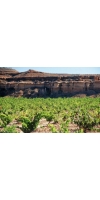
Calatayud is a wine region in Spain that is part of the Spanish Denominacion de Origen, or DO. The region is located about 90 kilometers from Zaragoza, and extends over 46 municipalities. The region has more than 5,600 hectares, and borders the Soria DO in the west, and the Cariñena Do in the east. Calatayud is located in the Reiver Ebro Valley and is overlapped by the Mesa, Piedra, Manubles, Jalon, Jiloca, and Ribota Rivers to name a few. The vineyards in the region can be found on the south facing slopes of the Sierra de la Virgen range between 500 and 800 meters above sea level. Calatayud became the Aragon’s second largest wine-producing region in Spain after Cariñena.
Calatayud has a continental climate with cold winters, and hot and dry summers. The annual temperature rarely exceeds 55.4° F. The region does experience frost about six months of the year.
The majority of the vines are planted in loose and stony soil that is low in nutrients with high lime content. The permeability of the soil is good which means that the roots are able to get the nutrients and water required to produce wine making grapes. Red grapes are predominant in the region and account for 83% of the vines planted.
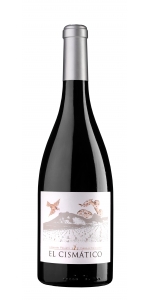
El Cismatico Garnacha is 100% Garnacha.
The wine is produced from 3 single vineyards: El Mimbreral, Piedra Blanca, Cerro Merino - situated between 850 to 900 meters high. These parcels share the same geological characteristics of pebble stones, red clay, marl and limestone which impart a precise and floral profile to the Garnacha grape that has achieved a balanced acidity and a low pH.
The grapes were harvested into 20 kg cases and fermented together in cement with gentle punching down only. Afterwards a long maceration occurred and malolactic fermentation took place on skins. After pressing the wine remained sur lie in 500 liter fine-grained French oak barrels for 12 months.
El Cismatico offers an intense ruby red in color. The nose is still very youthful, deep and complex with aromas changing every minute. Its starts out with notes of roasted meat, beets, wild red fruit, cloves, pepper. Little by little, as the wine opens the nose displays touches of crushed violets, pencil lead, black cherry and a light touch of mountain herbs. Fine, elegant and bold, the ripe fruit is exquisitely balanced by fresh acidity achieved from growing Garnacha at altitude. The tannin is firm but polished with an extremely long finish. Drinking 2022 and onwards for many years.

Es Lo Que Hay Garnacha is made from 95% Garnacha, 5% Moristel, Miguel de Arco and Provechón (Bobal). 75 to 100 year old vines.
“ES LO QUE HAY - it is what it is. A common Spanish expression, but one I like to reserve for the few old high altitude Garnacha vineyards that survive in Aragon . What you taste in the bottle is a true expression of what there is in the vineyard. It´s as simple as that.”
High altitude ancient vineyards (75-100 years) at 1,000 to 1,100 meters above sea level with Pizarra slate and quartzite soils. Completely dry grown and unirrigated, this is an inhospitable continental climate with extreme changes of temperature where mountain herbs, almonds, cherry trees and Garnacha form a breathtaking patchwork. Low annual rainfall of 200-300mm and the remarkable soils produce fine and elegant Garnacha which is punctuated by intense black fruit flavors with complex mineral, smoke and garrigue notes.
Review:
"The red 2019 Es Lo Que Hay is mostly old-vine Garnacha with 5% other grapes, mostly Moristel with a little Miguel de Arco and some Provechón (Bobal), from very stony old vineyards in the village of Villarroya de la Sierra. The grapes fermented together with 20% full clusters in concrete and were destemmed after a five-day cold soak with the natural yeasts; then the wine matured mostly in concrete with some leftovers in Flextank egg for 15 months. It's ripe without excess (14.26% real alcohol), balanced by low pH and good acidity and has a powerful Mediterranean profile, round and full-bodied, with hints of dry hay and straw and a touch of dark chocolate. The 2019s are evolving nicely and should have a positive development in bottle, and this is a good example. 8,270 bottles produced. It was bottled in December 2020. - Luis Gutiérrez"
- Robert Parker's Wine Advocate (November 2021), 93 pts
"The 2019 Garnacha Vinas Viejas is just about all Grenache (there are small amounts of Moristel, Miguel de Arco, and Bobal) from ancient vines that saw a touch of stems and aging in concrete tanks. This plump, medium to full-bodied, round, downright sexy beauty gives up lots of ripe red and black fruits as well as peppery spice, herbes de Provence, and sandalwood. It's balanced, has supple, incredibly polished tannins, no hard edges, and is just a beautiful Garnacha that has so much to love. It will keep for 5-7 years, if not longer."
- Jeb Dunnuck (August 2022), 93 pts

Tres Ojos Rosado Calatayud is fresh, crisp and juicy Rose made of 50% Garnacha and 50% Tempranillo displaying beautiful strawberry and raspberry fruits. Enjoy with salads, chicken or simply with a glass. Serve chilled.
Tres Ojos Rosado Calatayud is fresh, crisp and juicy Rose made of 50% Garnacha and 50% Tempranillo displaying beautiful strawberry and raspberry fruits.
Enjoy with salads, chicken or simply with a glass. Serve chilled.
Klipsun Cabernet Sauvignon Red Mountain is made from 84% Cabernet Sauvignon, 4% Merlot, 4% Malbec and 8% Syrah.
The 2017 vintage started out with a cool, wet winter, with significantly above average snowfall in eastern Washington. Red Mountain had a 24% increase in rainfall in 2017 over the 10 year average. Going into spring, the cool trend continued. As a result, bud break at Klipsun was behind the historical average and significantly behind the most recent warm vintages of 2013 2016. Bloom was also slightly delayed. Because of the cool weather, set was lighter than usual which translated into significantly less fruit in 2017.
The early part of the summer saw average temperatures followed by above average temperatures in July and August. As a result, he at accumulation was a bit above average for the season, despite the cool start. And because of the smaller than normal yield, harvest began right on schedule, perhaps even a bit early for some of the whites. In the second half of September, when Klipsun traditionally harvests all the reds, the temperatures cooled considerably, which delayed ripening. This allowed for luxurious amounts of hang time without the threat of increased sugar accumulation, stretching harvest into the first week of October. A s a result, all fruit going into the 2017 Klipsun Cabernet Sauvignon could be picked at perfect sugars levels with great fruit maturity and flavors. Overall, the quality of t he 2017 harvest is as high as the 2016. However, the style is slightly different. The 2017 wine has a firmer structure, more spice & mocha in the nose and will take a few mo re years than the 2016 to reach a perfect balance between fruit and tannin.
Review:
The 2017 Cabernet Sauvignon Red Mountain is composed of 84% Cabernet Sauvignon, 4% Merlot, 4% Malbec and 8% Syrah, which immediately emanates with aromas of dark roasted espresso bean, toasted oak, dried tobacco and dusty black fruit tones of cassis, currant and blackberries covered in dark cocoa powder. Full-bodied, generous in complexity and still tight in the mouth, the wine unpacks layers of cedar and vanilla tones with dusty purple flowers and bitter dark chocolate across the mid-palate, giving way to fine-grained tannins that will loosen with time. As the wine sits on the palate, the 100% French oak regimen is on full display for all to see. The wine lingering long and continues to evolve in the mouth, ending with a drying finish that highlights the oak and terroir. It’s still a baby, and I would keep it in the cellar for another few years before popping the cork—this will effortlessly coast for more than a decade. The 2017 vintage marks the second release of this wine, with 6,300 bottles produced. It comes from its namesake vineyard, first planted in 1984 on Red Mountain. I’m keeping my eye on this producer. I’m impressed, and even though the oak may be a bit much at the moment, it's still delicious. - Wine Advocate 94+ Points
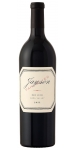
Pahlmeyer Jayson Red Napa Valley is made from 51% Merlot, 27% Cabernet Sauvignon, 11% Malbec, 7% Petit Verdot, 4% Cabernet Franc.
Voluptuousness meets vibrance in this classic Bordeaux-inspired blend. Ripe Merlot-dominant aromas of juicy macerated raspberry unfurl with hints of pencil lead, clove, cedar, and fresh sage. The compact fruit core, flanked by fine, polished tannin, surges open on a full, silky palate, giving way to complex underpinnings of earth and spice. A beam of bright acidity keeps the fruit fresh and focused through a soft, lingering finish of dusty plum and cocoa.
It’s best to serve this rich, layered wine at a temperature between 60°F and 65°F. Open and opulent in its youth, this wine is ready to match with a range of flavorful summer dishes such as Carolina-style pulled pork, bánh mì sandwiches, or bacon cheddar burgers.
Review:
This is a very polished wine in 2022, well-built with neatly knit tannins that form a solid foundation for the dark currant and blackberry fruit that floods the mid-palate. Good depth of concentration and driving energy create a sense of tension and vibrancy. Indeed not a shy wine, yet more approachable, with tannins almost melting away on the finish—very characteristic of the warm vintage. Grape sources include William Hill and Broken Rock in Napa, Stagecoach, Waters, and Round Pond in Rutherford, along with Cabernet Franc and Cabernet Sauvignon from the iconic Monte Rosso Vineyard in Sonoma. Grapes are sorted by hand, fermented in stainless steel with a small percentage in oak tanks, and then aged for 15 months in 80% new French oak. (JC)
-Decanter 94 Points



