" We don't sell the wine without touching the vine "
| Country: | France |
| Region: | Bordeaux |
| Winery: | Larriaut |
| Grape Types: | Semillion Sauvignon Blanc |
| Vintage: | 2023 |
| Bottle Size: | 750 ml |
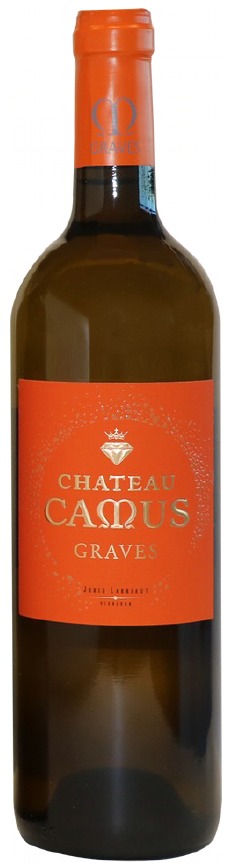
Camus Graves Blanc is made from 50% Sauvignon Blanc and 50% Semillon.
A beautiful, brilliant color, this wine offers a great aromatic balance with complex and mineral notes, Offering white fruit (peach and pear), citrus (grapefruit and lemon), and a toasty finish with a delicate oak presence. The mouthfeel is rich and complex with a great minerality, freshness, structure, and a good length to the finish.
Pairs with poultry, fish, and shellfish.
Camus Graves Blanc is made from 50% Sauvignon Blanc and 50% Semillon.
A beautiful, brilliant color, this wine offers a great aromatic balance with complex and mineral notes, Offering white fruit (peach and pear), citrus (grapefruit and lemon), and a toasty finish with a delicate oak presence. The mouthfeel is rich and complex with a great minerality, freshness, structure, and a good length to the finish.
Pairs with poultry, fish, and shellfish.
Chateau Camus Graves Rouge is made from 50% Merlot and 50% Cabernet Sauvignon
A dark purple color, this wine exhibits some delicate oak aromas, well-integrated with notes of red fruits and spices. The mouthfeel is fresh and fruity, with soft and elegant tannins. The wine is ready to drink but can also be aged for a few years to develop some secondary aromas with truffles and mushroom components
Pairs with red meat, poultry, and cheese.
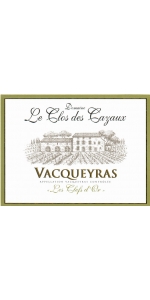
Cazaux Vacqueyras Blanc Les Clefs d'Or is made from 50% Clairette, 30% Roussanne and 20% Grenache Blanc.
A wine with lively acidity, expressive aromas of fennel and white flowers. It is long and full in the mouth with minty and anisy aromas mixed with white peach flavors. Refreshing and mineral character.
Clairette grapes are green harvested to concentrate and harmonize aroma. Each grape varietal is hand picked separately. Pressing with skin contact at low temperature. Aged 12 months in stainless steel tank. (No oak)
Enjoy this wine with all sorts of fish starters, squid salad with olive oil and basil. A must try with fresh oysters.
Review:
"Exotic citrus, pineapple, baking spices, and minty flower notes emerge from the 2023 Vacqueyras Les Clefs D'Or Blanc, a medium-bodied, juicy, lively, balanced white that has the vintage's ripe yet pure, layered, focused style. It's incredibly well done and worth your time and money."
- Jeb Dunnuck (April 1st 2025), 92 pts
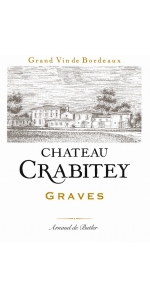
Chateau Crabitey Graves Blanc is made from 70% Sauvignon Blanc and 30% Semillon.
The finish is long and distinguishes itself by nice and light woody and citrus fruit aromas.In the mouth, the wine is fully developed and complex, with a nice volume as well as a light acidity for the freshness. Its nose is fine and complex - even lemony with its pomelo scent - with some smoky notes. Chateau Crabitey Graves Blanc displays a fine, light yellow color and a nice brilliance.
Pairs with bisque, smoked fish, roasted chicken and vegetables with fresh herbs
Review:
"Fresh, pretty nose of gooseberries, lime zest, lemon and green apple. Light to medium body with sharp acidity. Tangy and citrusy. 70% sauvignon blanc and 30% semillon. Vegan. Drink now."
- James Suckling (January 2022) 90 pts
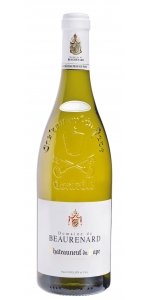
Domaine de Beaurenard Chateauneuf-du-Pape Blanc is made from Clairette blanche & Rose, Grenache Blanc & Gris, Bourboulenc, Roussanne, Picpoul and Picardan.
Gold bright green color. Expressive nose with pear and stone fruits aromas (peach, apricot) with jasmine and roasted almonds notes. The mouth is smooth and fleshy like stone fruit we can smell, with a long a nice finish.
Review:
Always terrific, the 2023 Châteauneuf Du Pape Blanc is no exception, and readers who love vibrant, age-worthy Rhône whites can safely buy this cuvée in just about every vintage. Based on 30% Clairette, 20% Grenache Blanc, 25% Bourboulenc, 22% Roussanne, and splashes of Picardan and Picpoul Blanc, the 2023 reveals a medium gold hue as well as textbook aromatics of pear and orchard fruits intermixed with honeyed flowers, chalky minerality, and subtle green almond nuances. This balanced, medium-bodied, vibrant white is very much in the fresh, focused, yet still textured, approachable style of the vintage.
-Jeb Dunnuck 93 Points
Camus Graves Blanc is made from 50% Sauvignon Blanc and 50% Semillon.
A beautiful, brilliant color, this wine offers a great aromatic balance with complex and mineral notes, Offering white fruit (peach and pear), citrus (grapefruit and lemon), and a toasty finish with a delicate oak presence. The mouthfeel is rich and complex with a great minerality, freshness, structure, and a good length to the finish.
Pairs with poultry, fish, and shellfish.
The estate has been operated by the Larriaut family since 1890, and Château Camus itself since 1923. Today, it is run by Joris Larriaut who represents the 4th generation.
The family used to practice polyculture, a mixed farming of vines, pear trees, and tobacco plants, but in the 1960s, Jean-Pierre Larriaut decided to convert his gravelly and silico-gravel soils into a single landscape: vineyards. For the reds, he planted Merlot and Cabernet Sauvignon, and for the whites, Sauvignon and Semillon. Today, the estate spreads over 11 hectares (27 acres).
The gravel and pebble-based soils give birth to a racy red wine with great aromatic power (blackcurrant, cherry, cinnamon) and great aging potential and a dry white wine with lively and crisp aromas of citrus fruit and white flowers.
From the volcanic soils in the blocks residing at the summit of Stony Hill's vineyard, their 2019 Cabernet Sauvignon is showing beautifully. 2019 was a warm year with late spring rains and a true, dry fall finish. e late spring rains imbued wines with a characteristic freshness and tension, balanced by a generous fruit profile. Bing cherry, cassis, pomegranate seed, singed bay leaf, and cacao sings from the glass. The palate receives a structure showing breadth and presence with lacey tannins and a delicate, persistent finish.
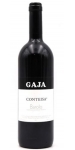
Gaja Barolo Conteisa is made from 100 percent Nebbiolo.
Piedmontese for "quarrel," this wine was named for the historic dispute between the communes of La Morra and Barolo for possession of the Cerequio land. This garnet-colored wine features expressive floral notes and an aroma of red berries, plum, licorice and spice. The sumptuous texture and refined character offer perfectly integrated tannins and an elegant finish.
STYLE: Full-bodied, Rich, Balanced
FLAVOR: Floral, Red Berries, Plums, Licorice, Spice
Reviews:
This is a really enticing wine with an open and vivid nature that tells you right away it is Barolo, but it’s polished and sweetly tannic. You want to taste and taste. It’s medium- to full-bodied with rounded tannins and a savory finish. Juicy and so approachable now. Better in a couple of years, but hard to resist now. Try after 2026.
James Suckling 98 Points