
" We don't sell the wine without touching the vine "
| BUY MORE! SAVE MORE! | ||||||||||||||||||||
|
| Country: | Italy |
| Region: | Tuscany |
| Winery: | Capanna |
| Grape Type: | Sangiovese |
| Organic: | Yes |
| Vintage: | 2018 |
| Bottle Size: | 750 ml |
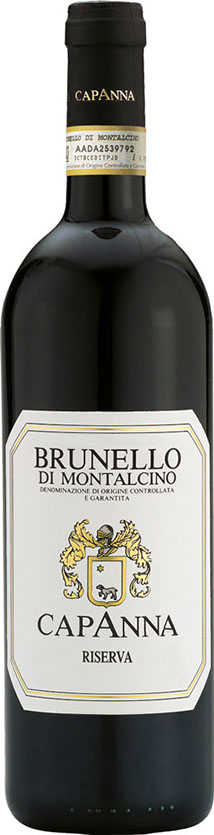
Capanna Brunello di Montalcino Riserva is made from 100 percent Sangiovese.
TYPE: DOCG
BLEND: 100% Sangiovese carefully selected in the oldest vineyards and only of the best harvests.
VINIFICATION:
Alcoholic fermentation with maceration of the skins (30-35 days) at a controlled temperature and spontaneous malolactic fermentation, both in truncated cone-shaped Slavonian oak vats.
AGEING:
In Slavonian oak casks of 10 to 25 hl for over 40 months; followed by ageing in bottles for at least 15 months.
NOTES:
Colour: deep ruby red, strong, lively.
Bouquet: very intense and complex, fruity and spicy, with red fruit, jam and liquorice shades; great prospects of future development.
Taste: great structure in the acid-tannin components, well supported by the soft ones; extremely persistent.
Food pairings: roast red meats, game and very aged cheeses.
Review:
Bright ruby in the glass. First impact is low key, with red cherry, leather, tobacco, fresh violet and balsamic notes. The attack is velvety, with a full body, lifted acidity and dense, ripe tannins. Character emerges from the glass, meaty and bloody. Thick, dry finish that’s fierce. Drink or hold
-James Suckling 95 Points
The Capanna farm, owned by the Cencioni family since 1957, is situated in the Montosoli area, to the north of Montalcino. It was founded by Giuseppe Cencioni and, helped by his sons Benito and Franco, it was one of the first farms of the modern period of Brunello. They started bottling their own wines in the 1960's and after Brunello di Montalcino was granted DOC status in 1966, Giuseppe was one of the 25 founders of the Consorzio del Vino Brunello di Montalcino. Production, initially only a few thousand bottles, then increased when new vineyards were planted. In 1975 they began exporting Brunello di Montalcino DOC – Capanna 1970 – to Germany and then new markets were reached in subsequent years: United States of America, Canada, Switzerland, Belgium, Holland, Japan, Austria, Poland, Denmark and others (about 20 overall). The Capanna farm is still family run from both a farming and winemaking viewpoint, furthermore, it is Amedeo Cencioni himself, Patrizio's son and representative of the fourth generation, who supervises the oenological and agronomic parts of the cellar.

“1752” is the name of the Damilano Barolo Cannubi Riserva, in honor of the year in which the historic bottle was first marked “Cannubi”. It still exists today perfectly conserved by the Manzone family in Bra, close to Barolo. The bottle is clearly marked as being of “1752” vintage, indicating that Cannubi historically precedes Barolo.
About the Vineyard:
The Cannubi Cru is in found within one of the 6 core zones which comprise a UNESCO heritage site in Italy. A mixture of Tortonian and Helvetian calcareous marl gives the grapes intense aromas of cherry, plum and tobacco, rose and violet in sequence. Its low potassium and high calcium/magnesium content offer the wine a fine and polished touch. The vineyard is located at about 270 m. a.s.l. and has a south-east sun exposure. Barolo Riserva Cannubi 1752 It is a small plot of about 2 hectares of Nebbiolo vines, currently between 30 and 50 years of age.
Tasting Notes:
Garnet ruby red in color, the bouquet is intense and balanced, with notes of violet, red fruit, cherry and plum, spices, liquorice, cocoa, leather and tobacco. Dry, robust, full-bodied, very persistent, rich and velvety
Food Pairing:
This wine is excellent with typical piedmontes pasta (tajarin, ravioli); perfect with red meat, braised and roast meat, game and absolutely ideal with all types of cheeses.
Review:
“Incredible, reserved ripeness and depth already evident on the nose after one whiff, offering plum, cedar, rose hip, sandalwood, and licorice. Full-bodied with superb depth of fruit and an abundance of polished tannins that give the wine poise and grace, even though it’s long and powerful. The quality of the tannins are exceptional. Sheer and refined. This comes from the center of Cannubi.”
-James Suckling 99 Points

Sei Solo Ribera del Duero Tempranillo is made from 100 percent Tempranillo.
Named after Bach's six solos for violin, Sei Solo represents Javier Zaccagnini's vision of elegant, high-toned Ribera del Duero from the powerful, mineral soils of La Horra and the top vineyards of Barroso and Acos that are planted with old vines of 60 to 90 years old.
Displaying wonderful clarity of fruit and excellent transparency to the multi-layered flavors, there is no new oak influence on this at all, resulting in a wine that has nothing to hide behind. Deft tannins support a taut, mineral, dark fruited wine that, while tight knit and brooding is tremendously refined and vital and not at all tiring to drink. A Ribera built on elegance, refinement and nuance that promises great things for the future. A star is born.
Fermented in stainless steel tanks of small capacity, adapted to the size of every vineyard, allowing to do individual fermentation for every different plot.
Short and careful pumping over, never reaching high temperatures to respect the fruit and avoid over extraction of the tannins, gaining the full potential of elegance and finesse of the old vines. After alcoholic fermentation the wines are racked to two-year-old French barrels to undergo malolactic at low temperature ( less than 14 degrees C) . This process takes several months. When malolactic is finished, the wines are racked to 600 liter big barrels of French oak, which are not new to avoid a loss of balance and style of the wines. Aging in barrels for 20 months.
Review:
Made with Tempranillo from 60- to 100-year-old vines, this wine has a bouquet of purple plum, black currant and a hint of cedar. Plush tannins and striking acidity provide a backdrop to black cherry, Mission fig, caramel, milk chocolate and juniper-berry flavors. I did not want this wine to end; it is a gorgeous pour on its own, but to get the most out of it enjoy it alongside a Porterhouse or Tomahawk steak. Drink through 2034. — Mike DeSimone
- Wine Enthusiast (May 2024), 97 pts & Cellar Selection

Charles Smith K Vintners Powerline Estate Syrah is made from 100 percent Syrah.
Friendly, approachable and vivacious, yet also dark and mysterious. Black cherry, allspice, black ash, and orange blossom. Thyme and flint with ark fruit, cedar, kelp, black pepper, juniper, crushed rock, and tons of complex floral notes. Fear not, embrace it.
While just bottled a week before this tasting, the 2019 Syrah Powerline Vineyard certainly wasn't showing any worse for it, offering a stunning bouquet of ripe red and black fruits as well as white pepper, sandalwood, tobacco, and new leather. Pure, medium to full-bodied, and vibrant, with supple, polished tannins, this brilliant Syrah is going to keep for 10-12 years, if not longer.
-Jeb Dunnuck 97 Points
“1752” is the name of the Damilano Barolo Cannubi Riserva, in honor of the year in which the historic bottle was first marked “Cannubi”. It still exists today perfectly conserved by the Manzone family in Bra, close to Barolo. The bottle is clearly marked as being of “1752” vintage, indicating that Cannubi historically precedes Barolo.
About the Vineyard:
The Cannubi Cru is in found within one of the 6 core zones which comprise a UNESCO heritage site in Italy. A mixture of Tortonian and Helvetian calcareous marl gives the grapes intense aromas of cherry, plum and tobacco, rose and violet in sequence. Its low potassium and high calcium/magnesium content offer the wine a fine and polished touch. The vineyard is located at about 270 m. a.s.l. and has a south-east sun exposure. Barolo Riserva Cannubi 1752 It is a small plot of about 2 hectares of Nebbiolo vines, currently between 30 and 50 years of age.
Tasting Notes:
Garnet ruby red in color, the bouquet is intense and balanced, with notes of violet, red fruit, cherry and plum, spices, liquorice, cocoa, leather and tobacco. Dry, robust, full-bodied, very persistent, rich and velvety
Food Pairing:
This wine is excellent with typical piedmontes pasta (tajarin, ravioli); perfect with red meat, braised and roast meat, game and absolutely ideal with all types of cheeses.
Review:

Pazo de Senorans Seleccion de Anada Albarino is made from 100 percent Albarino.
Straw yellow with greenish tints, vivid and brilliant. High intensity and very expressive. Profusion of aromas with traces of mineral. Great volume and ample body leaving a lasting impression from beginning to end.
Reviews:
I think the 2014 Albariño Selección de Añada could be the finest vintage of this characterful long-aging Albariño, from a year with a more moderate 13% alcohol and very high acidity (and low pH) that make the wine fresher and more vibrant. It is developing very slowly and showing quite young after it spent over 30 months with lees in 1,500- and 3,000-liter stainless steel tanks. It has a pale color and an elegant nose with notes of freshly cut grass, white flowers and wet granite. The palate is vibrant with effervescent acidity, and it has a long, dry and tasty finish with an austere sensation, far away from the tropical notes of some past vintages. This is superb and should continue developing nicely in bottle. Bravo! It wasn't bottled until April 2023, and 14,000 bottles were produced.
-Wine Advocate 96 Points
Tech:

K Vintners The Beautiful Syrah 2018 is made from 97% Syrah, 3% Viognier.
A multi-layered beauty; perfumed, lovely. Super dark rose. Broken, unfiltered cigarette, Amaro. Densely colored with a shimmering red rim. Giving, yet just an inch at a time. One to ponder. One to enjoy.
Review:
The 2018 Syrah The Beautiful Powerline Vineyard comes from a vineyard outside of Walla Walla, in the foothills of the Blue Mountains. It was not destemmed and was brought up in neutral, larger barrels. An exotic nose of ripe blue and black fruits, lavender, sappy flowers, and herbes de Provence-like nuances give way to a medium to full-bodied, richly textured, structured wine with a mouth-filling, layered, meaty style that builds nicely with time in the glass. There's always a sappy, almost herbal edge to this beauty, and it ages beautifully. Feel free to open bottles any time over the coming 15-20 years. It would certainly be hard to pick out in a lineup of top Northern Rhône Syrahs.
-Jeb Dunnuck 97 Points

Capanna Brunello di Montalcino Riserva 2015
TYPE: DOCG
BLEND: 100% Sangiovese carefully selected in the oldest vineyards and only of the best harvests.
VINIFICATION:
Alcoholic fermentation with maceration of the skins (30-35 days) at a controlled temperature and spontaneous malolactic fermentation, both in truncated cone-shaped Slavonian oak vats.
AGEING:
In Slavonian oak casks of 10 to 25 hl for over 40 months; followed by ageing in bottles for at least 15 months.
NOTES:
Colour: deep ruby red, strong, lively.
Bouquet: very intense and complex, fruity and spicy, with red fruit, jam and liquorice shades; great prospects of future development.
Taste: great structure in the acid-tannin components, well supported by the soft ones; extremely persistent.
Food pairings: roast red meats, game and very aged cheeses.
Review:
Powerful, sparkling garnet red. Rich, very appealing nose with notes of ripe raspberries and fresh plums, some liquorice and fine spice notes in the background. Grippy, fine-meshed tannin on the palate, builds up in many layers, salty, good tension, very long finish in the finish.
- Falstaff 98 Points

Collemattoni Brunello di Montalcino Riserva is made from 100 percent Sangiovese.
Intense ruby red with brilliant burgundy reflects in color. Reminiscent of wild black fruits, vanilla and spices on the nose and dry, warm, slightly austere but velvety in the palate.
This wine comes from the oldest vineyard of Collemattoni: Fontelontano. Less than half hectare. It's one of the few Single Vineyard Brunello di Montalcino riserva.
Coming from a parcel with 15-18 year old vines planted in sandy clay and marl soils.
Harvest is 100% destemmed with a soft pressing, fermentation in stainless steel tanks at controlled temperature of 28-30°C, pumping over for the first week of maceration following by skin-contact maceration for 20-25 days with rack and return technique (delestage).
Malolactic fermentation completed. The delestage and the pumping over are then spaced out along the process.
Wine is slightly filtered before bottling.
Review:
This is intense with aromas of dried cherries, sweet licorice, cloves, crushed walnuts and hints of chocolate and undergrowth. Full-bodied, deep and structured with taut, tightly packed tannins. Long and persistent. Drink or hold.
-James Suckling 94 Points

Influenced by the northeastern side and the features of the terroir, Vigna del Lago is an elegant, light and sapid Brunello. It exhibits a distinctive, slightly pale, ruby-red colour and notes of ginger, cherry, orange peel, bitter orange and dried flowers. Medium-structured, silky and delicate tannins with a slightly salty finish.
Vigna del Lago is located on the northeastern slope of Montalcino, which is influenced by a continental climate, with harsh winters and very hot summers. The surrounding nature is reminiscent of the Crete Senesi, with hills and cypresses and a lovely lake next to the vineyards. The soils are clayey.
Ageing takes place in a dedicated cellar, 24 months in 40-hl Slavonian oak barrels, followed by 6 months in concrete and 9 to 12 months of bottle maturation.
Review:
This 2018 Val di Suga Brunello di Montalcino Vigna del Lago is looking really beautiful in this 2018 vintage. The nose is bright with delicate, fragrant rose and ripe strawberry notes. The palate has a very tangy, juicy acidity and plenty of savory, fine-textured tannins. There is a sublime texture with that wonderful quality of weightless harmony. This is a lovely wine that just feels very gentle and flows across the palate like a little wave.
-Wine Independent 97 Points

Poggio San Polo Podernovi Brunello di Montalcino is made from Sangiovese.
Intense ruby red in color with garnet hues, clear and glossy. The bouquet exhibits typical aromas of violets and small red berries. Subtle nuances of forest undergrowth, aromatic wood, a touch of vanilla and jammy mixed fruit then give way to subtle hints of coffee. This Brunello is intense, persistent, broad and heady. Full-bodied and warm on the palate, with a densely-woven texture and robust body, it has a persistent finish with well-rounded tannins. The particular features of the terroir at San Polo produce a Brunello with a capacity for lengthy aging, while patient cellaring enhances the wine during ageing in the bottle.
Review:
Lovely purity of fruit with ultra fine tannins and depth, finesse and complexity. Black cherries, cedar and some flowers. It’s full-bodied with very fine tannins that drive the finish. Give it a year or two to open more, but already so enticing. Drink or hold.
-James Suckling 96 Points
The San Polo 2015 Brunello di Montalcino Riserva (with 8,000 bottles produced) is a textured wine with hearty fruit and touches of smoked meat and spice. At its core, the wine offers dark fruit, blackberry and ripe plum. The rich fruitiness of the wine cedes to campfire ash, mahogany and furniture wax. These results are sultry and even a bit flashy, with distant background tones of teriyaki and plum sauce. The wine is fermented in cylindrical oak fermenters and aged in oak for three years. We'll see this bottle hitting the market sometime after February 2021.
-Wine Advocate 95 Points

San Giorgio Ugolforte presents a dark core of red and black berry fruit layered with earth, leather, smoke, and herbs. Complex and elegant, the wine is full on the palate and firm in tannin structure. Refreshing acidity frames a graceful finish. Classic Brunello di Montalcino.
This red is marked by cherry, plum, thyme, sage and loam aromas and flavors. Lively and firmly structured, featuring a saline undercurrent. An open-knit version, with nice equilibrium, fine energy and a long, resonant finish.
-Jeb Dunnuck 94 Points
-Wine Spectator 94 Points

Collemattoni Brunello di Montalcino is made from 100 percent Sangiovese.
Color: brilliant red with burgundy reflects; Bouquet: penetrating with memories of wild black fruits, black cherry and noble wood; Taste: warm, dry and persistent
Coming from a parcel with 10-15 year old vines planted in sandy clay and marl soils.
Harvest is 100% destemmed with a soft pressing, fermentation in stainless steel tanks at controlled temperature of 28-30°C, pumping over for the first week of maceration followed by skin-contact maceration for 20-25 days with rack and return technique (delestage).
Malolactic fermentation completed.
Wine is slightly filtered before bottling.
Review:
"Black cherry and plum with a touch of smoke , vanilla. And toast on the nose. Powdery tannins coat the mouth and has a long persistence. Powerful and fresh while a little warming on the finish."
- Decanter Wolrd Wine Awards (June 2023), 97 pts

K Vitners The Hidden Syrah is made from 100 percent Syrah.
It is not a secret the magnitude this wine can reach. In this vintage, femininity reigns supreme. Perfume, flowers, cassis. All anchored to sense of place with stone, ancient soil and chanterelles that make this wine a wine of the earth.
Review:
Kirsch, ripe black cherries, roasted herbs, violets, and orange blossom notes all emerge from the 2018 The Hidden Syrah Northridge Vineyard, which is all Syrah brought up in neutral oak. Rich, full-bodied, and beautifully polished, it packs loads of fruit yet stays light on its feet, with no sensation of heaviness. As with all of these Syrahs from Smith, it's going to benefit from 2-4 years of bottle age.
-Jeb Dunnuck 96 Points

Ambre de Maltus Bordeaux Blanc is made from 70% Sauvignon Blanc, 30% Sémillion.
Malolactic fermentation.
The wine was aged in French Oak barrels for a few month (between 6 and 8 months depending on the barrel's toastiness and cooper)
Delicious with grilled fish or grilled vegetables



