
" We don't sell the wine without touching the vine "
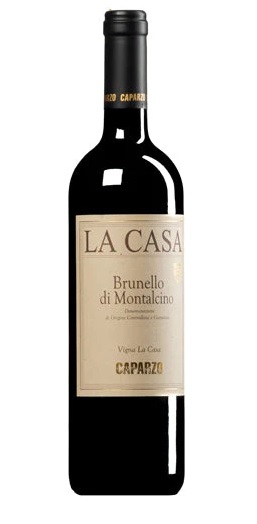
| Country: | Italy |
| Regions: | Tuscany Brunello di Montalcino |
| Winery: | Caparzo |
| Grape Type: | Sangiovese |
| Organic: | Yes |
| Vintage: | 2018 |
| Bottle Size: | 750 ml |
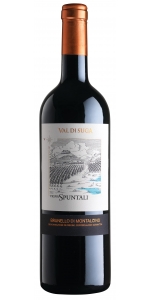
This is a 6 pack with 2 bottles each from vintages from 2013, 2015, and 2016.
***Tenimenti Angelini Val di Suga Vigna Spuntali Brunello di Montalcino 2016:
The 2016 Vigna Spuntali Brunello di Montalcino is the most brooding of the lineup from Val di Suga and is sourced from the southwest of the region on sandy soils. There are aromatics of black raspberry, licorice, menthol, sage, cinnamon, and iron-rich earth. Its Mediterranean influence is felt on the palate with ripe black cherry, dried herbs, and sun-baked earth. This is the fullest bodied and most savory of the Val di Suga lineup, with more roundness and grip. Its structure will benefit from cellaring for several years and will be great drinking over the next 20 years or more. 2026-2040.
-Jeb Dunnuck 96 Points
***Tenimenti Angelini Val di Suga Vigna Spuntali Brunello di Montalcino 2015:
The 2015 Vigna Spuntali Brunello di Montalcino is more introverted on first opening, with notes of black plum, licorice, dried Mediterranean herb, and sun-baked earth. On the palate, it offers a tart dried fruit character, with a building tannin structure that finishes with tomato leaf, and bitter herbs. The most rustic and burly of the wines in the lineup of the 2015 Val di Suga vintage, it will benefit from allowing some time in cellar to see how this matures and its tarriness develops. Drink 2026-2036
-Jeb Dunnuck 94 Points
***Tenimenti Angelini Val di Suga Vigna Spuntali Brunello di Montalcino 2013:
Plenty of spices and fresh herbs on the nose, such as dried rosemary and nutmeg, to match the underlying dried redcurrants and cranberries. Full-bodied with plenty of concentration, but still shows a very sturdy, tannin backbone and punchy acidity, to drive this through to a long finish. Drink in 2021.
-James Suckling 94 Points
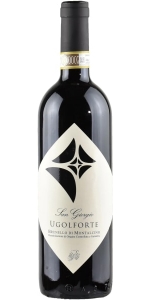
San Giorgio Ugolforte presents a dark core of red and black berry fruit layered with earth, leather, smoke, and herbs. Complex and elegant, the wine is full on the palate and firm in tannin structure. Refreshing acidity frames a graceful finish. Classic Brunello di Montalcino.
This red is marked by cherry, plum, thyme, sage and loam aromas and flavors. Lively and firmly structured, featuring a saline undercurrent. An open-knit version, with nice equilibrium, fine energy and a long, resonant finish.
-Jeb Dunnuck 94 Points
-Wine Spectator 94 Points
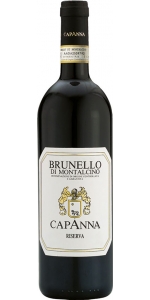
Capanna Brunello di Montalcino Riserva is made from 100 percent Sangiovese.
TYPE: DOCG
BLEND: 100% Sangiovese carefully selected in the oldest vineyards and only of the best harvests.
VINIFICATION:
Alcoholic fermentation with maceration of the skins (30-35 days) at a controlled temperature and spontaneous malolactic fermentation, both in truncated cone-shaped Slavonian oak vats.
AGEING:
In Slavonian oak casks of 10 to 25 hl for over 40 months; followed by ageing in bottles for at least 15 months.
NOTES:
Colour: deep ruby red, strong, lively.
Bouquet: very intense and complex, fruity and spicy, with red fruit, jam and liquorice shades; great prospects of future development.
Taste: great structure in the acid-tannin components, well supported by the soft ones; extremely persistent.
Food pairings: roast red meats, game and very aged cheeses.
Review:
Bright ruby in the glass. First impact is low key, with red cherry, leather, tobacco, fresh violet and balsamic notes. The attack is velvety, with a full body, lifted acidity and dense, ripe tannins. Character emerges from the glass, meaty and bloody. Thick, dry finish that’s fierce. Drink or hold
-James Suckling 95 Points
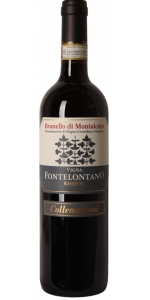
Collemattoni Brunello di Montalcino Riserva is made from 100 percent Sangiovese.
Intense ruby red with brilliant burgundy reflects in color. Reminiscent of wild black fruits, vanilla and spices on the nose and dry, warm, slightly austere but velvety in the palate.
This wine comes from the oldest vineyard of Collemattoni: Fontelontano. Less than half hectare. It's one of the few Single Vineyard Brunello di Montalcino riserva.
Coming from a parcel with 15-18 year old vines planted in sandy clay and marl soils.
Harvest is 100% destemmed with a soft pressing, fermentation in stainless steel tanks at controlled temperature of 28-30°C, pumping over for the first week of maceration following by skin-contact maceration for 20-25 days with rack and return technique (delestage).
Malolactic fermentation completed. The delestage and the pumping over are then spaced out along the process.
Wine is slightly filtered before bottling.
Review:
This is intense with aromas of dried cherries, sweet licorice, cloves, crushed walnuts and hints of chocolate and undergrowth. Full-bodied, deep and structured with taut, tightly packed tannins. Long and persistent. Drink or hold.
-James Suckling 94 Points
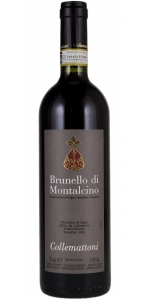
Collemattoni Brunello di Montalcino is made from 100 percent Sangiovese.
Color: brilliant red with burgundy reflects; Bouquet: penetrating with memories of wild black fruits, black cherry and noble wood; Taste: warm, dry and persistent
Coming from a parcel with 10-15 year old vines planted in sandy clay and marl soils.
Harvest is 100% destemmed with a soft pressing, fermentation in stainless steel tanks at controlled temperature of 28-30°C, pumping over for the first week of maceration followed by skin-contact maceration for 20-25 days with rack and return technique (delestage).
Malolactic fermentation completed.
Wine is slightly filtered before bottling.
Review:
This is a really balanced and pretty young Brunello with dark-cherry and citrus character on both the nose and palate. It’s medium-bodied with integrated tannins and a beautiful, succulent finish. Nicely done. Drinkable now, but better in two or three years.
-James Suckling 95 Points
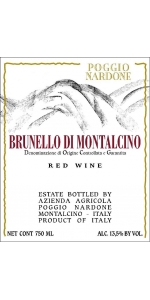
Poggio Nardone Brunello di Montalcino is made from 100 percent Sangiovese Grosso.
The rich nose displays scents of spices combined with aromas of small red ripe fruits, blackberry and blueberry.
Well structured, determined and elegant, with round and silky tannins. Very nice finish.
Alcoholic fermentation was done in tank, malolactic fermentation in oak barrels. Wine was then aged for 3 years in French oak barrels.
Review:
Powerful and classic, it alternates in the best way the floral features of magnolias, gardenias and hawthorn with fruity notes reminiscent of plums, pressed blueberries and lemon juice. Medium-full body, smooth and relaxed in the sip, it closes harmonious and balanced. How beautiful! Better from 2024.
Raffaele Vecchione - WinesCritic.com 94 Points
The Caparzo Brunello di Montalcino DOCG Vigna la Casa can be considered a real oenological jewel and not only of Montalcino. The origin of the name LA CASA derives from the fact that in the past this was one of the farms where some peasants lived employed by the owners of Palazzo Montosoli, located a few hundred meters away. The first vintage produced of Brunello di Montalcino Vigna La Casa was 1977. At the time, little was known about terroir and little attention was paid to the concept of zoning, introduced in Montalcino only in recent years. Also in this case Caparzo was an avant-garde company in producing one of the first "Single Vineyard" Brunello di Montalcino in one of the most privileged vineyards of the Municipality.
With the Brunello di Montalcino La Casa, Caparzo has also achieved another milestone: that of being one of the first companies to introduce the barrique in Montalcino, managing to create a wine with a gentle and elegant soul. The Brunello di Montalcino Vigna La Casa is the fruit of a unique territory and expresses all of Caparzo's great passion and long experience in producing excellent wines. With the Brunello di Montalcino La Casa, Caparzo has also achieved another milestone: that of being one of the first companies to introduce the barrique in Montalcino, managing to create a wine with a gentle and elegant soul.
The Brunello di Montalcino Vigna La Casa is the fruit of a unique territory and expresses all of Caparzo's great passion and long experience in producing excellent wines. With the Brunello di Montalcino La Casa, Caparzo has also achieved another milestone: that of being one of the first companies to introduce the barrique in Montalcino, managing to create a wine with a gentle and elegant soul. The Brunello di Montalcino Vigna La Casa is the fruit of a unique territory and expresses all of Caparzo's great passion and long experience in producing excellent wines.
Review:
Lots of blue and sweet berry fruit with heady rose and floral notes on the nose, alongside hot chocolate, sandalwood, toffee and nutmeg. It’s full-bodied with ripe, muscular tannins that are superbly integrated. Powerful, yet with transparency and clarity that gives it beauty. Long, graceful finish.
-James Suckling 96 Points
Still today, innovative breeding systems are being tested and, in particular, various clonal selections in the owned lands, which extend over an area of about 200 hectares, 90 of which are planted with vineyards, 4 with olive groves, 87 with woods and 19 currently with arable land and courtyards. Caparzo carries out an activity that aims to obtain top quality products, achieved with meticulous and artisanal production techniques, but nevertheless reveals a modern mentality in management, efficient and capable in commercial relations. More than forty years have passed since the first rows of vines and the first cellar experiences. Caparzo, in this time, grown in respect of the Brunello tradition and the different terroirs of the area, has been able to enhance its wines with a creative spirit and desire for innovation, expressing the maximum qualitative rigour. Precisely for this reason, Caparzo wines have been adopted by the most famous restaurants in the world, served at international meetings and official state dinners.
aparzo vineyards occupy about 90 hectares in the municipality of Montalcino. In Caparzo, in the hilly area, at an altitude of 220 metres, facing south to south-east, about 9 hectares of Brunello are cultivated, 3 hectares of Chardonnay, Sauvignon and Traminer, 2.5 hectares of Cabernet Sauvignon, 3 hectares of Rosso di Montalcino, 1 hectare of Sangiovese Sant'Antimo and 1.5 hectares of Moscadello. The soil is of Pliocene, sedimentary, sandy-clayey formation. In the locality of La Casa, at an altitude of 275 metres, facing south to south-east, there are 5 hectares of Brunello. The soil is of shale-clayey formation, known as marl. In the western area, called La Caduta, at a height of 300 meters, 7.5 hectares of Brunello are located on a soil of sandstone matrix, loose and rich in skeleton. From south to southeast of Montalcino, the Il Cassero vineyard is located, at a height of 270 meters, where there are about 6 hectares of Brunello, 4 of Sangiovese, 1 of Syrah, 1 of Colorino and 3 hectares of Rosso di Montalcino, on a soil of Pliocene formation with a sandy-stony or schistic-clayey matrix. Finally, south-east of Montalcino, in the San Piero-Caselle vineyard, at a height of 250 meters, 2.5 hectares of Brunello are cultivated, 15 of Sangiovese, 2.5 of Merlot, 2 of Cabernet Sauvignon, 2.5 in Syrah, 1.5 in Petit Verdot and 2 hectares in Colorino. As a rule, the harvest period begins in the first days of September for white grapes, while the red grapes are harvested in the third week of September. The Cabernet Sauvignon and Sangiovese Grosso grapes destined for the production of Ca' del Pazzo are harvested separately. Only after the malolactic fermentation does the mixing of the two wines take place. The grapes destined for the production of Le Grance are softly pressed and the fermentation of the must takes place in small 350-litre oak barrels. After fermentation, the wine remains in the same barrels for twelve months. The red grapes are destemmed: the must and pomace begin fermentation at a controlled temperature for about eight days, with pumping over and punching down on the cap.
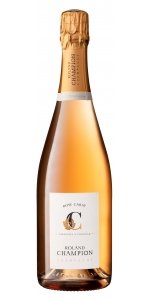
Roland Champion Champagne Brut Rose Grand Cru NV is the blend of 33% Chardonnay, 33% Pinot Meunier and 33% Pinot Noir.
The Champagne rose shows an orange salmon color coming from the red wine base. The pinot meunier brings red fruit aromas of strawberry and raspberry with hints of spices. The palate is juicy and harmonious with good depth and minerality. A delicate balance between Chardonnay, Pinot Meunier and Pinot Noir.
It is a blend of 93% White juice (made from 33% Chardonnay, 33% Pinot Meunier and 33% Pinot Noir) and 7% Pinot Noir red wine. The grapes used to produce the Coteaux Champenois red wine are coming from their vineyards near the Village of Verneuil.
Poggio Nardone Brunello di Montalcino is made from 100 percent Sangiovese Grosso.
The rich nose displays scents of spices combined with aromas of small red ripe fruits, blackberry and blueberry.
Well structured, determined and elegant, with round and silky tannins. Very nice finish.
Alcoholic fermentation was done in tank, maloactic fermentation in oak barrels. Wine was then aged for 3 years in French oak barrels.
Review:
Noble and decidedly balsamic in the primary profile alternating notes of peppermint, eucalyptus, green tea leaves and guaranà. A lot of very delicate dried cherries are housed in the background giving brilliance and crunchiness. Medium bodied, well extracted mature tannins and a finale which squeezes from the centre palate onwards. Better from 2025.
- WinesCritic.com 93 Points
San Giorgio Ugolforte presents a dark core of red and black berry fruit layered with earth, leather, smoke, and herbs. Complex and elegant, the wine is full on the palate and firm in tannin structure. Refreshing acidity frames a graceful finish. Classic Brunello di Montalcino.
This red is marked by cherry, plum, thyme, sage and loam aromas and flavors. Lively and firmly structured, featuring a saline undercurrent. An open-knit version, with nice equilibrium, fine energy and a long, resonant finish.
-Jeb Dunnuck 94 Points
-Wine Spectator 94 Points
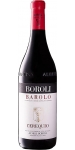
Boroli Cerequio is made from 100 percent Nebbiolo.
The Boroli family is a family of entrepreneurs, with roots in Piedmont dating back to 1831. The family started their winemaking business in1997, when Silvano and Elena Boroli felt an ardent desire to step away from the pressures of their publishing business and reconnect to nature. Silvano and Elena grew the company until their son, Achille, stepped in to run the wine-growing and production business in 2012.
With the 2012 grape harvest Achille decided to radically change the methods used in vineyards and wineries, aiming for the highest quality in Barolo and its crus. He cut production levels, updated the winemaking technology, and focused on low intervention methods to raise the quality of the Boroli wines be on par with the finest Barolo wines.
About the Vineyard
The Cerequio cru lies just across the valley from the Boroli winery in the commune of La Morra and is considered one of the most prestigious sites in the Barolo DOCG zone. It is known to produce Nebbiolo wine of enormous elegance and finesse.
Wine Production
Cerequio is distinguished by a careful selection of grapes, precise destemming, and a long maceration with submerged cap.
Tasting Notes
A clear bright ruby color with very light garnet red reflections; intense and persistent aroma of red fruit with notes of plum and cherry. A pleasant aroma of wood is noticeable after the fruity aroma, anticipating the full taste of a great wine suitable for long lasting life. A succulent, rich, full-bodied and pleasant taste emerges after the woody one, with the presence of slightly ripe red fruit.
Food Pairing
Thanks to its viscosity and body, Barolo is the ideal wine to pair with elaborate dishes and dishes like truffle dishes, meat dishes, pasta with porcini mushrooms, game, and aged cheeses. Cerequio is also perfect with dry pastries or chocolate.
Review:
Precise and essential, it displays notes of lavender, hibiscus, violet, white pepper, lime, jasmine flowers, and elderberry. Medium body, perfectly ripe, fine-grained tannins, and a juicy finish that displays smoothness and relaxation. Beautiful right away, it will only improve from 2024 onwards. One of the best Barolos tasted in the 2019 vintage.
-WineCritics.com 96 Points
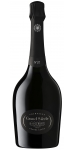
Laurent-Perrier Grand Siecle No. 27 is a blend of 60% Chardonnay, 40% Pinot Noir.
Grand Siècle was born from the vision of Bernard de Nonancourt: to recreate the perfect year, one that nature alone could never deliver. Iteration N°27 embodies this idea, crafted from a masterful blend of three outstanding years – 2015, 2013, and 2012 – with a predominance of Chardonnay complemented by Pinot Noir, sourced from eight Grand Cru vineyards.
After at least 10 years of aging on the lees, the result is a wine of rare aromatic complexity, combining freshness, energy, and timeless elegance. Grand Siècle is never tied to a single vintage but represents a higher concept: the pursuit of absolute balance between intensity, finesse and harmony. Since 1959, it has been revealed only 27 times in bottle and 24 times in magnum, affirming its place among the most exclusive and refined champagnes.
Vintage in Champagne is usually synonymous with excellence for Prestige Cuvées. Contrarily, Laurent‑Perrier believes that only the art of assemblage can offer what nature can never provide, that is, the perfect year.
The expression of the perfect year is that of a great champagne wine that has long ageing potential and over time develops depth, intensity and aromatic complexity yet retains its freshness and vibrancy.
Since 1959, Grand Siècle has been revealed only 26 times in bottle format and 23 times in magnum.
The « Grand Siècle » (Great Century) is the name given to one of the most prosperous periods (17th century) in the history of France known for the capacity of man, through his works, to create what nature cannot. Louis XIVth, known as the « Sun King », by creating the « Château de Versailles » and its gardens, was the architect of this model of harmony, balance and perfection.
The symmetry and perspective of the « Jardins à la française », the capacity to grow Mediterranean fruits (especially Oranges inside the « Orangerie ») in such a Northern climate, creating the Grand Canal, the fountains and ponds with no nearby rivers are many illustrations of this ability of man to sublimate natural elements. The name of Grand Siècle was chosen for Laurent‑Perrier’s Prestige Cuvée based on this common vision to reach a perfection that Nature, on its own, cannot provide.
Review:
Impressively aromatic, showing honeysuckle, violets and lavender with bread dough and just a hint of light caramel as well as dried apples, cooked pears and tarte tatin. Reductive with graphite, stone and iodine. Some chalk too. Full-bodied but not at all heavy, turning almost weightless. Nine years on the lees and 7 g/L dosage give energy, length and form. Goes on for minutes. This will age beautifully but is already fascinating, evolving in the glass. Drink or hold.
James Suckling 99 Points



