
" We don't sell the wine without touching the vine "

Boroli Barolo Brunella is made from 100 percent Nebbiolo.
A clear ruby red color, with very light orange reflections. A net aroma in which liquorice stands out at first, immediately followed by a fruity scent; the aroma makes you scent it again and again to discover different and pleasant facets. The fruity aroma magnificently prevails after a few minutes in the glass. A very enveloping, fresh and harmonious taste, with a delicate and tasty presence of wood. A long lasting taste that invites to sip it slowly again and again.
Tasting Notes
Brunella is distinguished by a careful selection of grapes, perfect destemming, long macerations with submerged cap. The barrels for Brunella are specifically chosen by the winemaker.
Wine Production
Brunella is one of the most historic single vineyard sites of all of Castiglione Falletto, however it hasn’t ever been bottled singularly under the Menzione Geografica Aggiuntiva BRUNELLA until 2013. The Brunella vineyard occupies the western crest of the Villero hillside and complete surrounds the Boroli winery. The vineyard is a monopole—owned entirely by Boroli and is the most prestigious wine in the lineup. As it occupies the best exposed section of the Villero hillside, La Brunella expresses power, drive, complexity, and extraordinary length and ageability.
About the Vineyard
The Boroli family is a family of entrepreneurs, with roots in Piedmont dating back to 1831. The family started their winemaking business in1997, when Silvano and Elena Boroli felt an ardent desire to step away from the pressures of their publishing business and reconnect to nature. Silvano and Elena grew the company until their son, Achille, stepped in to run the wine-growing and production business in 2012.
With the 2012 grape harvest Achille decided to radically change the methods used in vineyards and wineries, aiming for the highest quality in Barolo and its crus. He cut production levels, updated the winemaking technology, and focused on low intervention methods to raise the quality of the Boroli wines be on par with the finest Barolo wines.
Review:
-James Suckling 93 Points

Villero is undoubtedly one of the most important vineyards in Castiglione Falletto in terms of quality and exposure.
The soil is clayey and calcareous, with a south and southwest exposure. The combination of exposure and soil give us a structured and powerful Barolo, with a deep aromatic profile. The tannins are smooth and soft, thanks to long maceration.
Barolo Villero is a long-lasting wine, capable of reaching its full potential even many years after the harvest.
Wine Production
Villero is distinguished by a careful selection of grapes, perfect destemming, long macerations with submerged cap.
Tasting Notes
Clear bright ruby colour with very light garnet red reflections; intense and persistent aroma of red fruit with notes of plum and cherry. A pleasant aroma of wood is noticeable after the fruity aroma, anticipating the full taste of a great wine suitable for long lasting life. A succulent, rich, full-bodied and pleasant taste emerges after the woody one, with the presence of slightly ripe red fruit
Food Pairing
Thanks to its viscosity and body, Barolo is the ideal wine to combine with elaborate dishes such as truffle dishes, meat dishes, pasta with porcini mushrooms, game, and aged cheeses. Villero is also perfect with dry pastries or chocolate.
Review:
-James Suckling 95 Points

Gaja Barolo Conteisa is made from 100 percent Nebbiolo.
Piedmontese for "quarrel," this wine was named for the historic dispute between the communes of La Morra and Barolo for possession of the Cerequio land. This garnet-colored wine features expressive floral notes and an aroma of red berries, plum, licorice and spice. The sumptuous texture and refined character offer perfectly integrated tannins and an elegant finish.
STYLE: Full-bodied, Rich, Balanced
FLAVOR: Floral, Red Berries, Plums, Licorice, Spice
Reviews:
- Vinous (Antonio Galloni): 97 points
"The 2019 Barolo Conteisa is a noble wine, with angular and drying tannins, as well as more mineral expression. Notes of medicinal herbs, crushed stones, and pure cherry lead to a wine that is more restrained right now but will be fantastic. Through the palate, it has compact but wonderful concentration and a driving structure and is more herbaceous, savory, and mineral than fruity and floral. It is outstanding. Drink the 2020s while waiting for the 2019s. 98-100"
-Jeb Dunnuck 100 Points

Gaja Sperss is made from 100 percent Nebbiolo.
Vibrant and intense notes of herbs and spices such as thyme, cloves and black pepper. On the palate the wine is tense, loaded with energy that will need serious ageing to fully develop although extremely approachable in its youth. Impressive fruit concentration, with dark and ripe fruits – prunes and black cherries. Acidity and tannins lift this wine to its freshest expression.
Nebbiolo based wines have not only complexity and structure but also great elegance and finesse. The distinctive silky tannins of the Nebbiolo make it the right wine to drink with meat. Usually a young vintage goes very well with richer dishes because of the stronger tannins; mature Barolos are more suitable with delicate white meat courses or braised meat courses with sauces or concentrated red wines reductions.
Review:
-Jeb Dunnuck 99 Points

The Cordero di Montezemolo Barolo Enrico VI is a deep red garnet in color. Delicately spiced bouquet with notes of eucalyptus, licorice and menthol, and mature fruit on the palate invoking liqueur soaked cherries, blackberries and prunes with hints of violets and medicinal herbs. Powerful on the palate with a lasting finish.
Review:
The rose flower, violet, dark berry and cedar aromas are impressive on the nose. Full-bodied with chewy tannins that are powerful and muscular. Excellent length. Classic Barolo that needs at least four or five years to soften. From organically grown grapes. Try after 2027.
-James Suckling 96 Points

Lodovico Barolo di Barolo is made from 100% Nebbiolo.
Barolo di Barolo is a blend of 2 different vineyards in Barolo: PREDA and SARMASSA, both in the village of Barolo. The somewhat different soils, exposures and microclimates of the Preda and Sarmassa vineyards combine to produce a well-balanced, harmonious wine packed with the fresh, elegant aromas supplied by La Preda, and the full body and structure catered for by Sarmassa.
Loads of blackberry and red berry with vanilla oak character. full and concentrated, displaying seamless tannins and gorgeous fruit. Complex and complete, full-bodied, with lots of fruit and round tannins. It's long and fruity. It will be at its best after 2-3 years stored lying down in cool, dark surroundings. Serving recommended in large glasses at a temperature of 17-18°C.
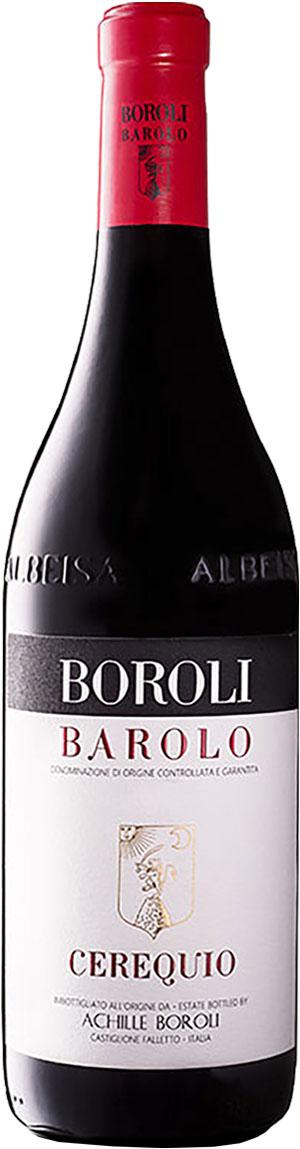
Boroli Cerequio is made from 100 percent Nebbiolo.
The Boroli family is a family of entrepreneurs, with roots in Piedmont dating back to 1831. The family started their winemaking business in1997, when Silvano and Elena Boroli felt an ardent desire to step away from the pressures of their publishing business and reconnect to nature. Silvano and Elena grew the company until their son, Achille, stepped in to run the wine-growing and production business in 2012.
With the 2012 grape harvest Achille decided to radically change the methods used in vineyards and wineries, aiming for the highest quality in Barolo and its crus. He cut production levels, updated the winemaking technology, and focused on low intervention methods to raise the quality of the Boroli wines be on par with the finest Barolo wines.
About the Vineyard
The Cerequio cru lies just across the valley from the Boroli winery in the commune of La Morra and is considered one of the most prestigious sites in the Barolo DOCG zone. It is known to produce Nebbiolo wine of enormous elegance and finesse.
Wine Production
Cerequio is distinguished by a careful selection of grapes, precise destemming, and a long maceration with submerged cap.
Tasting Notes
A clear bright ruby color with very light garnet red reflections; intense and persistent aroma of red fruit with notes of plum and cherry. A pleasant aroma of wood is noticeable after the fruity aroma, anticipating the full taste of a great wine suitable for long lasting life. A succulent, rich, full-bodied and pleasant taste emerges after the woody one, with the presence of slightly ripe red fruit.
Food Pairing
Thanks to its viscosity and body, Barolo is the ideal wine to pair with elaborate dishes and dishes like truffle dishes, meat dishes, pasta with porcini mushrooms, game, and aged cheeses. Cerequio is also perfect with dry pastries or chocolate.
Review:
-WineCritics.com 96 Points
A Piedmontese family of entrepreneurs since 1831. Firstly in the textile industry, then in publishing and now also in wine-growing.
In the 90’s, Silvano and Elena Boroli felt the need to start a new project that could bring them back to nature, far from the crazy rhythms of today.
The choice was almost obligatory for a Piedmontese: Langa wines. A passion that has converted into a job. What could be better?
A very difficult and demanding job, whose results are never achieved by chance, but, precisely for this reason, with great satisfaction.
In 2000, Achille, the third of four children, joined the company.
However, the family origins lie in the mists of time. Many family documents have survived thanks to the conservation and classification work of Don Carlo Pollina (1744-1799), the guardian of little Carlo Antonio Boroli, Silvano’s Great Great Great Grandfather.
Among them, the coat of arms tells us about great merits in the crusades, as shown by the Crescent and the scimitar brandished by the lion rampant, a symbol of perspicacity and bravery. On its part, the shining sun tells us about the resources of the family, blessed by Divine Providence.
Silvano married Elena Verri in 1968; they have 4 sons (Carlo, Guido, Achille and Filippo) who work in different fields, and now 7 grandchildren.
Silvano worked in the graphics-publishing industry until the ’90s and decided to change his life by devoting himself to an old passion of his: the land, which for a Piedmontese can only mean Langa wines.
Achille, after graduating in business administration, decided to take care of the wine-growing and producing business and deal with food-and-wine connoisseurship. After gaining the Michelin Star with the Locanda del Pilone, with the 2012 grape harvest he decided to radically change the methods used in vineyards and vineries, aiming at total quality for Barolo and its crus.

Argyle Reserve Pinot Noir is made from 100 percent Pinot Noir.
Pinot Noir thrives in Willamette Valley's long growing seasons with cool autumn breezes and sunny days. This culmination of extra time on the vine yields aromatics of crunchy dried leaves, pomegranate molasses, black tea leaves, and tart cherries. Earthy undertones and great textured tannins that continue to smooth out with time - adding to the body and longevity.
Review:
-Wine Spectator 93 Points

Xavier Vignon Chateauneuf du Pape Rouge is made from 65% Grenache, 20% Mourvèdre and 15% Syrah.
A clear and very expressive nose with notes of black fruits, spices and licorice. The mouth reveals tanins that are already supple with a great balance.
The finish is long, on black fruits, licorice and a slight salinity.
Xavier Vignon Chateauneuf du Pape Rouge is made from grilled rib of beef, roasted duck with figs, boar stew.
Review:
-Jeff Leve, The Wine Cellar Insider 93 Points
-James Suckling 92 Points
-Beverage Dynamics 95 Points

Fenocchio DOC Nebbiolo Langhe Bussia is made from 100 percent Nebbiolo.
The color is a deep ruby red with garnet reflections and an intense and fruity bouquet of plum and cherry. The flavor is dry with good body, well balanced tannins and harmonious with hints of licorice and rose.
Parcel is 2 hectares (5 acres) planted at 300 meters above sea level.
Pairing well with all types of food, from appetizers to cheeses with red and white meat.
Review:
-Decanter World Wine Awards 90 Points

Holocene Memorialis Pinot Noir is made from 100 percent Pinot Noir.
Holocene Pinot Noir Memorialis is a blend of 777, Pommard and 115 clones from MonksGate vineyard in the Yamhill-Carlton AVA, and it saw about 20% new French oak for 16 months prior to bottling. It is always the lighter and more feminine of the two Holocene wines, with red fruits, white flowers, dried herbs, mushroom and forest floor aromatics, bright acidity and a lithe texture, long finish.
By now, everyone knows that the Willamette Valley is an amazing place to grow Pinot Noir. When I relocated from Napa Valley to partner up with Force Majeure Vineyards, I knew I also wanted to start a project where I could focus attention on a varietal and growing region that I loved. Part of the excitement of being in the Pacific Northwest is the ability to have access to so many amazing vineyards and so much diversity, along with the opportunity to push boundaries and try new things – something that is becoming increasingly difficult in other growing regions.
We partner up with a few very small, diverse and amazing vineyards in the Willamette Valley, sourcing fruit from these dry-farmed sites that emphasize low yields, sustainable practices and produce outstanding fruit.
The wines are crafted in the same way I have been making wine since I was carrying it out at Bryant Family Vineyard in the Napa Valley — utilizing very low-impact, non-industrial techniques, native yeasts, little extraction and little new oak, and never filtering or fining. This allows a real sense of place to show through in the wines that is often dimmed when too much manipulation is undertaken.
Our first vintage was 2015, and was released in early 2017. As production is currently extremely small, the best way to get the wines into your hands is to join our mailing list at the “Mailing List” link above to receive an allocation when we have a release. We release wines once per year, and they will be sold on a first come, first served basis, shipped straight to your door.
Review:
-Decanter World Wine Awards 96 Points
-Eric Guido (Vinous) 95 Points

Wine Gift Set Includes:
Review:
-James Suckling 93 Points

Setriolo Merlot Toscana 2024 is made from Merlot. Alongside their Chianti Classico, the Soderi family at Castellina in Chianti make a small-production Merlot from their organically farmed hillside — a tiny estate where grapes have been grown since the early 1800s and estate-bottling began in 2005.
A plush, sun-ripened Tuscan take on Merlot, it offers supple black cherry and plum, cocoa and sweet spice, with a round, velvety texture and a warm, savory finish. Approachable young, it is a softer counterpoint to the estate's Sangiovese-based wines.



