
" We don't sell the wine without touching the vine "
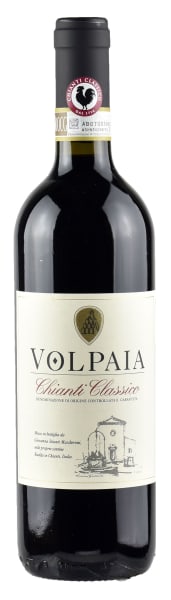
| Country: | Italy |
| Regions: | Tuscany Chianti |
| Winery: | Castello di Volpaia |
| Grape Type: | Sangiovese |
| Organic: | Yes |
| Vintage: | 2020 |
| Bottle Size: | 750 ml |
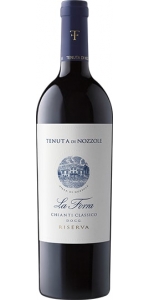
Tenuta di Nozzole La Forra Chianti Classico Riserva is made from 100% Sangiovese.
Located north of the village of Greve in the heart of the Chianti Classico region, the Nozzole estate covers a striking, rugged, mountainous area of about 1,000 acres at 984 feet in elevation. In order to obtain concentration and complexity in the wine, yields are kept low. The grapes are hand harvested, destemmed and crushed. Fermentation is initiated on the skins in temperature-controlled stainless steel tanks, followed by a maceration period to draw out color and tannins. The wine is racked into stainless steel tanks for malolactic fermentation before aging in oak vats and in bottle before release. The wine is bottled on the estate.
The 2020 vintage was characterized by a basically cold period between April and May and by a generally warm and dry climate until July. The initial slight delay of the vegetative cycle has been recovered since the summer. The sudden increase in temperatures, especially for the later varieties where the fruit set had not yet ended, has favored a production characterized by sparse and light bunches. The stable and sunny climate of the months of August and September allowed the grapes to complete ripening in optimal conditions.
Review:
Attractive on the nose with cherries, red berries, dried herbs and baking spices. It’s medium-bodied with fine tannins. Harmonious and poised with a refined character. Weightless and agile. Polished and succulent finish.
-Wine Enthusiast 93 Points
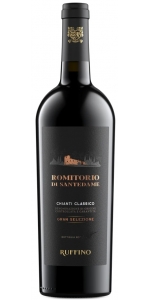
Ruffino Romitorio di Santedame Chianti Classico Gran Selezione DOCG is made from 90% Sangiovese, 10% Colorino.
Romitorio di Santedame, a limited-production Gran Selezione from Castellina in Chianti, pays homage to a rich history while embracing a bright future. It originates from a single vineyard within the Chianti Classico's "golden basin" (Conca d'Oro) and is crafted from an exclusive blend of Sangiovese and Colorino. The latter is a native Tuscan grape variety that was nearly extinct but has experienced a revival through dedicated research and promotion efforts.
Fruity aromas typical of Sangiovese, including black cherry and ripe plum, with violet and complex chocolate and black pepper notes. The palate offers sweet tobacco and balsamic hints, while its balanced structure with refined tannins and lively acidity makes it suitable for extended aging.
Review:
You feel the oak here, suggesting vanilla and clove character, but it’s very well complemented by the dark fruit, ranging from blackberries to mulberries to dark cherries. Full-bodied, dense and decadent with a regal structure and muscular tannin backbone. The acidity cuts nicely through on the long finish and provides freshness. Drink from 2024.
-James Suckling 94 Points
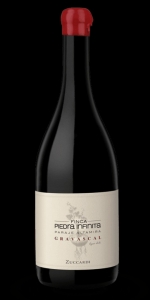
Familia Zuccardi 'Finca Piedra Infinita' Gravascal is made from 100 Malbec.
WINE DATA:
Grape Composition: 100% Malbec
Appellation: Finca Piedra Infinita, IG Paraje Altamira,Valle de Uco, Mendoze
Vinification: Manually selected grapes, filling of tanks by gravity. Fermentation with native yeasts in concrete vessels without epoxy. Aging in concrete vessels. The 2020 was a very particular vintage, characterized by limited yields and a high speed of maturity, which made it one of the fastest and most challenging on record.
In the search for the purest expression of the identity of Finca Piedra Infinita vineyard, we reached this small plot of 0.73 hectares. Located on its north-east side, it shows the typical facet of Paraje Altamira soil, with large gravels and granite stones covered with calcareous material at a depth of 50 cm.
Altitude: 3,609 feet above sea level
Soil Type: Short alluvial soil covered with calcareous materials
Alcohol: 14% Total Acidity: 5.6g/l
TASTING NOTES:
Color: Bright ruby color
Aroma: Dark berries, black olive tapenade, and iron
Flavor: Rich on the palate, with firm tanins
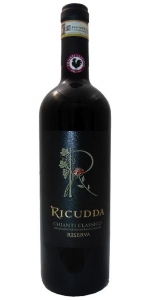
Ricudda Chianti Classico Riserva 100% Sangiovese.
Deep ruby red color.
The wine shows an intense and persistent bouquet, with notes of berries and spices such as licorice and black pepper. Well-harmonized hints of oak.
In the mouth, it is well structured and balanced, complex, persistent with notes of red fruits and spices such as black pepper and licorice.
Pair with grilled red meats, steak, game of hair and feather, stewed and roasted, aged cheeses hard like pecorino.
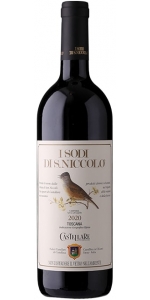
Castellare di Castellina 'I Sodi di San Niccolo' Toscana IGT is a blend of Sangioveto (85%-90%) and Malvasia nera (15-10%)
Intense ruby red in color and with a great olfactory concentration, thanks to the presence of a ripe red fruit that leads to notes of jam, but also spices, vanilla and licorice. In the mouth the wine is characterized by a dense and elegant texture, also supported by the important acidity of the Sangiovese, the tannins are absolutely sweet and the finish is long and of great persistence.
Excellent with cured meats and savory meats, with succulent dishes and mature cheeses. Much appreciated when paired with Tuscan Pecorino and Parmigiano.
The masterpiece of Castellare, I Sodi di San Niccolo, has twice placed in the top 100 of Wine Spectator, and has been awarded “Three Glasses” by Il Gambero Rosso.
I Sodi di San Niccolo is produced solely with native varieties: 85-90% of Sangioveto and 10-15% of Malvasia Nera, I Sodi comes from the two best crus of the farm.
The word "I Sodi" was used by the Tuscan farmers to describe those grounds which had to be processed by hand, being too hard (in fact firm) or too steep to allow for the employment of the horses, unlike the "fields" that make the grounds more easily cultivable.
Reviews:
Packed with ripe, juicy cherry, blackberry, pomegranate and floral aromas and flavors, this red is supple and beautifully integrated. Earth, iron and tobacco accents add detail as this winds down on the lazy, resonant aftertaste, showing terrific energy. Sangioveto and Malvasia Nera. Best from 2026 through 2043.
-Wine Spectator 97 Points
#35 Wine Spectator Top 100 of 2024
Vinous 97+ Points
Castello di Volpaia Chianti Classico is made from 90% Sangiovese, 10% Merlot.
The vineyards of Volpaia are among the highest in Chianti. Their Chianti Classico is characterized by elegance and finesse with a rich bouquet of red fruits and spices.
Review:
Black-cherry and orange-peel aromas and flavors. Some lead pencil and slate, too. It’s medium-bodied with fine tannins and firm acidity, which adds verve and tension to the wine. From organically grown grapes. Drink or hold.
-James Suckling 93 Points
A bright, succulent style, this exudes cherry, strawberry, earth and tobacco aromas and flavors, with spicy character. Shows vibrant structure and balance, with a lingering finish. Sangiovese and Merlot.
-Wine Spectator 92 Points
The village of Volpaia sits on a hilltop just north of the town of Radda in the heart of the Chianti Classico region. Volpaia was built in the 11th century as a fortified village on the Florence-Siena border. Unlike Brolio, Meleto and other Chianti-area castles, Volpaia is a “terra murata,” a “walled village.” Although only part of the original protective walls and two of its six towers are still standing, the medieval layout and buildings within the village are still intact, making Volpaia one of the best-preserved villages of its period.
The most notable Renaissance-era building in Volpaia is the Commenda di Sant’Eufrosino, the second of four churches built within the city’s walls. Attributed to Italian architect and sculptor Michelozzo di Bartolomeo (1396-1472), the church was built in 1443 by request of the Canigiani family, who lived in Volpaia. One of the family members wished to join the Knights of Malta, a religious order and military brotherhood ruled by a Grand Master that answered only to the Pope. The Knights of Malta required that the Canigianis build a church in Volpaia before joining the organization.
The Commenda was deconsecrated in 1932 and declared a national monument in 1981. For 13 years, until 1993, the Commenda housed a renowned art collection. The basement of the church now contains one of the winery’s barrel cellars, while the Commenda where mass was once held is used for tastings, dinners, concerts and other events.
Volpaia dates back to 1172. In 1250, Volpaia was a founding member of the Lega del Chianti (Chianti League). The Florentine Republic formed the Lega by dividing its communities into three districts — Castellina, Radda, Gaiole — and allotting each a certain amount of territory. Volpaia was included in the League’s Terziere di Radda. The territories were front-line garrison towns for Florence in the Florentine-Sienese wars, and the emblem for the Chianti League was the “Gallo Nero,” or “Black Rooster” — the current trademark for Consorzio Vino Chianti Classico.
The winery’s logo features the coat of arms from the illustrious della Volpaia family, who lived in the village and took its name from the town itself. Lorenzo della Volpaia (1446-1512), an architect, goldsmith, mathematician and clockmaker, founded a Florentine dynasty of clockmakers and scientific-instrument makers that included his sons, Camillo, Benvenuto and Eufrosino and nephew Girolamo. As clockmaker, he gained fame and honor with the construction of the Orologio dei Pianeti (Planetary Clock) in 1510. Lorenzo also built the clock at the Palazzo Vecchio in Florence. He was a friend of Leonardo da Vinci and often gave him advice on technical problems; Lorenzo even took part in the discussions on the placement of Michelangelo’s David. The della Volpaia family instruments are on display at the Science Museums in Florence and Greenwich (United Kingdom).
Raffaello Stianti, one of Italy’s preeminent printers and bookbinders, adored his daughter, Giovannella. On the occasion of her fifteenth birthday, Raffaello presented Giovannella with an 18th-century Florentine ring in the shape of two foxes. “Volpaia” means “fox’s lair” in Italian, thus, in Giovannella’s opinion, “sealing her destiny.”
At this time, Volpaia was owned by three different families and portions of the village, vineyards and surrounding land became available to purchase. Raffaello purchased a portion of the Volpaia estate in 1966 and continued to purchase land in Volpaia as it became available in the passing years. When Giovannella married Carlo Mascheroni in 1972, Raffaello gave his Volpaia estate to the young couple as a wedding gift.
By the mid-1970s, Carlo and Giovannella decided to commit their considerable energies toward modernizing the winery and producing world-class wines — all without altering the external structure of the 11th-century village. They painstakingly converted several historical sites to cellars, offices and apartments. Within the castle, whole floors were removed, roofs were raised and carefully re-laid with their original tiles, while abandoned churches were fitted with the latest stainless-steel equipment. Giovannella and Carlo were the first in the Chianti Classico region to utilize temperature-controlled fermentation techniques.
The Stianti Mascheroni family also installed an amazing “wineduct” that connects the winery’s stainless-steel fermentation tanks in the upper part of the village to the various barrel cellars in the lower portion of the village. The wine passes by gravity through the stainless-steel pipes that are hidden below the village’s streets.
Achieving their desired level of quality has been a decades-long process, and one that is never finished. Nearly every five years the family has updated the cellars with the most modern vinification technologies. In the last 35 years, the family has replanted most of its vineyards, using the best Sangiovese clones available, while at the same time preserving the oldest Sangiovese clones in the region.
One of the highest-elevation winery in the Chianti area, Castello di Volpaia owns 46 hectares (114 acres) of vineyards, which are situated at 450 to 600 meters (1,300 to 2,130 feet) on the southern hillsides leading up to the village.
Volpaia is committed to organic farming practices in all of its estate vineyards and complies with all of the organic viticulture legislation in the production of its wines (European Community Legislation, rg CE 834/2007 Organic Agricolture; EU Certification 203/3012 for Organic Wine; Controller Q Certificazioni srl).
Today, the Stianti Mascheroni family owns roughly two-thirds of the village. There are 370 hectares (914 acres) of land, including 46 hectares (114 acres) of vineyards, nearly 16 hectares (40 acres) of olive trees, as well as the walled village, villas and forests.
Just as it has been for the last 900 years, nearly the entire village is intimately involved in the production of wine and olive oil. Volpaia is not only a beautiful village for tourists to admire, but is also a hub of activity where the residents are linked directly or indirectly with the winery. Most of the employees of the winery live within the village’s walls, sheltered in houses that the Stianti Mascheroni family has restored for this very purpose. Volpaia is one of the few rural villages whose population has been growing in the last two decades. Residents welcome an average of 50 guests on any given day through Volpaia’s villa and apartment accommodations.
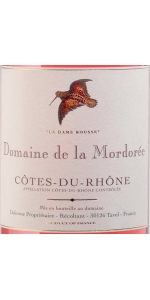
Mordoree Cotes du Rhone Dame Rousse Rose is made from 40% Grenache, 35% Syrah, 15% Cinsault, 5% Carignan, 5% Mourvèdre
Color : rosé, slightly orange (mordorée colour).
Aromas : crystallized oranges and cherries, slightly aniseed.
Palate : very rounded, fresh and long finish.
Ageing potential : 2 to 3 years
Surface : 14 Ha. Yield : 45 Hl./Ha. Vineyard age : 20 years Terroir : clay / chalk,clay / limestone and sandy with pebble stones. Harvest : by hand. Vinification : vat bleeding, temperature control. Estate bottled.
Food pairing: cold meats and delicatessen, fowl, white meats, grilled lamb with Provence herbs, fish soup, fried fish, pastas, pizzas and all Asian dishes.
Review:
"This rosé appears so pretty in the glass with its watermelon hue and presents a refreshing summery nose. Find notes of watermelon slices and yellow peaches sprinkled with sea salt. Think of pairings similar to prosciutto-wrapped melon. This is a solid rosé to enjoy all summer long."
- Wine Enthusiast (May 2023), 91 pts
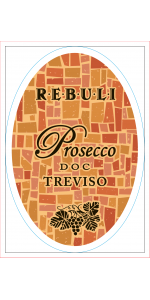
Visual aspect: Straw yellow color with persistent mousse.
Aromas: Fruity notes of delicious Golden apple and Kaiser pear with a pleasant citrus background.
Mouthfeel: The wine is well balanced with a nice acidity and minerality, combined with freshness and complexity.
The finish is long and very pleasant.
Area of origin: Valdobbiadene, Conegliano, Vittorio Veneto.
Soil: calcareous clayey
Varietal: Glera (known as Prosecco)
Harvest: manual harvest with grape selection
Winemaking: off skins by gentle pressing.
Primary fermentation with controlled temperature by selected yeats.
Refinement :Stainless Steel tanks
Foaming: secondary fermentation in "autoclave" (cuve close) at a controlled temperature with selected fermentation as long as a 5 bar pressure is reached.
Fining: 60 days
Training system: autochthonous called "capuccina modificata"
Bottling: isobaric bottling after sterile filtration.
It is ideal for important occasions and as an aperitif. It is also excellent with risotto and noble meat.
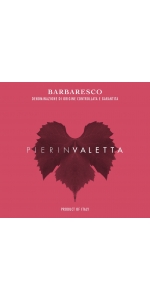
Pierinvaletta Barbaresco is made from 100% Nebbiolo
Rich, Full bodied, Intense.
Pierin Valetta is one of the ancestor of the Family and these wines are dedicated to him as we would like to thank him for giving us vineyards that reach up to 70 years old.
Made from 70 years old vines planted on clay soils.
Aged 30 months in French and Slovanian Oak barrels.
Wine wasn't filtered before bottling.

Xavier Vignon Beaumes de Venise Rouge is made from 60% Grenache Noir, 15% Syrah , 15% Mourvèdre and 10% Cinsault.
Thanks to the altitude all the grape varieties have been vinified together. The altitude vines have brought enough acidity to proceed with a burgundy style ageing with 50% in barrels of 3 to 5 years and 50% in stainless steel tanks.
It's full-bodied and lush, with waves of black cherries, hints of stone fruit and nuances of allspice, pepper and licorice on the long finish.
Pairs with roasted pigeon with wild basil - Rack of lamb with thyme - Pork ribs with a barbecue sauce - Peking duck - Wild boar braised in beer
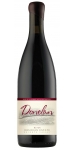
Obsidian Vineyard Syrah is bathed in terroir. The vines experience severe stress, pushing the roots ever deeper through rock in search of water, producing miniature clusters of intense power. Given the wine’s natural propensity for tannin, we take extreme care in the cellar to chisel/whittle its rough edges and leave room for richness to flatter its distinctive scaffold. The mid-palate supports flavors of roasted coffee beans, sarsaparilla, and dark chocolate. The finish marches on long after most wines have tired.
Our estate vineyard — the six-acre Obsidian Vineyard in the Knights Valley AVA — has an incredibly complex soil structure. It takes its name from a layer of volcanic obsidian rock that was discovered when we drilled for water.
Chocolate ganache, black currants, fig, graphite, and an expansive mouthfeel.
Review:
"Joe Donelan believes his Obsidian Vineyard is one of the world’s greatest sites for Syrah. I’ve visited the site twice, and can say candidly it certainly sits among the most striking vineyards I've ever laid eyes on within the U.S. It sits like a rock on a promontory—two switchbacks to reach the top—and the stones under the top soil, quite literally, never stop emerging from the ground. The place has an ancient, almost sacred, temple-like feel. It is consistently swept by afternoon breezes. The vineyard was replanted in 2017 after fires ravaged it. Winemaker David Milner laid out the site at denser spacing than before, at 2,000 vines per acre to keep yields per vine low while still achieving sensible tonnage, averaging around three tonnes per acre. Viognier was planted for co-fermentations, alongside some Cabernet Sauvignon, for a single vineyard bottling of that grape. ‘God put on his viticultural hat when he designed this site,’ says Milner. The vineyard is planted with ENTA 174, 877, and Alban 1 clones, along with Donelan Heritage selections certified virus-free. The wine, the 2023 vintage release (the first from the new vines), was aged for 21 months in 36% new oak and co-fermented with 1.8% Viognier, using 32% whole clusters. And it is positively gorgeous: composed of nine different blocks, each fermented separately, then assembled through sequential blending, with no racking until bottling. From just five-year-old vines, this wine is utterly extraordinary—something oddly achievable from young vines on rare occasion. I tasted this wine from the same bottle over three days. While the high-toned espresso-bean and cedar accents are present at first pull of the cork, they mellow out a day later, and the fruit profile is so vibrant. This is the sign of an excellent wine. I first tasted wines from the Donelan’s Obsidian Vineyard years ago at Tasting Panel Magazine in the late, great Anthony Dias Blue’s office. Cushing Donelan showed the wines, and to this day, I recall the first moment I put my nose into a glass of Obsidian Syrah. In early January of 2026, as I nosed this brand new release of Obsidian Syrah, I was transported straight back to that tasting twelve years ago. What’s remarkable is that the aromatics are unmistakably the same, yet from these new, more densely planted vines, the aromas are more refined—precision-farmed wines from young vines delivering a level of detail and poise that feels beyond their years. So what’s in the glass? Pure red, black, and blue fruit nuances layered with tobacco, white truffle character, violet pastille, and an intoxicating perfume. White pepper notes emerge on the medium- to full-bodied palate, framed by velvety tannins. Iron-like and crushed slate minerality underpins dazzling black cherry and blackberry fruit, brown spices, and blood orange richness. There’s a velvety, iron-fist quality here that exudes polish, complexity, and undeniable quality. You want to drink it now—and you absolutely can—but it will also reward time in the cellar. Either way, you’ll be utterly wowed. And when you realise the price is under £100, the achievement becomes even more staggering. As these vines mature, what will become of them in subsequent vintages? I suspect that as the vines mature, they'll go in and out of phases, but so long as Mother Nature cooperates, I expect this wine to continue to dazzle each vintage. - Jonathan CRISTALDI"
Decanter (January 5th 2026), 100 points
This is the first vintage of the Obsidian Syrah after wildfires torched the vineyard in 2017, leading to significant redevelopment. Throughout all those years, the Donelans have exhibited remarkable patience and a clear sense of purpose. This is their reward: a truly magnificent, towering wine of the highest level.
Knights Valley is one of the most magical grape-growing districts in the United States, but it is not very well known because only a few estate wineries are located there.
The 2023 Syria Obsidian Estate is one of the most profound, moving wines I have tasted in Sonoma County. Blackberry, gravel, incense, chocolate, lavender, and dried herbs race out of the glass. Delicate yet powerful, the 2023 is spectacular. It is also very fairly priced in today’s market.
Vinous 100 Points
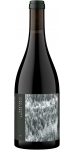
Zena Crown Vineyard The Sum Pinot Noir is made from 100 percent Pinot Noir.
Massed from multiple vineyard blocks and clones, this wine has a timeless beauty that can be inherently understood by innate human nature. Wines of this stature, much like great art, reflect the complex and compelling relationship between humanity and Earth. Expressing Autumn, S (The Sum) leads with Gala
apple, Japanese plum, gun powder, dirt, and garlic power on the nose, with barely ripe cherry on the finish. 60% whole-cluster fermentation bolsters the wine, sustaining the tannic imprint and tension that uncoils like a rattlesnake strike on the finish.
Review:
A jeweled ruby hue, the 2021 Pinot Noir The Sum takes on fantastic crystalline and pure aromas of wild strawberries, raspberries, dark stones, menthol, and cedar spice, but it’s not very oaky. Medium-bodied, it has ripe tannins, with ripe acidity and a bit more modest acidity compared to the other wines from Zena Crown, but it’s long on the palate, with a more autumnal sensibility, and it’s going to show its best over the next 12-15 years.
-Jeb Dunnuck 95 Points



