" We don't sell the wine without touching the vine "
| Country: | France |
| Regions: | Burgundy Chablis |
| Winery: | Chartron et Trebuchet |
| Grape Type: | Chardonnay |
| Vintage: | 2016 |
| Bottle Size: | 750 ml |
Corinne Perchaud Chablis Premier Cru Fourneaux is made from 100 percent Chardonnay.
This is the south facing portion of the slope and very hot, heavy "Fourneaux" or "oven" effect.
The wine is expressive and vivacious with beautiful aromas.
Well-balanced, round and fruity wine with a fine minerality on the finish.
1er Cru Fourneaux is located on the Fleys village and faces the field. the plots are very steep and exposed full south on soil type Kimmeridgian consists of marl clay-limestone with shallow ground and a very stony ground. After a slight settling, the juice starts its fermentation in tank, then ¼ of juice is racked in barrels. Both wines perform their alcoholic fermentation and malolactic and their aging on the lees, separately. The two cuvées are blended six months after harvesting. The wine is then filtered and is bottled 15 months after harvesting. 2013 Conditions and Harvest The relatively high temperatures at the end of winter allowed an early bud vines in early March. With a hot, dry spring flower took place in good conditions. In July, a hailstorm located did some damage to our Fourchaume plot. July and early August, rainy and stormy brought the water needed by the vineyards. The dry and sunny weather of the second half of August brought the grapes to maturity. The harvest began on September 2 under cloudy skies.
Coquille St. Jacques (scallops) with leeks and cream.
Corinne Perchaud Chablis Premier Cru Vaucoupin is 100 percent Chardonnay.
The vineyard The plots are on the Vaucoupin Chichée village. They are very steep and facing south, their average age is 40 years. The total area is 1.45 hectares. The vines are planted on soil Kimmeridgian marl consisting clay and limestone with dominant clay. Winemaking After a slight settling, the juice is put in to achieve its fermentation tank alcoholic and malolactic. It follows a long aging on lees to bring a maximum of complexity of aromas and flavors. If necessary, we make a collage to bentonite to remove proteins and a passing cold which eliminates tartar crystals. Then we perform a tangential filtration is the filtration method most friendly to wine.
The wine will be bottled 16 months after harvest. The relatively high temperatures at the end of winter allowed an early bud vines in early March. With a hot, dry spring flower took place in good conditions. In July, a hailstorm located did some damage to our Fourchaume plot. July and early August, rainy and stormy brought the water needed for the vineyards. The dry and sunny weather of the second half of August brought the grapes to maturity. The harvest began on September 2 under clement skies.
Pairs well with seafood, shellfish.
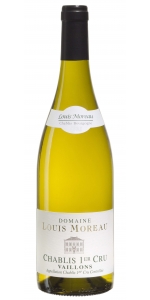
Domaine Louis Moreau Chablis Vaillons Premier Cru is made from 100 percent Chardonnay.
Chablis achieves its highly distinctive mineral character due to its cool northerly climate and its highly calcareous soil. The Domaine Louis Moreau Chablis Vaillons Premier Cru is a generous, fleshy and lively wine that displays a beautiful balance of minerality, fruitiness and elegance.
Chablis, with its steely character and fresh citrus flavor, pairs well with white fish and shellfish and its naturally high acidity can counterbalance cream-based sauces. Unoaked Chablis lends itself well to vegetables, starches, Comté, or fresh goat cheese.
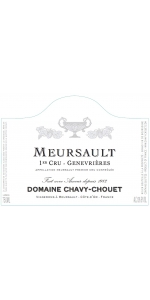
Chavy-Chouet Meursault Premier Cru Les Genevrieres is made from 100 percent Chardonnay.
Fruity flavors and typical nutty nuances. The Genevrières parcels are located in the heart of Meursault's southern premiers crus. "Genevrieres" takes its name from the presence, years ago, of the juniper bushes which covered its slope, and it is sometimes said that the tang of this aromatic berry can be detected in the wine.
The Genevrières parcels are located in the heart of Meursault's southern premiers crus. "Genevrieres" takes its name from the presence, years ago, of the juniper bushes which covered its slope, and it is sometimes said that the tang of this aromatic berry can be detected in the wine.
Fruity flavors and typical nutty nuances.
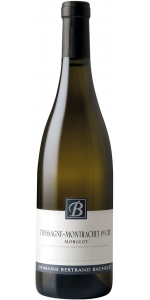
Bertrand Bachelet Chassagne Montrachet Premier Cru Morgeot is made from 100 percent Chardonnay.
The Chassagne-Montrachet appellation is located in the southern part of the Côte de Beaune and produces mainly white wines.
'Morgeot' is located in the south of the village, characterized by compact limestone soil containing iron oxide, which gives the soil its particular red-brown color.
The wine offers a golden color, a subtle nose of white flowers and honey notes. Full-bodied and well-structured on the palate.
The softness of the Chardonnay on the palate makes an interesting pairing with cooked foie gras; it also sits well with lobster, spiny lobster, or even morel mushroom dumplings or Bresse chicken in a cream sauce.
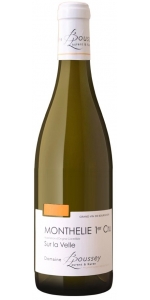
Boussey Monthelie Blanc Premier Cru Sur La Velle is made from 100 percent Chardonnay.
The name Monthelie comes from Mont Lyoei, mountain of Bacchus. The "Sur la Velle" plot is located on the eastern edge of Monthélie. It borders the Volnay Clos des Chênes Premier Cru to the east. The vineyards here lie on broadly southeast facing slopes with just enough gradient to achieve good drainage.
The Monthelie Blanc Premier Cru Sur La Velle has a beautiful pale yellow color with green reflections.
It is complex and rich with delicious aromas of white flowers, fresh almonds, lemon and minerality.
The finish is long with a very good balance between the excellent ripeness and the perfect amount of acidity.
We recommend this wine with white meat, fish and seafood.
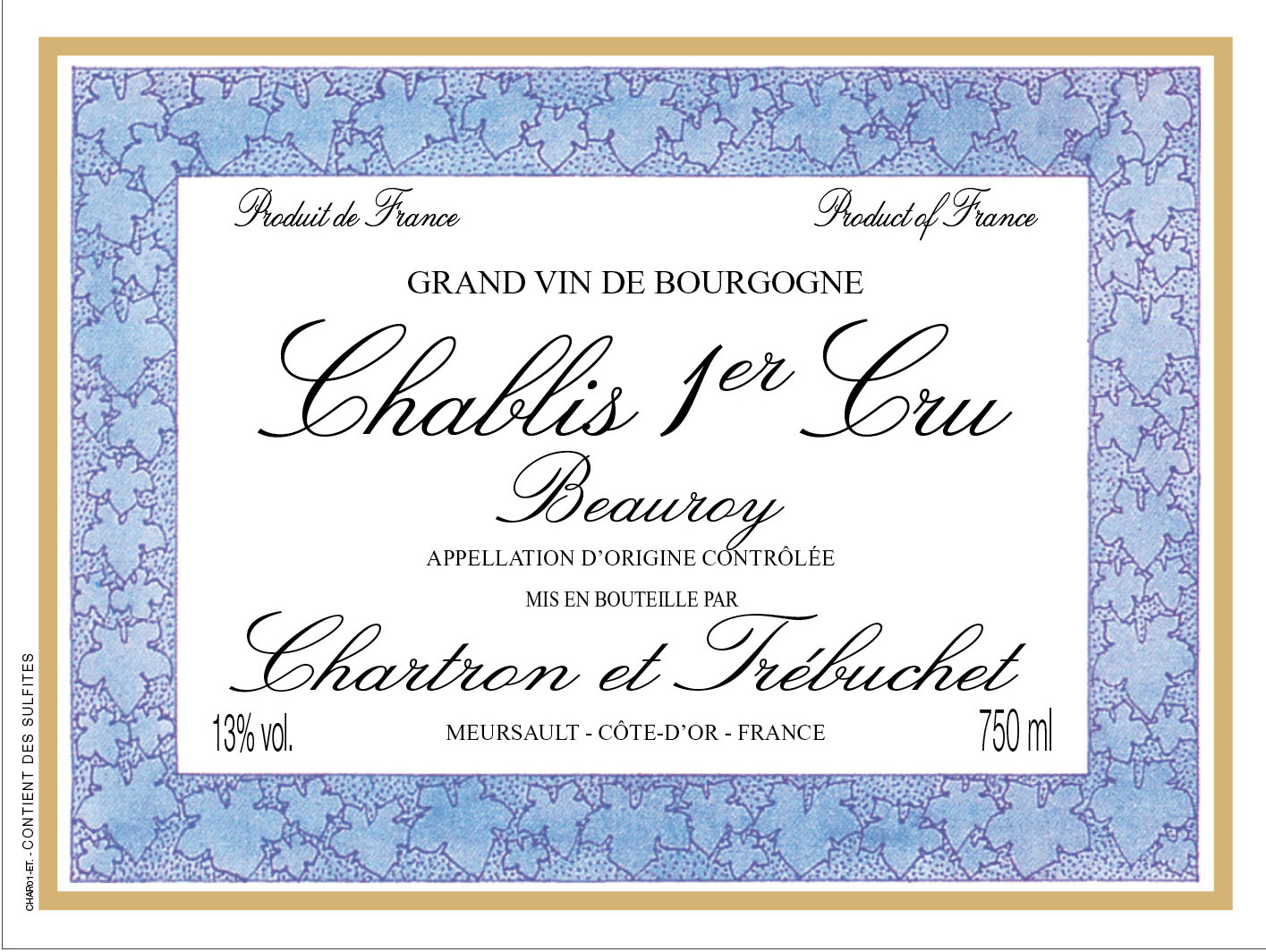
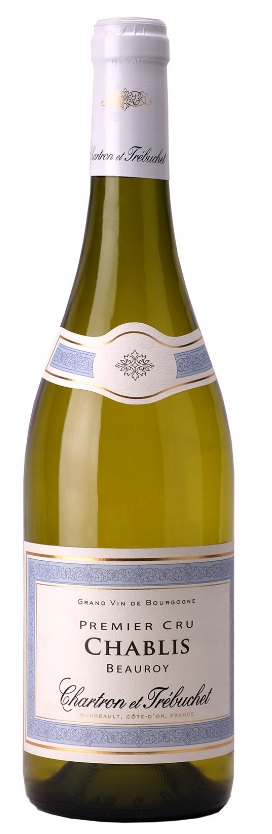
Chartrons et Trebuchet Chablis 1er Cru Beauroy is a crisp and clean Chardonnay that offers a rich and intense bouquet of fresh citrus fruits and white flowers. The mouth is round, ample and powerful. The rich and rounded palate is expressive and voluptuous with a mineral character and good acidity. A long finish. Delicious.
Chartrons et Trebuchet Chablis 1er Cru Beauroy is a perfect match with cooked oysters or fish in sauce, white meats (veal, poultry), sushi, goat cheese, blue cheese and Comté.
The Chartron et Trebuchet Estate
Owners of Premiers and Grands Crus in Puligny-Montrachet since 1859 with the Domaine Jean Chartron, Jean-René Chartron founded the Maison Chartron et Trébuchet in 1984 with Louis Trébuchet, manager of a wine trading company.
Vincent Sauvestre acquired the company in 2004. His objective is to continue to promote the great white wines of Burgundy, whilst respecting and perpetuating the quality work achieved by Jean Chartron and Louis Trébuchet.
The Maison Chartron et Trébuchet specialises in producing great white Burgundy wines. The know-how of the winemakers begins with a radical selection of the very best plots: the highest-quality terroirs of the Côte are chosen and the grapes are carefully monitored throughout the ripening period. Grapes are hand-picked when the balance between acidity and sweetness is at its prime: the fruit must not be too ripe so that the full potential of the terroir is maintained, including its acidity, to ensure that the wines age properly. All of the winemaking is done in casks: the alcoholic fermentation is followed by malolactic fermentation. A proportion of 20 to 40% of new barrels is used, depending on the appellations and the vintage. Wines are left to age for 12 to 18 months depending on the appellations.
The Chartron et Trebuchet Vineyards
Chartron et Trébuchet's vineyards are all planted on Limestone and Clay based soils. In average, the age of the vines is 30 years old.
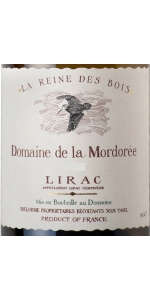
Mordoree Lirac Blanc Reine des Bois is made from Grapes : Grenache 35 % Clairette 25 % Viognier 10 % Roussanne 15 % Marsanne 10 % Picpoul 5%>
Color : green gold
Aromas : white fruits, peach, apricot, pear, violet.
Palate : rounded, long finish, highly flavoured.
Ageing Potential : 4-5 years.
Surface : 4 Ha. Yield : 35 Hl./Ha. Vineyard age : 30 years Terroir : Clay / chalk with pebble stones. Harvest : by hand Vinification : skin maceration and direct pressing with temperature control. Fermentation : oak barrel fermentation for 25% of the total volume
Pairs well with appetizers, fish, seafood.
Review:
"Iconic grapes of 35% Grenache, 25% Clairette, 10% Viognier, 15% Roussanne, 10% Marsanne, and 5% Picpoul from 40-year-old vines make up this organic Southern Rhône white. A floral bouquet of white tea and jasmine make their designs on a defined slate mouthfeel. Lime pops with a tart center, along with notes of peach and gingerbread on a keen, edgy finish."
- The Somm Journal (Feb/March 2022), 94 pts
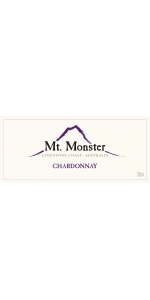
Mt Monster Chardonnay is made from 100 percent Chardonnay.
Gentle pressing and free run juices create the base of this wine.
Traditionally Mt Monster Chardonnay is 100% fermented and matured in stainless steel, this receives some lees contact to add texture and complexity to the palate, but essentially this wine is pure Chardonnay fruit.
Review & Tasting notes:
Bright straw color, with hints of lime green. Fresh figs and melon, with vibrant lemon citrus fruit. The nose also shows some yeast complexity from extended lees contact. Fresh tangy melon fruit flavors, & a clean acid finish. Although it may benefit from up to 2 years maturation in bottle, this wine is best consumed when young and fresh.
- Australian Wine Showcase (December 2016), 94 pts
Pernot Belicard Batard Montrachet Grand Cru is made from 100 percent Chardonnay.
Aromas of white peach, white apple, with a beautiful minerality. Also lighty salty, chalky aromas and some bread and brioche flavors and a hint of vanilla.
Poultry with cream based sauces, French cheese, like camembert, but not too strong, also seafood and fish.
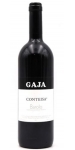
Gaja Barolo Conteisa is made from 100 percent Nebbiolo.
Piedmontese for "quarrel," this wine was named for the historic dispute between the communes of La Morra and Barolo for possession of the Cerequio land. This garnet-colored wine features expressive floral notes and an aroma of red berries, plum, licorice and spice. The sumptuous texture and refined character offer perfectly integrated tannins and an elegant finish.
STYLE: Full-bodied, Rich, Balanced
FLAVOR: Floral, Red Berries, Plums, Licorice, Spice
Reviews:
This is a really enticing wine with an open and vivid nature that tells you right away it is Barolo, but it’s polished and sweetly tannic. You want to taste and taste. It’s medium- to full-bodied with rounded tannins and a savory finish. Juicy and so approachable now. Better in a couple of years, but hard to resist now. Try after 2026.
James Suckling 98 Points