" We don't sell the wine without touching the vine "
| Country: | France |
| Region: | Burgundy |
| Winery: | Chartron et Trebuchet |
| Grape Type: | Chardonnay |
| Vintage: | 2017 |
| Bottle Size: | 750 ml |
Croix Senaillet Saint Veran is made from 100 percent unoaked Chardonnay.
Fresh and fruity with floral, peach and citrus fruit aromas followed by mineral notes. Mineral, citrus and honey flavors. Rich and luscious palate with a long finish.
Produced from a selection of 40 parcels spread over 17 hectares. Some of the parcels include: Maillettes, Bergades, Poncétys, Terres noires, Pommards, Chênes, Surigny, Prâgnes, Bruyère, Chailloux, etc Average age of the vines is 45 years. The soil is made of clay and limestone. South, southeastern exposure - a few plateaux. Careful vinification. Minimal intervention in the vinification process. Modern equipment (pneumatic press, thermo-regulated tanks). Each parcel is harvested at full maturity. Destemming, slow press, slow fermentation, malolactic fermentation, aging on the lees.
Maurice Martin Saint-Veran is made from 100 percent unoaked Chardonnay.
White gold color with silver or greenish reflections , shiny and soft. Aromas suggest broom, acacia, green apple, lemongrass, citruses. A fresh, dry and fruity, nervous with a good balance.
The grapes for this wine is coming from 2 famous part of the Saint Véran' appellation: Prissé and Davayé.
The wine went through malolactic fermentation. It has been gently filtered before bottling.
Very easy to associate with his very complete balance : grilled fish, creamy risottos, antipasti, salads, sushis, very pleasant at the aperitif.
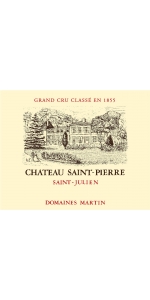
Saint Pierre Saint Julien is made from 79% Cabernet Sauvignon and 21% Merlot.
Chateau Saint-Pierre Saint-Julien 4th Grand Cru Classé boasts a rich and brilliant purple color, a complex aromatic expression marked by beautiful ripe fruits combined with soft spices, chocolate and licorice nuances. Well-balanced and a good texture, the palate is round and subtle, supported by velvety tannins that enhance the elegant and pure character of this Saint Julien.
Review:
"Very pretty and typical for the appellation with aromas of blackcurrants, violets and sandalwood that follow through to a full body with layers of polished tannins and a long, flavorful finish. Lasts a long time on the palate. Classic structure. Drink after 2027."
- James Suckling (January 2022), 96 pts
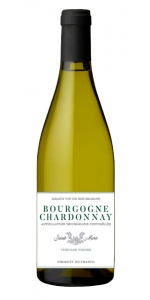
Sainte-Marie Bourgogne Blanc Vieilles Vignes is made from 100 percent Chardonnay.
The wine has a perfect light yellow color with green hues. Nose of white flower, sweet spice and bitter orange. Fresh and delicious attack. It shows roundness and a slight buttery note with a very saline finish that makes you slightly salivate.
Excellent with Seafood, grilled fish, clams and oysters of course. Also great with goat cheese or Comté cheese.
Aged on lees for 6 months in stainless steel vats. Adjustment of sulphites at the end of MLF and before bottling. Filtration on earth then on 1.2µ cartridge after bonding with bentonite.Machine harvest, and direct pressing with a pneumatic horizontal press. Static settling. Alcoholic and malolactic fermentation in stainless steel vats with native yeast and bacteria.
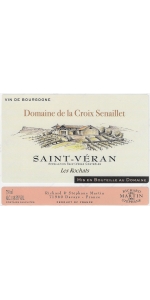
Croix Senaillet St. Veran Les Rochats is made from 100 percent Chardonnay.
This Saint Veran Les Rochats is produced from 50-year-old Chardonnay vines, grown organically on Jurassic-era limestone (Entroque limestone), covered by pebbles that act as a filtering soil. The parcel is southeast facing on half hills.
Clear golden color with light green reflections. The wine has a rich and complex bouquet with a wide array of aromas: pear, nougat, wild peach and kiwi. The mouth is rich and dense bringing freshness with a nice volume and finishing on a light exotic note.
Vineyard
Surface area : 1 Ha.
Soil : limestone soil from the Jurassic period, covered by pebbles acting like a filtering soil.
South-east facing parcel on half-hills.
Grape variety : organically-grown Chardonnay.
Plantation density : 8.500 vinestocks per ha.
Age of vines : 50 years.
Mâconnais style pruning quite short, with 10 to 12 buds.
Hand-harvesting at optimal maturity.
Destemming to avoid herbaceous taste.
Slow and gentle pneumatic pressuring guarantees purity of juice and extraction of the finest aromas.
Very slow alcoholic fermentation in stainless still tank.
Malolactic fermentation.
Aging in stainless steel tanks for 9 months with gentle stirring of fine lees.
Pairs well with shrimp risotto, sautéed veal with eggplant.

All older vintage wines have been purchased from a single collectors cellar. Pictures can be requested before shipment.
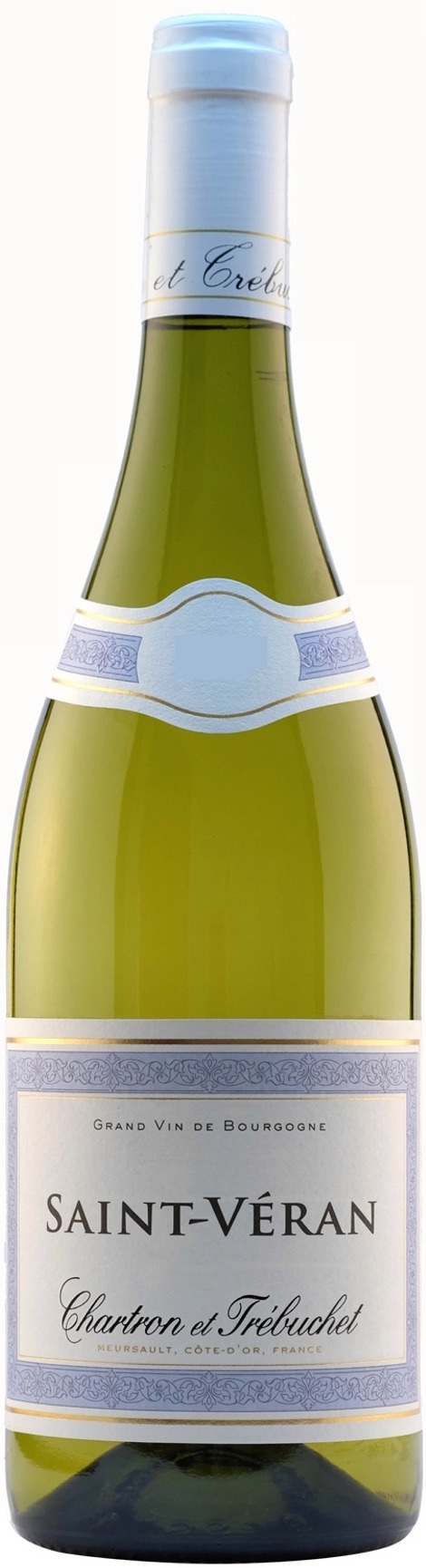
Chartron & Trebuchet Saint Veran is made from 100 percent Chardonnay.
Clear pale yellow in color. Fresh notes of lime, verbena and tea. The mouth offers a great acidity, with floral and citrus aromas.
Average age of vines 18 years
The grapes are grown using sustainalble viticulture's method.
Plantation: 10,000 vines / hectare
Yield : 60 hectoliters / hectare
Vinification : Traditional vinification. The grapes are pressed on arrival at the winery using pneumatic presses. The fermentation takes place in stainless steel tanks thermoregulated at 16°C.
Perfect with noble seafood (gambas, lobsters, crayfish...) but also with foie gras and white meats with a creamy sauce (veal or poultry). Sushi pairs perfectly with its minerality. Ideal with Goat cheese as well.
The Chartron et Trebuchet Estate
Owners of Premiers and Grands Crus in Puligny-Montrachet since 1859 with the Domaine Jean Chartron, Jean-René Chartron founded the Maison Chartron et Trébuchet in 1984 with Louis Trébuchet, manager of a wine trading company.
Vincent Sauvestre acquired the company in 2004. His objective is to continue to promote the great white wines of Burgundy, whilst respecting and perpetuating the quality work achieved by Jean Chartron and Louis Trébuchet.
The Maison Chartron et Trébuchet specialises in producing great white Burgundy wines. The know-how of the winemakers begins with a radical selection of the very best plots: the highest-quality terroirs of the Côte are chosen and the grapes are carefully monitored throughout the ripening period. Grapes are hand-picked when the balance between acidity and sweetness is at its prime: the fruit must not be too ripe so that the full potential of the terroir is maintained, including its acidity, to ensure that the wines age properly. All of the winemaking is done in casks: the alcoholic fermentation is followed by malolactic fermentation. A proportion of 20 to 40% of new barrels is used, depending on the appellations and the vintage. Wines are left to age for 12 to 18 months depending on the appellations.
The Chartron et Trebuchet Vineyards
Chartron et Trébuchet's vineyards are all planted on Limestone and Clay based soils. In average, the age of the vines is 30 years old.
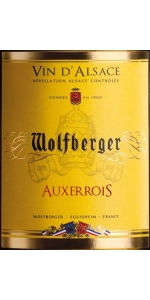
Wolfberger Auxerrois is made from 100% Auxerrois
Auxerrois blanc is thought to have originated in Lorraine, rather than near Auxerre in the Yonne. Recent DNA fingerprinting suggests that it is a cross between Gouais blanc and Pinot noir, the same ancestry as Chardonnay. The name Auxerrois blanc has actually been used as a synonym for Chardonnay in the Moselle region in France, which explains why there is also a longer name (Auxerrois Blanc de Laquenexy) for the grape variety.
This pale yellow Auxerrois Pinot Blanc shows an intense nose of fresh white fruits, rhubarb and spring flowers. Easy to drink and fresh on the palate, this wine ends on a fruity and crunchiness tast.
Alcoholic fermentation at 16°C followed by a short fermentation at 18°C allowing to keep some crispiness to the wine.
Then the wine was aged on the fine lees for 6-7 months. No Oak.
No Malo-Lactic fermentation.
Right before bottling, the wine was filtered using a tangentiel filtration system.
Quiche, grilled fish, rhubarb pie, mixed salad, and also fresh sheep milk cheese.
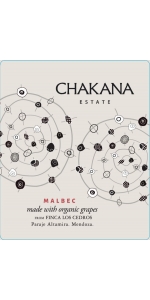
Finca los Cedros Single Vineyard Malbec is made from 100 percent Malbec.
Single vineyard wine from the Finca los Cedros vineyard in Paraje Altamira (3,600 ft. elevation). Planted in high density (8,000 plants per hectare) on calcareous gravel soils, this Malbec has a fresh & easy-drinking style with a mineral character.
Intense purple color. Plum, brambly berries, spices and an iris/violet note are apparent on the nose. Intense, fruity flavors with velvety tannins.
Fermentation with indigenous yeasts. Aged 12 months in oak barrels and concrete vats.
Excellent with roasted meats, duck, salad, pasta, pizza.
Intense violet, hints of lavender, black cherry, fresh leather and spicy flavors (white pepper and clove), rich and concentrated with a lingering spicy finish. Will age gracefully for several decades.
Review:
Morlet doesn’t make much of it, but their Syrah is beautiful and well worth seeking out. The 2018 Syrah Bouquet Garni comes from the cool climate, higher elevation Bennett Valley in Sonoma and offers a big, exotic nose of blackberry and blackcurrant fruits as well sandalwood, dried flowers, new leather, and white pepper. The fruit is ripe and opulent, yet it still holds onto loads of classic cooler-climate Syrah gaminess and peppery notes. Full-bodied on the palate, it’s balanced and has a lively, clean texture, beautiful depth of fruit, and a great finish. Enjoy bottles any time over the coming decade.
-Jeb Dunnuck 97 Points
2023 Shiraz Viognier The Shiraz Viognier is our flagship, a careful selection of the best of the Shiraz Viognier parcels we craft from our Murrumbateman vineyard.
Opulent aromas of roses, violets and layered spices, ripe berries of every hue. Perfectly formed tannins frame complex fruit flavors across the palate. This wine will age magnificently.
Enjoy Clonakilla Shiraz Viognier with roasted chicken and sauteed mushrooms.
Review:
The 2023 Shiraz Viognier leads with wet garden rose, sage, apricot, raspberry, pomegranate and blueberry. The wine is bloody, mineral, very fine and with a honed, wet stone feeling to the tannins. I've tasted Pinot today with bigger, more loose-weave tannins than this superb beauty of a thing. This takes svelte to a whole new level. Once again, this is highly recommended. It's one of my favorite Shirazes from this great country. It is made with 6% co-fermented Viognier. 13% alcohol, sealed under screw cap.
- Wine Advocate 97 points