
" We don't sell the wine without touching the vine "
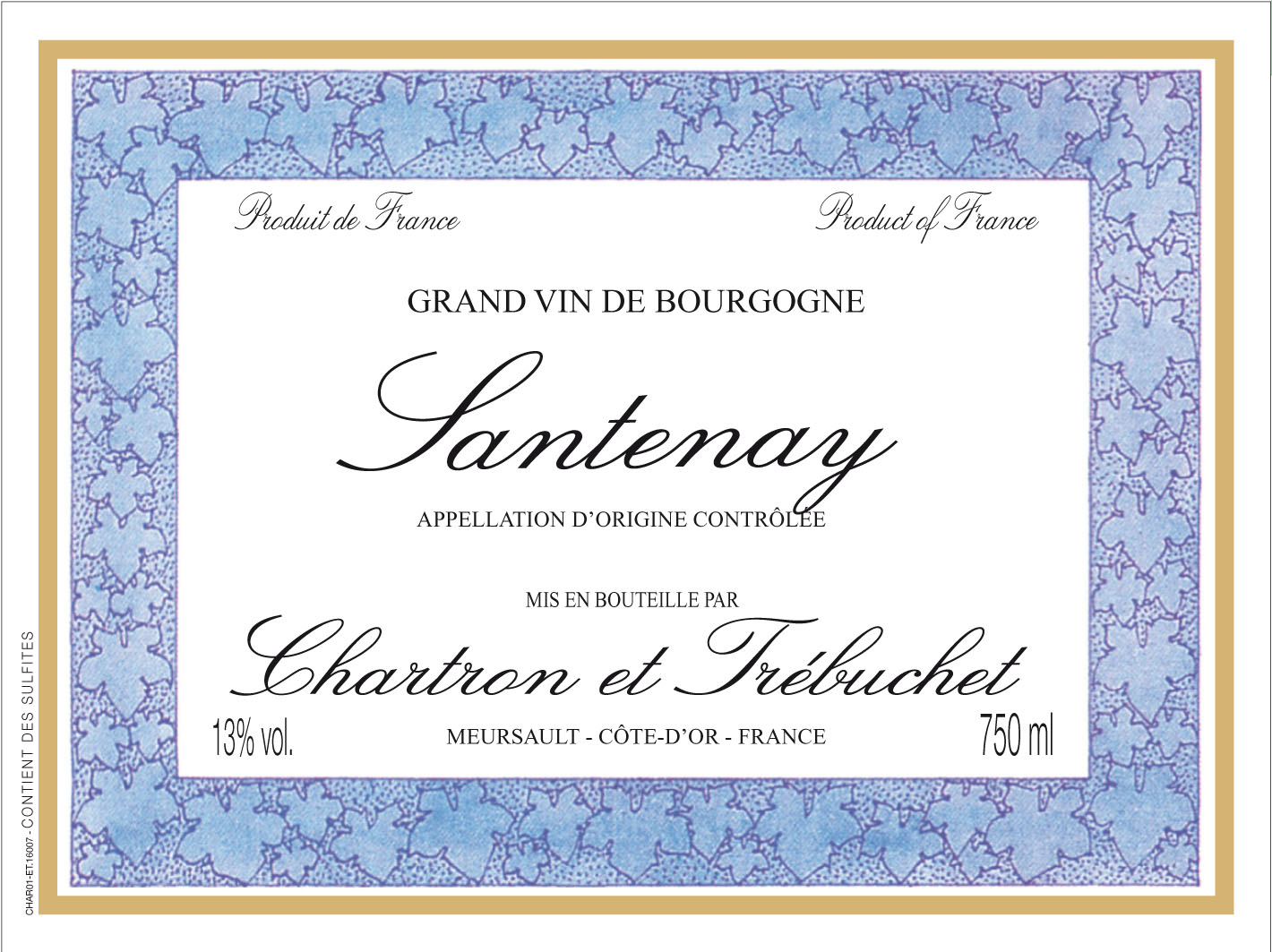
| Country: | France |
| Region: | Burgundy |
| Winery: | Chartron et Trebuchet |
| Grape Type: | Chardonnay |
| Vintage: | 2013 |
| Bottle Size: | 750 ml |
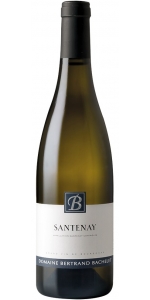
Bachelet Bertrand Santenay Blanc is made from 100 percent Chardonnay.
Tasting Notes:
The Santenay Blanc comes from a parcel that is 1.2 hectares in size (3 acres) in the village called “En Charron”, at around 300 meters above sea level, with excellent sunshine and thin limestone soil, guaranteeing great aromatic finesse.
The wine shows a beautiful golden color, a fresh and slightly roasted nose combining lemon and lime aromas with a hint of vanilla. On the palate, almond and toasted hazelnut flavors, along with notes of white flowers and vanilla nuances.
Bachelet Bertrand Santenay Blanc is made from 100 percent Chardonnay.
Tasting Notes:
The Santenay Blanc comes from a parcel that is 1.2 hectares in size (3 acres) in the village called “En Charron”, at around 300 meters above sea level, with excellent sunshine and thin limestone soil, guaranteeing great aromatic finesse.
The wine shows a beautiful golden color, a fresh and slightly roasted nose combining lemon and lime aromas with a hint of vanilla. On the palate, almond and toasted hazelnut flavors, along with notes of white flowers and vanilla nuances.
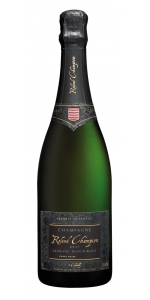
This is a 9 liter imperial also called a Salmanazar .
Roland Champion Champagne Blanc de Blanc Grand Cru 2014 is made from 100% Grand Cru Chardonnay from the chalky soils of Chouilly.
This Champagne is full of elegance and finesse. Very complex nose, with a bouquet of aromas dominated by honey, brioche and notes of dried fruits, hazelnuts and sweets. Perfectly matured.
Manual harvest; then pressing immediately to avoid oxidation & preserve quality. Free run juice only. Aged six years on the lees.
It matches magnificently with foie gras!
Review:
"Based in Chouilly on the Côte des Blancs, it is obvious this producer will have a Blanc de Blancs Champagne. And very good it is, with some age after six years on lees while still having freshness, crisp acidity and a tight, steely edge. The bottling will benefit from further aging, and it will be at its best from 2022. - ROGER VOSS"
- Wine Enthusiast (December 2020), 92 pt
Brulesecaille Blanc Grande Reserve is made from 75% Sauvignon Blanc, 25% Sauvignon Gris.
Average age of the vines is 25 years.
Manual harvest from September 19th-20th 2016.
Direct press at low pressure (whole cluster) with low amount of SO2, settling at 10°C.
Addition of yeast and alcoholic fermentation in casks 400 liters.
Raised on the lees for 6 months with regular batonnage (stirring of the lees).
Bottling in april 2017.
Fish, seafood, white meats, fine goat cheeses.
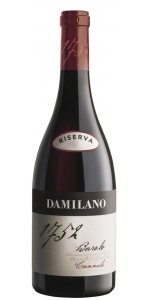
“1752” is the name of the Damilano Barolo Cannubi Riserva, in honor of the year in which the historic bottle was first marked “Cannubi”. It still exists today perfectly conserved by the Manzone family in Bra, close to Barolo. The bottle is clearly marked as being of “1752” vintage, indicating that Cannubi historically precedes Barolo.
About the Vineyard:
The Cannubi Cru is in found within one of the 6 core zones which comprise a UNESCO heritage site in Italy. A mixture of Tortonian and Helvetian calcareous marl gives the grapes intense aromas of cherry, plum and tobacco, rose and violet in sequence. Its low potassium and high calcium/magnesium content offer the wine a fine and polished touch. The vineyard is located at about 270 m. a.s.l. and has a south-east sun exposure. Barolo Riserva Cannubi 1752 It is a small plot of about 2 hectares of Nebbiolo vines, currently between 30 and 50 years of age.
Tasting Notes:
Garnet ruby red in color, the bouquet is intense and balanced, with notes of violet, red fruit, cherry and plum, spices, liquorice, cocoa, leather and tobacco. Dry, robust, full-bodied, very persistent, rich and velvety
Food Pairing:
This wine is excellent with typical piedmontes pasta (tajarin, ravioli); perfect with red meat, braised and roast meat, game and absolutely ideal with all types of cheeses.
Review:
The purity of this wine is pretty phenomenal with blackberries, strawberries, fresh flowers and licorice. Hints of tar. It’s full-bodied, yet composed and compact with ultra fine tannins and a long, flavorful finish. Very structured. Try after 2024.
-James Suckling 97 Points
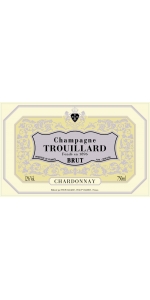
The House of Trouillard has incredible holdings on the Côtes de Blancs. The vineyard's rating average 94-95, just one of the reasons the Blanc de Blancs has such incredible raciness and elegance. It is a Cuvée of eleven different Crus in the Reims Mountain, the Côtes de Blancs and the Sézannaise region and is the specialty of the house.
Trouillard Blanc de Blancs Brut NV is made of 100% Chardonnay with a green-gold color, characteristic of Chardonnay, and with fine persistent bubbles. This wine has an aroma that jumps out of the glass and is very inviting. On the nose there are seductive scents of warm almond croissant and honey, lightened by some floral notes. Crisp and refreshing in the mouth and lively with a very refined fruitiness and a touch of smokiness typical of wines from the Côtes des Blancs. The elegance and subtlety of the Chardonnay are to be especially appreciated as an aperitif, and nicely accompanies shellfish and fish.
It has become the favorite of those who know Champagne Trouillard.
Reviews:
"A blend of grapes from the Aube and the Marne Valley, this ripe wine shows the structure of Pinot Noir. The fruit's richness balances the low dosage to give an almost bone-dry wine that is full, fruity and that could age further in bottle. - ROGER VOSS"
- Wine Enthusiast (December 2019), 91 pts
"Aromatic, offering ripe fruit and yeast notes, this is backed by firm acidity, with a lively bead and flavors of Golden Delicious apple, white peach, ginger and whole-grain toast. Drink now through 2018. 2,500 cases made. –AN"
Wine Spectator (Web Only 2013), 90 pts
- Chardonnay du Monde 2012, SILVER MEDAL
This all Chardonnay Champagne is sourced from eleven different crus. It offers a fragrant bouquet of orchard fruit with hints of toasted grain and lemon zest. On the palate, there’s good textural richness and attractive apple and pear complemented by a smoky mineral note. But what we like most about this Blanc de Blancs is its outstanding sense of freshness. 100% Chardonnay aged 2+ years on the lees; 7-8 g/L RS" - - I-WineReview (Champagne: Diversity and Change, January 2020), 91 pts
Chartron & Trebuchet Santenay Blanc 2013 is 100% Chardonnay.
The wine is clear and brilliant, mineral and floral, fresh and vigorous. Its aromatic expression features notes of bracken fern and hazelnut.
Its lightness, vivacity and edge would be a good choice for fluid and creamy like pasta or risotto with mushrooms. It would harmonize well with cheeses like Comté and goat cheeses.
The Chartron et Trebuchet Estate
Owners of Premiers and Grands Crus in Puligny-Montrachet since 1859 with the Domaine Jean Chartron, Jean-René Chartron founded the Maison Chartron et Trébuchet in 1984 with Louis Trébuchet, manager of a wine trading company.
Vincent Sauvestre acquired the company in 2004. His objective is to continue to promote the great white wines of Burgundy, whilst respecting and perpetuating the quality work achieved by Jean Chartron and Louis Trébuchet.
The Maison Chartron et Trébuchet specialises in producing great white Burgundy wines. The know-how of the winemakers begins with a radical selection of the very best plots: the highest-quality terroirs of the Côte are chosen and the grapes are carefully monitored throughout the ripening period. Grapes are hand-picked when the balance between acidity and sweetness is at its prime: the fruit must not be too ripe so that the full potential of the terroir is maintained, including its acidity, to ensure that the wines age properly. All of the winemaking is done in casks: the alcoholic fermentation is followed by malolactic fermentation. A proportion of 20 to 40% of new barrels is used, depending on the appellations and the vintage. Wines are left to age for 12 to 18 months depending on the appellations.
The Chartron et Trebuchet Vineyards
Chartron et Trébuchet's vineyards are all planted on Limestone and Clay based soils. In average, the age of the vines is 30 years old.

All older vintage wines have been purchased from a single collectors cellar. Pictures can be requested before shipment.
Peter Michael 'L'Esprit des Pavots' Estate Red is made from 59% Cabernet Sauvignon, 22% Merlot, 11% Cabernet Franc, 8% Petit Verdot.
The saturated garnet 2022 ‘L’Esprit des Pavots’ features an intense nose of cassis, black cherry, ripe plum and blackberries with hints of black olive, black tea and baking spices. The soft, supple entry and round generous tannins combine for a plush mouthfeel and elegant finish. This is a fleshy vintage of ‘L’Esprit des Pavots’ which can be approached in its early years but will continue to expand with age.
Review:
“The deep ruby/magenta-colored 2022 Cabernet Sauvignon L’Esprit Des Pavots is a blend of Knights Valley and Oakville… fruity upfront… rich and concentrated… polished tannins and a great finish. A great value in the vintage.”
- Jeb Dunnuck 95 points



