
" We don't sell the wine without touching the vine "
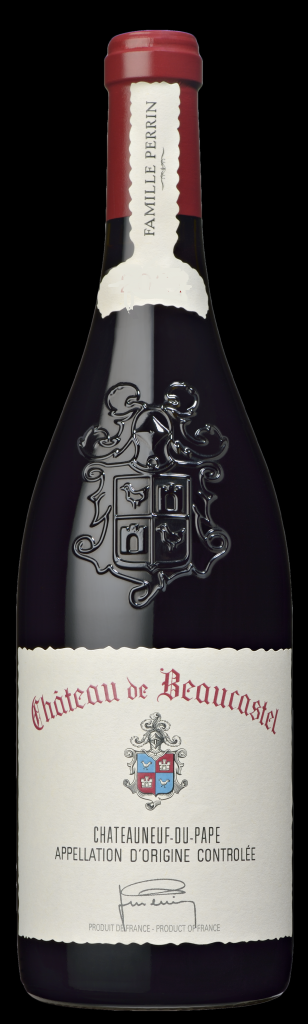
| Country: | France |
| Regions: | Rhone Chateauneuf du Pape |
| Winery: | Beaucastel |
| Grape Type: | Grenache |
| Organic: | Yes |
| Vintage: | 2004 |
| Bottle Size: | 750 ml |

Chateau de Saint Cosme Gigondas is made from 70% Grenache, 15% Mourvèdre, 14% Syrah, 1% Cinsaut.
The wine shows intense blackberry and fig fruit with licorice, violets, and charcoal on the finish. It is remarkably fresh and finessed given the sun and warmth of the southern Rhône. The unique micro-climate combined with 60-year-old vines and traditional winemaking make Château de Saint Cosme Gigondas the benchmark wine of the appellation.
Review:
Leading off the Gigondas, the base 2020 Gigondas has lots of black raspberry, ground pepper, and violets notes as well as a round, supple, silky style on the palate. It should be approachable on release, yet it has plenty of mid-palate depth as well as tannins, and I have no doubt it will evolve for 20 years if properly stored.
-Jeb Dunnuck 91-93 Points

Hominis Fides is typically the most elegant of Château de Saint Cosme’s three single-vineyard Gigondas. “Grenache grown in the sandy soil produces marvelously textured wines as well as extremely refined tannins; a very special and stylish wine,” says Louis Barruol. The wine features aromas and flavors of pepper, truffle, graphite, and smoke.
Grenache is the pale-colored, red-fruited, and potpourri-scented red grape variety of the southern Rhône and can be paired with both rustic and sophisticated dishes. Full-bodied Grenache-based wines are ideal with stews, braises, and grilled meats, while lighter versions can work well with dark fish and tomato-based dishes such as ratatouille.
Review:
Deep, vivid ruby-red. Intensely perfumed, mineral-tinged scents of medicinal cherry, redcurrant and cassis are complemented by suggestions of star anise, white pepper and pungent flowers. It offers densely packed bitter cherry, red berry liqueur, lavender and licorice flavors that open up very slowly with air. Extremely primary but highly promising, with a long, spice- and mineral-tinged finish shaped by youthfully firming tannins. Made with 100% whole clusters; raised in barriques, one-third of them new.
-Vinous 95-97 Points

Chateau de Saint Cosme Gigondas Le Claux is made from 95% Grenache, 5% Syrah.
Château de Saint Cosme is the leading estate of Gigondas and produces the benchmark wines of the appellation. The property has been in the hands of the Barruol family since 1490. Louis Barruol took over from his father in 1992 making a dramatic shift to quality and converting to biodynamics in 2010.
Château de Saint Cosme Gigondas Le Claux is the estate’s oldest vineyard and sits near the entrance to the winery. “It was first planted in 1870 following phylloxera. My uncles thought it wasn’t producing enough fruit and planned to uproot it in 1914,” says Louis Barruol, but “World War I interrupted that plan.”
The 1.8-hectare Le Claux—meaning “Clos” in old French—is a field blend of predominately Grenache. Louis Barruol believes 10% of the vineyard is from the original 1870 planting. Vines are replaced by massal selection and the average vine age is 60-years. The wine is made with whole cluster fermentation from indigenous yeasts, is aged in 20% new 228-liter barrels, and bottled without fining or filtration.
Tasting Notes
Brilliant violet color. Displays pungent, mineral- and spice-accented cherry, black raspberry, potpourri and licorice aromas, along with hints of savory herbs, vanillo and incense. Chewy and tightly focused on the palate, offering bitter cherry, dark berry and Moroccan spice flavors that unfurl slowly through the back half. It closes with firm tension, chewy tannins and excellent tenacity, leaving resonating cherry and floral notes behind. All barriques, a third of them new.
-Vinous 95-97 Points

Le Blanc du Chateau des Landes Bordeaux Blanc is made from 50% Sauvignon Blanc and 50% Semillion.
Le Blanc du Chateau des Landes Bordeaux Blanc is a very fruity style of Bordeaux Blanc AOC. It has great aromatic intensity with white peach and citrus aromas.
No oak for this wine. The wine was aged on the lees for a few month in stainless steel tank.
Malolactic fermentation was completed as well in the process .
Excellent as an aperitif, it also goes very well with poultry and salads. If you have a chance to have access to fresh oyters, it is a great match as well.
The first vintage of this wine was made in 2018 as Nicolas Lassagne wanted to create an easy drinking wine that will be perfect as an aperitif in the summer time or to compliment salads and seafood in the winter time.

Maison de Magali Chateauneuf-du-Pape Rouge is made from 84% Grenache, 11% Syrah and 5% Mourvèdre.
Maison de Magali Chateauneuf-du-Pape is designed to be a very fruity and fresh CDP with structure. Different flavors of red and black fruits with a hint of pepper and spice notes.
Pair with grilled meat and vegetables. Also excellent with cheese and dark chocolate dessert.

Cellier du Chateau de la Chaume Bourgogne Chardonnay is 100% Chardonnay.
Clear yellow color.
Aromas of white flowers, honeysuckle, leme tree and dried fruits.
The palate is rich and balanced, with good acidity and nice minerality.
Good length to the finish, pair with fish in creamy sauce, white meats and fine cheeses.
Grenache 30%, Mourvèdre 30%, Vaccarèse, Terret noir, Muscardin, Clairette, Picpoul, Picardan, Bourboulenc, Roussanne,15% Counoise , 10% Syrah, 10% Cinsault : 5%
The story :
Château de Beaucastel has long been considered one of the great wines of France. It is unanimously renowned for its balance, elegance and ageing potential. Beaucastel has an extraordinary terroir at the Northern end of the appellation with heavy exposure to the Mistral. All 13 varieties of the appellation have been organically grown here since the sixties.
The vintage :
A great vintage, this year is characterised by the contrast between an extremely hot July and a very cool August.
September experienced heat and two heavy rain pours during the first half of the month. This did not hurt the quality of the vintage and we were able to harvest late with the beautiful Indian summer lasting until mid October.
Location :
Châteauneuf du Pape, between Orange and Avignon, Château de Beaucastel red is a 70-hectare vineyard.
Terroir :
Château de Beaucastel is 110 hectares, with one single plot at the north of the appellation. The terroir is archetypal of the best terroirs in Châteauneuf: rolled pebbles on the surface, sand, clay and limestone deeper down. The vines are old and have been organically grown for 50 years, which has allowed the roots to grow exceptionally deep.
Beaucastel grows all thirteen grape varieties authorised by the appellation.
Ageing :
Each variety is harvested manually and separately. Vinification is completed in truncated oak barrels for the reductive grapes (Mourvèdre and Syrah) and in traditional tiled cement tanks for the oxidative grapes (such as Grenache). After the malolactic fermentations, the family blends the different varieties and then the wine ages in oak Foudres for a year before bottling.
Review:
Thoroughly primal, with a torrent of raspberry and boysenberry fruit rushing forth. Only shows hints of its full range, with licorice, incense, graphite and mocha flavors fluttering in the background. Has an iron-clad structure, with a long finish that shows great cut and grip. Best from 2009 through 2025. 14,165 cases made.
-Wine Spectator 96 Points
An estate with worldwide recognition, Château de Beaucastel’s history dates back to 1549, when Pierre de Beaucastel purchased the land and built a manor house. In 1909, another Pierre -- Pierre Traminer-- purchased the estate, which he later transferred to his son-in-law Pierre Perrin. Today, the fourth and fifth generation of Perrins run the famed wine estate. Throughout the generations the family’s values have remained: absolute respect for land and terroir; biodynamic culture as a philosophy of life; and the research of truth, balance, and elegance. Pioneers in their innovative approach to organic farming in 1950 and then biodynamic farming in 1974, Famille Perrin has the deep conviction that the grapes must have flavors to make an expressive wine. The vineyards of Château de Beaucastel are located on historic land where each of the 13 approved grapes varietals of the Châteauneuf-du-Pape appellation are planted. Château de Beaucastel covers 315 acres. 250 acres are planted with vines, three-quarters in the AOC Châteauneuf-du-Pape and the remaining one-quarter in the AOC Côtes du Rhône. The art of blending is key at Château de Beaucastel, both the blending of talents of each family member and blending the 13 grapes to produce these exceptional Châteauneuf-du-Pape wines. They are in the process of renovating and rebuilding the winery’s cellar with an ecological focus, including a project to harness the cooling effect of the region's notorious 'Mistral' wind to limit the use of artificial air conditioning and bring down current cellar temperatures from 14°C to a desired 12°C. Once accomplished, the winery will be one of the most advanced in regard to environmental practices

Morlet Family Vineyards Billet Doux Late Harvest Semillon 2012 (half-bottle) is made from Sémillon (65%) Sauvignon Blanc (31%) Muscat à Petits Grains (4%)
rowing in the gravelly soil of an ancient riverbed in the beautiful Alexander Valley, the old vines benefit from hot afternoons and cool, foggy mornings, favorable for the development of Botrytis (Noble Rot). Extremely small yields in the Sémillon, Sauvignon Blanc and Muscat vineyards lead to the immensely concentrated fruit. Just as one receives a note from one’s sweetheart, we present this wine as a precious ‘Love Note’ or ‘Billet Doux.’
Deep crystal clear gold. Intense and complex bouquet of dry apricot, pêche de vigne and Reine Claude yellow plum intermixed with notes of quince, honey, Muscat and a hint of sweet vanilla. Full bodied, the palate is reminiscent of the nose, with a creamy sweet texture and a great intensity. The large amount of sugar and glycerin creates a highlighted viscosity. Along with the wine’s great concentration, richness and opulence, the classical aromatic complexity reveals a flamboyant yet harmonious ensemble, leading to a very long, complex and smooth finish.
Proprietary name ‘Billet Doux’
Name meaning Love Note
Type of wine Late harvest white wine
Appellation Alexander Valley
Vineyard singularity 25-60 year old vines Loamy and gravelly soils from an ancient river bed One cluster per shoot ‘de rigueur’
Typical harvest date November Picking Manual, small lugs, refrigerated truck
Sorting Cluster by cluster
Fermentation In barrel through native yeast
Upbringing 16 months French Oak from selected artisan Coopers
Bottling Unfined, filtered to prevent Malolactic
Cellaring time Decades
Serving Chilled and decanted
Review:
Produced from 65% Sémillon, 31% Sauvignon Blanc and 4% Muscat, the 2012 Billet Doux has a medium golden color and profoundly scented nose of beeswax, honeyed nuts, orange marmalade, Manuka honey and preserved lemons. Full-bodied, full-on sweet, rich, concentrated and oh-so-unctuous, it delivers powerful flavor layers and epic length. 175 cases were made.
-Wine Advocate 97 Points

Very complex nose. Elegance and finesse. A surprising aromatic complexity. A bouquet of aromas dominated by honey, brioche and notes of dried fruits, hazelnuts and sweets. Perfectly matured.
Juice exclusively 100% Grand Cru from Chouilly, chalky soil and subsoil.
It matches magnificently with foie gras!

This 100% Chardonnay blend is made from Tête de Cuvée, or first pressing of the grapes, considered superior in quality, with a high percentage of reserve wines for extra complexity, depth and richness, and a low added dosage to preserve purity and freshness.

Thibaut-Janisson Blanc de Chardonnay is made from 100% Chardonnay
Appellation 100% Virginia
Winemaking Notes The grapes are handpicked in small baskets late August and are gently pressed as whole clusters. After a settling of 24 hours, the juice is inoculated with selected Champagne yeast and ferments in stainless steel tanks at low temperature. Once the fermentation is over, the wine ages on the fine lees until the spring of the following year. The blend is then put together and cold-stabilized prior to bottling. The bottling occurs in the spring when the cellar temperature is conducive to a second fermentation in the bottle. The now sparkling wine will age on the yeast for over 24 months. At disgorging, a small amount of dosage liquor is added in order to balance the natural acidity.
Clean, crisp and refreshing! With scents of white flowers, apples and pears. This sparkling wine is elegant and complex with vibrant aromas, and fine active streamers. The depth of complexity is elegant and the intricate nuances of the terroir fill the nose and stimulate the palate. It’s full of youthful, bright and alert acidity.
-150x300.jpg "Roland Champion Champagne Non Vintage Brut Rose Carat NV(magnum)")
Roland Champion Champagne Non Vintage Brut Rose Carat (magnum) is made from 33% Chardonnay, 33% Pinot Meunier and 33% Pinot Noir
The Champagne rose shows an orange salmon color coming from the red wine base. The pinot meunier brings red fruit aromas of strawberry and raspberry with hints of spices. The palate is juicy and harmonious with good depth and minerality. A delicate balance between Chardonnay, Pinot Meunier and Pinot Noir.
It is a blend of 93% White juice (made from 33% Chardonnay, 33% Pinot Meunier and 33% Pinot Noir) and 7% Pinot Noir red wine. The grapes used to produce the Coteaux Champenois red wine are coming from their vineyards near the Village of Verneuil.
Review:
"Eye of the partridge color. With a bouquet that evokes leesy hints of red cherry and berry with a touch of stone fruit, this is a finely sculpted wine, beautifully balanced with rich flavors of cherry, shortbread,and a hint of honeyed apricot. A rosé Champagne that’s complex and dry with good palate depth and length. A blend of 20% Chardonnay, 40% Pinot Noir, and 40% Pinot Meunier; 7-85% of the juice is red wine (Pinot Noir) from 2013 vintage of Coteaux Champenois Rouge from the village of Verneuil. 3+ years on the lees." - I-WineReview (Champagne: Diversity and Change, January 2020), 92 pts
"A delicate, subtle Champagne, delivering aromatic notes of mulling spices and yeast that accent the flavors of kirsch, bread dough, candied lemon zest and rose petal. This is finely tuned, with lively acidity and a minerally finish. 330 cases made. –AN"
- Wine Spectator , 91 pts
"Bright orange. Aromas of blood orange, dried rose, allspice and minerals, with a subtle note of anise. Juicy and precise, with very good depth to its spicy red berry and citrus pith flavors. Finishes smooth and long, with excellent clarity and lingering spiciness."
- Stephen Tanzer's International Wine Cellar , 91 pts
"Champion is a small grower in Chouilly, in the Cotes des Blancs, an area known for fantastic chardonnay. This rosé — of which he makes only about 330 cases — includes 10 percent red wines (pinot noir, pinot meunier) to give it a pale, salmonlike color and a beguiling palate of cranberries, strawberries and currants. Wow. And yum."
- Washington Post, ***

Grand Veneur Chateauneuf Du Pape Vieilles Vignes is made from 50% Grenache, 40% Mourvedre, 10% Syrah
Matured in concrete vats (40%) and oak casks (60%)
It boasts an inky/purple color in addition to a gorgeous perfume of crushed rocks, jammy black fruits, charcoal and graphite. Blackberry aroma with an air of dates pressed in alongside – this is sweet-noted. It is easy to appreciate, a sleek and stylish start. The palate holds excellent fruit that runs well and has kick. Its tannins move round freely and a minted finale comes forward. Its dark fruit is tasty, darkens on the finish, where tar and char from its oak enter. It is all very much together, a bundle of harmony, and will gain local attributes as it ages.
An outstanding Chateauneuf du Pape which display the best of its terroir.
The vines are 50 to 100+ year old. They are planted on red clay soils covered with pebble stones.
Harvest is destemmed and crushed. Fermentation temperature is controlled at 30°C. Vatting period of 18 to 20 days. Matured in concrete vats (40%) and oak casks (60%).
The vineyards are located in the north of Châteauneuf du Pape. GRAND VENEUR «Vieilles Vignes» cuvee is produced from the older vines. Thanks to time and an organic growing, roots go very deep in the soil. Yields are naturally low and grapes highly concentrated.
The vines are 50 to 100+ year old. They are planted on red clay soils covered with pebble stones.
Winemaking and aging
Harvest is destemmed and crushed. Fermentation temperature is controlled at 30°C. Vatting period of 18 to 20 days. Matured in concrete vats (40%) and oak casks (60%).
Pair with venisson, duck, braised lamb or strong cheese.
Review:
"Up with the crème de la crème of the vintage, the 2018 Châteauneuf Du Pape Vieilles Vignes is a bigger, richer wine than the Les Origines cuvée and has a beautiful core of smoked black fruits, candied violets, peppery garrigue, and scorched earth-like aromas and flavors. Playing in the medium to full-bodied end of the spectrum, it’s flawlessly balanced and has terrific tannins, a stacked mid-palate, and a great finish. It certainly shows the more front end-loaded, fleshy, mildly concentrated style of the 2018 vintage, yet the balance is top-notch, and it’s just a thrill to drink today. It should evolve nicely for 10-15 years."
- Jeb Dunnuck (October 2020),96 pts

The climate in the Champagne region in 2006 was characterised by a hot, dry season, which had a significant impact on the vines. September’s summery conditions were decisive, effectively drying out the outbreaks of botrytis and encouraging exceptional ripening of the grapes. Beginning on 11 September, the harvest stretched out for almost three weeks, the ideal time for a superior-quality crop. This vintage is a perfect example of how a favourable climate can influence the champagne quality.
Dom Pérignon Vintage 2006 Plénitude 2 marks a new encounter between Dom Pérignon and the year 2006, underlining the crucial importance of time in the making of this vintage. Its persistent, suspended light offers us an invitation to contemplation, celebrating the joy of a moment of perfection. This balance between earth and sky is underpinned by a strong tactile dimension, the authentic signature of Dom Pérignon: without touch, flavour does not unfold in either the space or time of the tasting, a perfect mirror of the space and time of its production. Today, Dom Pérignon 2006 Plénitude 2 enfolds us in its warm and luminous light. It then reveals its full-bodied, substantial and curvaceous qualities, leaving in its wake the emotion of a champagne that is both enveloping and delicate.
Dom Pérignon Vintage 2006 Plénitude 2 reveals a soft, warm and reassuring sweet bouquet, rich in subtle nuances. Its aromatic profile boasts a remarkable finesse with floral and mineral tones. This composition rapidly unfolds to reveal delicate notes of wild peach, citron, calisson and mocha, creating a unique and memorable experience on the nose. The palate of Dom Pérignon 2006 is full-bodied, both restrained and tender, developing into a thick texture that gradually becomes firmer. The complexity of the wine increases, revealing a subtly saline nuance. On the finish, an exquisite bitterness and wonderful maturity prevail, enriched by deep aromas of dried fruit, cocoa and toasted hazelnut, which blend harmoniously to offer an exceptional wine tasting experience.
Dom Pérignon Vintage 2006 Plénitude 2 is distinguished by its soft, warm character, ideally expressed when paired with seafood such as langoustine and scallops. This wine pairing harmony continues with veal and Jerusalem artichoke dishes, which highlight its delicate, enveloping nature. The flavours are further enhanced by herbs such as rosemary and basil, while hints of acidity from lemon and bergamot fully reveal its breadth and refined structure. This vintage illustrates Dom Pérignon’s ability to create fine wines that capture and enhance the essence of the ingredients with which they are served.
Review:
A blonde bombshell of a Champagne, hedonistic with its alluring brioche, creamed cherry and glazed tangerine flavors that show embellishments of fragrant saffron, candied ginger, fennel seed and vanilla, yet there's lovely definition and focus via the racy, lemon-infused acidity and plush texture. Long and minerally on the finish, with the rich profile joined by a subtle undertow of smoke, oyster shell and brine. Drink now through 2040.
-Wine Spectator 98 Points

Mas Redonne Tournier Bandol Luisa Jeanne is made from 95% Mourvedre and 5% Syrah.
The wine takes its name from a goddess, Luisa Jeanne. It has a deep red color with dark brick hues, a very intense and complex nose with strong sensations of dark fruit, compote, spice, earth and garrigue, with a minty touch. Palate intense, complex and silky, full and opulent with olfactive sensations and a slightly mineral saline aftertaste accompanied by rich but ripe tannins wrapped in a fruity robe. Approachable, long, harmonious, elegant.
Late manual harvesting of left grapes, their selection according to ripeness, harvesting parcel by parcel, variety by variety, separate vinification. Long fermentation with natural yeasts to oxygenate the must, gentle extraction of color and tannins, decanting and dipping of the matoline cap to absorb the tannins and make the wine silky and expressive. Aged for 18 months in old foudres.
A gastronomic wine for major occasions, ideal for red meat, game, charcuterie, cheese, chocolate and Provençal cuisine.
The wine takes its name from a goddess, Luisa Jeanne. It has a deep red color with dark brick hues, a very intense and complex nose with strong sensations of dark fruit, compote, spice, earth and garrigue, with a minty touch. Palate intense, complex and silky, full and opulent with olfactive sensations and a slightly mineral saline aftertaste accompanied by rich but ripe tannins wrapped in a fruity robe. Approachable, long, harmonious, elegant.



