
" We don't sell the wine without touching the vine "
| BUY MORE! SAVE MORE! | ||||||||||||||||||||
|
| Country: | France |
| Region: | Rhone |
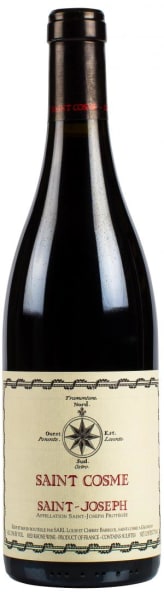
| Winery: | Saint Cosme |
| Grape Type: | Syrah |
| Organic: | Yes |
| Vintage: | 2021 |
| Bottle Size: | 750 ml |
Louis Barruol describes the microclimate of the vineyard Malleval as “very cold” which allows the grapes to retain acidity and showcase the floral aromas of the local Sérine variety. Aromas and flavors of blackberries and wild strawberries are accented by notes of peppercorns, tobacco, peonies, and violets.
Syrah, with its deep flavors and firm tannins, is a natural match for grilled or smoked meat and dishes featuring herbs, roasted mushrooms, and onions. Seared venison or beef with black pepper and thyme or a Moroccan tagine of pigeon or chicken are complimented by the spicy characteristic of Syrah.
Review:
This rich and impeccably balanced Gigondas has everything we look for in the wines of this appellation. What a wide spectrum of aromas with everything from raspberry to candied orange, plus a slew of delicate spicy notes and fresh Mediterranean herbs. I love the interplay of richness, fine tannins and lively acidity on the generous, but not expansive palate. Very long, refined finish. From organically grown grapes. Drink or hold.
-James Suckling 94 Points
Powerful, with steeped plum and cherry coulis merging with potpourri and charred garrigue on a ripe, lush palate. Packs a wall of iron that provides a ballast for the ripe fruit, while refined tannins build in intensity. Long and complex, with a gorgeous expression of place. Grenache, Mourve`dre, Syrah and Cinsault.
Wine Spectator 94 Points
Château de Saint Cosme is the leading estate of Gigondas and produces the appellation’s benchmark wines. Wine has been produced on the site of Saint Cosme since Roman times, evident by the ancient Gallo-Roman vats carved into the limestone below the château. The property has been in the hands of Louis Barruol’s family since 1490. Henri and Claude Barruol took over in 1957 and gradually moved Saint Cosme away from the bulk wine business. Henri was one of the first in the region to work organically beginning in the 1970s. Louis Barruol took over from his father in 1992, making a dramatic shift to quality, adding a négociant arm to the business in 1997, and converting to biodynamics in 2010.
The estate is in the heart of Gigondas where 15 hectares of vineyard grow in the shade of the Dentelles de Montmirail. The limestone that distinguishes Gigondas from other southern Rhône appellations is visible on the jagged cliffs of the Dentelles. In addition to Gigondas and the old-vine selection Gigondas Valbelle, three single-vineyard Gigondas are produced: Hominis Fides, Le Claux, and Le Poste. Louis Barruol owns an additional 10 hectares of vineyard in Violès outside of Gigondas to produce Les Deux Albions Blanc IGP. Côtes-du-Rhône Les Deux Albions Rouge and Le Poste Côtes-du-Rhône Blanc round out the estate offerings and are labeled as “Château de Saint Cosme.” Little James’ Basket Press, Châteauneuf-du-Pape, and northern Rhône appellations are from contracted growers and are labeled “Saint Cosme.”
Louis Barruol’s style combines the region’s typical ripeness with freshness, an elusive quality in the warm climate of the southern Rhône. One of the keys to freshness is the use of stems for their red wines. The stems absorb alcohol during fermentation and help retain acidity and tannin. Red wines are made by spontaneous fermentation. Louis prefers cement tanks or mostly used 228-liter Burgundian pièce for élevage with just a few traditional demi-muid for his whites. The négociant wines are transported to Gigondas in casks to avoid racking and unnecessary exposure to oxygen. Reds are bottled unfined and unfiltered. “I want to make wines which express their terroir with purity and personality. I want balanced wines with a great ability to age,” says Louis Barruol.
Ceretto Barbaresco DOCG is made from 100 percent Nebbiolo.
If we could sum this wine up in a single word, we wouldn’t hesitate to define it as “classic”. As tradition suggests, this Barbaresco is the fruit of the assembly of several parcels of land, coming from some of our most beautiful vineyards. The idea is that of naturally obtaining balance by harmonizing different expressions, often contrasting ones. The result is a liquid expression of a terroir, tempting and typical, a synopsis of one Langa, that of Barbaresco, which moves in the glass, alternating between structure and elegance.
Review:
This is a really solid, meaty and mouth-filling Barbaresco that offers vivid red fruit with floral and mineral nuances and hints of licorice and cedar. Medium- to full-bodied with compact, velvety tannins that form the backbone of the wine, showing impressive concentration and length. Drink from 2027.
- James Suckling 93 Points
Bright, brightening ruby garnet. Appealing and finely drawn nose with notes of strawberries, blood orange and sealing wax. Very juicy on the palate, fresh, precisely defined fruit, opens up with fine-meshed tannins, very tense, with a cherry finish.
-FalStaff 93 Points
Chateau La Nerthe Chateauneuf-du-Pape Rouge is made from Grenache 39%, Mourvédre 33%, Syrah 25%, Cinsault 2%, Others 1%.
Château La Nerthe is one of the oldest estates in Châteauneuf-du-Pape and dates from 1560. Château La Nerthe has 227 acres of vineyards that surround the château and top the renowned La Crau plateau. The terroir is typical of the region. Vineyards run along a slope and grow in sandy-clay soils. The ground is covered by a layer of ‘galets’ – large, round, well-worn stones that were carried down from the Alps by glaciers during the last ice age. All the 13 permitted primary varietals are planted here. Grenache dominates 62% of the vineyards and the average vine age is over 40 years old. The grapes are hand harvested and sorted on tables. The grapes are then put into vats for almost 4 weeks with regular pump overs and punch downs. The must is tasted every day during fermentation to ensure the best extraction of the berry compounds. At the end, the wines are racked into oak vats for malolactic fermentation. The cuvée is then aged in large French oak casks and barrels for 12 months before blending. Bottling takes place 6 months later.
The dark, deep, inky color of the wine shows immediately, stemming from the concentration of the vintage. Nose of blackcurrants, black tea and dried flowers stands out. The mouth is rich, fruity and velvety with an incredibly layered tannic structure. The wine is balanced and pure with strong intense and incredibly long aging potential.
Review:
A focused expression, this wine delivers pure red and black fruits unfolding against a delicate rose-petal backdrop. Silky yet chewy tannins gradually reveal layers of red cherry, pomegranate, spice, violets, and a hint of clove. Its elegance is underscored by fine tannins, suggesting a wine that, while quiet now, holds the promise of revealing its full beauty with time in the bottle. Cellaring through 2028+ before revisiting should prove to be rewarding.
-Wine Enthusiast 93 Points

Each year, Sea Smoke's goal for Southing is to create the ideal marriage of complexity and elegance. The ever-changing nose of the Southing exhibits fresh currant, slight strawberry and rose aromas with notes of dried fruit, fennel, clove and nutmeg. The fine tannins and minerality are enhanced by the estate vineyard's characteristic cool climate acidity.
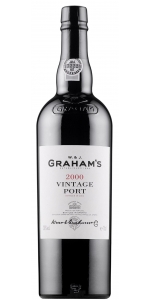
W & J Graham's Vintage Port is made from 35% Touriga Nacional, 47% Touriga Franca and various others.
It is with great pleasure that Graham's announces the declaration of the 2000 Vintage, a wine that has been deemed to meet our very exacting standards, and one that shows every promise of living up to the reputation of the very best Vintage ports that the Twentieth Century provided.
This is a landmark wine for Graham's, not only being the first Vintage of a new millennium, but being the first Vintage wine to enjoy the extraordinary results achieved by the new robotic 'lagares' at Malvedos in the inaugural year of our remodelled winery. Significant also has been the decision to include a rather larger proportion of mature Touriga Francesa and Touriga Nacional from Vila Velha, a classic riverside Quinta a short distance downstream from Malvedos, and some spectacular old vine lots from Vale de Malhadas in the Upper Douro. These wines each from family-owned Quintas have been used to reinforce the predominant component from Malvedos and the traditional excellence of the Rio Torto lots from Lages, to produce a rounded and even blend in the hallmark rich Graham style.
Picking began at Malvedos on September 22nd and the last lagar was run off on October 10th, an unusually short and compact Vintage. Fruit arrived in good condition although yields were less than three quarters of a kilogram per vine, and the juice to skin ratio well below normal. 2000 was a year noted for a very low average yield across the Douro, and with the grapes unusually lacking in liquid, the extra amount of treading work required made it an ideal time to employ our new, tireless, mechanical treaders alongside the two original 1890 stone lagares still worked by human feet. It was evident early on in the Vintage from the colour and aroma of the fermenting musts that we were looking at a spectacular year, and after the usual waiting period of sixteen months or so to see how the lots would develop, we have now made our final selection and assembled the final blend.
The blend displays many of the typical Graham aromas of ripe plum and 'esteva' (gum cistus) and is pleasantly smooth on the palate despite its youth. It is full and rich in the mouth with fresh blackberry and red plum notes. Despite the hallmark Graham sweetness in the mouth the finish is long and clean.
As with all Graham Vintages, this is a wine made to last for years and the patience of laying down the wine for fifteen to twenty years will certainly be rewarded.
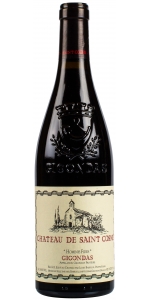
Hominis Fides is typically the most elegant of Château de Saint Cosme’s three single-vineyard Gigondas. “Grenache grown in the sandy soil produces marvelously textured wines as well as extremely refined tannins; a very special and stylish wine,” says Louis Barruol. The wine features aromas and flavors of pepper, truffle, graphite, and smoke.
Grenache is the pale-colored, red-fruited, and potpourri-scented red grape variety of the southern Rhône and can be paired with both rustic and sophisticated dishes. Full-bodied Grenache-based wines are ideal with stews, braises, and grilled meats, while lighter versions can work well with dark fish and tomato-based dishes such as ratatouille.
Review:
Deep, vivid ruby-red. Intensely perfumed, mineral-tinged scents of medicinal cherry, redcurrant and cassis are complemented by suggestions of star anise, white pepper and pungent flowers. It offers densely packed bitter cherry, red berry liqueur, lavender and licorice flavors that open up very slowly with air. Extremely primary but highly promising, with a long, spice- and mineral-tinged finish shaped by youthfully firming tannins. Made with 100% whole clusters; raised in barriques, one-third of them new.
-Vinous 95-97 Points
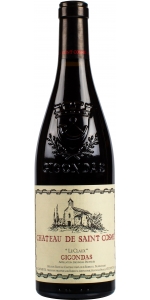
Chateau de Saint Cosme Gigondas Le Claux is made from 95% Grenache, 5% Syrah.
Château de Saint Cosme is the leading estate of Gigondas and produces the benchmark wines of the appellation. The property has been in the hands of the Barruol family since 1490. Louis Barruol took over from his father in 1992 making a dramatic shift to quality and converting to biodynamics in 2010.
Château de Saint Cosme Gigondas Le Claux is the estate’s oldest vineyard and sits near the entrance to the winery. “It was first planted in 1870 following phylloxera. My uncles thought it wasn’t producing enough fruit and planned to uproot it in 1914,” says Louis Barruol, but “World War I interrupted that plan.”
The 1.8-hectare Le Claux—meaning “Clos” in old French—is a field blend of predominately Grenache. Louis Barruol believes 10% of the vineyard is from the original 1870 planting. Vines are replaced by massal selection and the average vine age is 60-years. The wine is made with whole cluster fermentation from indigenous yeasts, is aged in 20% new 228-liter barrels, and bottled without fining or filtration.
Tasting Notes
Brilliant violet color. Displays pungent, mineral- and spice-accented cherry, black raspberry, potpourri and licorice aromas, along with hints of savory herbs, vanillo and incense. Chewy and tightly focused on the palate, offering bitter cherry, dark berry and Moroccan spice flavors that unfurl slowly through the back half. It closes with firm tension, chewy tannins and excellent tenacity, leaving resonating cherry and floral notes behind. All barriques, a third of them new.
-Vinous 95-97 Points
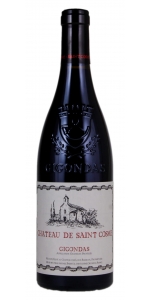
Chateau de Saint Cosme Gigondas is made from 70% Grenache, 15% Mourvèdre, 14% Syrah, 1% Cinsaut.
The wine shows intense blackberry and fig fruit with licorice, violets, and charcoal on the finish. It is remarkably fresh and finessed given the sun and warmth of the southern Rhône. The unique micro-climate combined with 60-year-old vines and traditional winemaking make Château de Saint Cosme Gigondas the benchmark wine of the appellation.
Review:
Leading off the Gigondas, the base 2020 Gigondas has lots of black raspberry, ground pepper, and violets notes as well as a round, supple, silky style on the palate. It should be approachable on release, yet it has plenty of mid-palate depth as well as tannins, and I have no doubt it will evolve for 20 years if properly stored.
-Jeb Dunnuck 91-93 Points
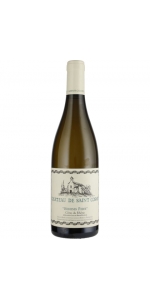
At Saint Cosme, their white wine traditions are as important and time-honored as the reds. The Clairette grape variety has found the ideal place to express itself in the cool, limestone valley of Saint Cosme. Produced by massal selection from the Le Poste vinevard, the Clairette for Hominis Fides thrives in Miocene limestone sand. Its aromas of fennel and grapefruit usher in its finely textured palate, imparting it with substantial agability.
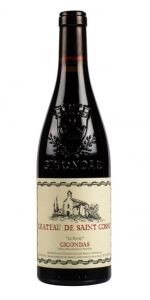
Le Poste’s cool microclimate and limestone soil make it one of Saint Cosme’s most structured, aromatic, and mineral intense wines of the estate. This wine always walks a knife's edge of power and finesse thanks to its deep fruit and precise structure. The wine features aromas and flavors of iodine, violet, pepper, and ash.
Grenache is the pale-colored, red-fruited, and potpourri-scented red grape variety of the southern Rhône and can be paired with both rustic and sophisticated dishes. Full-bodied Grenache-based wines are ideal with stews, braises, and grilled meats, while lighter versions can work well with dark fish and tomato-based dishes such as ratatouille.
Review:
Deep magenta. Expansive, spice- and mineral-tinged black raspberry, kirsch and boysenberry aromas are complicated by suggestions of incense, lavender and smoky minerals. Alluringly sweet and focused in the mouth, offering densely packed red and blue fruit preserve, floral pastille and exotic spice flavors that smoothly balance weight and finesse. This wine shows superb finishing clarity and mineral lift on the penetrating and impressively long finish, which features polished tannins and resonating fruit, floral and mineral notes.
-Vinous 95-97 Points
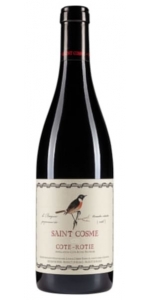
On the palate, it reveals a fresh attack followed by an ample, structured, long-lasting finish. The wine unfurls in successive stages and ends with top-quality tannins produced by whole cluster fermentation. It features aromas and flavors of smoked ham, violet, graphite, graphite, and licorice.
Review:
A refined, fine-textured and precise Cote-Rotie with aromas of cherries, wild berries, wild herbs, bark and baking spices. Medium-bodied with finely grained tannins. There is a vibrant and spicy character at the center, with a succulent, precise and lively expression toward the long finish. Try after 2026.
-James Suckling 95 Points

All older vintage wines have been purchased from a single collectors cellar. Pictures can be requested before shipment.
Clear and deep ruby in color, lightening at the rim, with light staining in the glassand moderately thick tears. Medium intensity on the nose with rich red plum, blackberry jam, cocoa powder, and savory tea leaf. A vein of earthy minerality brings complexity to juicy fruit and autumn spice. Oak lends warm vanilla, caramel, and allspice. Dry and full-bodied with intense, youthful red fruit on the palate. Bing cherry and blackberry notes are layered with leather, espresso, and nutmeg, and the long finish is accented with well-integrated tannin and an element of acidity that keeps the wine from being heavy.
The bold fruit and spice character of this 2022 Reserve Cabernet Sauvignon would pair perfectly with balsamic braised beef with creamy parmesan polenta, or an earthy, complex dish such as eggplant moussaka.
Review:
Here is a big, powerful Cabernet that pushes the envelope. The 2022 vintage was another drought year, and Paso Robles experienced late season heat waves. Made from 100% Cabernet that was aged for 21 months in French oak, 50% of it new, it clocks in at 15.5 % alcohol. However, when tasted blind, it offers an aroma of ultra-ripe black berries, chocolate, and spices that by the final swirl is absolutely gorgeous. Full-bodied with very juicy black fruit flavors and spice backed up by toasty oak, it all holds together seamlessly thanks to integrated tannins. The finish ends on a light toasty oak note. The real challenge is to pair it with a comparably robust main course.
-Wine Review Online 93 Points



