
" We don't sell the wine without touching the vine "
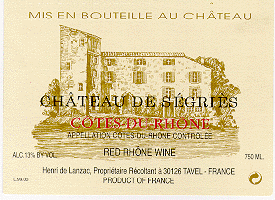
| Country: | France |
| Region: | Rhone |
| Winery: | Segries (Chateau) |
| Grape Types: | Grenache Syrah |
| Organic: | Yes |
| Vintage: | 2011 |
| Bottle Size: | 750 ml |
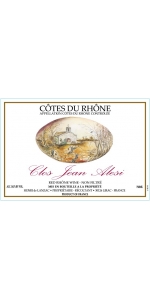
Segries Clos Jean Alesi Cotes du Rhone Rouge is made from 1/3 each of Grenache, Syrah and Mourvèdre.
This wine was originally called Segries Lanzac Clos Hermitage Cotes du Rhone Rouge
This 3.5 hectare vineyard, located in the famous “Quartier de la Chartreuse de Villeneuve-les-Avignon”, has been owned by the Formula 1 race car driver Jean Alesi since 1995. It is managed by Château de Ségriès.
This wine is a blend of 33% Grenache, 33% Syrah, and 33% Mourvedre sourced from 40-year-old vines. It was fermented in concrete vats then aged for nine months in 5% new oak barrels. The wine is a very grapey color in the glass. There is a light nose of tightly packed black fruit, dried herbs, pepper, and licorice. In the mouth there are tight-grained blue fruit, fine, powerful tannins, and a little strawberry flavor breaking loose. With air the wine reveals pencil and pepper flavors along with the structure for aging.
Yield: 40 hl/ha
Age of the vines: 40 years.
Vinification: 21 days skin maceration in temperature controlled concrete vats
Ageing: 9 months oak aging -5% new French oak from Seguin Moreau cooper and 95% of 1 year old barrels.
Delicious with roast meat, grilled vegetables, strong cheese and chocolate desserts.
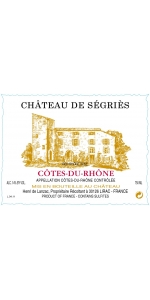
Segries Cotes du Rhone Rouge is made from 50% Grenache, 30% Syrah, 10% Cinsault, 10% Carignan
The wine is ripe, rich and round, with black raspberry, white pepper and spice flavors. True Cotes du Rhone in a Bistro style.
Segries Cotes du Rhone Rouge is made from 50% Grenache, 30% Syrah, 10% Cinsault, 10% Carignan
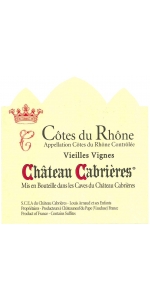
Chateau Cabrieres Cotes du Rhone Rouge Vieilles Vignes is made from 50% Grenache and 50% Syrah.
Château Cabrières’ Côtes du Rhône vineyard is located south of Orange, on the edge of Châteauneuf-du-Pape. The area of the vineyard is 1.53 hectares. The soil is comprised of clay-limestone mixed with pebbles.
Bright cherry red color with an expressive red fruit nose (strawberry and raspberry). Soft tannins in mouth, with freshness and spices. This CDR tastes like a baby Châteauneuf-du-Pape!
Pairs with charcuterie, pizza, pasta and mild cheeses.
Chateau Cabrieres Cotes du Rhone Rouge Vieilles Vignes is made from 50% Grenache and 50% Syrah.
Château Cabrières’ Côtes du Rhône vineyard is located south of Orange, on the edge of Châteauneuf-du-Pape. The area of the vineyard is 1.53 hectares. The soil is comprised of clay-limestone mixed with pebbles.
Bright cherry red color with an expressive red fruit nose (strawberry and raspberry). Soft tannins in mouth, with freshness and spices. This CDR tastes like a baby Châteauneuf-du-Pape!
Pairs with charcuterie, pizza, pasta and mild cheeses.
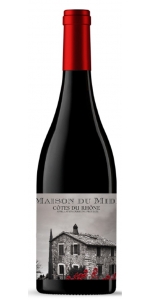
Maison du Midi Cotes-du-Rhone Rouge Vielles Vignes is 80% Grenache, 10% Syrah and 10% Mourvedre.
This ruby red colored wine with purple glints develops red fruits aromas and spicy overtones. In the mouth, this wine is smooth and its supple structure emphasizes aromas. Fruitforward and easy drinking wine showing light spices and silky tannins. A perfect everyday wine.
This delicious juicy wine can be enjoyed now with steak frites, any Mediterranean dishes, pizzas, grilled chicken and cheese.
Chateau Segries Cotes Du Rhone Rouge 2011 is made from 50% Grenache, 30% Syrah, 10% Cinsault, 10% Carignan.
Age of the vines: 30 years.
Vinification: 8 days skin maceration in temperature controlled vats. Aged 90% in tank, 10% in barrel. The wine is ripe, rich and round, with black raspberry, white pepper and spice flavors. True Cotes du Rhone in a Bistro style.
"The 2011 Cotes du Rhone rouge displays a forward, dense ruby/plum color and loads of raspberry, pepper and black cherry notes with hints of tobacco leaf and roasted Provencal herbs. A classic Cotes du Rhone made in a bistro style from a blend of 50% Grenache, 30% Syrah, and the rest equal parts Cinsault and Carignan, this medium-bodied wine should be drunk over the next 2-3 years."
-Wine Advocate (Issue 201, June 2012), 88 pts
The Chateau de Segries Estate
In 1994, Henri de Lanzac, cousin of Christophe Delorme from Domaine de la Mordoree, purchased the Domaine and began to improve the quality of the wine. "Segries" in provencal means "water spring". This family owned and operated winery is located in Lirac and produces some of the best values in my portfolio. They produce the following A.O.C. wines:
* Tavel Rose
* Cotes du Rhone Rouge
* Lirac Rouge
* Lirac Blanc
"An old Lirac estate with recent signs of revival under the new owners; the reds are medium weight, good to drink inside six years; charming Tavel." - Anthony Dias Blue's pocket guide to wine 2006
"A super value treasure trove in the southern Rhone, Segries is a large estate of 109 acres brought back to life over the last decade by Henri de Lanzac. The wines continue to go from strength to strength."- Wine Advocate (#178, Aug. 2008)
"Over the last fifteen years, this property has been transformed into one of the better value producers in the Cotes du Rhone. The old, oxidized, vegetal offerings have been replaced with classic examples of Provencal wines that are fresh and fruity with ripe tannins." - Wine Advocate (#190, Aug. 2010)
"The new releases from proprietor Henri de Lanzac are all impressive." - Wine Advocate (#195, June 2011)
"This has been a reliable producer of terrific values in the Cotes du Rhone (and for their Tavel rose) for a number of years, and they have once again done an admirable job." - Wine Advocate (#201, June 2012)
The Chateau de Segries Vineyard
The Domaine Chateau de Segries owns 44.5 hectares of vineyard land (108.91 acres), all in old vines, 30 hectares in one piece alone:
- 7 ha (17.30 acres) in Tavel, on limestone, pebble stone, sand and clay based soils.
- 30 ha (74.10 acres) in Lirac, on clay and limestone based soils.
- 4 ha (9.88 acres) in Cotes du Rhone.
- 3.5 other ha (8.65 acres) in Cotes du Rhone for the "Clos de l'Hermitage"
Many of the vines date back to 1925, and were planted by the former owner Count de
Morlet Family Vineyards Mon Chevalier Cabernet Sauvignon is made from Cabernet Sauvignon (86%) Cabernet Franc (8%) Merlot (3%) Malbec (2%) Petit Verdot (1%) .
Located on the hillsides of Knights Valley, near Calistoga, this vineyard benefits from its proximity to Mount St. Helena, whose warm and windy climate is ideal for the long ripening of the Bordeaux red varietals. Handcrafted by using classical winemaking techniques, this special wine is dedicated to our son, Paul Morlet.
Dark red with a hue of purple. Intense and complex bouquet of red, black and blue berries intermixed with notes of blueberries, minerals (graphite, wet river rocks) licorice, fresh blond tobacco and a hint of lavender. Full bodied, the palate is reminiscent of the nose, with a richly tannic yet round frame and a great intensity. The hillside tannins and the classical aromatic complexity create a harmonious ensemble, leading to a very long and elegant finish. Built to age for decades, this collectible wine opens up after a few years of cellaring and is particularly representative of this special vineyard from the hillside of Knights Valley. Mon Chevalier features the interaction of the loamy, well drained and rocky volcanic soil, the typical sunny mountain climate and the low-interventionistic Morlet winemaking approach.
Property Name: Mon Chevalier
Name Meaning My Knight Named after our son, Paul Morlet
Type of wine Vineyard designated
Appellation Knights Valley
Vineyard singularity Morlet Family Estate Hillside 1100-1200 feet elevation Rhyolitic, loam & volcanic ash
Typical harvest date End of October
Picking Manual, small lugs, refer truck
Sorting Cluster by cluster, berry per berry
Fermentation Through native yeast Tank and Puncheons
Upbringing 16 months French oak from artisan coopers
Bottling Unfiltered
Cellaring time Decades
Serving Room temperature
Decanting recommended
Review:
The 2018 Cabernet Sauvignon Mon Chevalier comes from the Knights Valley, just north of Napa Valley in the larger Sonoma County, and it always seems to me to have one foot in Napa and one foot in Sonoma. Boasting a similar ruby/purple color (as do all of the releases here), it’s slightly more reserved and stately (knightly, if you will), with building aromas and flavors of blackcurrants, toasted bread, dried violets, baking spices, and loamy earth. These carry to a pure, full-bodied, multi-dimensional Cabernet that’s flawlessly balanced, has ripe yet certainly present tannins, a notable sense of minerality, and a great, great finish. It’s just another incredible wine from Luc Morlet that can be drunk today with ample pleasure or cellared for 20-30 years if, for some reason, you feel the need to delay gratification.
-Jeb Dunnuck 99 Points
Thomas Sancerre Blanc Cuvee Terre Blanche is made from 100 percent Sauvignon Blanc.
A typical Sancerre with citrus, honey, and flint notes, supple and fragrant. The palate is fresh, with grapefruit and lemon flavors and a pleasant minerality throughout.
Thomas Sancerre Blanc Terre Blanche was fermented in part Oak foudre (Cuve tronconique) and part 400-liter oak barrels for 18 Months.
Pair with grilled fish with lemon sauce, caesar salad with chicken as well during the spring or summer time.



