
" We don't sell the wine without touching the vine "

| Country: | France |
| Region: | Rhone |
| Winery: | Segries (Chateau) |
| Grape Types: | Grenache Syrah |
| Organic: | Yes |
| Vintage: | 2010 |
| Bottle Size: | 750 ml |
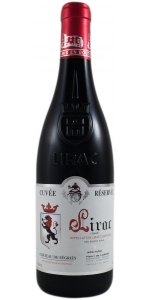
Segries Lirac Rouge Cuvee Reservee is made from 50% Grenache, 30% Syrah, 10% Cinsault, 10% Mourvèdre
Dark garnet in color. Expressive Red fruits and spicy. Sweet tannins and good length
Ageing up to 10 years
Vineyards Clay and limestone Area: 24 hectares Age of Vines: 80 years Yeild: 24 Hl/Ha Production: 570 Hl Harvest and VInification Harvest by hand and 100% destemmed. Maceration for 21 days in cement tank - Fermentation with controlled temperature at Château de Ségriès.
Pairs well with Stews, Grilled meats, Game, Various cheeses
Segries Lirac Rouge Cuvee Reservee is made from 50% Grenache, 30% Syrah, 10% Cinsault, 10% Mourvèdre
Dark garnet in color. Expressive Red fruits and spicy. Sweet tannins and good length
Ageing up to 10 years
Vineyards Clay and limestone Area: 24 hectares Age of Vines: 80 years Yeild: 24 Hl/Ha Production: 570 Hl Harvest and VInification Harvest by hand and 100% destemmed. Maceration for 21 days in cement tank - Fermentation with controlled temperature at Château de Ségriès.
Pairs well with Stews, Grilled meats, Game, Various cheeses
Review:
The 2022 Lirac Cuvée Réservée is also brilliant, with a juicy, layered, incredibly Provençal profile that has so much to love. Ripe black cherries, leather, peppery garrigue, and spice notes all give way to a medium to full-bodied, round, lush Southern Rhône that's balanced and has beautiful fruit as well as outstanding length. Based on 50% Grenache, 30% Syrah, and the balance Cinsault and Mourvèdre, destemmed and brought up in concrete, drink bottles over the coming 5-7 years.
-Jeb Dunnuck 93 Points
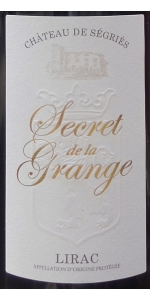
Segries Secret Grange Lirac Rouge is made from 50% Grenache and 50% Syrah.
This is a new wine for Chateau de Segries. 2013 is the first vintage.
The wine is dark and inky.
The aromas are intense and complex. It has fruit flavors of course, Strawberry and Blackberry, but it also have some interesting spice components, garrigue, pepper and licorice.
The finish is long and very pleasant as the tannins are round and well integrated.
La Grange is the name of the parcel where the grapes are grown. The soil is Clay and Limestone.
The average age of the vines is 80 years old.
Classic vinification in temperature controlled tanks. The skin contact maceration lasted 30 days and was completed in cement tanks.
The wine went through MaloLactic fermentation and was bottled without filtration.La Grange is the name of the parcel where the grapes are grown. The soil is Clay and Limestone.
The average age of the vines is 80 years old.
Classic vinification in temperature controlled tanks. The skin contact maceration lasted 30 days and was completed in cement tanks.
The wine went through MaloLactic fermentation and was bottled without filtration.
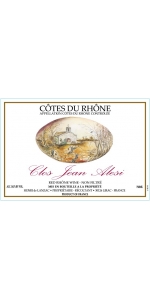
Segries Clos Jean Alesi Cotes du Rhone Rouge is made from 1/3 each of Grenache, Syrah and Mourvèdre.
This wine was originally called Segries Lanzac Clos Hermitage Cotes du Rhone Rouge
This 3.5 hectare vineyard, located in the famous “Quartier de la Chartreuse de Villeneuve-les-Avignon”, has been owned by the Formula 1 race car driver Jean Alesi since 1995. It is managed by Château de Ségriès.
This wine is a blend of 33% Grenache, 33% Syrah, and 33% Mourvedre sourced from 40-year-old vines. It was fermented in concrete vats then aged for nine months in 5% new oak barrels. The wine is a very grapey color in the glass. There is a light nose of tightly packed black fruit, dried herbs, pepper, and licorice. In the mouth there are tight-grained blue fruit, fine, powerful tannins, and a little strawberry flavor breaking loose. With air the wine reveals pencil and pepper flavors along with the structure for aging.
Yield: 40 hl/ha
Age of the vines: 40 years.
Vinification: 21 days skin maceration in temperature controlled concrete vats
Ageing: 9 months oak aging -5% new French oak from Seguin Moreau cooper and 95% of 1 year old barrels.
Delicious with roast meat, grilled vegetables, strong cheese and chocolate desserts.
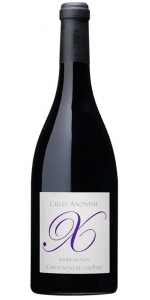
Xavier Vignon Chateauneuf-du-Pape Rouge Cuvee Anonyme 2019 is made from 60% Grenache, 15% Mourvedre, 10% Syrah and the rest is "field blend" with the following grapes : grenache, vaccarese, counoise, mourvèdre, terret noir and muscardin.
One of Xavier Vignon's first almost anonymous blends only in MAGNUMS !
The grapes come from "collection vines", where many grape varieties are planted together, making it difficult to identify the exact share of each variety: grenache, vaccarese, counoise, mourvèdre, terret noir and muscardin.
Partially destemmed and vinified in a mix of demi-muids and tank, it offers a beautifully pure, vibrant bouquet of black raspberries, white and black pepper, candied orange, and violets. Complex, layered, and nuanced, this beauty is medium to full-bodied, has a seamless texture, and a great finish. It has both elegance and richness, and will keep for 15+ years.
Pairing: Duck in sauce with olives. Ravioli with porcini mushrooms, cream of parsnip and bacon crisps. Partridge leg confit with olive oil.
Review:
"The flagship from Xavier is the 2019 Châteauneuf Du Pape Cuvee Anonyme, and in 2019 it’s 60% Grenache, 15% Mourvèdre, 10% Syrah, and the balance a mix of permitted varieties. Partially destemmed and brought up in a mix of demi-muids and tank, it offers a beautifully pure, vibrant bouquet of black raspberries, white and black pepper, candied orange, and violets. Complex, layered, and nuanced, this beauty is medium to full-bodied, has a seamless texture, and a great finish. It has both elegance and richness, and will keep for 15+ years."
- Jeb Dunnuck (October 2020), 95-97 pt
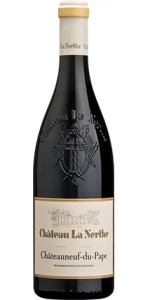
Chateau La Nerthe Chateauneuf-du-Pape Rouge is made from Grenache 39%, Mourvédre 33%, Syrah 25%, Cinsault 2%, Others 1%.
Château La Nerthe is one of the oldest estates in Châteauneuf-du-Pape and dates from 1560. Château La Nerthe has 227 acres of vineyards that surround the château and top the renowned La Crau plateau. The terroir is typical of the region. Vineyards run along a slope and grow in sandy-clay soils. The ground is covered by a layer of ‘galets’ – large, round, well-worn stones that were carried down from the Alps by glaciers during the last ice age. All the 13 permitted primary varietals are planted here. Grenache dominates 62% of the vineyards and the average vine age is over 40 years old. The grapes are hand harvested and sorted on tables. The grapes are then put into vats for almost 4 weeks with regular pump overs and punch downs. The must is tasted every day during fermentation to ensure the best extraction of the berry compounds. At the end, the wines are racked into oak vats for malolactic fermentation. The cuvée is then aged in large French oak casks and barrels for 12 months before blending. Bottling takes place 6 months later.
The dark, deep, inky color of the wine shows immediately, stemming from the concentration of the vintage. Nose of blackcurrants, black tea and dried flowers stands out. The mouth is rich, fruity and velvety with an incredibly layered tannic structure. The wine is balanced and pure with strong intense and incredibly long aging potential.
Review:
A focused expression, this wine delivers pure red and black fruits unfolding against a delicate rose-petal backdrop. Silky yet chewy tannins gradually reveal layers of red cherry, pomegranate, spice, violets, and a hint of clove. Its elegance is underscored by fine tannins, suggesting a wine that, while quiet now, holds the promise of revealing its full beauty with time in the bottle. Cellaring through 2028+ before revisiting should prove to be rewarding.
-Wine Enthusiast 93 Points
Chateau Segries Lirac Rouge Cuvee Reservee is made from 50% Grenache, 30% Syrah, 10% Cinsault, 5% Mourvedre, 5% Carignan.
Deep blueberry and forest aromas precede the very long flavors of black cherry, bramble and black pepper. Muscular and packed, it finishes with drying tannins. A great value.
The Chateau de Segries Estate
In 1994, Henri de Lanzac, cousin of Christophe Delorme from Domaine de la Mordoree, purchased the Domaine and began to improve the quality of the wine. "Segries" in provencal means "water spring". This family owned and operated winery is located in Lirac and produces some of the best values in my portfolio. They produce the following A.O.C. wines:
* Tavel Rose
* Cotes du Rhone Rouge
* Lirac Rouge
* Lirac Blanc
"An old Lirac estate with recent signs of revival under the new owners; the reds are medium weight, good to drink inside six years; charming Tavel." - Anthony Dias Blue's pocket guide to wine 2006
"A super value treasure trove in the southern Rhone, Segries is a large estate of 109 acres brought back to life over the last decade by Henri de Lanzac. The wines continue to go from strength to strength."- Wine Advocate (#178, Aug. 2008)
"Over the last fifteen years, this property has been transformed into one of the better value producers in the Cotes du Rhone. The old, oxidized, vegetal offerings have been replaced with classic examples of Provencal wines that are fresh and fruity with ripe tannins." - Wine Advocate (#190, Aug. 2010)
"The new releases from proprietor Henri de Lanzac are all impressive." - Wine Advocate (#195, June 2011)
"This has been a reliable producer of terrific values in the Cotes du Rhone (and for their Tavel rose) for a number of years, and they have once again done an admirable job." - Wine Advocate (#201, June 2012)
The Chateau de Segries Vineyard
The Domaine Chateau de Segries owns 44.5 hectares of vineyard land (108.91 acres), all in old vines, 30 hectares in one piece alone:
- 7 ha (17.30 acres) in Tavel, on limestone, pebble stone, sand and clay based soils.
- 30 ha (74.10 acres) in Lirac, on clay and limestone based soils.
- 4 ha (9.88 acres) in Cotes du Rhone.
- 3.5 other ha (8.65 acres) in Cotes du Rhone for the "Clos de l'Hermitage"
Many of the vines date back to 1925, and were planted by the former owner Count de
Cave Carod Clairette de Die is made from 75% Muscat Petits Grains and 25% Clairette. Clairette de Die is produced with the ancestral dioise method.
The grapes are rapidly pressed after the harvest and then placed in vats at low temperatures (replicating the process used by the Voconces in ancient times who kept the jars in the icy waters of their local rivers). The half-fermented must is bottled and fermentation continues in the bottle, giving a naturally sparkling wine. Disgorging occurs at least six months after bottling, while the wine still contains sugar and has reached an alcohol content of 7 to 9 %.
This is a sparkling wine with very fine bubbles, light in alcohol (8°), and containing residual sugar (incomplete fermentation). Clairette de Die has been known since ancient times (dates back to 77 A.D.). Clairette brings delicacy and lightness to the wine whereas Muscat gives its typical sweet flavor. The wine displays intense aromas, a refreshing balance of fruit and acidity with peach, orange and white flowers flavors.
This is an ideal wine for all desserts and ice creams, and is very interesting with foie gras. It is especially suitable for daytime meetings and cocktail parties. A great breakfast wine!
Wine to be consumed young, to conserve the full fruity and floral flavors. To be stored flat in a cool room away from light.
GOLD MEDAL - Effervescents du Monde 2010
GOLD MEDAL - Concours General Agricole de Paris 2012
SILVER MEDAL - Concours General Agricole de Paris 2011
Morlet Family Vineyards Ma Douce Chardonnay is made from 100 percent Chardonnay.
The cool maritime breeze and mild and sunny mountain climate create ideal conditions for this hillside vineyard located on the second ridge from the Pacific Ocean. Handcrafted using classical Burgundian winemaking techniques, this wine is dedicated to Jodie Morlet. It is ‘My Sweet’ or ‘Ma Douce.’
Full yellow color. Aromas of lemon drop, Crème Brulée and orange zest intermixed with strong notes of minerality (wet stones) and fresh hazelnut. Full-bodied, mineral driven, this wine displays a creamy texture and very long mineral finish. Built to age gracefully for a decade, this wine is already very approachable.
Propietary Name Ma Douce
Name Meaning My Sweet “Douce brize” from the Ocean
Varietal composition Chardonnay
Type of wine Vineyard designated
Appellation Fort Ross-Seaview
Vineyard singularity On the second ridge off Ocean High elevation Goldridge soil
Typical harvest date End of October
Picking Manual, small lugs, refer truck
Sorting Cluster by cluster
Fermentation In barrel through native yeast 100% Malolactic
Upbringing Sur lies with bâtonnage
French oak from selected coopers
Bottling Unfiltered
Cellaring time 5-10 years
Serving Slightly below room temperature Decanted when served young
Review:
"Lots of white peach, quince, white flower, and green almond notes emerge from the 2020 Chardonnay Ma Douce, a full-bodied barrel sample with beautiful depth as well as freshness."96 Points Jeb Dunnuck:
Pearmund Cellars Old Vine Chardonnay is made from 100 percent Chardonnay.
Warm buttery flavor, hint of pear and apple. Full-bodied and lush to the palate. Aged nine months in French oak



