" We don't sell the wine without touching the vine "
| Country: | France |
| Region: | Burgundy |
| Winery: | Chavy-Chouet |
| Grape Type: | Chardonnay |
| Vintage: | 2019 |
| Bottle Size: | 750 ml |
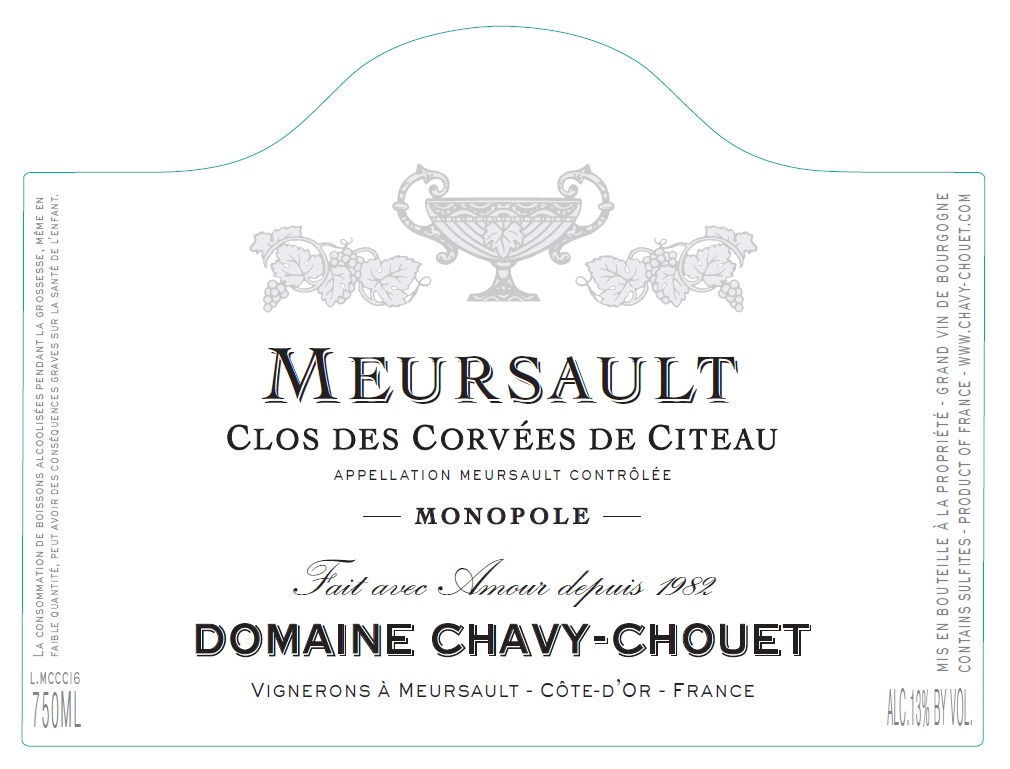
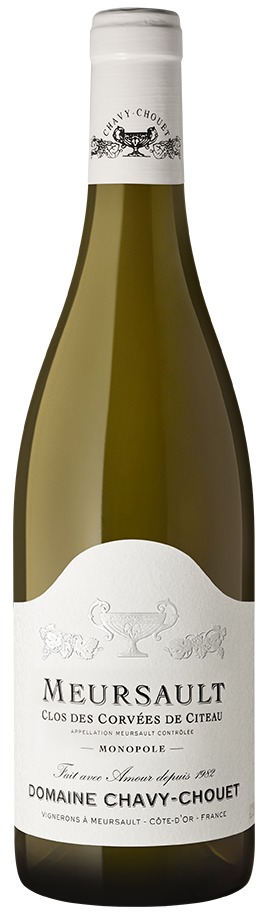
Chavy-Chouet Meursault Clos des Corvees de Citeaux is 100 percent Chardonnay
Aged in new oak barrels (Allier).
The Clos des Corvees de Citeau is a .96 hectare vineyard located in Meursault. It was part of the appellation of l'Ormeau; an old property of the Cistercian monks who made a two meter wall around the vines. The tall walls create a micro-climate that encourages early growth and ripening.
Thanks to its clay rich soil, the vineyard produces a rich, opulent and luscious wine that can be enjoyed young. This is a powerful and elegant white Burgundy; expressive, fresh and fruity with intense and strong flavors.
Chavy-Chouet Meursault Les Casse Tetes is made from 100 percent Chardonnay.
A "casse tête" in French is a conundrum or puzzle and the name of this plot refers to the hardness of the soil and the challenge it was for our ancestors to plant vines on this pebbly limestone ground.
Surface Area : 1.5 acres (0.6 hectares)
Age of the vines: 45 years old
Planting density : 10,000 vines per hectares
Soil Type : Limestone
Tasting notes: Concentrated, powerful, and lively, Les Casse-Têtes is the very quintessence of the Meursault appellation. Its sophistication, structure, and assured elegance reflect the character of the soil.
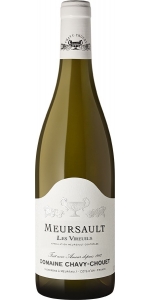
Chavy-Chouet Meursault Les Vireuils is made from 100 percent Chardonnay.
The "Les Vireuils" parcel is located on the top of the hill above Meursault, right below the forest.
It is slightly cooler parcel with a limestone soils with a higher presence of rocks. The wines coming from this parcel are always sharp with a vibrant acidity and a lot of freshness.
Tasting notes: Concentrated, powerful, and lively, Les Vireuils has all the classic characteristics of the Meursault appellation. Its sophistication, structure, and assured elegance reflect the character of the soil.
It is a great match with fish in creamy sauce, cheese, white meats.
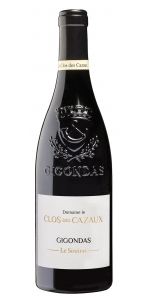
Clos des Cazaux Gigondas Le Souiras is 100% Grenache.
“Le Souiras” is the terroir located at the very South end of the Gigondas appellation. Here, in the midst of the Dentelles de Montmirail, an extraordinary calcareous massif, we planted grapevines on slopes surrounded by Mediterranean vegetation.
We are situated at an altitude of 250 meters, where the nights are cooler. The terroir is stony with a layer of grey and blue clay under the topsoil. The slopes face West and are protected from the strong summer sun by the Montmirail hill. Due to this ideal microclimate, our old Grenache grapevines contain all the complexity and balance of this sunny terroir.
Color : Dark intense ruby color.
Bouquet : Notes of little red fruits, white pepper, caramel and juniper.
Palate : The first impression is arresting and generally qualified as round, complex and dense.
The aromas of black cherry, mocha and white pepper are very intense. The palate is powerful, elegant and velvety.
The finish is long, with very silky tannins and a very slight bitterness that gives this exceptional Grenache an impression of freshness.
Review:
"A brilliant wine that has so much to love, the 2022 Gigondas Le Souiras is all Grenache that was brought up in barrels. It exhibits a vivid ruby hue as well as classic kirsch and blackberry fruit intermixed with peppery garrigue, spice, and ample Provençal nuances. This medium-bodied, fresh, focused 2022 has a beautiful sense of elegance, fine tannins, and the balance to evolve gracefully over the coming 10-12 years."
- Jeb Dunnuck (December 5th 2024), 94 pts
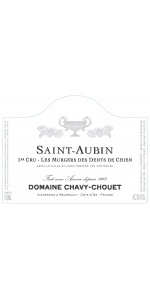
Chavy-Chouet Saint-Aubin Premier Cru Les Murgers des Dents de Chien is made from 100 percent Chardonnay.
The wine is produced from 30 year-old vines overlooking the grand crus of Puligny-Montrachet. The vines grow on limestone soils covered with white pebble stones.
The altitude and the poor soil result in a fine, subtle wine with bright acidity. It is a feminine wine that evolves slowly with floral and spicy notes before taking on greater density and revealing its power.
Ageing in oak barrels for 12 months (20% new).100% Chardonnay of 30 years of age.
The vineyard measures 0.17 hectare with a plenting density of 10,000 vines per hectare.
Review:
Jasper Morris - Inside Burgundy 93 Points
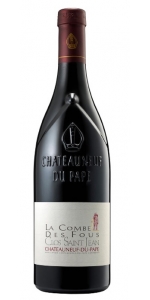
Clos Saint-Jean is a 41-hectare estate in Châteauneuf-du-Pape run by brothers Vincent and Pascal Maurel. Considered by many critics and wine-writers as the preeminent estate espousing the modern style of winemaking in Châteauneuf, this cellar is one of the oldest in the region, having been founded in 1900 by the greatgreat-grandfather of Vincent and Pascal, Edmund Tacussel. A short time after its founding and well before the AOP of Chateauneuf-du-Pape was created in 1923, Edmund began bottling estate wines in 1910.
The farming at Clos Saint-Jean is fully sustainable due to the warm and dry climate, which prevents the need for chemical inputs. Instead, Vincent and Pascal employ organic methods for pest control, mainly pheromones, to prevent pests from taking up residence in their vines, a process called amusingly enough in French, confusion sexuelle. The vines tended manually, and harvest is conducted in several passes entirely by hand.
Combe des Fous literally means, the hill of the fool. The hill, in this case, is located in the far southern reach of Le Crau which was left barren for many centuries because the layer of galets was so exceedingly deep that everyone assumed vines could never survive there. The fool in this situation is Edmund Tacussel, the great-great-grandfather of Vincent and Pascal Maruel who planted a Grenache vineyard on this site in 1905. That old-vine Grenache form the heart of this cuvée with a small amount of Syrah, Cinsault and Vaccarèse. La Combe des Fous is only made in the best vintages.
Review:
This has good concentration and energy to the dense core of dark fruit and bitter cherry, with great poise and elegance despite its ripeness (an impressive feat for the vintage). Guided by finely crushed mineral accents and tannins, this reveals pretty high-toned floral notes and leafy tobacco. Grenache, Syrah, Mourvedre, Cinsault, Vaccarese and Muscardin. Drink now through 2032. 900 cases made.
-Wine Spectator 95 Points
Chavy-Chouet Meursault Clos des Corvees de Citeaux is 100 percent Chardonnay
"Clos des Corvees de Citeaux" is a monopole.
Aged in new oak barrels (Allier). A powerful and elegant white Burgundy; expressive, fresh and fruity with intense and strong flavors.
The Clos des Corvees de Citeaux is a vineyard located in Meursault. It was part of the appellation of l'Ormeau; 0.96 hectares which was an old property of the Cistercian monks who made a two metre wall around the vines, consequently it's a hot place on a summer afternoon – one of the earliest ripening plots in Meursault.
Aged in new oak barrels (Allier).
Review:
"The 2019 Meursault Clos des Corvées de Citeau, which was the first vineyard picked this year, has a tightly wound bouquet of crushed rock, jasmine and honeysuckle aromas. The palate is smooth and slightly honeyed in texture on the entry, richer than Chavy-Chouet’s other Meursault, revealing hints of sesame and a little toastiness toward the long, harmonious finish. Excellent.- Neal Martin"
- Antonio Galloni's Vinous (December 2020), 92 pts
The Domaine Chavy-Chouet Estate
Romaric Chavy took over the estate in 2014, making him the eighth generation to make wine in his family. Romaric learned from his father, Hubert Chavy, who founded the winery. Chavy-Chouet is one of the oldest families in Puligny-Montrachet. The Ropiteau family (on his mother's side) is the oldest one in Meursault.
Hubert Chavy (known not only for his winemaking but also for his charisma) was able to train Romaric in for a few years before his passing in early 2014. Romaric has become a very smart vigneron with a great philosophy. Making wine has come naturally to him, as if often does in Burgundy when you are next in line.
After six years at a specialist winemaking school and with plenty of experience in winegrowing and vinification around the world under his belt, Romaric has given the estate a makeover, watching over his 15 hectares of vines with a rigorous eye. He is proud of his roots, and his approach combines rigor, tradition, and innovation.
A group from Kysela visits Chavy-Chouet in January each year, carrying on a tradition of tasting from barrels, then bottles, and then finishing with some mystery wines. The group has to guess the appellation and the vintage of wines being poured from magnums...a tough job, but somebody has to do it.
This is a 15 hectare-domaine (37 acres) that produces wine from 14 A.O.C.'s (80% White, 20% Red). The vineyard is divided into 70 parcels planted to vines that are 40 years old or more. He uses Gillet as his cooper, who blends oak from Nevers, Limousin and Allier forests. The barrels receive medium toast. Romaric, just as his father, Hubert, does not fine or filter his wines, as he prefers their purity to shine through.
The winery covers 1,300 square meters, including 800 square meters of cellars, and is a mix of ancient and ultra-modern. The set-up allows him to work hand-in-hand with nature in a well-managed yet pleasant environment, and to meet his very high demands in terms of quality. The wines are put into barrels using gravity, intervention is kept to a minimum, and an irreproachable attitude to cleanliness also symbolize his quest for excellence in the shape of pure and balanced wines that burst with energy.
A corked bottle of 1983 Pichon-Lalande led to my inaugural visit to this Meursault domaine. My precious Pauillac corked, I ordered a bottle of 2015 Bourgogne Les Femelottes from Chavy-Chouet at Brat restaurant in London. It was so damn delicious that I ordered another and emailed winemaker Romaric Chavy that I must visit pronto.
Arriving at the gates, I noticed that there was no doorbell or knocker. When I was noticed loitering outside, the gates finally opened and Romaric Chavy informed me that they do without a doorbell because they have so many visitors. Chavy is a young and confident guy, very media-savvy, which is uncommon in Burgundy. He worked abroad in various countries including South Africa and Greece before taking over Chavy-Chouet at the age of just 22. Before tasting through the 2017s, which had all been bottled, I asked about the background of the domaine.
“The holdings come from two sides of my grandfather’s family. Chavy comes from Puligny-Montrachet, and his wife was part of the Ropiteau family in Meursault. Back then, he sold the wines to Bouchard Père. It was my own father, Hubert, who started bottling his own wine when he married his wife from Pommard and bought this house in Meursault. I started at the domaine in 2006 when we were still selling off grapes. I already had a good network [of potential clients] and so we started to bottle everything and develop exports. My father passed away in 2014. Now we have 15 hectares, mostly old vines located in five villages, producing around 90,000 bottles, of which around 90% is exported. We have three or four people working full-time and we work in a classical way - lutte raisonée and ploughing in the vineyard. This year we approached half the vineyard organically, but when the pressure became too high, we switched back and used spray. We press the fruit for two hours, with a 24-hour debourbage, and then ferment in barrel using natural yeast, a maximum of 20% new oak for between 9 and 12 months, with no lees stirring and a light filtration before bottling. We try to keep as much natural CO2 as possible.”
It is always a pleasure to discover a producer who has skimmed under your Burgundy radar for some time. Chavy-Chouet has built a loyal following here in the UK and I can understand why. These wines are very pure, terroir-driven and focused. Yet they are not challenging or pretentious and give much sensory pleasure. As I mentioned, you can splash the cash on a Premier Cru white if you wish, but do not ignore the 2017 Bourgogne Blanc Les Femelottes. It is unequivocally Village Cru in quality – no real surprise given that its vines are adjacent to Puligny-Village. The 2017 Meursault Charmes is an absolute knockout, whilst the monopole Clos des Corvées de Citeau is superb. This is an address I will definitely return to in the future, though I have made a mental note to phone ahead, so that I can actually get in. - Neal Martin"
- Antonio Galloni's Vinous (2017 Burgundy: A Modern Classic, January 2019)
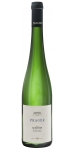
Weingut Prager Achleiten Riesling Smaragd is made from 100 percent Riesling.
Franz Prager, co-founder of the Vinea Wachau, had already earned a reputation for his wines when Toni Bodenstein married into the family. Bodenstein’s passion for biodiversity and old terraces, coupled with brilliant winemaking, places Prager in the highest echelon of Austrian producers.
Smaragd is a designation of ripeness for dry wines used exclusively by members of the Vinea Wachau. The wines must have a minimum alcohol of 12.5%. The grapes are hand-harvested, typically in October and November, and are sent directly to press where they spontaneously ferment in stainless-steel tanks.
Achleiten sits east of Weißenkirchen and is one of the most famous vineyards in the Wachau. The steeply-terraced vineyard existed in Roman times. Some sections have just 40 cm of topsoil over the bedrock of Gföler Gneiss, amphibolitic stone, and slate. “Destroyed soil,” as Toni Bodenstein likes to say.
Tasting Notes:
Austrian Riesling is often defined by elevated levels of dry extract thanks to a lengthy ripening period and freshness due to dramatic temperature swings between day and night. Wines from Achleiten’s highly complex soils are famously marked by a mineral note of flint or gun smoke, are intensely flavored, and reliably long-lived.
Food Pairing:
Riesling’s high acidity makes it one of the most versatile wines at the table. Riesling can be used to cut the fattiness of foods such as pork or sausages and can tame some saltiness. Conversely, it can highlight foods such as fish or vegetables in the same way a squeeze of lemon or a vinaigrette might.
Review:
The 2020 Ried Achleiten Riesling Smaragd offers a well-concentrated, fleshy and spicy stone fruit aroma with crunchy and flinty notes. It needs some time to get rid of the stewed fruit flavors, though. Full-bodied, fresh and crystalline, this is an elegant, complex and finely tannic Riesling that needs some years rather than a carafe to polymerize the tannins and gain some finesse. Tasted at the domain in June 2021.
At Prager, I could not determine that 2020 would be inferior to the 2019 vintage; on the contrary, the 2020 Smaragd wines fascinated me enormously in their clear, cool, terroir-tinged way. A 38% loss had occurred mainly because of the hail on August 22, although predominantly in the Federspiel or Riesling vineyards. There was no damage in the top vineyards such as Ried Klaus, Achleiten or Zwerithaler. "Interestingly, the vines are in agony for about two weeks after the hail. There was no more growth, no development of ripeness and sugar," reports Toni Bondenstein. The Veltliner then recovered earlier, while even picking a Riesling Federspiel in October was still a struggle. "Why Riesling reacted more intensively to the hail, I don't know myself either," says Bodenstein. Whole clusters were pressed to preserve acidity and to compensate for the lower extract, and compared to 2019, the 2020s were left on their lees longer. In June, however, the 20s in particular showed outstanding early shape.
-Wine Advocate 94 Points
Light yellow-green, silver reflections. Yellow stone fruit nuances with a mineral underlay, notes of peach and mango, a hint of tangerine zest, mineral touch. Juicy, elegant, white fruit, acidity structure rich in finesse, lemony-salty finish, sure aging potential.
-Falstaff 95 Points
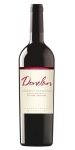
The nose of our the Cabernet Sauvignon shows remarkable purity, opening with juicy fruit-punch and layered notes of blue and red fruit dried with sweet herbs. The palate builds with blackberry pie filling, baker’s chocolate, and freshly ground coffee, underscored by an earthiness of loam and underbrush. Acidity is finely tuned, carrying structure through the middle and sides of the wine. For those who can wait, cellar this bottle for several years. For those who cannot, double decant 4–5 hours before serving and let the wine come fully alive.
Blackberry pie filling, baker’s chocolate, freshly ground coffee, earthy loam and underbrush, red and blue fruit dried with sweet herbs
Review:
"How do you do Cabernet the Donelan way—and do it in Sonoma? The answer began with archetyping older styles of Cabernet. The vineyard lies near Skipstone, encompassing sites such as T-T Vineyard, Obsidian, and Constant on Diamond Mountain. For Joe Donelan, the goal was to craft a Cabernet reminiscent of what Mondavi was producing in the 1970s and early 1980s—wines defined by freshness, clarity, and balance rather than sheer weight. The result is vivid, bright, and pure-fruited, with an immediate freshness factor. Red berry fruit, cherry, and cassis lead the way, framed by a medium-bodied structure with velvety-textured tannins and a creamy mid-palate that makes the wine deeply engaging and remarkably easy to drink. Sagebrush and black olive notes lend savoury complexity, joined by subtle hints of tobacco, all carrying through to a long, mineral-driven, fruit-focused finish. - Jonathan CRISTALDI"
Decanter (January 5th 2026), 97 points