
" We don't sell the wine without touching the vine "
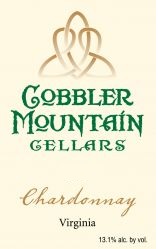
| Country: | United States |
| Region: | Virginia |
| Winery: | Cobbler Mountain |
| Grape Type: | Chardonnay |
| Organic: | Yes |
| Vintage: | 2012 |
| Bottle Size: | 750 ml |

J. Christopher Appassionata Fortissimo Pinot Noir is made from 100 percent Pinot Noir.
Inspired by the three movements of Beethoven’s “Appassionata” Piano Sonata, there are three Appassionata Pinot Noirs, released at different tempos.
The finale of the Appassionata Pinot Sonata is Fortissimo (dynamically forceful). Selected for ultimate expressivity and longevity, it is not released until 10 years after the vintage. This is the epitome of expressive excellence that we are seeking in Willamette Valley Pinot Noir – a wine that combines brooding intensity with lilting grace and can stand alongside the classic wines of the world. The 2012 Fortissimo is muscular and full-bodied, with a deep color and seamless structure. In this phase of maturation, tertiary aromas begin to show a profound complexity and subtle earthiness that only develops with bottle age and cannot be accelerated
Review:
Loosen Bros. and J. Christopher Wines just released the Fortissimo and it is showing great acidity and fine-grained tannins. Its aromas and flavors of sweet red cherries, roasted pork shoulder and orange-pekoe tea are alive and kicking. Enjoy 2023–2032.
-Wine Enthusiast 95 Points
More intense than you might expect from an 11 year old Pinot Noir, certainly one that has been held back at the estate for 10 years before release. Grilled raspberry leaf and reductive smoky notes greet you on the nose here, with sweet black fruits softening the tangy red cherry and cranberry of Oregon Pinot, all wrapped up with waves of leather, sage and tobacco. This has power and succulence, and even at 10 years old it feels pretty young, just at the beginning of its development with a good decade ahead of it. Late release is an unusual approach in Oregon, but not so unusual if you follow Loosen’s winemaking in the Mosel, where he has been known to keep Riesling between 20 and 30 years in barrel. In this case the barrel ageing is for around two years, with the rest taking place in the bottle. Old fashioned winemaking, delicious results. 20% new oak. Fermented with natural yeast, unfiltered and unfined. Tim Malone winemaker. First time on the Place from this wine, from a vineyard in the foothills of the Chehalem Mountains in Oregon’s Willamette Valley. Heavy bottle.
- Jane Anson - Inside Bordeaux 97 Points

Argot Le Rayon Vert Chardonnay is made from 100 percent Chardonnay.
"Le Rayon Vert", the phenomenon which occurs as the sun dips below the horizon, and a brilliant green flash occurs when sunlight prisms through Earth's atmosphere. Jules Verne wrote "a green which no artist could ever obtain on his palette”, akin to the ethereal, green halo all truly pedigreed Chardonnays radiate from the glass.
Wafting from the glass like a freshly opened stick of Wrigley's gum. Both intense and vibrant, the full-bodied palate delivers Granny Smith apple and stone fruits; confections of custard and sticky vanilla bean; animated by bursts of spearmint and pine forest.
Review:
The 2019 Chardonnay Le Rayon Vert comes from fruit grown on Sonoma Mountain. It slides out of the glass with graceful notes of lemon tart, lime leaves, and fresh grapefruit, leading to suggestions of almond croissant, sea spray, honeysuckle, and aniseed. The medium-bodied palate is fantastically tight-knit with gorgeous tension and layer upon layer of citrus and mineral flavors, finishing very long and chalky. This is amazing.
-The Wine Independent 97 Points

Hartford Court Far Coast Vineyard Chardonnay is made from 100 percent Chardonnay.
The 2019 Far Coast Vineyard Chardonnay exhibits aromas of orange zest, yellow apple, dried fruits, and spice. The flavors of tangerine, mandarin orange, and quince are followed by a long textural finish of minerals and delicate fruit.
Review:
This vineyard is located on a mountain ridge north of Fort Ross on the Sonoma Coast at 700 feet elevation, and the wine was aged for 14 months in 39% new French oak. The 2019 Chardonnay Far Coast Vineyard offers more lime citrus, saline minerality, and white peach, and the palate is fresh, energetic, and consistent with the nose. Texture-wise, it is markedly different, with more focused structure and tension.
-Jeb Dunnuck 96 Points

The Kasteelberg range of wines, celebrates the discovery of Riebeek and the Kasteelberg mountainsin 1661. Kasteelberg stands sentinal over the fertile valley below. From the slopes of the mountians, hand-selected grapes are expertly crafted with care to produce rare and expressive wines. The Kasteelberg range truly is the pinnacle of our Winemakers'art.
Rich and golden with strong tropical aromas, beautifully enhanced by subtle tones of well-integrated oak. Although upfront and bold, the secret of this wine is in its exceptional balance, an outstanding version of the classic Chardonnay.

Kershaw Chardonnay Deconstructed Groenland Shale CY548 is made from 100 percent Chardonnay.
The inspiration for this Chardonnay stems from my belief that the Elgin region has both a signature grape as well as particular terroirs within its demarcated boundary that reflect regional credentials. This Chardonnay was selected from a sub-region of Elgin from a specific vineyard and an individual clone (CY548).
Tasting Notes:
Sourced from the foothills of the Groenland Mountain in Northern Elgin this clone has been taken from Corton Charlemagne cuttings. It produces wines that have aromatics oscillating between lemon blossom, white flowers, petrichor and struck stone. Full in body they exude concentration with white stone fruit yet reinforced with an austere texture and robustness that makes for excellent aging potential. The Bokkeveld Shales adds structure and concentration to the flavor.
Vineyards:
Sourced from the foothills of the Groenland Mountain in Northern Elgin this clone has been taken from Corton Charlemagne cuttings.
Winemaking:
Grapes were hand-picked in the early autumnal mornings, placed into small lug baskets and tipped directly into a press before being gently whole-bunch pressed up to a maximum of 0.6 bar or until a low juice recovery of 580 liters per ton was obtained. The juice gravity-flowed directly to barrel (no pumps were used at all) without settling. The unclarified juice had no enzymes or yeast added to it and therefore underwent spontaneous fermentation until dry, with malolactic discouraged. The wine rested in barrel for 4 months prior to judicious sulfuring and a further 7 months’ maturation in barrel before racking and bottling.
Barrel: Selection: A small number of artisanal coopers are selected from mostly Burgundy, with only French oak was chosen. Up to 40% of the oak is new with the remainder split into 2nd and 3rd fill barrels of predominantly 228 litres.
Look at pairing this with textured fish, straightforward chicken dishes, pan-fried or grilled pork dishes, soft-rind cheeses, cream or creamy dishes be it with pasta or the aforementioned fish, chicken or pork, to allow the complexity of the wine to shine through. If using mustard, preferably use Dijon mustard as it uses verjus (soured grape juice) and not vinegar. Also look to delicate herbs (tarragon, dill, basil, parsley) rather than hard stalked herbs (rosemary, thyme, oregano, etc). Avoid smoked meats or fish as well as highly spiced dishes as this can overwhelm the wine and clash with the oak. I would try oysters; Lobster grilled or boiled but not thermidor as it is too rich; turbot, dover sole, sea bass, yellowtail with a shellfish sauce; fish pie; roasted free-range chicken with tarragon; roast loin of pork with garlic and ginger; truffle risotto; pasta in a clam sauce; slice of brie de meaux.
Review:
"Perfume of flowers, minerals and citrus zest. The palate is dense and focused, almost chewy with an opulent mandarin mid palate and long, savory finish. Matured in 50% new oak that is seamlessly integrated with the wine."
- International Wine Review (Richard Kershaw Lifts Elgin To New Heights, February 2019), 94 pts

Lismore Chardonnay made from 100 percent Chardonnay.
This very special Chardonnay was made in the style of a traditional Burgundian Chablis. It shows intense citrus and soft fruit layered with brioche, honey and walnut carried by a distinct minerality and crisp acidity with a lingering citrus finish.
Wine Made in the Soil
The vineyards are planted in decomposed shale over clay at 300 meters in the foothills of the Sonderend Mountain Range. A low mean February temperature lends to an extended ripening period that can put harvest 3-4 weeks later than traditional wine growing regions in South Africa. The intense citrus notes and the lingering finish are consistent trademarks of Lismore's specific terroir. The restrained minerality of the Chardonnay is a clear indication of the cool climate in which it is grown.
Wine of Origin "Greyton" has been designated by SAWIS recognizing the special terrior of this region.
Delightful with warm curries which lift the aromatics or a traditional pairing of smoked salmon highlighting the fresh acidity.
Shimmering notes of pear and crisp apple. Aged 50% in Oak & 50% in stainless tanks yields playful citrus effects for a refreshing cocktail at the end of a long day. Delicious paired with simmered Lemon Chicken & Capers, or Halibut with Cream Sauce. The clusters of champagne colored berries were saturated by Summer floods during their infancy, nearly buried in the Blizzards of '09 and later thrived during the droughts of record-high temps of late Summer. Meanwhile, Mother Nature sent Robins to nest and start new life inside the green canopy and heavy trellis. This refreshing Chardonnay remembers a past and pours the gifts of sunshine, mountain and the winemaker's care into your glass.

Lismore Pinot Noir is made from 100 percent Pinot Noir
Complex bouquet of crushed rose petals, wild jasmine and fresh French herbs followed by a palate full of cranberry, raspberry and a long savory finish.
The grapes were picked at optimal ripeness. 30% whole bunch fermented in large 5000 liter vats with gentle pump-overs twice a day. The process allowed for a long extraction period which lends to the fruit expression and structure of this wine. The free run wine was drained off and the fermented grapes were then pressed in a traditional wooden basket press. The wine was racked into 225, 300 and 500 liter barrels where malolactic fermentation took place and the wine was aged for 10 months. 35% new French oak was used.
Review:
"The 2018 Pinot Noir comes from Walker Bay and Kaaimansgat and includes 30% whole-bunch fruit, aged for 11 months in 25% new oak. The bouquet sports vivid red cherry and raspberry fruit that is exceptionally well defined and beautifully integrated with the oak. The palate is medium-bodied with supple tannins, well-judged acidity and a slightly fleshy texture. There is just the right amount of salinity here, and the finish is kept on a tight leash, allowing the detail and precision to be fully expressed. A slight sour edge on the finish keeps you coming back for another sip. Excellent and reassuringly classy. - Neal Martin" - Antonio Galloni's Vinous (November 2019), 92 pts
"Walker Bay and Elandskloof are the twin sources of 30% whole bunch-fermented Pinot from Sam O'Keefe. Juicy, floral and charming, it's a graceful, fruit forward style with some clove and tobacco spice and refreshing acidity. The finish is a little firmer than I remember. 2020-24"- Tim Atkin (South Africa 2020 Special Report), 92 pts

Cabrieres Chateauneuf du Pape Rouge Les Silex is made from 80% Grenache and 20% Syrah .
The vineyard is situated on the high tablelands, which are characteristic of the northern area of Châteauneuf-du-Pape. The terrain consists mainly of alpine diluvium and chalky Miocenian soil, with large flint pebbles covering the surface. These pebbles conserve the heat of the day during the night, thus avoiding too much evaporation.
This 2020 has opened up and is drinking great right now. A blend of 80% Grenache and 20% Syrah. Elegant cherry red color, with expressive notes of red fruits (strawberry and raspberry). Mellow tannins, well-balanced on the palate. I feel I need to point out the freshness, it is bright and lively on the palate, something we don’t see a lot of in this region. This also makes it extremely food friendly as it can hold up to fatty proteins.
Very good with white meat, red meat, charcuterie and cheese.



