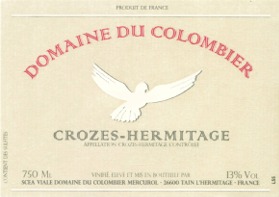
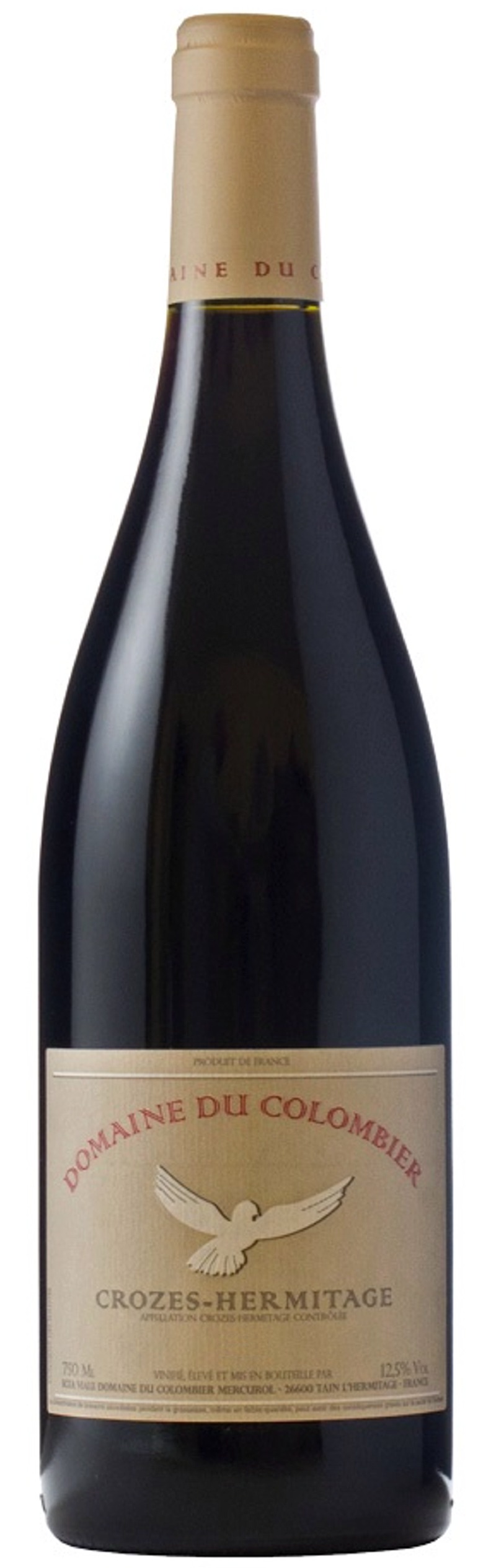
" We don't sell the wine without touching the vine "
| Country: | France |
| Region: | Crozes Hermitage |
| Winery: | Colombier |
| Grape Type: | Syrah |
| Vintage: | 2013 |
| Bottle Size: | 750 ml |

Domaine du Colombier Hermitage Rouge is made from 100 percent Syrah.
Perfect with beef ribs, grilled meats and cheese.
Manually harvested with destemmed grapes and fermented for about 2 to 3 weeks in temperature controlled vats, with an ageing period of 12 months, 65% in oak barrels and 35% in concrete tanks.
Review:
Brought up in 30% new demi-muids, with the balance in used barrels, the 2017 Hermitage is beautifully pure and layered, with smoking good notes of crème de cassis, white flowers, crushed rocks, and violets. Deep, full-bodied, and concentrated on the palate, it has plenty of tannins and is going to need 5-7 years of bottle age. This is a sensational Hermitage from Colombier that will drink well for 25+ years.
These wines are made by the talented Florent Viale and shine for their purity as well as character. While the winemaking here is traditional, with the wines destemmed and brought up mostly in used demi-muids, the purity of fruit can give the impression that wines are more modern styled than they are. They will all benefit from short-term cellaring.
-Jeb Dunnuck 96+ Points

Fayolle Crozes-Hermitage Rouge Cuvee Nicolas is made from 100 percent Syrah.
Deep ruby red color. Nose of red and black currant fruits, pepper, spring flowers, new leather and mineral/earthy nuances. Medium bodied palate of red fruit and spice. Nice balance. Long finish and velvety.
Review:
"Boasting even more striking aromas of blueberries, violets and peppery spice than the La Rochette bottling, the 2018 Crozes-Hermitage La Cuvee Nicolas is almost Côte-Rôtie-like. Medium to full-bodied without seeming at all heavy, ripe without being overdone, silky and fine from start to finish, it's a real beauty and a testament to the potential of the commune of Gervans - a small granitic outpost within the Crozes-Hermitage appellation. - Joe Czerwinski"
- Robert Parker's Wine Advocate (May 13th 2021), 93 pts
Fayolle Crozes-Hermitage Rouge Cuvee Nicolas is made from 100 percent Syrah.
Deep ruby red color. Nose of red and black currant fruits, pepper, spring flowers, new leather and mineral/earthy nuances. Medium bodied palate of red fruit and spice. Nice balance. Long finish and velvety.
Good match with red meat (beef, lams) or white meat (veal) in sauce, poultry and game meat. Perfect with most cheeses.

Fayolle Crozes-Hermitage Rouge La Rochette is made from 25-year-old vines planted on loess and red granitic soils. 100% Syrah.
Deep ruby red color.
The wine has plenty to offer with red and black fruit aromas, as well as a good minerality.
The finish is long, clean and juicy and offers some white pepper spiciness typical of the best Crozes-Hermitage.
Soil type is red brittle granite and white soil.
Hand harvested in small crates. The grapes are then pumped into tanks (full cluster, not destemmed).
It will stay in this tank for 15 days for the skin contact maceration and the Alcoholic fermentation.
They will also use the "rack and return" technique (delestage).
Then the wine is transfered into neutral French Oak barrels where the wine will complete the Malo-Lactic fermentation.
Fayolle Crozes-Hermitage Rouge La Rochette is made from 25-year-old vines planted on loess and red granitic soils. 100% Syrah.
Deep ruby red color.
The wine has plenty to offer with red and black fruit aromas, as well as a good minerality.
The finish is long, clean and juicy and offers some white pepper spiciness typical of the best Crozes-Hermitage.
Soil type is red brittle granite and white soil.
Hand harvested in small crates. The grapes are then pumped into tanks (full cluster, not destemmed).
It will stay in this tank for 15 days for the skin contact maceration and the Alcoholic fermentation.
They will also use the "rack and return" technique (delestage).
Then the wine is transfered into neutral French Oak barrels where the wine will complete the Malo-Lactic fermentation.
Fayolle Crozes-Hermitage Rouge La Rochette is made from 25-year-old vines planted on loess and red granitic soils. 100% Syrah.
Deep ruby red color.
The wine has plenty to offer with red and black fruit aromas, as well as a good minerality.
The finish is long, clean and juicy and offers some white pepper spiciness typical of the best Crozes-Hermitage.
Soil type is red brittle granite and white soil.
Hand harvested in small crates. The grapes are then pumped into tanks (full cluster, not destemmed).
It will stay in this tank for 15 days for the skin contact maceration and the Alcoholic fermentation.
They will also use the "rack and return" technique (delestage).
Then the wine is transfered into neutral French Oak barrels where the wine will complete the Malo-Lactic fermentation.
Review:
"The 2022 Crozes-Hermitage La Rochette comes from a single lieu-dit and was aged 15 months entirely in French oak barrels averaging 20 years old. Ripe blackberries, black olive, iron, leather, and pepper all define the aromatics, and it's medium-bodied, with a supple, elegant mouthfeel and a great finish. It's going to have a solid decade of longevity."
- Jeb Dunnuck (Importer Highlight: Fran Kysela ; July 2024), 91 pts
Toasty, savory nourishing red. Medium weight with detectable acidity but very comfortable, confident winemaking. The structure is well balanced with a long and slightly tannic finish. The wine will benefit from a 10-20 minute decanting before serving. A lovely expression of the appellation.
Goes well with "Charcuterie" and cheese. Great with anything BBQed as well.
Review:
This may not be as potent or complex as Colombier's Cuvée Gaby, but it comes close, which makes it an excellent value. Meaty, savory notes are ideally suited for accompanying autumn game or winter stews, yet the tannins are supple, making it approachable already."
- Wine Enthusiast (November 2015), 91 pts
The Domaine de Colombier Estate
Domaine du Colombier is located in the Northern Rhone Valley, in the left bank of the Rhône River. The estate has been part of the family since the First World War. The owners gradually moved from a sharecroppers status to that of owners. Florent Viale joined his father in 1990 and decided to bottle part of their production in 1991. Now they sell 80% in bottle, 20% in bulk.
The Domaine de Colombier Vineyard
This 12 hectare (30 acres) Domaine spreads over the two communes of Tain l'Hermitage and Mercurol and is comprised of:
1.6 hectares (4 acres) of Hermitage
1.2 hectares (3 acres) of white Crozes-Hermitage
9.2 hectares (23 acres) of red Crozes-Hermitage.
Total: 12 hectares (30 acres)
The vineyard, located on stony hillside, is planted with old vines (50-55 years of age): Syrah for the red and Marsanne for the white. The grapes are harvested by hand.

Belle Glos' first wine under the newly minted West Sonoma Coast AVA and a cellared release, this majestic vineyard brings plum with a slight burnt edge in the glass and boasts aromas of freshly tilled land, a rich oak forest in Autumn, and Crème de Cassis. Once on the palate, the acidity sparks a fire of smoked caramel and cinnamon spiked cranberry sauce. The silky-smooth texture gives way to a long and balanced finish that leaves your senses wanting more.
Review:
Located in the westernmost section of Sonoma County, this rugged, elevated, marine-influenced sub-AVA is the newest in the region. This almost nine-year-old wine immediately delivers a memorable experience through its perfume of jasmine, gardenia, and tangelo; on the palate, notes of brown-sugared cherry join a parade of orange peel and crushed stone. Grainy yet juicy strawberry weaves into vanilla and cedar as white pepper keeps the palate primed for more flavor.
-Tasting Panel 97 Points

Schwarz Thiele Road Grenache is made from 80 year old 100% Grenache vines.
Thiele Road is a dusty track that crosses Bethany Creek at the foot of the Barossa Ranges. It is home to Jason Schwarz's family's 70 year old, deep rooted Grenache vines that produce wines with complex flavours and plenty of character.
Bouquet: The nose is floral and expressive with raspberry and pepper.
Palate: Red fruits, spice and earth with beautiful balance and structure. Medium weighted with fine acidity. A wine built on complexity and packed with interest.
Planted in 1941. The gnarled, old vines continue to produce fantastic fruit and the quality out of the 2014 vintage was evident. The vines are handpicked, 10% whole bunch and the remainder de-stemmed and into an open fermenter. Before too long the wild yeast population on the grapes kicks off fermentation and that continues with daily gentle pump overs and hand plunging until fermentation is complete and the flavour profile is just right. The wine is then basket pressed and matured in seasoned French oak for 18 months before bottling. Not filtered or fined.