
" We don't sell the wine without touching the vine "
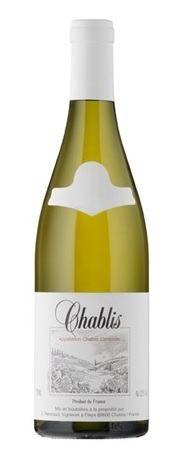
| Country: | France |
| Regions: | Burgundy Chablis |
| Winery: | Corinne Perchaud |
| Grape Type: | Chardonnay |
| Vintage: | 2019 |
| Bottle Size: | 750 ml |
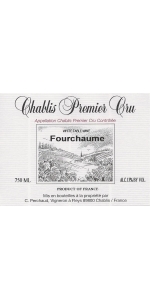
Corinne Perchaud Chablis 1er Cru Fourchaume is made from 100 percent Chardonnay
Elegant citrus aromas. Concentrated and finessed, combining flavors of dried fruit with slight hints of woody notes. Perfect balance between body and acidity, long and persistent finish. This one is drinking great now, but as with all exceptional Chablis, it is possible to pay it down for years to come.
Made from 35 year old vines. The owners take great care to produce exceptional Chablis wine by keeping the lively Chardonnay fruit and the unique mineral quality imparted by the Kimmeridgian soil, the fruity acidity and bouquet in perfect balance. The grapes are harvested by hand and gently pressed in a horizontal pressoir to ensure the fullest extraction and range of flavors and aromas.
Pair with Scallops Jacques cream, roast veal with oyster mushrooms.
Corinne Perchaud Chablis is 100 percent Chardonnay.
A classic Chablis with aromas of ripe white fruits and a taste of rich minerals.
The Vineyards The plots are in Chablis located predominantly on the village of Fleys, but also on the common Chichée and Fontenay, their total area is 13 hectares. They are mostly north and north-west oriented. The ground floor is Kimmeridgian marl consisting clay and limestone. The oldest of of the vines is 35 years. Winemaking After a slight settling, the juice is put in stainless tanks to achieve its fermentation both alcoholic and malolactic. Ther is a long aging on lees to refine the flavors and develop complex flavors. If necessary, we make a collage of Bentonite to remove proteins and a passing cold which eliminates tartar crystals. Then we perform a tangential filtration method friendly to the wine. The wine is bottles between 14 and 21 months after the harvest.
Pairs well with Oysters or shellfish and Sole Meunière.
Corinne Perchaud Chablis (half-bottle) is 100 percent Chardonnay.
A classic Chablis with aromas of ripe white fruits and a taste of rich minerals.
The Vineyards The plots are in Chablis located predominantly on the village of Fleys, but also on the common Chichée and Fontenay, their total area is 13 hectares. They are mostly north and north-west oriented. The ground floor is Kimmeridgian marl consisting clay and limestone. The oldest of of the vines is 35 years. Winemaking After a slight settling, the juice is put in stainless tanks to achieve its fermentation both alcoholic and malolactic. There is a long aging on lees to refine the flavors and develop complex flavors. If necessary, we make a collage of Bentonite to remove proteins and a passing cold which eliminates tartar crystals. Then we perform a tangential filtration method friendly to the wine. The wine is bottles between 14 and 21 months after the harvest. 2011 Vintage The relatively high temperatures at the end of winter allowed an early bud vines in early March. With a hot, dry spring flower took place in good conditions. In July, a hailstorm located did some damage to our Fourchaume plot. July and early August, rainy and stormy brought the water needed vineyards. The dry and sunny weather of the second half of August brought the grape good maturity. The harvest began on September 2 under clement skies.
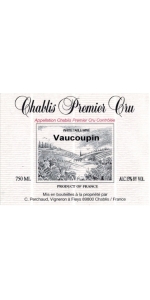
Corinne Perchaud Chablis Premier Cru Vaucoupin is 100 percent Chardonnay.
The vineyard The plots are on the Vaucoupin Chichée village. They are very steep and facing south, their average age is 40 years. The total area is 1.45 hectares. The vines are planted on soil Kimmeridgian marl consisting clay and limestone with dominant clay. Winemaking After a slight settling, the juice is put in to achieve its fermentation tank alcoholic and malolactic. It follows a long aging on lees to bring a maximum of complexity of aromas and flavors. If necessary, we make a collage to bentonite to remove proteins and a passing cold which eliminates tartar crystals. Then we perform a tangential filtration is the filtration method most friendly to wine.
The wine will be bottled 16 months after harvest. The relatively high temperatures at the end of winter allowed an early bud vines in early March. With a hot, dry spring flower took place in good conditions. In July, a hailstorm located did some damage to our Fourchaume plot. July and early August, rainy and stormy brought the water needed for the vineyards. The dry and sunny weather of the second half of August brought the grapes to maturity. The harvest began on September 2 under clement skies.
Pairs well with seafood, shellfish.
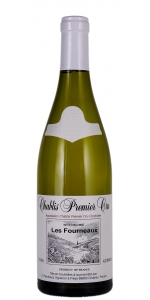
Corinne Perchaud Chablis Premier Cru Fourneaux is made from 100 percent Chardonnay.
This is the south facing portion of the slope and very hot, heavy "Fourneaux" or "oven" effect.
The wine is expressive and vivacious with beautiful aromas.
Well-balanced, round and fruity wine with a fine minerality on the finish.
1er Cru Fourneaux is located on the Fleys village and faces the field. the plots are very steep and exposed full south on soil type Kimmeridgian consists of marl clay-limestone with shallow ground and a very stony ground. After a slight settling, the juice starts its fermentation in tank, then ¼ of juice is racked in barrels. Both wines perform their alcoholic fermentation and malolactic and their aging on the lees, separately. The two cuvées are blended six months after harvesting. The wine is then filtered and is bottled 15 months after harvesting. 2013 Conditions and Harvest The relatively high temperatures at the end of winter allowed an early bud vines in early March. With a hot, dry spring flower took place in good conditions. In July, a hailstorm located did some damage to our Fourchaume plot. July and early August, rainy and stormy brought the water needed by the vineyards. The dry and sunny weather of the second half of August brought the grapes to maturity. The harvest began on September 2 under cloudy skies.
Coquille St. Jacques (scallops) with leeks and cream.
Perchaud Chablis Premier Cru Fourneaux is made from 100 percent Chardonnay.
This is the south facing portion of the slope and very hot, heavy "Fourneaux" or "oven" effect.
The wine is expressive and vivacious with beautiful aromas.
Well-balanced, round and fruity wine with a fine minerality on the finish.
1er Cru Fourneaux is located on the Fleys village and faces the field. the plots are very steep and exposed full south on soil type Kimmeridgian consists of marl clay-limestone with shallow ground and a very stony ground. After a slight settling, the juice starts its fermentation in tank, then ¼ of juice is racked in barrels. Both wines perform their alcoholic fermentation and malolactic and their aging on the lees, separately. The two cuvées are blended six months after harvesting. The wine is then filtered and is bottled 15 months after harvesting. 2013 Conditions and Harvest The relatively high temperatures at the end of winter allowed an early bud vines in early March. With a hot, dry spring flower took place in good conditions. In July, a hailstorm located did some damage to our Fourchaume plot. July and early August, rainy and stormy brought the water needed by the vineyards. The dry and sunny weather of the second half of August brought the grapes to maturity. The harvest began on September 2 under cloudy skies.
Coquille St. Jacques (scallops) with leeks and cream.
Corinne Perchaud Chablis is 100 percent Chardonnay.
A classic Chablis with aromas of ripe white fruits and a taste of rich minerals.
The Vineyards The plots are in Chablis located predominantly on the village of Fleys, but also on the common Chichée and Fontenay, their total area is 13 hectares. They are mostly north and north-west oriented. The ground floor is Kimmeridgian marl consisting clay and limestone. The oldest of of the vines is 35 years. Winemaking After a slight settling, the juice is put in stainless tanks to achieve its fermentation both alcoholic and malolactic. Ther is a long aging on lees to refine the flavors and develop complex flavors. If necessary, we make a collage of Bentonite to remove proteins and a passing cold which eliminates tartar crystals. Then we perform a tangential filtration method friendly to the wine. The wine is bottles between 14 and 21 months after the harvest.
Pairs well with Oysters or shellfish and Sole Meunière.
Review:
"Delicate apple, flint and blossom. Good underlying richness, with nice backbone and structure. Briny minerality with a long, textured finish."
- Decanter World Wine Awards 2021, 90 pts
The Corinne Perchaud Estate
Corinne Perchaud and her husband Jean-Pierre Grossot began working in the Domaine in 1980, but the estate was originally founded in 1920. They are the third generation of winemakers at this family estate, located in the village of Fleys, in the heart of the Chablis appellation.
"A very good to excellent Chablis producer making some wines in tank and others in barrel; the former are outstanding" - Anthony Dias Blue's pocket guide to wine 2006
The Corinne Perchaud Vineyard
They farm 18 hectares (44.5 acres) of vines: 13 A.O.C. Chablis and 5 hectares Premier Cru. The wines are only tank fermented, except the Fourneaux that gets 25% barrel fermented wine added into the final blend. The owners take great care to produce exceptional Chablis wine by keeping the lively Chardonnay fruit and the unique mineral quality imparted by the Kimmeridgian soil, the fruity acidity and bouquet in perfect balance. The grapes are harvested by hand and gently pressed in a horizontal pressoir to ensure the fullest extraction and range of flavors and aromas.
Long Shadows Saggi Red is made with 58% Sangiovese, 30% Cabernet Sauvignon 12% Syrah. Among Tuscany's oldest and most prestigious wine families, Ambrogio and Giovanni Folonari teamed with Allen Shoup to produce a wine that showcases Washington State's terroir with plenty of Italian character. Saggi (meaning "wisdom") is a stunning blend of two outstanding Washington Sangiovese vineyards. Candy Mountain Sangiovese gives the wine its dark fruit flavors and appealing notes of anise. Dick Boushey's Yakima Valley Sangiovese, planted in 1992, adds vibrancy and liveliness. Because Cabernet Sauvignon has the potential to overtake Sangiovese, the Folonaris work closely with Sagemoor Vineyards to carefully select blocks of Cabernet they know from experience deliver elegant character and refined tannins. Syrah, also from Sagemoor, adds to the wine's dark color and rich mid-palate.
Review:
The 2018 Red Wine Saggi is mostly Candy Mountain Sangiovese (58%) with Cabernet Sauvignon (30%) and Syrah (12%). Gilles Nicault has created a sensational, one-of-a-kind blend here. The wine explodes out of the glass with potpourri and anise tones alongside a beautiful core of red and dark fruits. The palate offers tobacco, milk chocolate and boysenberry flavors, serious depth and concentration, insanely good range and an opulent sense of texture. Complex and delicious with firm tannins and a touch of hedonism, this sensational and novel blend will provide drinking enjoyment for another 15 years to come.
-Vinous 95 Points
Guy Bernard Cote Rotie Cote Rozier is made from 100 percent Syrah.
A deep color, an intense nose where we can easily recognize the notes of small red and black fruits (crushed strawberry, blackcurrant), the spices (licorice, cinnamon) come to complete this already very complex nose. On the palate, this wine surprises by its amplitude, the notes of black cherries, toast and caramel are very pleasant and announce a big potential of ageing. Powerful and delicate, this Côte Rôtie is already pleasant and promises a good potential to cellar 5 to 15 years.
With red meats, big game, lamb or roasts. To be served between 16 and 18°C.



