
" We don't sell the wine without touching the vine "
| Country: | France |
| Regions: | Burgundy Maconnais |
| Winery: | Croix Senaillet |
| Grape Type: | Chardonnay |
| Organic: | Yes |
| Vintage: | 2011 |
| Bottle Size: | 750 ml |
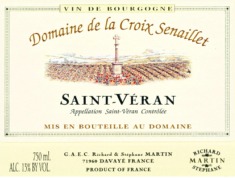
Croix Senaillet Saint Veran is made from 100 percent unoaked Chardonnay.
Fresh and fruity with floral, peach and citrus fruit aromas followed by mineral notes. Mineral, citrus and honey flavors. Rich and luscious palate with a long finish.
Produced from a selection of 40 parcels spread over 17 hectares. Some of the parcels include: Maillettes, Bergades, Poncétys, Terres noires, Pommards, Chênes, Surigny, Prâgnes, Bruyère, Chailloux, etc Average age of the vines is 45 years. The soil is made of clay and limestone. South, southeastern exposure - a few plateaux. Careful vinification. Minimal intervention in the vinification process. Modern equipment (pneumatic press, thermo-regulated tanks). Each parcel is harvested at full maturity. Destemming, slow press, slow fermentation, malolactic fermentation, aging on the lees.

All older vintage wines have been purchased from a single collectors cellar. Pictures can be requested before shipment.
Croix Senaillet St. Veran Les Rochats is made from 100 percent Chardonnay.
This Saint Veran Les Rochats is produced from 50-year-old Chardonnay vines, grown organically on Jurassic-era limestone (Entroque limestone), covered by pebbles that act as a filtering soil. The parcel is southeast facing on half hills.
Clear golden color with light green reflections. The wine has a rich and complex bouquet with a wide array of aromas: pear, nougat, wild peach and kiwi. The mouth is rich and dense bringing freshness with a nice volume and finishing on a light exotic note.
Vineyard
Surface area : 1 Ha.
Soil : limestone soil from the Jurassic period, covered by pebbles acting like a filtering soil.
South-east facing parcel on half-hills.
Grape variety : organically-grown Chardonnay.
Plantation density : 8.500 vinestocks per ha.
Age of vines : 50 years.
Mâconnais style pruning quite short, with 10 to 12 buds.
Hand-harvesting at optimal maturity.
Destemming to avoid herbaceous taste.
Slow and gentle pneumatic pressuring guarantees purity of juice and extraction of the finest aromas.
Very slow alcoholic fermentation in stainless still tank.
Malolactic fermentation.
Aging in stainless steel tanks for 9 months with gentle stirring of fine lees.
Pairs well with shrimp risotto, sautéed veal with eggplant.
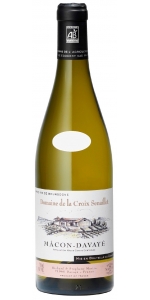
Croix Senaillet Macon-Davaye is 100 percent Chardonnay.
Pale brilliant yellow color. Fresh nose of citrus fruits (lemon, grapefruit). Mineral and salty notes on the palate. Fresh, supple and harmonious in the mouth.
Produced from 7 different parcels of vines spread over 3.77 hectares, planted on clay and limestone based soils. Average age of the vine is 28 years. Careful vinification. Minimal intervention in the vinification process. Modern equipment (pneumatic press, thermo-regulated tanks). Each parcel is harvested at full maturity. Destemming, slow press, slow fermentation, malolactic fermentation, aging on the lees.
Excellent as an aperitif and pairs well with grilled fish and Asian food.
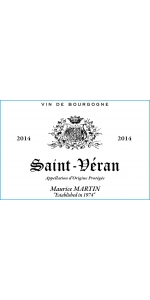
Maurice Martin Saint-Veran is made from 100 percent unoaked Chardonnay.
White gold color with silver or greenish reflections , shiny and soft. Aromas suggest broom, acacia, green apple, lemongrass, citruses. A fresh, dry and fruity, nervous with a good balance.
The grapes for this wine is coming from 2 famous part of the Saint Véran' appellation: Prissé and Davayé.
The wine went through malolactic fermentation. It has been gently filtered before bottling.
Very easy to associate with his very complete balance : grilled fish, creamy risottos, antipasti, salads, sushis, very pleasant at the aperitif.
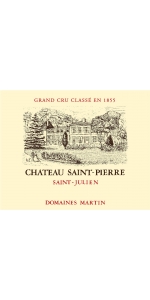
Saint Pierre Saint Julien is made from 79% Cabernet Sauvignon and 21% Merlot.
Chateau Saint-Pierre Saint-Julien 4th Grand Cru Classé boasts a rich and brilliant purple color, a complex aromatic expression marked by beautiful ripe fruits combined with soft spices, chocolate and licorice nuances. Well-balanced and a good texture, the palate is round and subtle, supported by velvety tannins that enhance the elegant and pure character of this Saint Julien.
Review:
"Very pretty and typical for the appellation with aromas of blackcurrants, violets and sandalwood that follow through to a full body with layers of polished tannins and a long, flavorful finish. Lasts a long time on the palate. Classic structure. Drink after 2027."
- James Suckling (January 2022), 96 pts
Croix Senaillet Saint Veran 2011 is made from 100% Chardonnay
Produced from a selection of 40 parcels spread over 17 hectares.
Some of the parcels include: Maillettes, Bergades, Poncétys, Terres noires, Pommards, Chênes, Surigny, Prâgnes, Bruyère, Chailloux, etc
Average age of the vines is 45 years.
The soil is made of clay and limestone.
South, southeastern exposure - a few plateaux.
Careful vinification. Minimal intervention in the vinification process. Modern equipment (pneumatic press, thermo-regulated tanks). Each parcel is harvested at full maturity. Destemming, slow press, slow fermentation, malolactic fermentation, aging on the lees.
Unoaked Chardonnay. Fresh and fruity with floral, peach and citrus fruit aromas followed by mineral notes. Mineral, citrus and honey flavors. Rich and luscious palate with a long finish.
Pairs well with poultry with creamy sauce, shellfish and goat cheese.
The Domaine de la Croix Senaillet Estate
This second generation old estate is located in the town of Davaye, in southern Burgundy. The winery was founded by Maurice Martin in 1969. His son Richard took it over in 1990 and was joined by his brother Stéphane in 1992. While Richard takes care of the vinification and the sales, Stephane is in charge of the vineyard. They sell 80% of their production in bottle and 20% to negociants. Currently, they export 40% of their wine outside of France.
"Domaine de la Croix Senaillet" takes its name from a cross that had been given by an ancient mayor of the village called Benoit Senaillet. The records show that the mayor donated the cross to Davaye in 1866 to replace the one that was destroyed in 1793 during the French Revolution. According to the common believes, the cross that was blessed in 1867 would protect the inhabitants of the village and everyone that would pass by.
The Domaine de la Croix Senaillet Vineyard
The vineyards are located on the south/southeastern slopes of the Solutre and Vergisson rocks. The estate spreads over 52 parcels in the town of Davayé and measures 22 hectares total (54.3 acres): 17 ha in St Veran, 5 ha in Macon, less than 1 hectare in Pouilly-Fuisse. The soil is both chalk and clay. The vines are 40 years old on average. In order to increase the quality of the grapes, Stephane has decided to use "culture raisonnee", which means that they watch carefully and daily the vineplant, checking for the sanitary level in the vineyard and use very small amount of pesticide and chemical products if necessary.
Saint Veran's AOC represents 696 hectares (1,726 acres) in total.
The total production for the AOC is around 42,775 hectoliters (474,089 twelve-bottle-case equivalent)
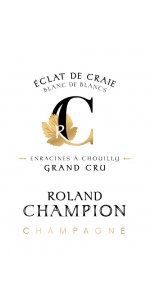
Roland Champion Champagne Blanc de Blancs NV is aged for minimum 30 months (the minimum for NV is 15 months). This cuvee is made from 100% Chardonnay and is produced from the free run juice only. The current release is the result of the blend of the 2005, the 2006 and the 2007 vintage.
Fresh and delicate, its fine bubbles and wide range of aromas will be perfect as an aperitif. This Champagne will also match very well with seafood and shellfish.
dosage : 8 grams per liter
ageing : 30 months on laths
Even if it doesn't say on the label, 100% of the production is RD (Recently Disgorged)
Total Production for this Cuvée : 1,500 cases (9 liter equivalent) per year
Reviews:
"Golden yellow color. Lively, fruity, toasty leesy aromas of honeyed brioche and apple tart with a satiny, tangy, dry-yet-fruity medium body and a sleek, interesting, snappy lemon curd, nougat, and chalk finish with silky, soft, fruit tannins. A classic example of blanc de blanc champagne, delicious."
- Beverage Testing institute , 93 pts
"Spiced with ground anise and ginger accents, this offers notes of poached pear, lemon meringue pie, hazelnut and stony mineral. Very elegant and well-meshed throughout, with a silky finish. Tasted twice, with consistent notes. 1,500 cases made. –AN"
- Wine Spectator 92 pts
"This cuvée made from 100% Chardonnay offers a fresh aromatic nose of light toast, dried yellow fruit and nuances of yeast. On the palate it has a creamy mouth feel of toasted nuts and rich autolytic notes. This is a beautiful wine, rich and complex."
International Wine review 92+ pts
"Small grower. Autumn fruits dominate the aromas of this wine, which is blatantly more like a wine than we normally expect a champagne to be. Some may find that unexpected and even off-putting, while others will find it intriguingly delicious."
- Washington Post - EXCELLENT
"Roland Champion is a small family-owned producer, now with the fourth generation, in the village of Chouilly (”shoo-ee”), which has only Grand Cru vineyards. Made from 100 percent chardonnay grapes, this Champagne offers ethereal grace and poise and harmony; if I were fighting a duel tonight, I would ask for this Champagne as my last beverage. The nose here is about the richness of warm biscuits and hazelnuts, dried fruit and spice, like a Platonic, ineffably light fruitcake; in the mouth, however, it’s about a structure that encompasses an incredible marriage of power and elegance, like the delicacy and strength of the finest bone china. And there’s something porcelain-like about this Champagne, in its notable crisp, lively character, its transparency and its slightly chalky, shale-like mineral elements. Forget the Champagnes that come on with heavy toasty, caramel qualities; here, instead, is a wealth of subtlety and nuance touched with a racy, dynamic edge. Exceptional."
Biggerthanyourhead.net
Xavier Vignon Chateauneuf-du-Pape Rouge Cuvee Anonyme 2019 is made from 60% Grenache, 15% Mourvedre, 10% Syrah and the rest is "field blend" with the following grapes : grenache, vaccarese, counoise, mourvèdre, terret noir and muscardin.
One of Xavier Vignon's first almost anonymous blends only in MAGNUMS !
The grapes come from "collection vines", where many grape varieties are planted together, making it difficult to identify the exact share of each variety: grenache, vaccarese, counoise, mourvèdre, terret noir and muscardin.
Partially destemmed and vinified in a mix of demi-muids and tank, it offers a beautifully pure, vibrant bouquet of black raspberries, white and black pepper, candied orange, and violets. Complex, layered, and nuanced, this beauty is medium to full-bodied, has a seamless texture, and a great finish. It has both elegance and richness, and will keep for 15+ years.
Pairing: Duck in sauce with olives. Ravioli with porcini mushrooms, cream of parsnip and bacon crisps. Partridge leg confit with olive oil.
Review:
"The flagship from Xavier is the 2019 Châteauneuf Du Pape Cuvee Anonyme, and in 2019 it’s 60% Grenache, 15% Mourvèdre, 10% Syrah, and the balance a mix of permitted varieties. Partially destemmed and brought up in a mix of demi-muids and tank, it offers a beautifully pure, vibrant bouquet of black raspberries, white and black pepper, candied orange, and violets. Complex, layered, and nuanced, this beauty is medium to full-bodied, has a seamless texture, and a great finish. It has both elegance and richness, and will keep for 15+ years."
- Jeb Dunnuck (October 2020), 95-97 pt
Brize Les Gres Anjou Blanc is made from 100% Chenin Blanc.
This is a dry wine. Easy to drink, fresh with good acidity. The aromas are persistent with apricot and peach.
The wine is made with grapes grown in a parcel called 'Les Grès'.
Pair with cheese and seafood.



